Best roof shingles for Florida
By Shelly Marchetti, Florida homeowner advocate. Reviewed by Hal Winstead, Editor, licensed roofing contractor. Somewhere in Cape Coral, I was sitting in a homeowner’s driveway on a Tuesday afternoon in July, holding a bundle of shingles that had delaminated so badly I could peel the fiberglass mat like a strip of bacon. The roofer had already left. The homeowner hadn’t even unrolled the contract before signing it. And when I flipped to the shingle spec sheet, I saw it was a builder-grade cosmetic shingle—fine for a shed in Ohio, maybe, but not for a roof that would face a Cat 2 by August. If you’re comparing options, start with a list of roofing companies in Florida who actually pull permits and know the difference between a wind rating and a marketing sticker.
That afternoon stuck with me because it wasn’t the contractor’s fault, entirely. The homeowner had asked for the cheapest roof that “looked good from the street.” The roofer delivered exactly that. If you’re reading this, you already know you want better. The real problem is that shingle marketing makes every product sound like it was forged in a hurricane lab and blessed by an act of Congress. It’s not that simple. I’ve been wrong about this before, call it a decade of watching roofs peel off in ways the lab tests never predicted.
So here’s the ground rule before we talk about brands or lines: the best roof shingles for Florida are not the ones with the prettiest color palette. They’re the ones that hold a seal when the wind comes from a weird angle, and the ones your insurer actually cares about when they compute your wind mitigation discount. Let’s get into what that actually means.
It's the wind rating, not the thickness, that gets you the discount
You’ll hear salesmen talk about “architectural” shingles and “dimensional” shingles like they’re doing you a favor. Those words describe how the shingle looks, not how it performs. What matters under Florida roofing law is wether the shingle is rated to handle wind speeds when properly installed. The rating comes from the manufacturer’s testing, and the insurance industry looks for a specific classification that tells them the roof covering can handle a certain speed without tearing off. The graded scale is simpler than the jargon suggests. If the shingle doesn’t carry an appropriate wind resistance classification for your area, you’re not getting a meaningful discount, no matter how pretty the weave pattern is.
What I’d put on my own roof right now
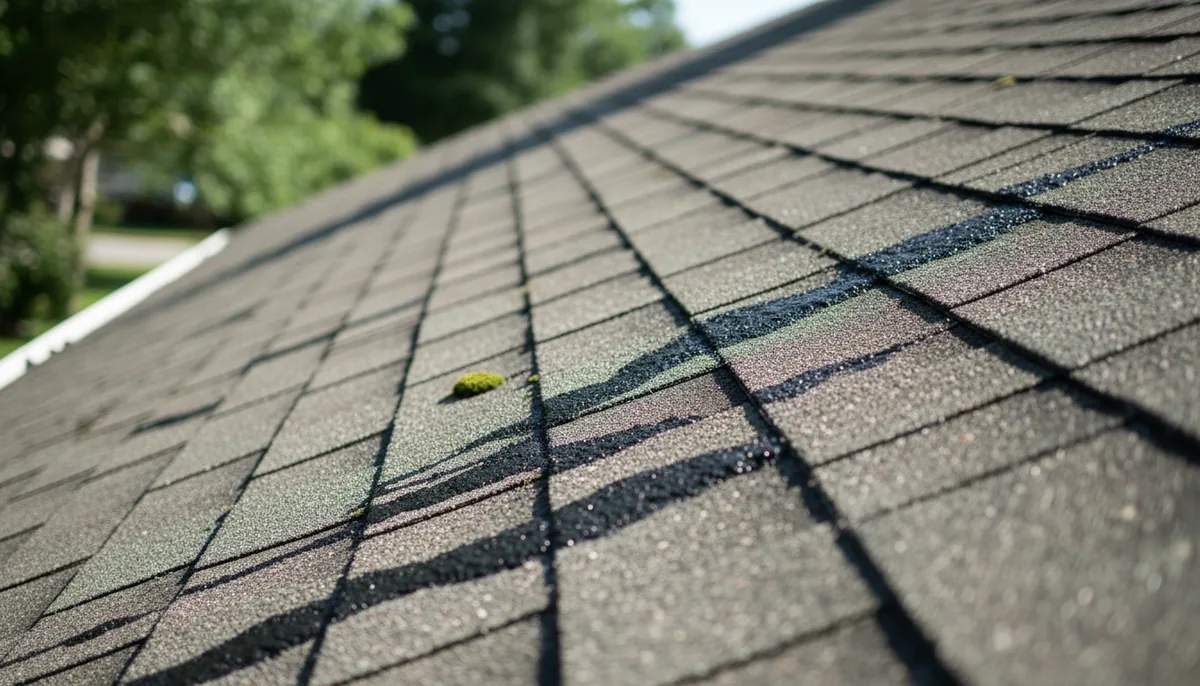
If money were no object and I owned a house in Tampa, I’d pick a high-end architectural laminate shingle with the steepest wind rating the manufacturer makes that fits my roof pitch. That sounds like a cop-out, but it isn’t. The best roof shingles for Florida are the ones that are rated for high wind and installed with the correct fasteners. You can buy the most expensive shingle on the market, and if the roofer staples it too low or skips the starter strip, it’s just an expensive piece of paper. I’d also want something with a thick enough mat that it doesn’t crease when a roofer walks on it in 95-degree heat. Because they will.
What I would actually do: Ask the roofer, in writing, to specify the exact wind classification of the shingle they propose, and ask to see the installation instructions for that specific product before I sign anything. If they hesitate, I walk.
The part that actually matters: the OIR-B1-1802 form
Here’s the part nobody tells you at the supply house. The shingle itself is one item on a form called OIR-B1-1802. That’s the wind mitigation inspection form, and it’s the single most importent piece of paper in your roof replacement besides the contract. It documents your roof covering, the deck attachment, the roof-to-wall connections, the geometry of your roof, whether there’s secondary water resistance, and how your openings are protected. Florida insurers must offer premium discounts for qualifying features on that form. The inspection costs far less than the annual discount it can open up, in almost every case I’ve seen.
So when a roofer tells you “this shingle will lower your insurance,” that’s sometimes true, but it’s an incomplete sentence. The shingle only helps if the rest of the system qualifies, and if the inspector can actually see that the deck is attached properly. If your roof deck is nailed in a way that doesn’t meet the existing code, a fancy shingle might not buy you anything on the OIR-B1-1802. The roofer can’t fix the deck attachment without opening up the deck, and that costs money and time. A good roofer will tell you that upfront. A bad one will just put the shingle on and let you discover the discount never materializes.
What homeowners mix up with the shingle itself
I had a client in Orlando who insisted she needed “impact-resistant shingles” because her neighbor got a discount. She didn’t need impact resistance; she had a hip roof with no overhanging trees, and the impact rating was costing her a fortune per square. The insurance discount she qualified for came from the roof geometry and the secondary water barrier, not the shingle. The shingle that actually made sense for her was a standard high-wind architectural shingle, not the class 4 impact version.
This is the part that drives me crazy. Homeowners fixate on the shingle when the roof system is what does the work. The deck matters. The flashing matters. The ridge vent matters. The number of nails per shingle matters. I watched a roofer in Fort Myers use a nail gun setting that was too high, so every single nail was basically holding the shingle by a thread. The shingle was the best on his truck. Didn’t matter. The wind found the weak point.
What I would actually do: Before I let anyone order materials, I pay for an independent wind mitigation inspection (or get the roofer to schedule one) so we know the starting point. If the deck attachment is weak, I find out before I spend money on premium shingles that won't be able to do their job.

Registered versus certified contractors—know the difference before you hire
This sounds like a sidebar, but it belongs in any honest discussion of shingles because a shingle is only as good as the person who nails it down. Florida roofing contractors are licensed by the Department of Business and Professional Regulation (DBPR). A certified roofing contractor holds a licence begining with CCC and can work anywhere in the state. A registered roofing contractor, licence starting with RC, can only work in the local jurisdiction that licensed them. If the “checks out” the RC number but expects the crew to drive across three counties, that’s a red flag. Always verify the number is active on the DBPR roll before you hire. And if a contractor offers to skip the permit, show them the door. A roof replacement in Florida requires a permit pulled from your local building department and an inspection afterward. An unpermitted roof can complicate an insurance claim and make future buyers run.
The laws that are actually shaping what you can buy
You might have heard about legislation passed after the 2022 hurricane season, called SB 4-D (2022). It changed how roofing contracts are written and what insurance companies can do about assignments of benefits. The practical effect for you is that you need to read your contract carefully, especially who is responsible for pulling the permit and what happens to the deductible. There’s also Florida Statute 627.70132, which requires what insurers sometimes call a “roof inspection” threshold—the rules around when an insurance company can refuse to renew or pay you based on the age of your roof. The exact provisions matter if your roof is older than fifteen years. So does the fact that Citizens Property Insurance Corporation, the state’s insurer of last resort, has it's own rules about roof age that sometimes make private insurers look generous. My advice is to read your declarations page and know what your own policy actually says. Coverage varies wildly, and I’m not a lawyer or a licensed adjuster. I’m the person who tells you to actually read the paperwork before you sign the repair authorization.
Questions I get asked
Should I just buy the most expensive shingle to be safe?
No. You should of buy the shingle that is rated for your actual wind load, and then pay for quality installation. The most expensive shingle is often an impact-resistant product that costs double but only helps if you have a specific exposure to hail or flying debris. For most coastal Florida homes, a properly rated architectural shingle with a high wind speed classification is the sweet spot.
My neighbor got a roofing discount. Why didn’t I?
The discount is on the OIR-B1-1802 wind mitigation form, and the shingle is only one element. Your neighbor likely had other qualifying features, like a properly sealed roof deck or hurricane straps on the roof-to-wall connection. If your roof geometry is complicated or your deck isn’t attached tightly enough, the shingle alone won't trigger the discount.
Do I need a permit for a repair, or just a full replacement?
If you're replacing the roof covering on more than a small percentage of the roof, you almost certainly need a permit. A full replacement absolutely does. If your contractor says you don’t need one so they can “save you money,” what they’re really saying is they don’t want the inspection.
What’s the deal with the shingle siding that looks like slate?
That's a design choice. Some architectural shingles imitate slate or wood shakes well. The visual texture doesn’t change the wind rating or the installation method. Buy it if you like the look, not because it's automatically stronger.
Should I paint my old roof shingles to save money?
An absolute no. Painting asphalt shingles traps heat and ruins the granule coating. It voids almost every manufacturer warranty, and I’ve seen it make a roof fail faster than any storm. I also once had a homeowner in Naples who tried to paint their roof the day before a hurricane warning because they wanted the aerial photos to look even. Don’t do that either.
Are the My Safe Florida Home grants worth looking into?
The My Safe Florida Home program is a real thing for wind mitigation improvements, and the money helps if you qualify. It’s been funded and paused at different times, so check the current status. But understand it funds specific improvements, not necessarily the premium shingle you were already imagining.