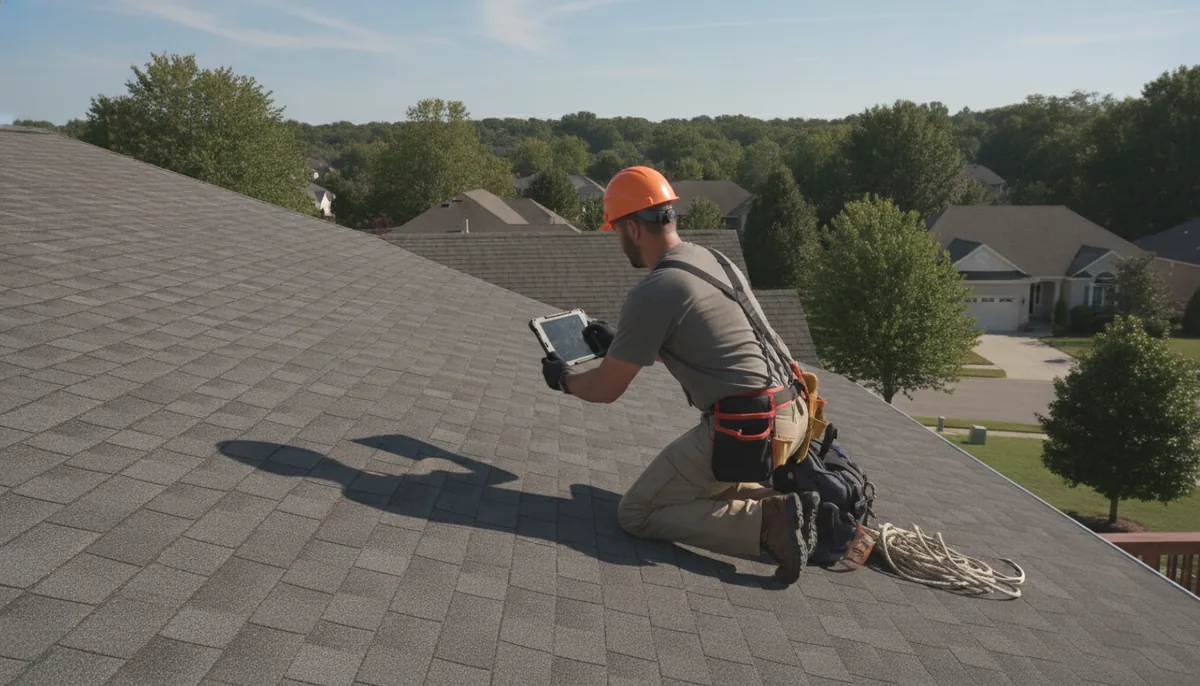
Florida roof insurance claim: What Florida Homeowners Should Know
By Renata Alvarez, Former property claims adjuster. Reviewed by Hal Winstead, Editor, licensed roofing contractor. The afternoon sun was cooking the shingles on a ranch house in New Port Richey, and I was measuring a wind hail claim on a roof that had clearly been patched three different ways. The homeowner came out with a folder thick enough to stop a bullet. He’d had the damage for fourteen months, waited on a roofer who never showed, and was only calling now because the ceiling stain had doubled in size. I had to tell him the bad news: Florida Statute 627.70132 gives you one year to notice an initial claim. He was out of luck, and the covered loss didn’t matter one bit. I’ve hated telling people that more than I’ve hated any Florida summer.
That folder should of been a check. Instead, it was a lesson in how the state changed the rules on us. If you’re hunting for a residential roofing companies in Florida or just trying to figure out your next move after a storm, listen up. This is the stuff that got claims paid when I was on the other side of the desk, and the stuff that got them denied when homeowners didn’t know any better.
I’m Renata. Nine years adjusting roof claims across this state, two hurricane seasons on catastrophe response. I’m not a lawyer, and I’m not your adjuster anymore. But I know what a file looks like when it’s going to pay, and I know what a file looks like when it’s going to die.
The one-year deadline is real, and it’s shorter than you think
Here’s where the state hung every homeowner out to dry. Under Florida Statute 627.70132, amended in 2022, you have one year from the date of loss to notify your insurer of an initial claim. Supplemental claims get eighteen months. It used to be three years. Now it’s a trap.
Notice the phrase “date of loss.” Not the date you noticed the leak. Not the date the roofer told you it was bad. The date the storm actually hit your roof. That’s a brutal rule when the damage is a slow leak that doesn’t show up for months. I’ve seen it kill claims that were completely legitimate—a tarp over a hole in Tampa, a blue tarp in Fort Myers, the whole neighborhood doing the same dance. The insurer gets a complete defense even when they know the roof is gone.
You need to read your own policy declarations page and understand what you have. I won’t tell you what your policy covers, because I ofn’t read it and coverage varies wildly. But I will tell you this: if you think you have damage, call your agent or insurer today. Don’t wait for the roofer’s schedule. Don’t wait for the adjuster’s availability. The clock is ticking from the day the wind blew, not the day you got around to it.
What I would actually do: If you suspect storm damage, file a claim immediately, even before you have a contractor lined up. You can always have a contractor look afterward. You cannot get that year back.
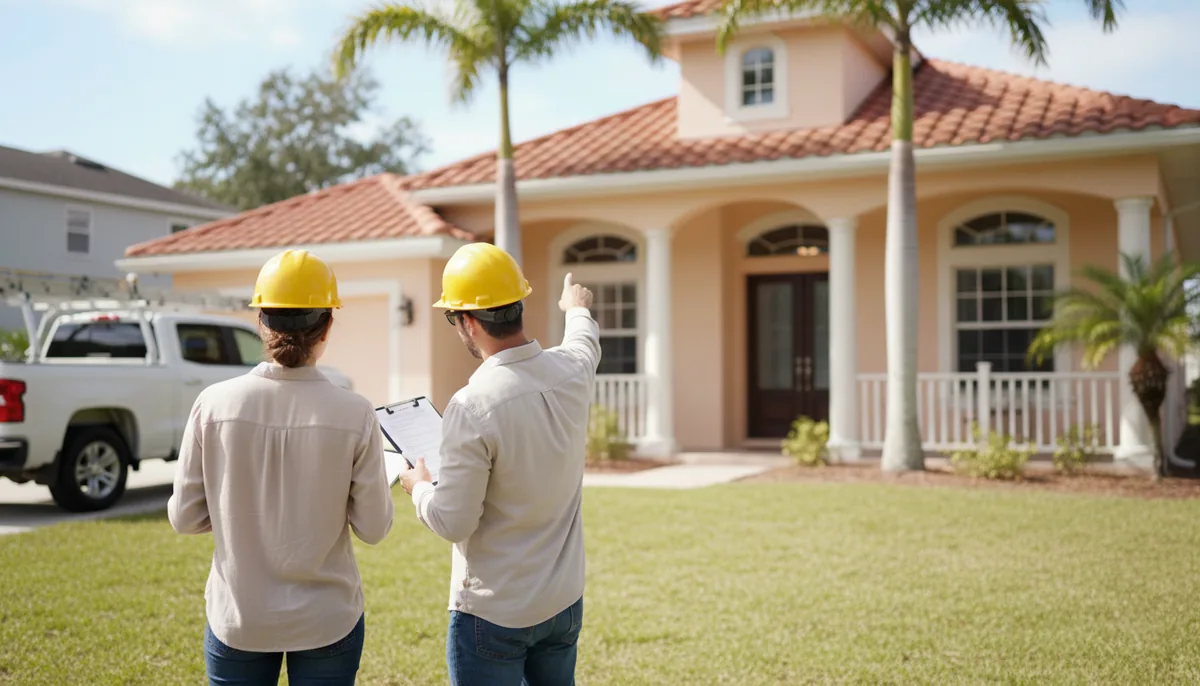
A wind mitigation inspection is the cheapest money you’ll ever spend on your roof
Everyone thinks a roof is just shingles. Then I show up and start asking about the roof deck attachment, the roof-to-wall connection, the secondary water resistance. You’d get a blank stare. That’s fine—you don’t need to know the details. You need to pay someone who does.
A wind mitigation inspection documents all those features, plus the roof geometry and opening protection. It’s a formal inspection on form OIR-B1-1802. Florida insurers have to offer premium discounts for qualifying features. You pay maybe a hundred and fifty bucks, give or take, and the discount on your premium can be far larger than that, every single year, for the life of the roof.
People skip this because it sounds like a gimmick. It’s not. When I was adjusting, a house with a proper wind mitigation report and a hip roof versus a gable roof was a completely different underwriting conversation. The inspection tells the insurer the roof can actually handle a storm, which changes the math on their risk and your wallet.
The report doesn’t just help your premium. It helps your claim. A documented roof deck attachment means the insurer knows what they’re dealing with before they even send someone like me out. It’s ammunition.
What I would actually do: Before hurricane season, schedule a wind mitigation inspection. Get the report. Send it to your insurer. Ask for the discount you’re legally owed. If the roofer says they can do it, verify they know what form OIR-B1-1802 looks like.
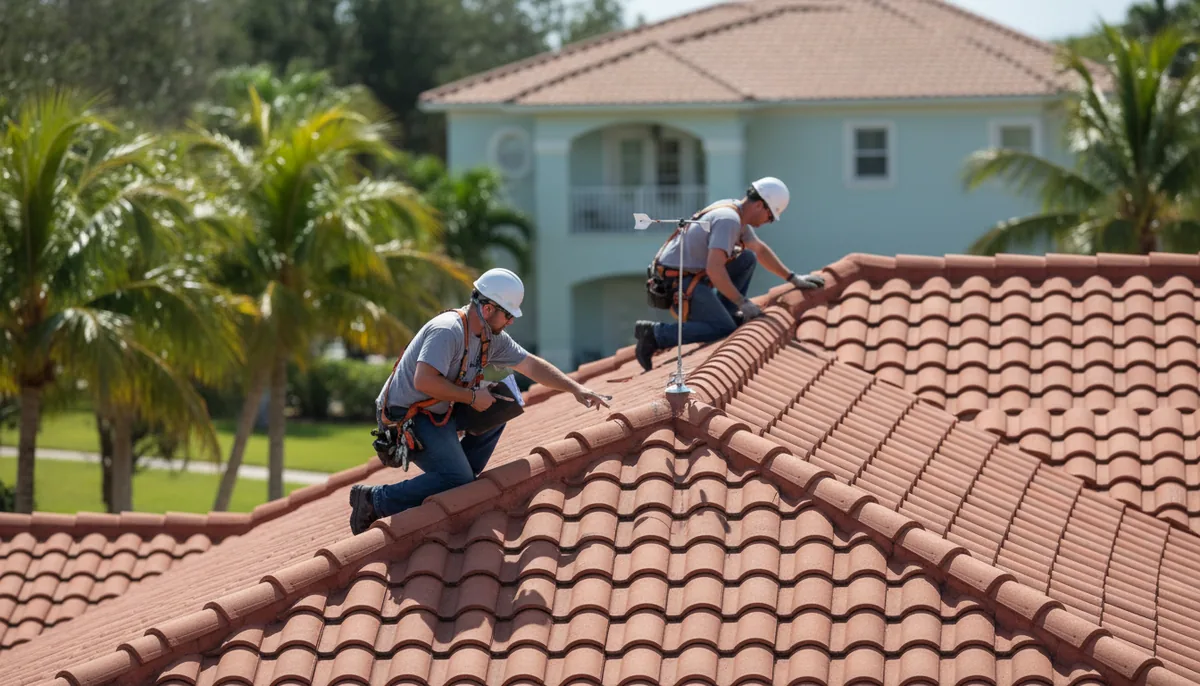
The "25% rule" changed, and most roofers still haven't caught up
Ask any old-school roofer about the 25% rule and they’ll tell you the old gospel: if you repair more than a quarter of your roof in a year, you have to replace the whole thing to meet current code. That’s the way it was. It’s not the way it is anymore.
SB 4-D (2022) rewrote the playbook. If your roof was built, repaired, or replaced under the 2007 Florida Building Code or anything newer, you only have to bring the portion you’re working on up to current code. The 2007 code took effect around March 2009, so a roof completed before that date generally doesn’t qualify. What does that mean for you? If your roof is from 2015 and a storm only took out a section, your contractor can repair that section without forcing a full replacement on you. That’s a huge difference in out-of-pocket cost.
But here’s the catch: insurance companies and adjusters know this. Contractors might not. I’ve had roofers insist the entire roof needs replacing when the code actually only demands the damaged section. They want the bigger job. You want to make a claim that makes sense. If your roof is modern, get a contractor who understands the current code and can explain exactly why the work they’re proposing is required. If they start quoting the old rule, run.
Know who you’re hiring: the difference between a CCC and an RC license
I’ve pulled up to more houses than I can count where the roofer had a business card with a fancy logo and a magnetic sign on their truck. Then I check the DBPR roll and the license is inactive, or it’s a registered license that only works in one county, and they’re two counties over. That’s a problem for you, not just for them.
Florida roofing contractors are licensed by the Department of Business and Professional Regulation. A certified roofing contractor has a license starting with CCC and can work anywhere in the state. A registered contractor has a license starting with RC and can only work in the local jurisdiction that licensed them. The prefixes matter. You want to see the number, you want to check the roll, and you want to make sure it’s active before you sign anything.
An unlicensed or improperly licensed contractor can mean work that doesn’t meet code, a lien on your house, and an insurance claim that gets denied because the repair wasn’t done right. One of my biggest profesional pet peeves is spending an hour on a roof that was “certified” fixed by a guy who botched the flashing. The water intrusion wasn’t storm damage at all. It was shoddy workmanship, which your homeowner’s policy almost certainly doesn’t cover. Read your declaration page, then check the license.
When the private market says no, you have options
If you’ve been turned down for coverage, you’re not totally out. Citizens Property Insurance Corporation is the state-backed insurer of last resort. They’re the option when nobody else will take you. It’s not always the cheapest, and it’s not always the best experiance, but it exists.
For fixes, there’s also My Safe Florida Home. This is a state program that offers free wind mitigation inspections and matching grants for qualifying hurricane-hardening improvements. The funding gets appropriated per cycle, and it runs out. It’s worth checking wether the program is open right now, but I’m not going to promise you a grant exists today. That would be a lie. What I can say is the program is a legit way to get money for roof reinforcements, and you should look into it if you qualify.
Questions I get asked
How long do I have to file a claim after a hurricane?
In Florida, you have one year from the date of loss for an initial claim, and eighteen months for a supplemental claim. That’s the law under Florida Statute 627.70132. If you miss it, the insurer has a complete defense, even if the loss is real. Call them now.
What is a wind mitigation inspection, actually?
It’s a formal assessment of your roof’s ability to resist wind, covering the roof covering, deck attachment, roof-to-wall connection, geometry, secondary water resistance, and opening protection. It’s documented on form OIR-B1-1802. Insurers must offer discounts for qualifying features, so the report often pays for itself.
Do I have to replace the whole roof if more than 25% is damaged?
Only if your roof predates the 2007 Florida Building Code. SB 4-D (2022) changed the rule. For roofs built to the 2007 code or later, only the portion being repaired needs to bring that section up to current code. Older roofs may still trigger full replacement. It depends on what’s under there.
What’s the difference between a certified and registered roofing contractor?
A certified contractor’s license begins with CCC and allows work anywhere in Florida. A registered contractor’s license begins with RC and limits work to the specific jurisdiction that licensed them. Always verify the license is active on the DBPR roll.
What if my roof is leaking but it’s not storm damage?
That’s a maintenance or workmanship issue, and it’s usually not a covered loss. If a roofer botched a repair, the damage that follows is on them, not your insurance policy. If it’s just age and wear from Florida’s heat, that’s not sudden and accidental. Check your policy language and your records.
More from the site
- Roof damage hurricane insurance lawyer florida: What Florida Homeowners Should Know
- Florida roof replacement insurance: What Florida Homeowners Should Know
- Roof damage claims public adjuster florida: What Florida Homeowners Should Know
- Florida insurance roof claim denied: What Florida Homeowners Should Know
- Denied roof claim florida: What Florida Homeowners Should Know