Peel and stick roof underlayment in Florida: The Florida Guide
By Marcy Doleman, Commercial roofing estimator. Reviewed by Hal Winstead, Editor, licensed roofing contractor. That warehouse in Lakeland still bugs me. We stripped the old cap sheet off a modified bitumen roof on a Tuesday afternoon in March, and the deck underneath was wet in spots we didn't expect. The general contractor had already ordered the replacement system, and he wanted answers about a peel and stick underlayment in Florida because his supplier swore it would speed things up. The kicker was the deck—it was damp, and no amount of self-adhering membrane is going to fix a moisture problem you didn't find first. We stopped the job, tarped it, and had a conversation about what the roof actually needed versus what the paperwork said.
You'll hear a lot of strong opinions about peel and stick roof underlayment in Florida, some of them from people who've never had to tear one off. The product has it's place, especially on low-slope commercial work where you need a secondary layer of defense before the main membrane goes down. But the Florida sun, the hurricanes, and the way building codes have shifted since the 2022 legislative changes mean you can't just pick a product off a shelf and call it done. I keep a running list of contractors I trust for referral work, and you can find the same kind of list through the roofing companies in Florida directory if you're starting cold. Just remember that a directory listing isn't a licence—more on that in a minute.
The first thing I tell anyone asking about peel and stick is that it's not a roof. It's a wheather barrier. It sits between the deck and the final membrane, and its whole job is to keep water out if the top layer fails or gets ripped off by wind. On a flat commercial roof, that secondary layer is what separates a minor leak from a building full of soaked insulation. I've been wrong about this before, but I'd rather have a good peel and stick under a TPO membrane than rely on the membrane alone, especially on a school roof where a leak means ceiling tiles and classrooms and phone calls from the principal's office.
What peel and stick actually is, in plain terms
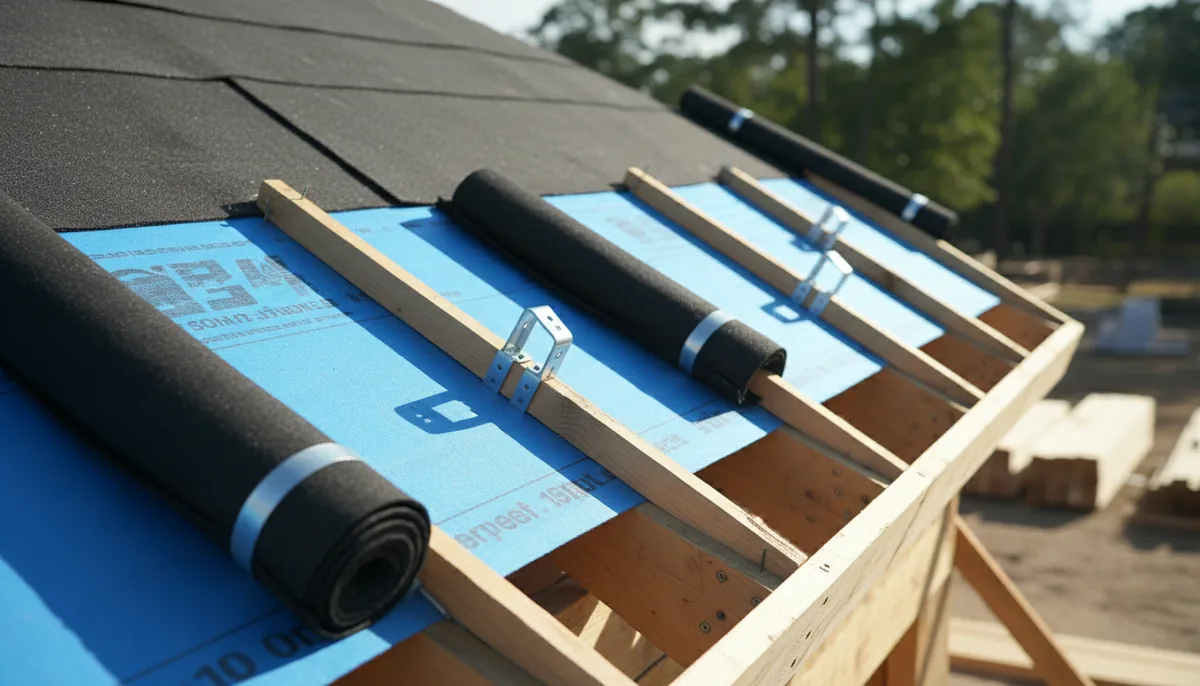
Peel and stick underlayment is a sheet of modified bitumen with adhesive on one side and a release film you pull off before rolling it down. No torches, no hot asphalt kettles, no fumes that send the school nurse into a panic. That's the sales pitch, and it's mostly true. The adhesive sticks to a clean, dry deck or to a layer of insulation, and once it's down, it forms a continuous barrier. The seams get sealed with mastic or a compatible tape, and then you've got your secondary layer ready for the main roof membrane.
But here's the part the manufacturers don't put on the brochure. The substrate has to be dry. Not sort of dry. Dry. If you roll peel and stick over a damp wood deck or wet gypsum, you're sealing the moisture in, and that moisture will turn into blisters and delamination faster than you can schedule a callback. I've pulled up peel and stick that was installed over a deck that "looked fine" and found the adhesive had never really bonded in the low spots. The cure was tearing it all off and starting over, which is exactly the kind of expense nobody budgets for.
Does the Florida Building Code make you replace the whole roof?
There was a rule for years that got called the 25% rule. If you repaired or replaced more than a quarter of a roof in a year, you had to bring the entire roof up to current code, which basicly meant a full replacement. Then the legislature passed SB 4-D in 2022, and that changed the math. If your roof was built, repaired, or replaced under the 2007 Florida Building Code or anything newer, only the part you're working on has to meet current code. That 2007 code took effect in March of 2009, so roofs completed before that generally don't qualify for the partial work.
What does that mean for a peel and stick decision? It means the age of your existing roof matters more than the product you pick. I had a client in Pensacola with a warehouse built in 2004, and we were only patching a corner where a lightning strike had taken out a chunk of membrane. Under the old rule, that patch might have triggered a full code compliance push. Under the current law, we could fix the damaged section and leave the rest alone. The peel and stick came in as part of that patch, but it didn't force the whole roof into a new life. You still need a permit and an inspection, though—no skipping that part.
What I would actually do: Verify the year the roof was originally built or last replaced before I bid any repair. If it's pre-2009, the conversation changes completely, and I'm going to tell you the full replacement might be cheaper than dancing around the code.
Wind mitigation inspections and the discount nobody uses
Florida insurers are required by law to offer premium discounts for certain wind-resistance features, and the inspection that documents those features is a standard form called OIR-B1-1802. A wind mitigation inspector will look at the roof covering, the deck attachment, how the roof connects to the walls, the roof geometry, wether there's secondary water resistance, and the opening protection on doors and windows. That last one isn't a roof thing, but it's on the form, so it's part of the package.
Here's where peel and stick earns its keep. A properly installed secondary water barrier is one of the features on that form, and having one can knock money off your windstorm premium. The inspection itself costs a fraction of what the annual discount is worth, and I've never understood why more commercial property owners don't do it. I had a retail plaza owner in Fort Myers who fought me on the cost of adding a peel and stick layer during a reroof. I finally told him to go get the wind mitigation inspection done first and look at the form before he made a decision. He came back with a number that made the extra layer look cheap.
You should ofn't take my word for what your policy will do, though. Coverage varies, and insurance companies have their own ways of applying discounts. Read your declarations page and talk to your agent. I'm not a licensed adjuster, and I don't play one on the phone.
What I would actually do: Spend the money on the wind mitigation inspection before you approve the final roof system. The inspector will tell you what features you already have, and then you can decide if the peel and stick layer is worth the upgrade. Most of the time, it pays for itself in the first year.
Why the licence check matters more than the sales pitch
Florida roofing contractors are regulated by the Department of Business and Professional Regulation, and the licence prefixes tell you what a contractor can do. A certified contractor has a licence starting with CCC and can work anywhere in the state. A registered contractor has a licence starting with RC and can only work in the jurisdiction that licensed them. Before I let anyone touch a roof, I check that number against the DBPR roll and make sure it's active. That's not a dig at registered contractors—some of them do excellent work—but it's a hard limit on where they're allowed to operate.
I've seen out-of-county contractors push a registered licence further than it was meant to go, and I've seen property owners figure it out only after the roof leaked and the contractor vanished. The same goes for permits. A roof replacement in Florida requires a permit from the local building department and an inspection. If a contractor tells you they can skip the permit to save you money, walk away. An unpermitted roof can complicate an insurance claim and make a future buyer nervous. I get that permits cost time and money, but they're also your paper trail that the work was done to code.
Questions I get asked
Will peel and stick work over my existing metal roof?
It can, but only if the metal is clean, dry, and free of rust and old sealant. The adhesive needs a smooth surface to bond to, and standing seams or corrugated profiles can leave gaps you can't see until the water finds them. I'd want to inspect the metal first and probably install a cover board before the peel and stick goes down. It's extra cost, but it's cheaper than a failed bond.
How long will a peel and stick underlayment last if it's exposed to the sun?
Not long. Most of these products are not rated for prolonged UV exposure, which means they need the top membrane installed within a specific window after the underlayment goes down. I've seen jobs sit for a month waiting on a TPO delivery, and the underlayment got brittle and started to curl at the edges. Plan the delivery for the membrane before you schedule the underlayment crew.
Does the 25% rule still apply to my building?
It depends on when the roof was built, repaired, or replaced. If it was done under the 2007 Florida Building Code or any later edition, then only the portion being worked on has to meet current code, thanks to SB 4-D (2022). If your roof predates that, a full compliance upgrade could be triggered. You need to know the roof's history before you start.
Is peel and stick cheaper than torch-down modified bitumen?
Material prices fluctuate, so I can't give you a number, but the labor math is where peel and stick wins. Torching requires a licensed crew, fire watches, and safety precautions that take time. Peel and stick goes down faster, which means less time on the roof and fewer man-hours. That said, price per square depends on pitch, access, and what's underneath. I've quoted jobs where the deck prep made the peel and stick option more expensive in total.
What happens if the peel and stick gets wet before the top layer goes on?
You hope it dries out, and you check every inch before you proceed. If water got under the sheet and wicked along the adhesive layer, you might have a delamination problem that requires pulling the sheet up. That's why I always schedule peel and stick installation around the weather forecast, and I've still been caught by a surprise afternoon storm. It's a risk you manage, not a problem you eliminate.
Can I use peel and stick as the main roof membrane?
No. It's an underlayment, not a finished roof. It doesn't have the UV resistance, the puncture resistance, or the wind uplift rating to serve as the final waterproofing layer on a commercial building. Some products claim temporary exposure ratings, but temporary doesn't mean permanent. Put the real membrane over it.
Every roof tells you what it needs if you look at it long enough, and peel and stick is a good tool in the right situation. It's not magic, and it won't fix a wet deck or a bad inspection. It's one layer in a system, and the system only works if every layer gets installed right. That's the job. That's the whole job.