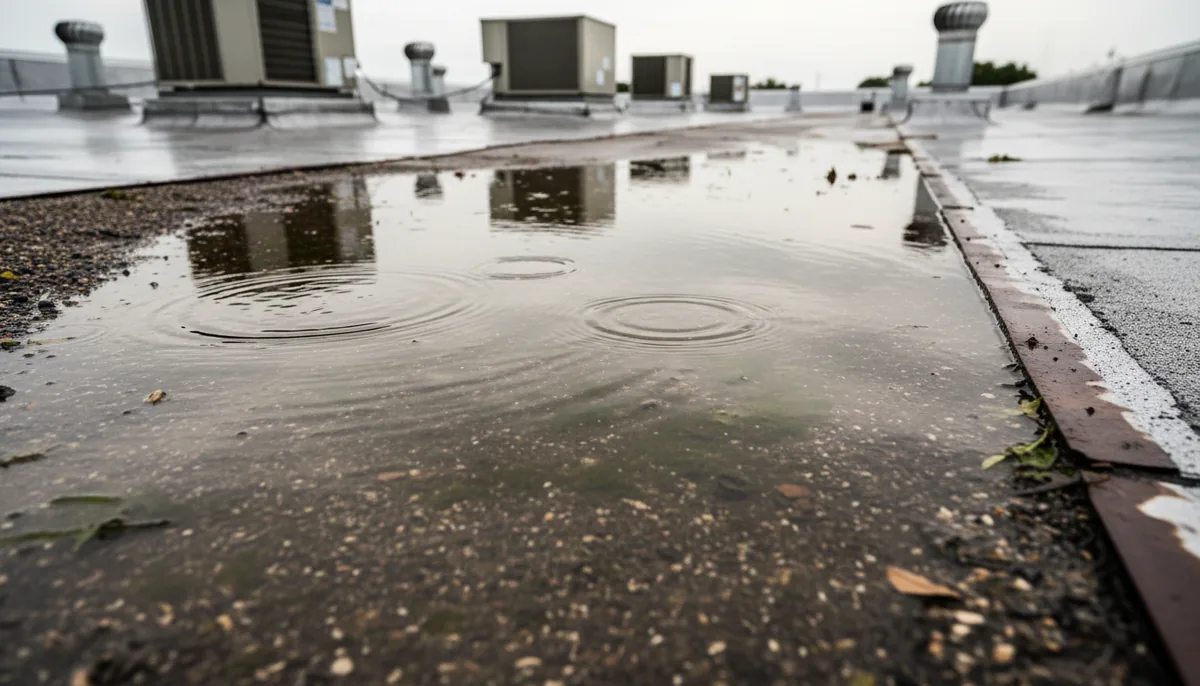
Emergency roof tarp Florida — How Bad Is It, Really?
By Dale Prescott, Roofing contractor, Central Florida. Reviewed by Hal Winstead, Editor, licensed roofing contractor. I was up on a barrel-tile roof in Tavares one August afternoon, a week after a tropical storm had peeled back the hip of a forty-year-old split-level. The homeowner had paid a handyman neighbor two hundred bucks to "patch" that hip with a five-gallon bucket of plastic roof cement and some chicken wire. It did not go well. The cement had baked into a brittle, yellow crust, and every tile I lifted crumbled into shards that rained down into the pool. The water damage underneath was three times worse than it would have been if they had just called it a loss and tarped the damn thing on day one. That roof taught me more about what folks panic-buy than any storm since. And the first thing I tell people is this: if your ceiling is dripping and the sky still looks angry, you are not looking for a permanent fix. You are looking for emergency roofing companies in Florida to stop the bleeding for the next two weeks.
The tarp is the Band-Aid. It is not the cure. I hate it when a homeowner wants the tarp nailed down tight and perfect, with a full ridge cap and proper flashing, because that is just a waste of good money. That money should go to the eventual tear-off and re-decking. But do not get me wrong. A properly installed, heavy-duty tarp bought you from "catastrophic" to "an expensive nuisance." It buys you time to argue with the adjuster. It buys you time to find a roofer who will pull a permit and not vanish with a deposit. And on a really bad day, it is the difference between re-sheathing a third of the roof and just replacing a couple of compromised trusses. I of been wrong about this before, but I would rather do one good emergency tarp job and wait than do a bad roofing job in the rain.
Here is the part that gets folks in trouble. They think the tarp is the start of a race. It is not. The race started the day the storm hit, and the finish line is a date you probably do not know. Florida Statute 627.70132, as amended, gives you a hard deadline to notify your insurer about an initial or reopened claim, and it is a seperate, shorter clock for a supplemental claim. I'm not a lawyer, so I will not quote it at you like one. I will tell you this: the clock runs from the date of loss, not the date you are standing in Home Depot buying a blue tarp. If you wait until after the adjuster comes out to send the official notice, you could be playing with fire. And if you try to supplement that claim later for a rotted deck the first adjuster missed, you have even less time to act. Read your policy declarations. Know the dates. Miss them, and the insurer can say no even if the roof is genuinely wrecked.
What I would actually do: Call your insurance agent from the driveway while the rain is still coming through and say the words "claim" and "date of loss" out loud. Get a time-stamped record of that call. Then find a roofer to tarp.
You Need A Permit, And An Inspection, Even A Crappy Tarp
Wait, I hear you saying. A tarp is not a repair. Do I really need a permit to staple plastic to my roof deck? No. The tarp itself is emergency mitigation, not a repair. But the moment you pay a guy to cut out wet plywood, sister a rafter, or replace a run of shingles to create a smooth surface for the tarp to breathe over, you have stepped into the world of residential roofing work. Florida requires a permit for roofing work, pulled from the local building department, and it requires an inspection. A contractor who says, "Aw, that patch under the tarp is too small for a permit," is a contractor to walk away from. I have torn off roofs that had a patch job done without a permit, and let me tell you, the quality was about what you would expect from a guy who does not want a county inspector looking at his work.
That unpermitted patch follows you like a stray dog. When you sell the house, the buyer's title company will not care about the tarp. They will care about the paperwork. And when the next storm hits, the insurance adjuster will look at that fresh, unpermitted repair job and quite possibly hand you a denial letter faster than you can say "pre-existing condition." The legal fix for a roof is a permit and an inspection. It protects you, sure, but it also protects the guy who has to work on it later. If a roofer refuses to pull a permit, that is him telling you he is not going to be around next time you call.
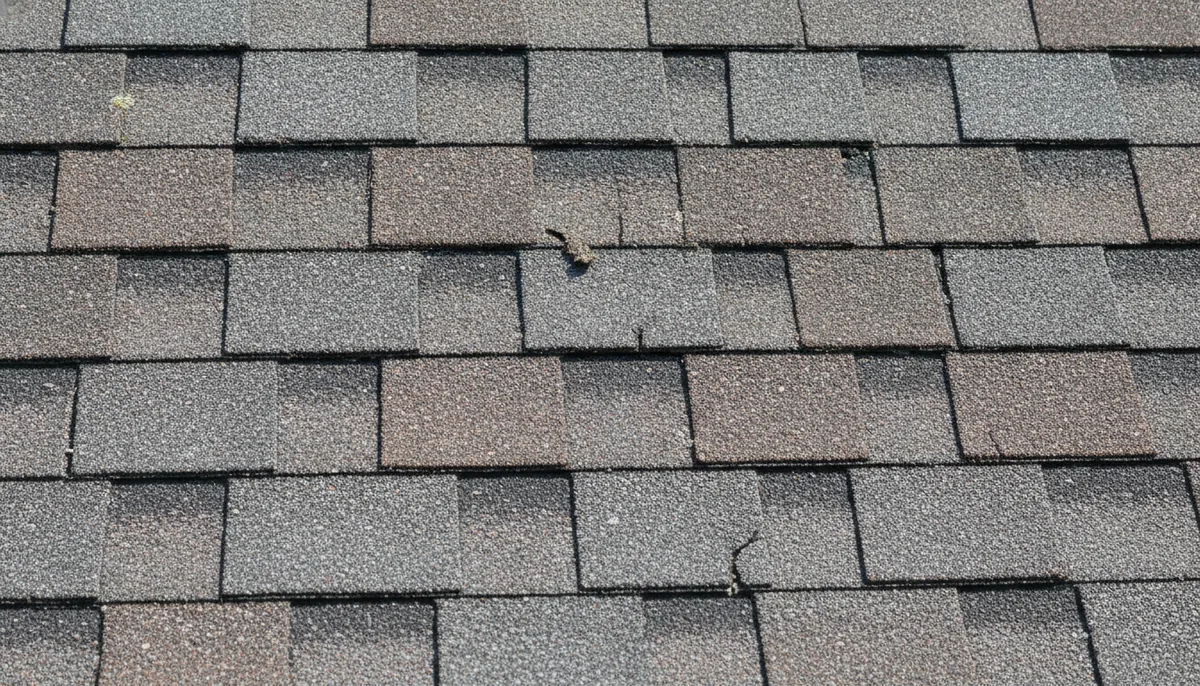
The 25% Rule Changed. Your Roof Might Be Grandfathered.
A lot of roofing guys in Central Florida got their start on roofs built before 2009. And for years, our rule of thumb was strict: if you repaired more than 25% of a roof within twelve months, you had to bring the entire roof up to current code. That was the old enforcement. Full roof replacement. Expensive, but simple. Then SB 4-D came down the pike in 2022 and changed the dance. Now, if your roof was originally built, repaired, or replaced to the 2007 Florida Building Code (or a later edition), the 25% trigger does not apply. You can repair a section, and only that section needs to meet the current code standard. But here is the catch that makes guys like me pay attention to house ages. The 2007 code took effect in Florida on March 1st, 2009. If your roof is older than that, you are likely stuck in the old world. If a roofer or adjuster tells you they can swap out a whole southern slope and leave the northern slope original because of the new law, please ask them: "Was this roof built to the 2007 code or later?" If the answer is a shrug, they are guessing with your money.
I tell homeowners this because the decision to tarp one slope versus plan a full tear-off depends entirely on that answer. You might think you are saving money by tarping a 400-square-foot section under an old roof. But if that old roof is pre-2009, you are not saving money. You are just delaying the inevitable full replacement, and the tarp is money down the drain. On the flip side, if you have a newer roof, that same tarp is a life raft. It means you can sit back, wait for the insurance money, and replace just that one damaged area. You need someone who actually knows the file on the house to make that call. I am a contractor, not a lawyer, and I have been wrong about this before. But I am never wrong when I tell you not to let a salesman decide what code applies to your roof.
What I would actually do: Look up the last building permit on your roof at the county property appraiser's office. Find the date. If it is after 2009, the new rule likely helps you. If it is before, plan for a bigger project than you hoped.
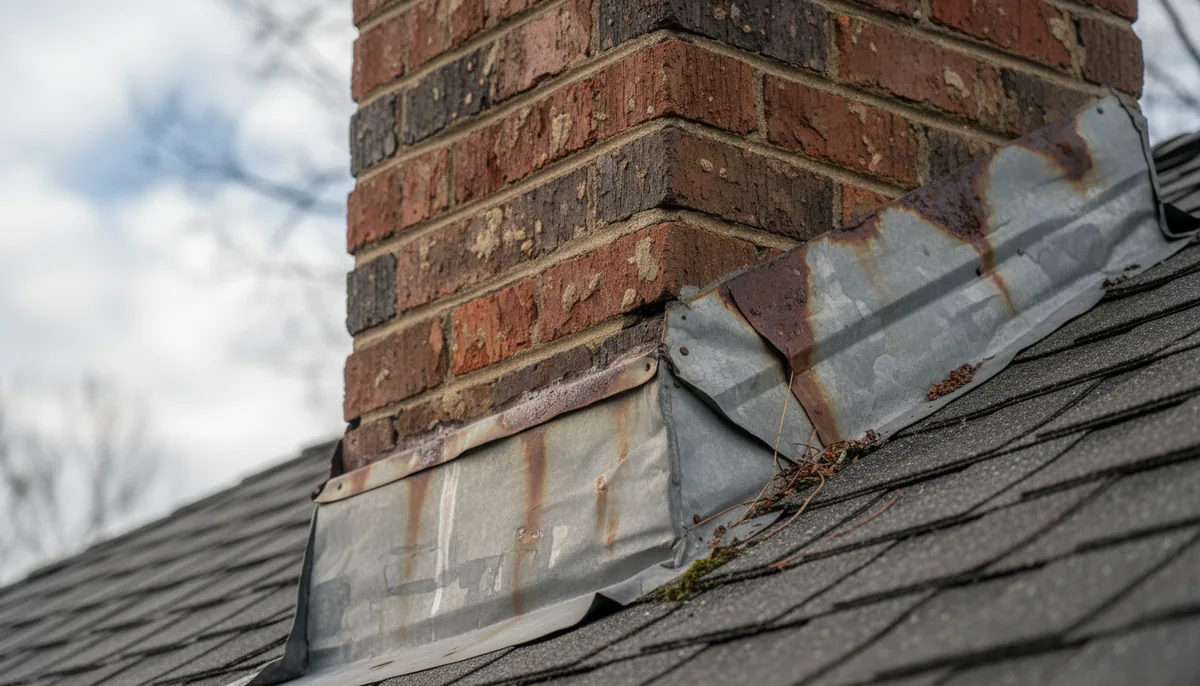
How Bad Is The Damage Under That Tarp?
You cannot see the damage from the top, and that is what makes this scramble so hard. A tarp over a perfectly intact roof deck is a dry blanket, doing nothing. A tarp over a roof where the deck is sagging and the rafters are wicking water like sponges is the start of a medical procedure for your house. The difference is only visible from the attic, with a flashlight and a little patience. I have been on roofs that looked fine from the curb, where the shingle granules had washed off years ago and the felt paper had turned to powder. I have been on roofs that looked like a bomb hit them, where the wood underneath was dry enough to light a match on.
The tarp does not care. It just sits there. But what is under that tarp dictates the timeline. Is the deck just wet? Dry it out, slap on some new felt, you have time. Is the deck spongy under your foot when you walk on the tarp? That's wood fiber that has lost it's integrity. Structural. And if you have tile, unscrew a couple of broken tiles near the ridge and run your hand along the battens. If those wooden battens crumble to the touch, the whole roof assembly is compromised. That is the difference between a two-day repair and a two-week project. I don't need a crystal ball for this; I need a ladder and a half-hour. Call it an educated guess, which is what my entire trade is.
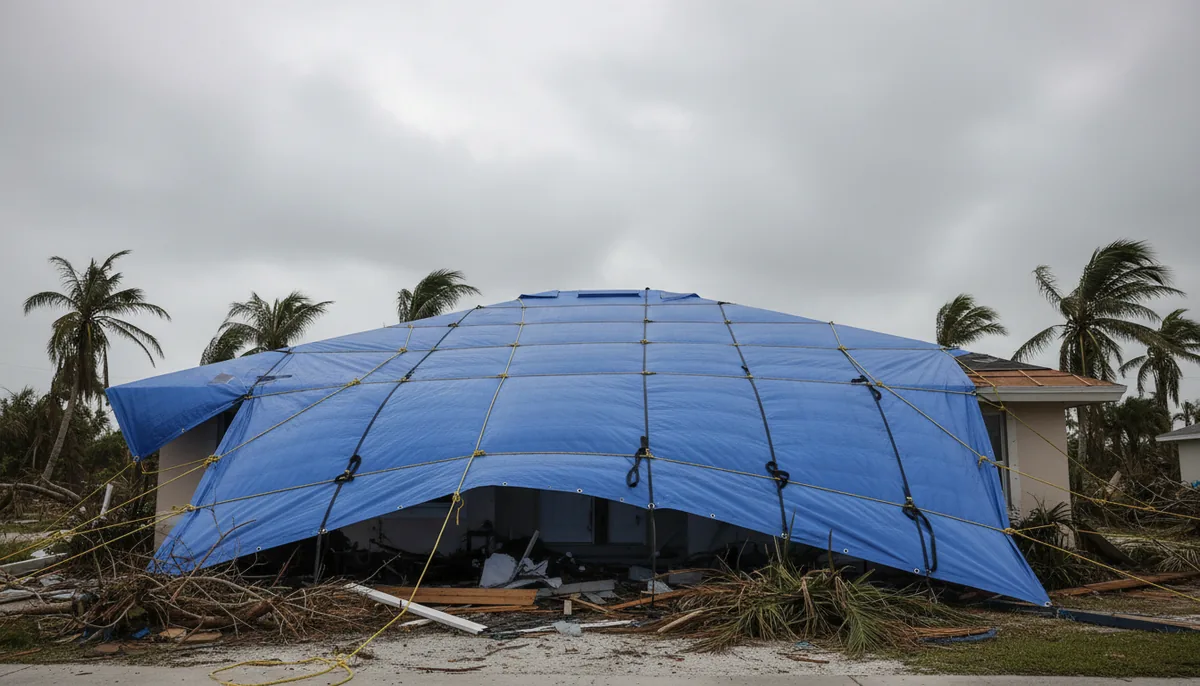
I Have Seen The Tarp Stay On For A Year. Do Not Do That.
And now for my gripe. The absolute worst thing a homeowner can do is get a tarp installed, get the insurance check, and then blow the money on a new car, or a home theater, or a vacation to the Bahamas while the tarp rots in the sun. The tarp is designed to survive a Florida hurricane. It is not designed to survive a Florida summer. The UV rays bake the nylon and the straps. The straps will either cut into your stucco or stretch out and start humming in the wind, working like a saw on your roof edge. Within six months, that tarp is not a waterproof membrane. It is a pool cover that leaks around every grommet, channeling water right past your weep holes and into the walls. I have ripped off tarps that have been on so long there were fourteen layers of them, each one holding in moisture and creating more rot than the original storm did.
I know why it happens. The insurance check arrives, the roofer is slammed, and the homeowner thinks, "Well, it is dry now. I can wait until next year." No. You cannot. The porch is comfortable now, but the sheathing is sweating in there. And here is the thing nobody tells you: that tarp can actually void your coverage if you neglect it too long. The insurer expects you to mitigate your damages. If you let the tarp turn into a sieve and the ceiling falls in four months later, they are not going to write a second check for that. They are going to point to the tarp and say, "You had a duty to care for the property." That is code for "you should have fixed this when you had the money."
Watch The Clock On Your Claim. It Is Shorter Than You Think.
In my twenty-two years, the pattern is always the same. The storm hits. The roof leaks. I tarp it. The adjuster comes out two weeks later, and I am standing there with my nail gun, saying, "Look, here is where the deck is soft. Here is where the battens pulled." The adjuster takes notes. A check shows up. And then six months later, the roofer pulls up to do the repair and he finds the rot has doubled because nobody bothered to look at the fine print of their claim. The law here is not on your side if you are slow. The notice requirements under the Florida law are tighter for supplemental claims than they are for initial claims, and both of them are measured in months, not years. I am not a licensed adjuster, so I cannot number-crunch your policy for you. But I can tell you that I have watched homeowners eat thousands of dollars in out-of-pocket costs because they thought "sooner" meant "eventually."
The paperwork for an supplemental claim is not a text message to your agent. It is a specific form, often requiring an OIR-B1-1802 or a similiar document that needs to be filed properly to stop the clock. If you miss the deadline, the insurer can legitimately tell you to go pound sand, and no roofer on earth can save you. The tarp is temporary. The claim window is absolute. Do not let a roofer, including me, convince you to wait on filing just because we are too busy to schedule your repair. File the claim immediately. Get your notice in writing. Then you can wait for the repair, and we can do the roof right.
Questions I get asked
Is a tarp going to stop the leak completely?
Probably not, and do not torture yourself expecting it to. The tarp keeps out the driving rain, but if you have water pooling in a valley or getting in at a cripple jack rafter, a tarp will slow it down but might not stop that last, slow drip. Peak your head in the attic during a light rain and you will know what is real.
Can I nail a tarp down myself tonight to save money?
You can, but you will probably tear it half off. A real emergency tarp job lapping over the ridge and tucked under the existing shingle course requires more than box nails. If you are nailing it flat, you are just building a drum. Call a profesional if the deck is soft or if it is a high-slung hip roof.
Does a small patch under the tarp require an inspection?
Yes. Roofing work in Florida is part of the building envelope. The tarp is a temporary cover, but any cut plywood, new fasteners, or replaced shingle bundles is a repair. That triggers a permit and an inspection. If someone tells you the inspector cannot see it because the tarp is there, walk away from them.
How long do I realistically have to file an insurance claim?
The law gives you a time limit for an initial claim that is measured from the date of loss. For supplemental claims it is longer, but not by much. If a hurricane hits on October 1st and you discover the leak on Thanksgiving, do not use that confusion as an excuse. Send notice as soon as you see the leak, and be clear that the date of loss is October 1st.
Is the tarp color a big deal?
Heck no. Some folks want blue because they see it on TV. Brown is a little less loud. The material matters, not the pigment. Just make sure it is woven poly and not that thin silver stuff you buy for a camping tent, or it will unravel by the end of the month.
What if my neighbor tells me they fixed their roof without a permit?
Your neighbor is not the one who will have to disclose that on a seller's disclosure form or explain it to an insurance adjuster after the next storm. In Florida, that lack of paperwork will haunt you at the closing table. Get your permit, get your inspection, and sleep easy. That holds true for a full replacement or a twelve-square patch under a tarp.