Florida storm damage roof repair — How Bad Is It, Really?
By Dale Prescott, Roofing contractor, Central Florida. Reviewed by Hal Winstead, Editor, licensed roofing contractor. I was standing on a barrel-tile roof in Winter Park in August, sweat running down my forearms, when the homeowner pointed at a spot where the soffit had pulled away and asked if I thought the hurricane had done it. The storm was nine months past. The tile was fine. The damage was old termite rot, plain as day. I told her so, and she got quiet, because her adjuster had already paid her for storm damage and she'd spent the money on a new kitchen. That conversation has played out in some version on nearly every roof I've ever climbed in Central Florida. If you're searching for storm damage roofing companies in Florida because something landed on your roof or ripped a corner of it off, you're doing the right thing early, which is more than most folks manage. Let me tell you how bad it really is, and where the traps are hiding.
Here's the honest part nobody likes: most storm damage in Florida is not a full roof replacement. It's a corner, a ridge line, a few blown tiles, a section of shingle that lifted and creased. But there are rules, and those rules changed in 2022 in ways that still catch people off guard. And there's a deadline that has quietly cost alot of homeowners their entire claim.
First, the rule that used to force a whole roof
For years, Florida had the "25% rule." If more than a quarter of your roof was damaged, code said you had to bring the whole roof up to current standards. That meant full replacement, and a lot of roofing jobs went throught because of it. Then SB 4-D (2022) changed the math. If your roof was built, repaired, or replaced under the 2007 Florida Building Code or any later edition, only the part being worked on has to meet current code. No more automatic full-roof trigger.
Roofs completed before March 1, 2009 generally don't qualify for that. And that's where I start asking questions before I ever get on a ladder. When was the roof put on? Is there a permit on file? If it's a 2005 roof in a windstorm zone, the new rule may not save you from a full replacement. But if you've got a 2012 roof with one damaged slope, we might be able to repair just that slope and leave the rest alone. Depends what is under there, and what the local building department says. I have been wrong about this before, so I tell every customer the same thing: I'll pull the permit, and the inspector makes the final call. Not me, and not you.
How bad is Florida storm damage, really?
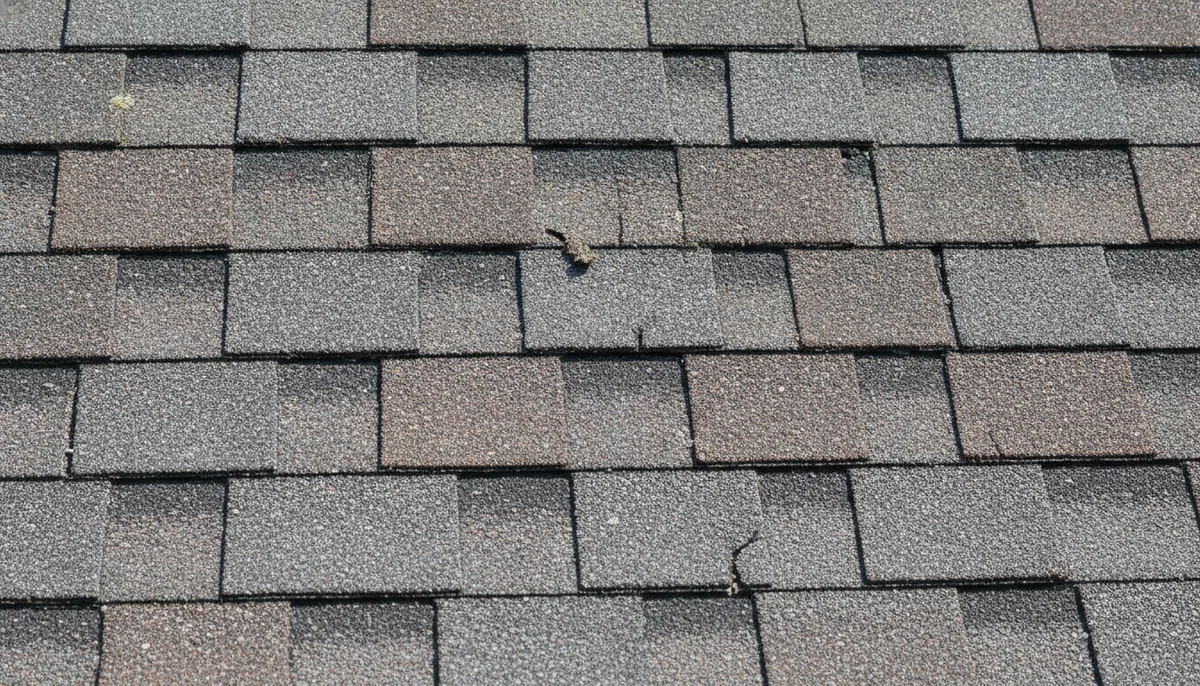
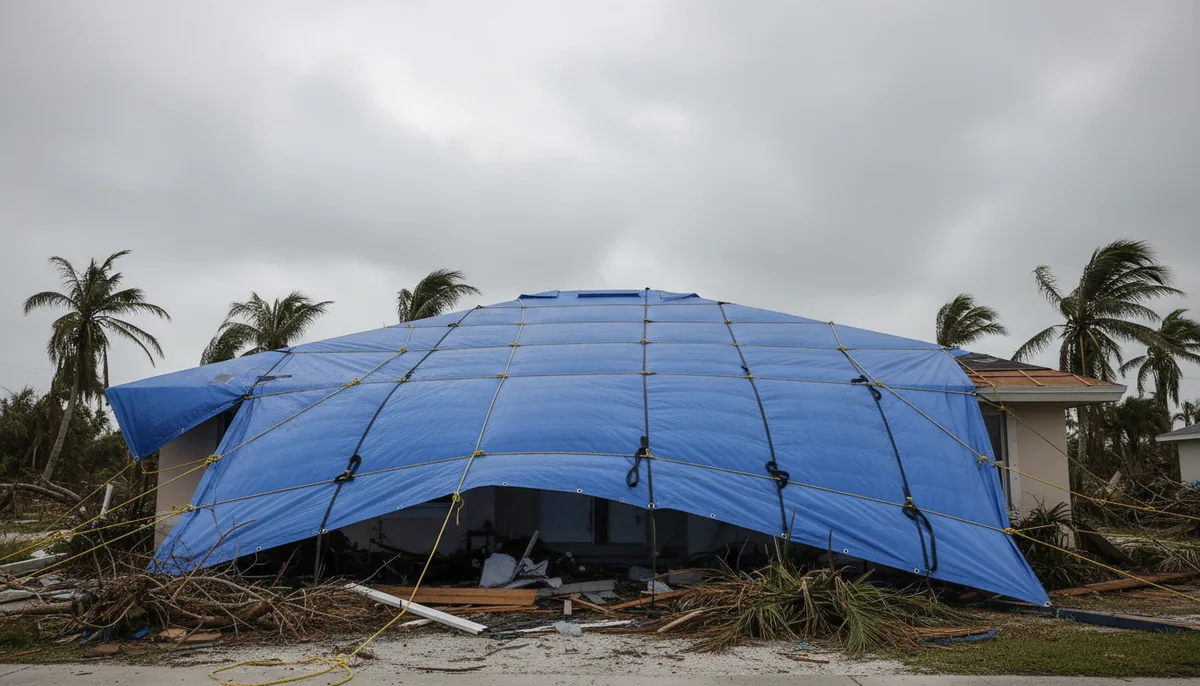
Call it this: it's rarely as bad as the panic feels, and it's rarely as simple as the insurance commercial makes it look. A hurricane throws wind, rain, and debris at your roof from three directions at once. What I see most after a big blow is not missing shingles, it's creased shingles. The wind lifts the tab, folds it over, and slams it back down. It looks fine from the ground. It's broken under the surface. Granules are gone. The next hard rain finds the weak spot.
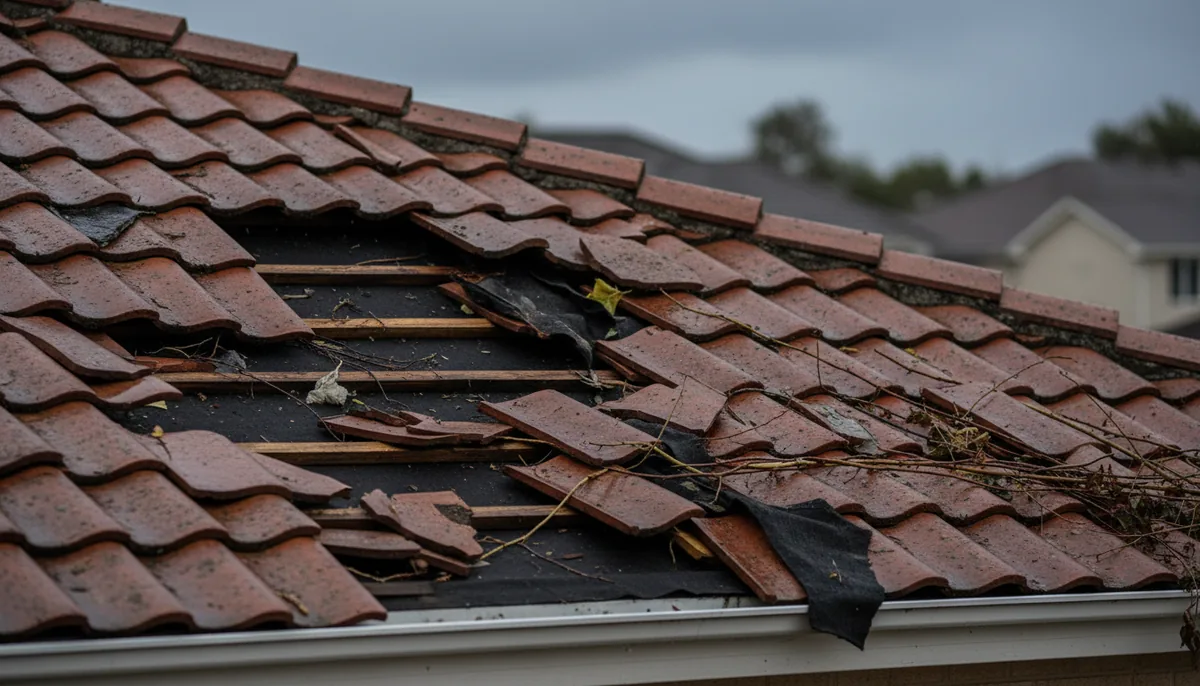
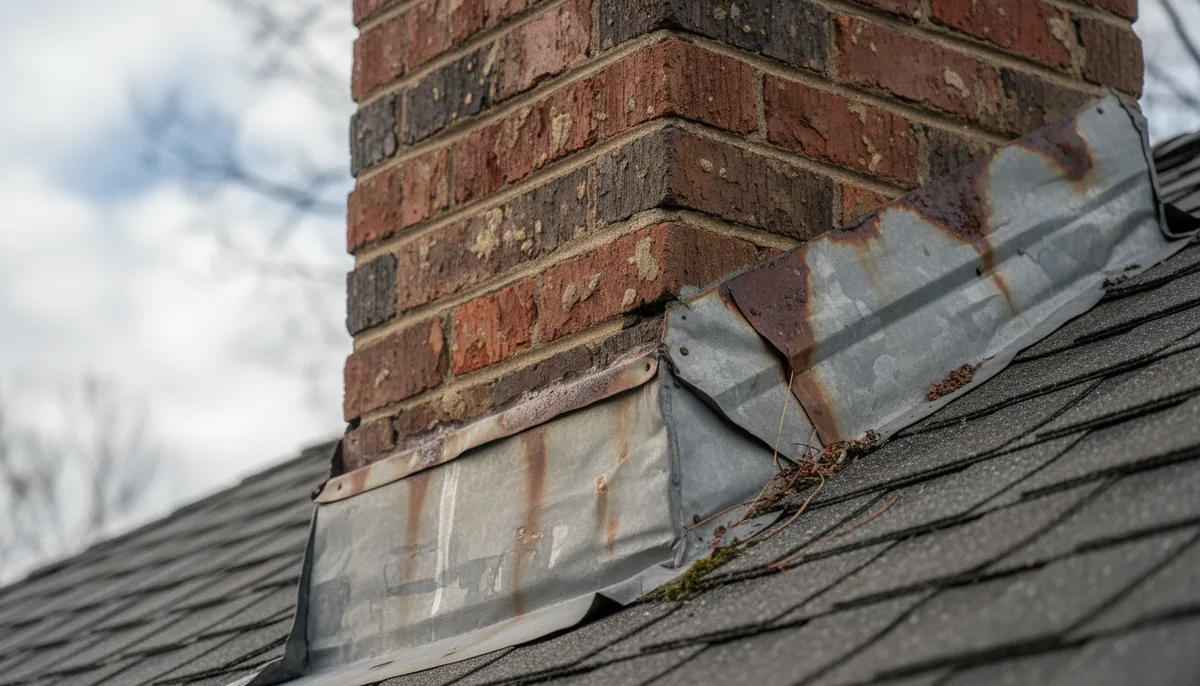
Tile is a different animal. A broken barrel tile here and there is straightforward. But when the wind gets under a tile roof at the eave, it can lift and drop, and the damage pattern repeats every few courses. That's when you need a real inspection, because the fix isn't always to replace the broken ones. The fix is to figure out why the wind got under there in the first place. Flashing, underlayment, the nailing pattern, the hip and ridge caps. On a tile roof the damage you can see is usually the last thing to fail, not the first.
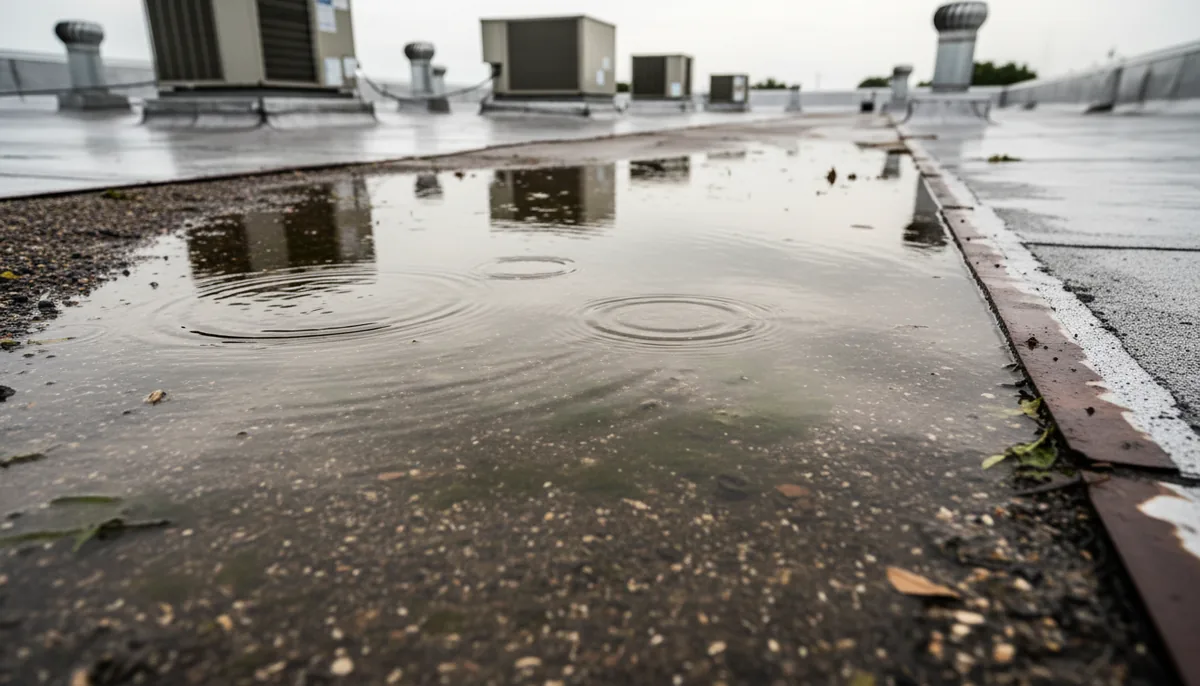
And then you've got the secondary damage, the one that isn't from the storm at all. Water sits in places it never sat before. Wood rots. Mold starts in a dark attic corner. By the time a homeowner calls me, sometimes weeks later, the storm damage and the water damage have blended into one expensive mess.
What I would actually do: get up there or pay a contractor to get up there within a week of the storm. Look at the roof deck from the attic, not just the surface. A creased shingle is a ticking clock. A dark stain on the plywood under an intact shingle means the water found it's way already.
The permit is not optional
You already know roofs cost a lot. Some folks look at the price and decide to pay a guy cash to patch it and keep it off the books. I understand the appeal. I've been doing this for twenty-two years, and I still watch perfectly smart people make that call and regret it.
A roof replacement in Florida requires a permit from the local building department, and an inspection afterward. If a contractor offers to skip the permit, walk away. That's a straight-up rule. An unpermitted roof complicates an insurance claim, and it complicates the sale of the house later. That buyer's inspector will find it. The title company will find it. You'll get a nasty letter from your insurer or your mortgage company, and it will cost you more than the permit fee to fix. Don't do it. I don't do it, and I won't pretend it's fine.
What to check before you hire anyone
Florida roofing contractors are licensed by the state through the Department of Business and Professional Regulation. You can look the license up yourself on the DBPR roll. It takes two minutes.
What you're looking for is the license number prefix. A certified roofing contractor has a "CCC" license and can work anywhere in Florida. A registered contractor has an "RC" license and can only work in the jurisdiction that licensed them. Both are legitimate, but "RC" means exactly what it says: local only. If an "RC" guy is offering to drive two counties over and roof your house, that's a problem.
What I would actually do: look up the license on the DBPR roll before I let anyone on my roof. Check that it's active. Then ask about their worker's comp and liability coverage. Not because they're a bad guy, but because if someone falls off my roof, that's a lawsuit with my name on it, and I want their insurance to be real. The directory does verify licenses against the state roll, so it's worth using as a starting point, but never skip your own two-minute check.
The insurance timeline that bites people
Here's the one that keeps me up at night, because it's not about roofs at all. Under Florida Statute 627.70132, you have to notify your insurer of an initial claim within one year of the date of loss. A supplemental claim gets eighteen months. It used to be three years for both. The clock starts on the date the storm damaged your roof, not the day you notice it. Not the day the adjuster comes. The day it happened.
I have seen a homeowner with a genuinely wrecked roof, a legitimate leak, real damage, and they waited fourteen months to file because they didn't think it was "bad enough yet." Under the law as it stands now, the insurer can deny that claim completely. Even if the policy covers it. Even if the roof is leaking onto the dining room table. Missing that deadline gives the insurer a complete defense. Read your declarations page. Know when your storm happened. Mark the calendar. One year is shorter than you think, and waiting is exactly what the insurance company hopes you do.
Questions I get asked
How do I know if my roof damage is from the storm or just old?
Look at the age of the roof first. If it's near the end of its life, adjusters and contractors will both assume the storm only accelerated what was already happening. Storm damage usually has a pattern. A fallen branch punches a hole. Wind lifts shingles on one slope, the one facing the wind. Old age is scattered, brittle, curling shingles all over the roof. If the damage is isolated to one area and the rest of the roof is sound, it's probably storm-related.
Do I have to file a claim with my insurance company?
No, not if it's under your deductible and not worth the rate increase. But if the damage is real and the repair costs more than your deductible, you should file. The first step is always having the roof inspected and the damage documented. Just remember the one-year clock under Florida Statute 627.70132 starts at the date of loss, so don't sit on it while you decide.
Will my insurance company make me replace the whole roof?
That's not how it works anymore in most cases. The insurer owes you for the covered damage. What the building code requires is between you and your local building department. Since the 2022 change from SB 4-D (2022), if your roof is newer than the 2007 code, you usually only have to fix the part you're working on. An older roof, or one that got seriously damaged, can still trigger a full replacement, but that's a building department decision, not just an insurance one.
Can I repair some damage on my own?
You can, legally, on your own home. But it'll be your workmanship on the line when the next storm hits, and it may not satisfy your insurance company if you later claim the new damage. Storm repair done wrong is how small leaks become structural messes. Know what you're good at. I've seen homeowners fix a single shingle and do a great job. I've also seen a homeowner "fix" a ridge vent and cause a thousand dollars of water damage over the next month.
What's the worst mistake people make after a storm?
Waiting. Waiting for the insurance company to call you back before you get an inspection. Waiting for three estimates. Waiting to see if it leaks. The damage doesn't wait. It gets worse, and the deadline under Florida Statute 627.70132 doesn't wait either. Call a roofer, get the damage documented, file the claim, and then take a breath. The order matters more than the speed.
Is a metal roof better than shingle for Florida storms?
Metal holds up differently. It sheds wind-driven rain better, and it doesn't crease the way shingles do. But a metal roof can still lose panels if the fasteners aren't right, and it's a lot more expensive to repair because you can't just patch one shingle. Tile is heavy and looks great, but it's brittle and the workmanship has to be right under the tile, not on top of it. Every system has a weakness. The contractor matters more than the material, honestley.