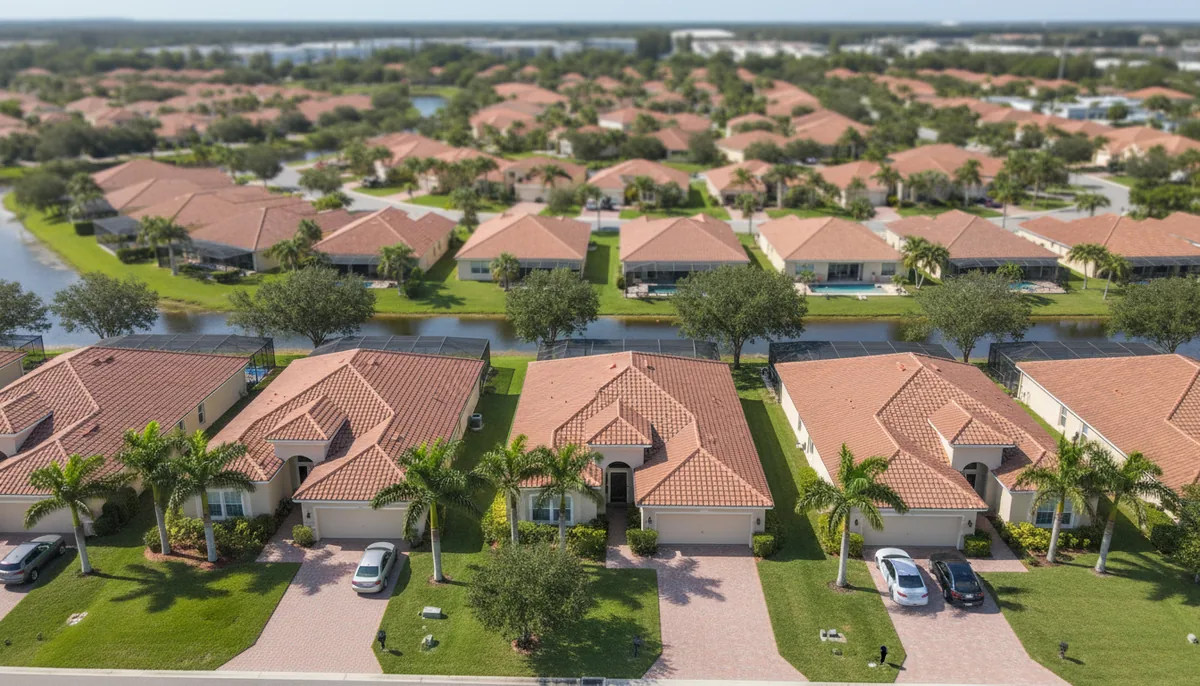
Florida elite roofing: The Florida Guide
By Dale Prescott, Roofing contractor, Central Florida. Reviewed by Hal Winstead, Editor, licensed roofing contractor. I was up on a barrel tile roof in Lakeland, an afternoon in late August, and the homeowner had watched me peel back three layers of shingle and one layer of old wood shake. He asked if we could just patch the valley and call it a day. I pointed at the decking—it crumbled when I poked it with a screwdriver. "Depends what is under there," I told him. That roof was coming off wether he liked it or not.
That is the job. You tear off what the wheather wrecked, you find what the last guy hid, and you put it back so the next storm does not land in somebody's living room. I of run tile and shingle crews between Orlando and the coast for twenty-two years. I have pulled more storm-damaged roofs than I care to count. When people ask me who to call for a job I cannot take, or a town I do not work, I point them to the roofing companies in Florida directory. It beats asking your neighbor's cousin.
What "florida elite roofing" actually means
You will see the term "elite" thrown around on truck magnets and Facebook ads. I get it—nobody wants to advertise themselves as average. But around here, elite is not a marketing word, it is a licence number you can verify, a permit pinned to the building department's website, and a work truck that has been through enough hurricane seasons to know where the weak spots hide.
The state splits roofing contractors into two groups. A certified contractor has a DBPR licence begining CCC and can work anywhere in Florida. A registered contractor has a licence beginning RC and can only work in the local jurisdiction that licensed them. That distinction matters more than any "elite" sticker on a tailgate. Before you let anybody set a ladder on your roof, check that number against the DBPR roll and make sure it is active. The directory does this for you, but you can look it up yourself in two minutes.
Why roofing insurance claims go sideways
A roof replacement in Florida requires a permit pulled from the local building department, and an inspection. That is not paperwork for the sake of paperwork. The inspector is the one person who does not care whether you are happy with the color of your shingles. They care that the decking is solid and the flashing is flashed.
If a contractor offers to skip the permit, walk away. I have been wrong about this before, but not often. An unpermitted roof can complicate an insurance claim worse than a tree through the kitchen. It can also surface at closing when you sell the house, and the buyer's title company starts asking pointed questions about that "new roof" in the disclosures.
The 25% rule is gone—sort of
For years, Florida had a rule that drove more roof replacements than any hurricane. It came from the Florida Building Code: if you repaired more than 25% of your roof in any twelve-month period, you had to bring the whole roof up to current code. That meant a small leak in the wrong spot could force a full replacement. Homeowners hated it. Contractors loved it.
Then SB 4-D (2022) changed the math. If your roof was built, repaired, or replaced under the 2007 Florida Building Code or any later edition, then only the portion you are working on has to meet current code. No more automatic full replacement just because a storm peeled a corner. The catch is timing. The 2007 code took effect on 1 March 2009, so roofs finished before that date generally do not qualify. If your roof predates that, the old rule can still bite you. If not, you might be able to patch that valley after all.
What I would actually do: Call your local building department before you sign anything. Tell them what you are planning and ask whether the 25% rule still applies to your house. They are free. They are official. And they have heard every scheme in the book.
The inspection that pays for itself
Every roofer in Florida knows the wind mitigation inspection. It documents six things: the roof covering, the deck attachment, the roof-to-wall connection, the roof geometry, the secondary water resistance, and the opening protection. That is a mouthful, but it comes down to one question—how well will your roof stay on when the wind tries to take it off?
The standard form is OIR-B1-1802. Florida insurers must offer premium discounts for qualifying features. I cannot tell you what your specific policy covers, because coverage varies by policy. Read your declarations page. But I can tell you the mechanism: the inspection costs something, call it a couple hundred bucks depending on pitch and access, and the annual discount can exceed that in one year. It is the only home improvement I know where the paperwork pays for itself.
Some mitigation credits are for features you already have. Some require upgrades like stronger deck attachments or secondary water barriers. That is where the roofing contractor earns his keep—knowing what the inspector wants to see and what upgrade gives you the most discount for the least money.
What I would actually do: Before you buy a new roof, ask your roofer for a wind mitigation inspection first. If your current roof already scores well, you might not need a replacement as urgently as you think. If it scores poorly, you have a document that tells you exactly what to fix.
Questions I get asked
Is a roof replacement covered by insurance?
Coverage depends on your policy, and I am not an adjuster. Read your declarations page and talk to your agent. I can tell you that an adjuster looks for storm damage, not old age. A roof that failed because it was twenty years old is wear and tear. A roof that lost shingles because a storm blew through is a claim. Sometimes it is both. That is when the adjuster and the roofer have a conversation.
What does a roof replacement cost in Central Florida?
Priced per square, and a square is a ten-foot by ten-foot area of roof. But the total depends on pitch, access, number of layers, decking condition, and the material you choose. I have torn off roofs where the decking was mush and the price jumped. I have also quoted jobs where the old roof came off clean and the homeowner was glad they budgeted a little extra. Get three bids and compare the scope, not just the number.
Who is the best roofing company near me?
I have worked with good crews and bad crews over twenty-two years. The good ones show you their CCC or RC licence number, pull a permit, and let the inspector do their job. The directory verifies licences against the DBPR roll, so start there. Then ask for local references and actually call them.
What is the wind mitigation discount worth?
The discount varies by insurer and by how many qualifying features your roof has. Some policies discount more for a hip roof than a gable. Some want the secondary water barrier. I have seen it make a real difference on premiums, but I have never seen two policies that treated it the same way. Use the inspection form and let your insurer run the numbers.
Should I use the My Safe Florida Home program?
That program exists to help homeowners harden their homes and reduce reliance on insurance. It is worth checking if you qualify. But do your homework on what it covers and what it requires. It is not a blank check, and it does not replace the basic step of verifying your contractor's licence with the DBPR first.
What to actually look for at the estimate
I have been in this trade long enough to know that the guy who shows up in the clean truck with the laminated price sheet is not always the guy who does the work. Ask who is going to be on your roof. Ask if they are employees or subcontractors. Ask what happens if it rains mid-tear-off—because it will rain mid-tear-off, and the answer tells you whether they use tarps or prayers.
Roofing in Florida is not complicated work. It is hard work. The sun cooks you, the decking splinters, and the tile cuts through your gloves if you are not paying attention. You do it enough seasons and you learn to respect the building code, because the code is written in the blood of people who cut corners. The 2007 code, the DBPR licence, the permit inspections—they are all there for the same reason. A roof is the only thing between your family and a Florida thunderstorm.
And when the storm passes, you want to be the one who can say you put it on right. That is what elite means in this trade. Not flashy. Just right. A roof you could put your own family under. That is the standard I try to meet on every job between Orlando and the coast, and the one I hope you hold your contractor to as well.