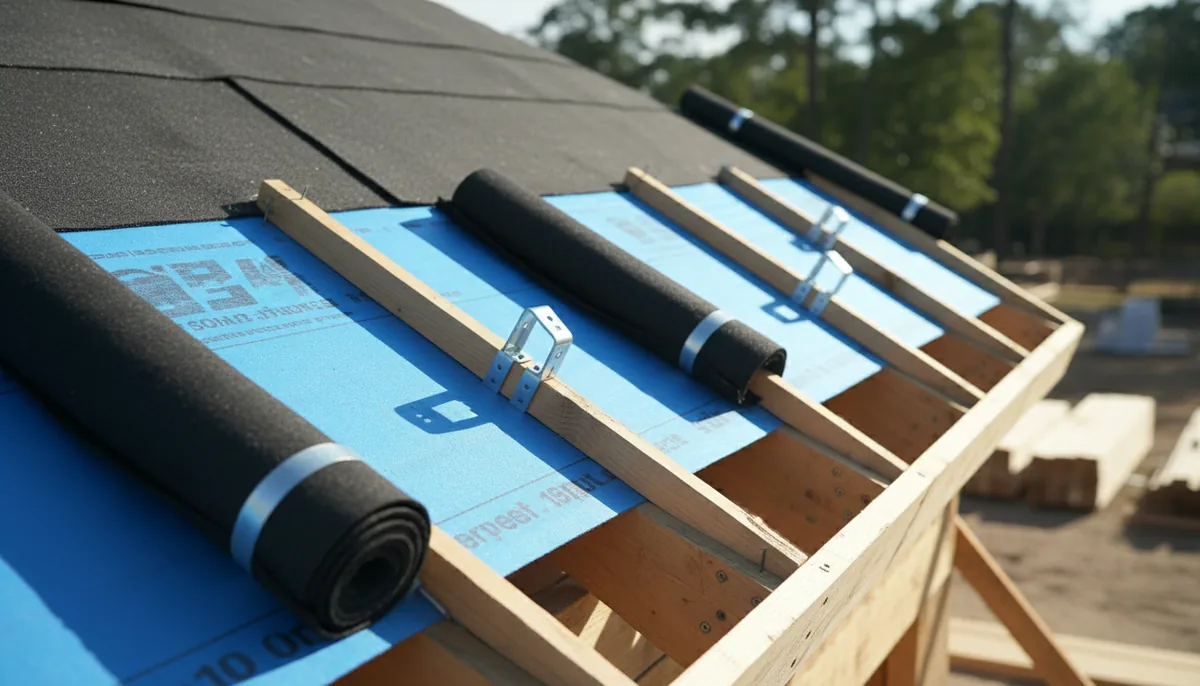
Metal roofing central Florida: The Florida Guide
By Marcy Doleman, Commercial roofing estimator. Reviewed by Hal Winstead, Editor, licensed roofing contractor.
Tuesday afternoon, Orlando, a warehouse roof that had leaked onto a pallet of returns for three weeks. I pulled up on the the roof and half the fasteners around the ridge had backed out an eighth of an inch or more. Water doesn't need much of an invitation, and neither does a bad contractor — so when a building owner asks me where to start with metal roofing companies in Florida, I tell them to use the directory for the shortlist but to do the licence check I describe below before anyone climbs up.
I'm Marcy Doleman, commercial roofing estimator. My work is flat and low-slope roofs across the state — TPO, modified, coatings — and metal keeps landing in my lap because it tends to outlast the alternatives. But that only happens when the roof is detailed right. Central Florida's sun and storms will find every shortcut, given time.
So here's the part I can't put on a bid sheet: how to hire, what permits actualy mean, and the one inspection that can pay for itself. Every roof is different. The rules we work under shouldn't be.
Why I keep telling owners to go metal
Metal roofing central Florida owners ask me about usually comes down to lifespan and fire resistance, give or take a horror story about hail. A good standing-seam panel on a roof that actually drains can serve a building for a long time with less fuss than single-ply. But I won't stand here and promise magic. Metal is loud in the rain. Hail dents it. Forklift exhaust stains it. And a metal panel on too-low a slope will find a way to make you sorry.
For a commercial low-slope roof, I start paying close attention at 1/4:12. Standing seam wants pitch, because the panel expands and contracts as the Florida sun beats down, and the water needs to walk downhill. Exposed fastener panels are cheaper and perfectly fine for a shed or a canopy, but every screw is a future leak. Call it a clue: the fastening pattern is where metal roofs go to die.
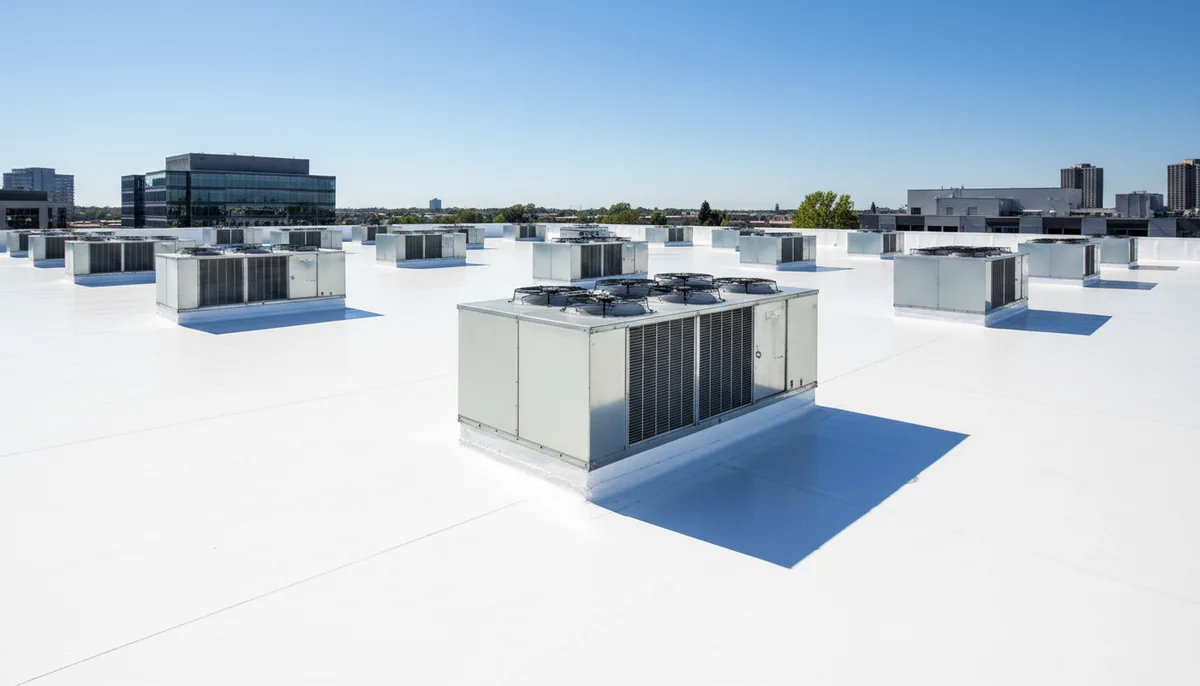
What central Florida sun does to a metal panel
Every roof in this state fights UV and thermal shock. Metal expands when a 2 a.m. Thunderstorm cools a panel that was baking at 3 p.m. That movement is normal. What isn't normal is a fastening system that didn't account for it. Screws back out. Seam gaskets dry up and crack. The metal itself doesn't quit — the little bits holding it down do.
One customer in Lakeland asked me to paint a dark brown metal roof white to cool the warehouse. Fair enough. But they scheduled it for July, then called me complaining the painters could only work thirty minutes at a time. Metal at noon in July is a griddle. We painted at sunrise.
The DBPR licence: CCC and RC matter more than the brand on the truck
Florida roofing contractors are licensed by the Department of Business and Professional Regulation. A certified roofing contractor's licence starts with CCC and works anywhere in the state. A registered contractor's licence starts with RC and is tied to the local jurisdiction that issued it. I've seen an RC contractor show up two counties over and act surprised when the building department flagged the permit. Don't be that building owner.
Always check the number on the state roll. The directory runs that same check, but you should see it with your own eyes before you hand over a deposit. A valid licence is the difference between a contract and a gamble.
What I would actually do: Ask for a photo of their current licence card and check the number on the DBPR roll before anyone takes a deposit. If they tell you the permit isn't neccessary, thank them and call the next name on the list.
Permits, inspections, and the roof that haunts a sale
A roof replacement in Florida requires a permit from the local building department, and the work gets inspected. There's no way around it. A contractor who offers to skip the permit is telling you who they are. Walk away. An unpermitted roof can complicate an insurance claim and sits on the title report when you sell the building.
I pull permits on every reroof, even fastener-and-coating jobs. The building department isn't the enemy. They're a second set of eyes you're not paying for.
Wind mitigation: the inspection that pays you back
Here's where a commercial metal roof can make you money. Florida Statute 627.70132 requires your insurer to offer premium discounts for wind mitigation features, and the standard form is OIR-B1-1802. That form documents roof covering, roof deck attachment, roof-to-wall connections, roof geometry, secondary water resistance, and opening protection. For a metal roof, the deck attachment and roof-to-wall connections can be exactly what keeps the building wrapped together in a hurricane.
Residential owners use this inspection all the time. Commercial owners sometimes don't realize they can, and the discount amount depends on your policy language. Read your declarations page. If you're with Citizens Property Insurance Corporation, the same form applies.
What I would actually do: Ask your insurance agent to inspect the roof with the wind mitigation checklist before you reroof, not after. If the deck attachment is weak, it's cheap to fix while the old roof is off. Later, you're paying to expose the whole deck again.
The rule that changed: no more automatic whole-roof reroof
If you own an older commercial building, you've probably heard of the 25% rule. It used to work like this: touch more than a quarter of your roof in any 12 months, and the building code could make you bring the entire roof up to current standards. That single rule kept owners from making obvious repairs, because they were afraid of triggering a full replacement.
SB 4-D (2022) fixed that for newer roofs. If your roof was built, repaired, or replaced under the 2007 Florida Building Code or any later edition, then only the portion being worked on has to meet current code. A full replacement is no longer automatically on the hook. The catch is that the 2007 code took effect in March 2009, so a roof completed before that date usually doesn't get this grace.
The first question isn't when it was last patched. It's when the roof system was actually installed and what the permit history says. I've been wrong about this before, and the permit records told the truth.
Questions I get asked
Does a metal roof cost more than TPO?
Usually, but I can't give you a square-foot figure from memory because the price depends on panel gauge, clip type, pitch, and how many penetrations are poking throught the deck. What I can tell you is that metal tends to run higher on materials and lower on upkeep. The gap narrows fast if you plan to own the building for the full roof life.
Can I put a metal roof over my existing single-ply or built-up roof?
Yes, but only if the old roof is dry and the new system can vent. I take moisture readings across the whole deck before I'll bid a retrofit. And don't let anyone lay closed-cell foam directly under metal panels on an old roof — it traps moisture against steel and turns a retrofit into a rust farm.
How do I know if my roof qualifies for the SB 4-D change?
Pull the original permit or check the age of the roof system. If it was installed under the 2007 Florida Building Code or later, then only the part you're altering has to meet the current code. Without proof, assume an older roof is still stuck with the old 25% logic.
Can I coat a rusted metal roof instead of replacing it?
Not if the rust has eaten through the panel around the fasteners. Coatings over surface rust and sound metal are a real option, but you need to wash, treat, and prime the metal first. If the panel is perforated, coating is a band-aid. The fastener will let go and take the coating with it.
Should I get a wind mitigation inspection on a commercial building?
Yes. The form doesn't ask if you're residential or commercial; it asks about the roof covering, deck attachment, and roof-to-wall connections. If a metal roof has good clips and proper fastening, the inspection can turn a discount your way. If it doesn't, you find out before hurricane season, not after a claim.
Can a registered RC contractor roof my building in another county?
No. An RC licence only covers the local jurisdiction that issued it. If the job is outside that jurisdiction, the contractor needs a CCC licence or you've got an unlicensed roofer on the roof. I tell people to check the prefix before they check the price.