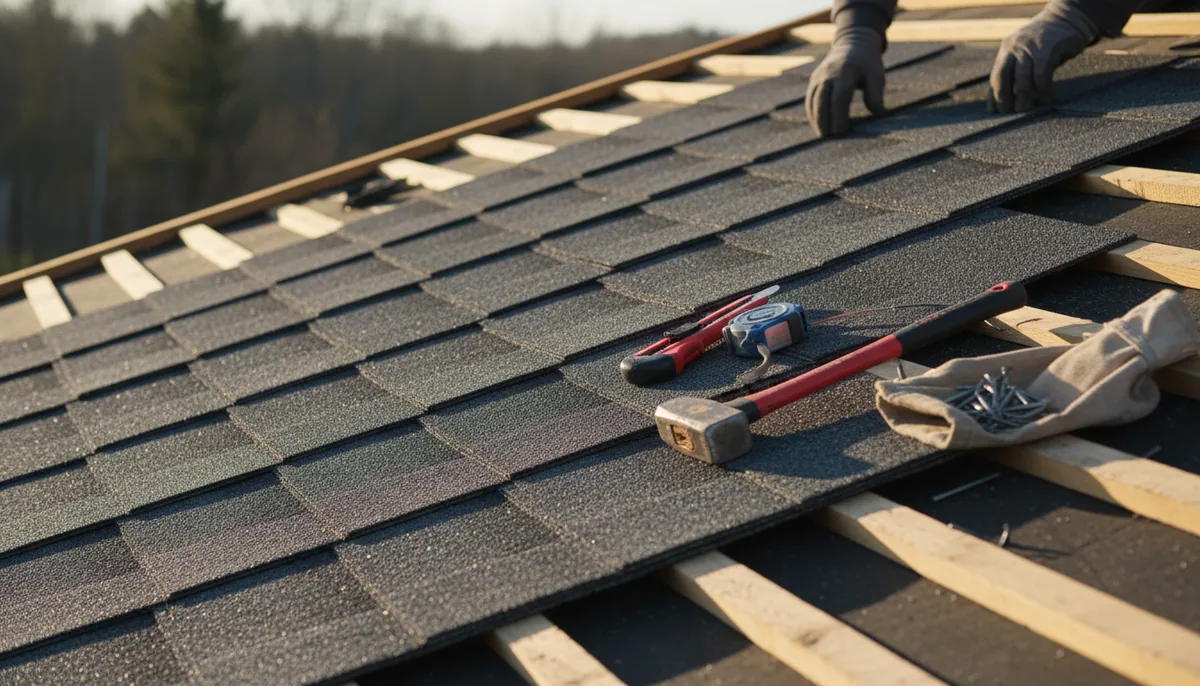
Florida new funding commercial roofing: The Florida Guide
By Marcy Doleman, Commercial roofing estimator. Reviewed by Hal Winstead, Editor, licensed roofing contractor. We were halfway across a warehouse roof in Palmetto when the owner's son finally asked the question he'd been dancing around. The membrane was original TPO from 2009, and the patch we'd just cut back had exposed wet insulation in three seperate spots. "Can't you just patch the bad parts?" he said. "We heard about the 25% rule." I had to give him the good news and the bad news in the same breath. The bad news was that his roof was done. The good news was that the rule he'd heard about had changed, and it might actually be on his side.
I'm Marcy Doleman. I estimate flat and low-slope commercial work—warehouses, retail plazas, schools—all over the state. I've spent more afternoons than I can count on hot decks, a roll of plans in one hand and a moisture meter in the other. And I have watched a lot of building owners nearly make a financial mistake because they were working off rules that no longer apply. That's why resources like the commercial roofing companies in Florida are where I send people to start looking for a legit contractor. But before you pick up the phone, you need to understand the game you're actually playing.
Florida new funding commercial roofing sounds like a simple search phrase. In practice, it means figuring out how a church, a strip mall, or a school board pays for a roof they didn't budget for. Let me walk you through what I've learned the hard way, so you don't have to learn it the same way.
Let's talk money first, because nobody calls me when they have plenty of it
The first question I get is almost always about grants. People hear the phrase "Florida new funding commercial roofing" and they picture a state check with their name on it. I hate to be the one to burst that bubble, but there is no magic pot of free commercial roof money that I have ever found. The state programs that do exist are mostly geared toward homeowners, not commercial landlords.
For a commercial roof, your funding options are essentially this: capital reserves if you planned ahead, a bank loan or line of credit if you didn't, and insurance proceeds if you have a covered claim. I'm not a lender, so I can't tell you which loan product is best. But I can tell you that a full reroof is priced per square, which is roofing speak for 100 square feet. The final number depends heavily on pitch, access, how many layers are coming off, and what is under the membrane that you can't see until the old one is gone. I have been wrong about this before. So build in a contingency.
Straight from the DBPR: do not skip this step
Florida roofing contractors are licensed by the Department of Business and Professional Regulation, and the DBPR licence prefixes CCC and RC tell you a lot about who is standing in front of you. A certified contractor holding a CCC license can work anywhere in the state. A registered contractor holding an RC license cannot. They are only supposed to work in the local jurisdiction that issued their license.
I check the DBPR roll on every job, even for subcontractors I've worked with for years. You should of do the same. It takes two minutes. If a contractor cannot produce an active license number, or if the number doesn't come back to the company you're talking to, end the conversation. That's not a tip, it's a filter. Use it.
The permit is your friend, even when it's a pain in the neck
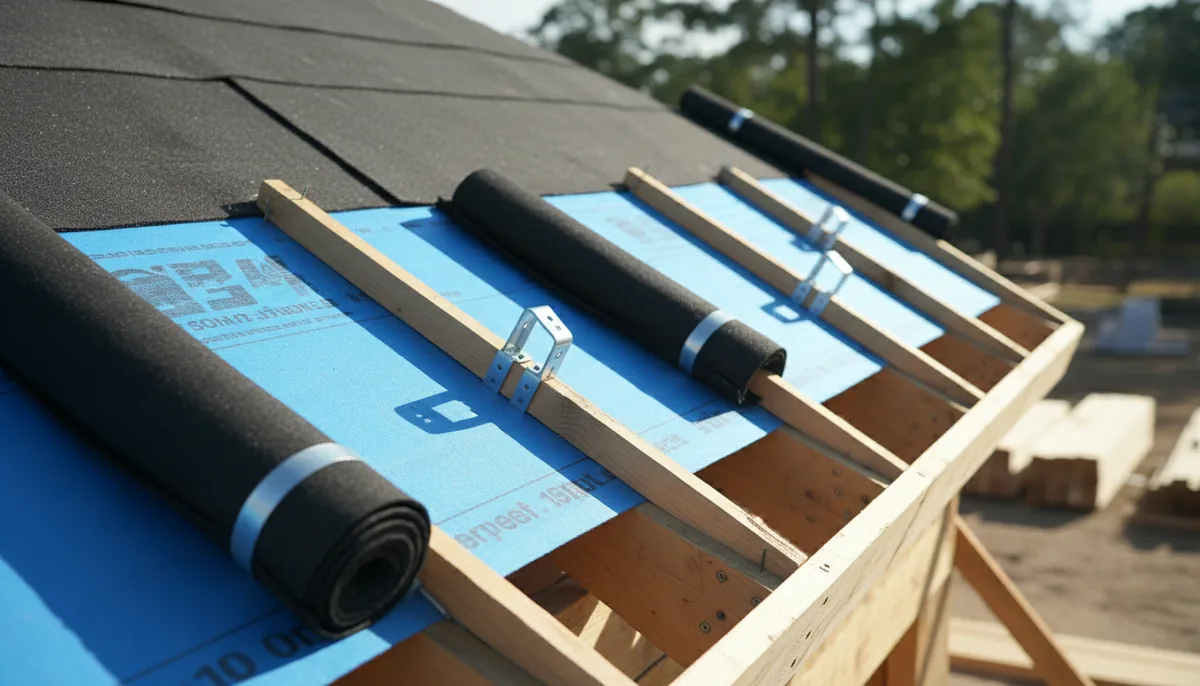
A roof replacement in Florida requires a permit pulled from the local building department, and it requires an inspection. There is no way around this that ends well. A contractor who offers to skip the permit is a contractor to walk away from. I don't care how good their deal sounds.
Here is the risk that people don't see coming. An unpermitted roof can complicate both an insurance claim and a future sale. When you go to sell that warehouse or that church building, the buyer's inspector will eventually find the roof was replaced without a permit. Then the transaction grinds to a halt while everyone scrambles to figure out what was done under the membrane. I have seen deals die over this. It is not worth the paper you think you're saving.
What I would actually do: Before you sign anything, ask the contractor to pull the permit themselves. Then call the local building department the next day and confirm it was issued. If the contractor hesitates or starts explaining why you don't need one, show them the door.
It's not your daddy's 25% rule anymore
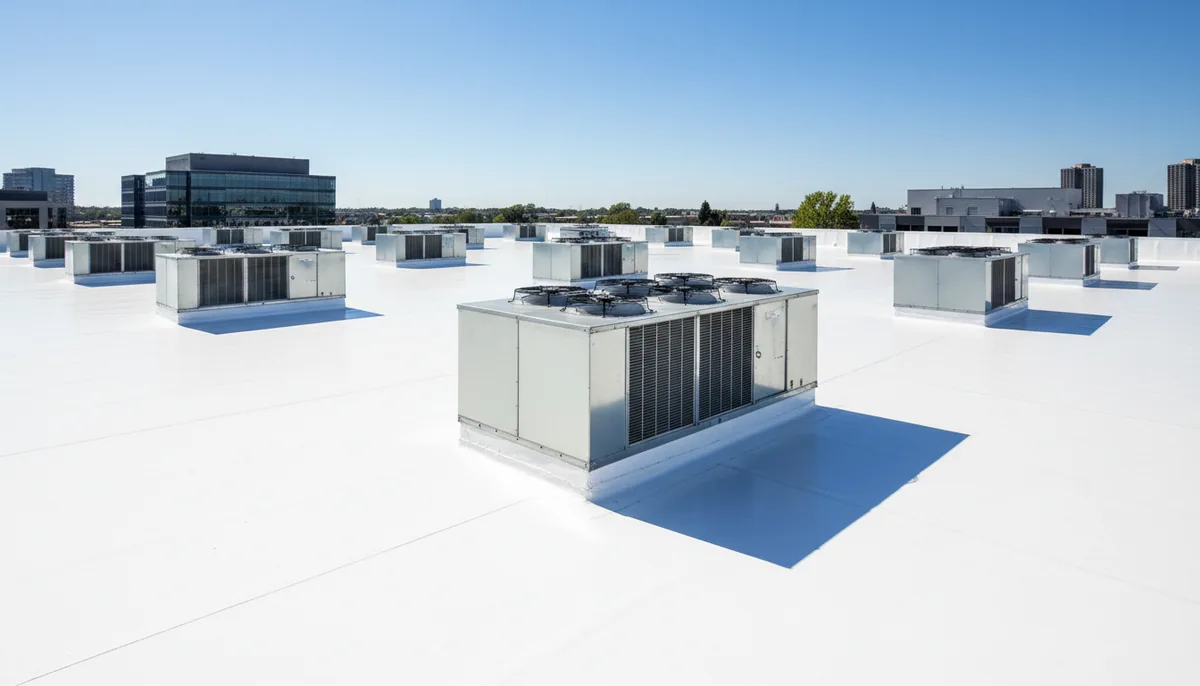
If you've been around Florida roofs for a while, you know the old rule. It came from the Florida Building Code, and it said that if you repaired or replaced more than 25% of a roof in any 12-month period, you had to bring the whole roof up to current code. That was a real trigger for a lot of expensive, unplanned full reroofs.
Then came SB 4-D (2022), which went into effect on May 26, 2022. This changed the game. If your roof was built, repaired, or replaced to the 2007 Florida Building Code or any later edition, then only the portion being worked on has to meet current code. A full replacement is no longer automatically triggered. The key date here is March 1, 2009, when the 2007 code actually took effect. So if your roof was completed before that date, it generally doesn't qualify for the relaxed rule.
I want to be careful here because I am not a lawyer. But I have seen this play out on actual jobs. A warehouse in Lakeland had a 2010 roof with a failing section over the old office area. Under the old rule, patching that section might have pulled the entire roof into a full replacement. Under the new rule, they repaired the damaged section and left the good roof alone. That saved the owner tens of thousands of dollars.
What I would actually do: Get a copy of the original roof permit or the closeout paperwork from the original installation. If you can prove the roof was completed after early 2009, you have a much better negotiating position with your contractor and your local building official. If the roof is from the 1990s, assume the full replacement is coming.
What your insurance actually pays for depends on your policy
The hardest part of my job is delivering the news that a roof is failing and the insurance company won't cover it because it's a maintenance issue. Wheather damage, falling limbs, hail—those are the things that usually get covered. A roof that is simply old and leaking is not typically a covered peril. That is a maintenance expense.
Florida Statute 627.70132 is something I see referenced on many policy documents, but what it covers varies by policy. I am not a licensed adjuster, and I will not pretend to be one. My advice is simple: read your declarations page and your policy language, then call your agent and ask direct questions. Ask them, in writing, wether your specific roof claim would be covered. Get the answer in an email. Policies have gotten far more restrictive in the last few years, and what your neighbor's policy covers may not be what your policy covers.
A wind mitigation inspection can pay for itself every year
Here is one thing that almost always puts money back in your pocket, and it's not a loan or a grant. A wind mitigation inspection is a documented way to identify features that make your roof more resistant to wind damage. It looks at the roof covering, the roof deck attachment, the roof-to-wall connection, the roof geometry, the secondary water resistance, and the opening protection on the structure.
The standard form for this is OIR-B1-1802. When the inspection is complete, your insurance company is required to offer premium discounts for qualifying features. I have seen the discount be substantial. The inspection typically costs far less than the annual discount it unlocks, which means it often pays for itself in the first year after the roof is complete. I tell every building owner to do this right after a new roof is installed. Getting that credit locked in early means you get the benefit for the entire life of the membrane.
Flood insurance is a different machine entirely. That's federal, and it has it's own rules. This wind mitigation thing is about wind, not water, and you need to know the difference when you're talking to your agent. I have seen owners confuse the two and miss out on the wind discount because they assumed it didn't apply.
Questions I get asked
How long does a full commercial reroof actually take?
Depends entirely on the size of the building and the weather. A small retail plaza might take a week and a half. A large warehouse could take a month or more. I always tell people to plan for the weather delays, because Florida will find a way to rain on your parade at the worst possible moment. Give or take a few days, you're looking at two to six weeks from tear-off to final inspection.
Can I just coat the old roof instead of replacing it?
Sometimes, yes. If the substrate is dry and the membrane is intact but just deteriorating on the surface, a coating system can extend the life of the roof. But a coating will not fix wet insulation, and it will not fix a membrane that has lost its ability to shed water. I have seen people spend good money on a coating over a roof that was already dead. The coating just delayed the inevitable and cost them twice. It depends what is under there.
Why do the estimates I got vary so much?
That is one of the most frustrating parts for building owners. The range in price can be huge. It comes down to what each contractor is planning to do once the old roof is off. One contractor might be planning to reuse the existing cover board. Another might be planning to tear it all down to the steel deck. Those are two very different jobs with different risk profiles and different price tags. Ask each contractor for a line-item breakdown of exactly what is included in the scope.
What happens if my roof is leaking right now?
You need temporary stabilization before you call me. Get a roofer out there to tarp the affected areas or patch the obvious holes to stop active water intrusion. That is priority number one. Then you can take a breath and start planning the real repair or replacement. Emergency work is almost always more expensive than planned work, so do the emergency patch and then negotiate the long-term fix calmly.
Is there state money for a commercial roof?
Not in the form of a direct grant that I have ever seen for a commercial building. The My Safe Florida Home program is a real thing, but it is a residential program. It helps homeowners harden their homes against hurricanes. It does not apply to warehouses, retail plazas, or schools trying to fund a commercial roof. For commercial property, your budget comes from your own reserves, a lender, or an insurance settlement for a covered claim.
How do I verify a contractor is actually licensed?
Go to the DBPR website and search the license roll. Look up the name on the side of the truck, not just the person you've been emailing with. The license needs to be active, and the classification needs to be for roofing. There is a difference between a general contractor and a roofing contractor. Make sure the license number you're given matches the business you're hiring. I have seen people get a great sales pitch from a company whose license was revoked two years ago. The DBPR roll would have told them in thirty seconds.