Florida roof damage lawyers — How Bad Is It, Really?
By Dale Prescott, Roofing contractor, Central Florida. Reviewed by Hal Winstead, Editor, licensed roofing contractor.
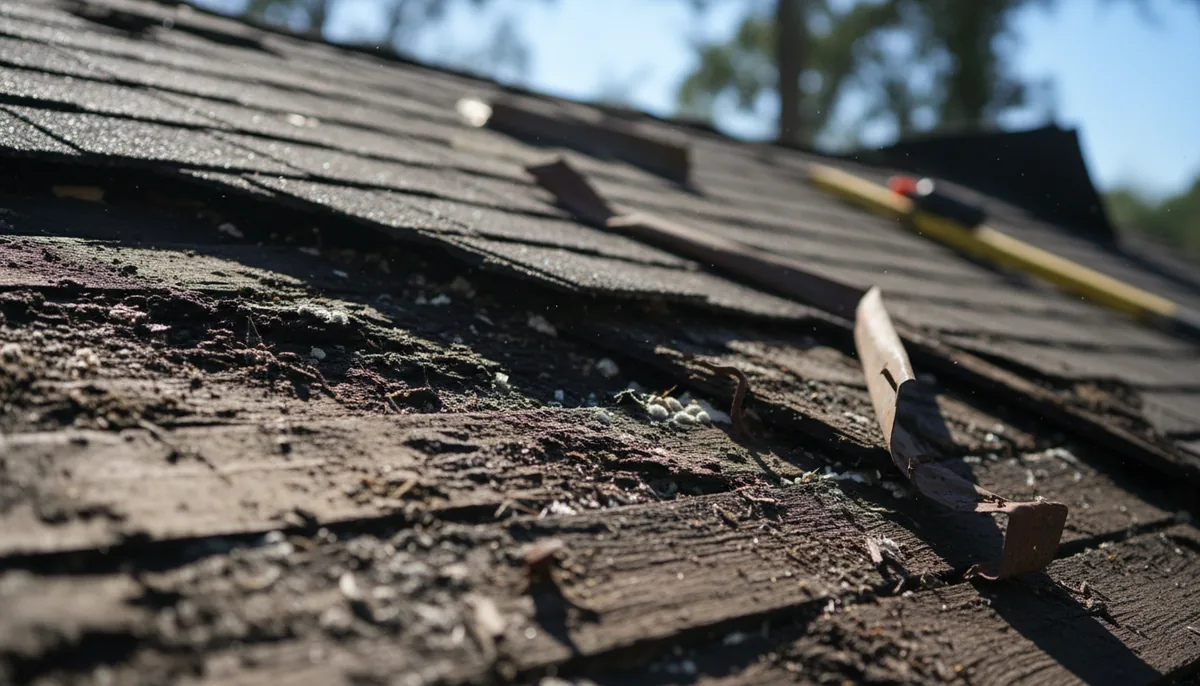
I was standing on a cracked barrel tile in Polk County, not far from the Polk Parkway, about two o’clock on a July afternoon. The homeowner had watched the same storm rip a palm frond across his ridge line, and he wanted me to tell him the insurance company was going to cover it. I’d already seen the half-inch gap under the hip. I’d already felt the decking give. I told him the real problem wasn’t the missing tile. It was the date on his policy and the last time he had his roof done. He looked at me like I’d cursed at his mother.
That conversation comes back to me every time somebody Googles “florida roof damage lawyers” before they’ve even gotten a contractor to look at the damage. The lawyers have gotten famous down here for a reason. But you do not need a lawyer to file a claim. You need a lawyer when the claim goes sideways. And nine times out of ten, it goes sideways for a reason you could have seen coming if somebody had explained the actual rules to you. The best I can do is explain the rules from my side of the roof, because I’ve torn off more storm-damaged roofs than I care to count, and I’ve watched the legal end of this business change everything about how we work. If you need someone to climb up there and tell you the truth about your particular roof, you can find a list of contractors who work this region at the roofing companies in Florida. Just make sure you verify their license before you let them on the ladder.
I’m not a lawyer. I’m not an adjuster. I’m the guy who shows up with a pry bar and a dump trailer. But I of to stay current on the rules, because the rules now decide wether I’m replacing ten squares or the whole dang roof. The biggest change in my twenty-two years happened in May 2022, when the legislature rewrote the old 25% rule. That rule was a beast. If a roofer touched more than a quarter of your roof in a year, the building department could force the whole roof up to the current code. That meant a small storm repair could trigger a full replacement. It made lawyers very happy. It made insurance companies very angry. And it made alot of homeowners very confused about who owed them what.
SB 4-D (2022) changed that math. Now, if your roof was built or repaired under the 2007 Florida Building Code or anything newer, you don’t automatically have to tear the whole roof off just because half got damaged. We only have to bring the section we’re actually touching up to code. But here’s the catch I always explain to homeowners with older roofs. If your roof was done before March 2009, that older roof does not qualify for the relaxation. You still get the full replacement trigger. That one date decides the whole ballgame, and I have been wrong about this before, so I always ask to see the permit or the paperwork before I quote a repair job.
Why does that matter for a lawyer? Because insurance policies usually owe you for the cost to repair the damaged portion, not to upgrade the undamaged part of an old roof. If the law makes you replace the whole thing, there is suddenly a huge gap between what the company wants to pay and what the building department makes you spend. That gap is the lawyers’ territory. That gap is where a lot of the “Florida roof damage lawyers” advertising comes in. But before you call one, you need to understand the deadline, because that’s what kills more claims than any lawyer can save.
Here is the thing that makes me want to throw my clipboard across the yard. The deadline is not measured from when you noticed the leak. It is measured from the date the storm hit your roof. Under Florida Statute 627.70132, you have to give your insurance company notice of an initial claim within one year of the date of loss. A supplemental claim, which is when you find more damage after the adjuster already left, gets eighteen months. That used to be a three-year window. The legislature cut it down in 2022. If you miss that date, the insurer can deny a completely covered loss, and there is not a lawyer in the state who can force them to pay. People call me in November for damage I remember from a February hailstorm. By the time I get there, the clock already ran out. It does not matter that the leak was hidden. It does not matter that you didn’t know. The day the damage happened is the day the clock started.
So my first piece of advice to anyone searching “florida roof damage lawyers” is to check the calendar before you check your policy. What was the date of loss? Can you prove it? If you have a storm date, write it down. Save the wheather report. Save the text you sent your neighbor about the hail. That date is your whole case.
What I would actually do: If a storm hit last month and you think you have damage, call a roofer first, not a lawyer. Get a written opinion with photos and a copy of the permit history. Then file the claim yourself. Lawyers are for after the denial, not before the estimate.
Now, let’s talk about the permit game, because this is where I sound like a nagging father. A roof replacement in Florida requires a permit pulled from your local building department and an inspection. That is not optional. It is the law. A contractor who offers to skip the permit to save you money or time is a contractor you should walk away from immediately. I don’t care how good his Facebook photos look. An unpermitted roof is a nightmare. First, the insurance company can deny your claim because the work wasn’t done to code. Second, when you sell the house, the buyer’s inspector will find it, and your sale will collapse. Third, and this is the part people don’t think about, your insurance adjuster might ask to see the permit history just to confirm the roof is as old as you say. If there’s no permit, the age gets murky, and murky means denial. The DBPR licence prefixes CCC and RC tell you whether a contractor can work at all, but the permit is the local proof we actually did the job right.
Speaking of licences, I’ll tell you how to spot a real roofer. The state licenses us through the Department of Business and Professional Regulation. A certified contractor has a license that starts with CCC and can work anywhere in Florida. A registered contractor starts with RC and is stuck working in the county or city that issued it. I’m certified. A lot of the guys running storm-chaser crews down from out of state are not even registered here. They work under somebody else’s license or they just don’t care. Always check the DBPR roll before you sign anything. It takes two minutes. It saves you from a guy who takes your deposit and disappears before the dry-in goes on. I have seen it happen to a widow in Lakeland who paid a man with a handshake and a truck. He never pulled a permit. He never came back. She lost eleven thousand dollars and gained a tarp.
A lawyer cannot fix that mistake for you. The lawyer can sue the ghost, but you cannot collect from a ghost.
So how bad is it, really, this whole florida roof damage lawyers situation? Depends on what you mean. If you mean the lawsuit culture, it has died down quite a bit since the 2022 law changes. The old days of a roofer knocking on your door, handing you a lawyer’s card, and telling you to sign an assignment of benefits so they could sue your insurer directly—those days are mostly gone. The law stopped a lot of that abuse. If you mean the actual need for a lawyer after a legitimate hurricane claim, it still happens. The insurance companies are not in the business of writing big checks without a fight. But what a lawyer does is interpret policy language and threaten litigation. He cannot make a storm have happened on a different date. He cannot make an old roof new. He cannot make the building inspector ignore the code.
The thing that actually causes most of the lawsuits I see is not the roofer’s estimate. It’s the insurance company’s lowball on the age of the roof. A twenty-year-old asphalt shingle roof in Florida is living on borrowed time. The insurer doesn’t care how well the shingles look from the street. They care about the expected remaining life. They depreciate the claim based on that age, and if the roof is old enough, they offer you the “actual cash value,” which means they subtract depreciation and give you maybe a third of the replacement cost. That’s when the homeowner calls a lawyer. And the lawyer files a lawsuit. And then the insurer sends a different adjuster who suddenly finds more damage, because the legal department doesn’t want to go to court over a fifteen-hundred-dollar difference.
I am not cynical about all lawyers. I have worked with a few good ones who genuinely helped my customers get a fair settlement. But the good ones will always tell you the same thing I am telling you now. Read your policy declarations page first. Check your deductible. That deductible in Florida is often a seperate hurricane deductible, and it’s usually a percentage of the home’s insured value, not a flat thousand dollars. People see a $2,000 deductible on their auto policy and assume the roof deductible is the same. On a $300,000 house, a 2% hurricane deductible is six grand. If the damage is only four grand of repairs, you don’t have a claim. You have a maintenance expense. Nobody tells you that at the door.
What I would actually do: If I smelled a rotten deck under tile in July, I would take a black sharpie and write the date of loss on the rafters. Then I’d take a video of it. Then I’d call my own agent—not a claims hotline—and ask them to walk me through the deductible and the age of the roof before I ever filed anything.
Let me tell you about the one digression I feel entitled to, because I’ve been doing this for over two decades and the weather changes but the customers stay the same. I had a man in Winter Haven call me out for a “small leak.” I get there and his living room ceiling is sagging like a water balloon. There’s a bucket catching a steady drip. He’s standing there with a cup of coffee, asking if I can just patch the one spot from the inside so he doesn’t have to make an insurance claim. Sir. The roof deck is gone. The insulation is wet. The drywall is coming down. You have a structural problem, not a leak. He argued with me for ten minutes about the deductible. Then he asked if I could “wait a week for the rain to stop” before I tarped it. It was already raining. That’s what the ceiling was telling him. People will do anything to avoid the paperwork, but the paperwork is cheaper than a new ceiling fan that’s about to become a ceiling anchor.
How much does a roof actually cost these days? I get asked that more than anything else. The honest answer is it’s priced by the square, which is ten feet by ten feet of roof surface, not the floor area of your house. The price depends on the pitch, the number of layers, the type of tile or shingle, and the access. A steep two-story tile roof with a pool below and no trees to tie off to is going to cost a whole lot more than a single-story asphalt tear-off with a flat yard. I can tell you cost ranges until I’m blue in the face, but the real number only comes after someone measures your roof and checks what is under there. Don’t trust a phone quote. Trust a guy with a ladder and a measuring wheel.
Now for the questions I actually get asked at the kitchen table.
Do I call a lawyer before I call the insurance company?
No. Call your insurance company first, or have a roofer document the damage first. A lawyer cannot make an uninsured loss appear. And if you haven’t missed the deadline, the claim process is designed to handle it. The lawyer is the escalation, not the starting point.
What if the one-year deadline has already passed?
Then you are probably out of luck on the insurance claim, no matter how good your case is. The law gives the insurer a complete defense if you missed the deadline. I have seen adjusters deny claims the day after the anniversary. You could still sue under a separate legal theory, but that’s a conversation for a lawyer, not a roofer. The minute you realize you missed it, go ahead and make that call.
The adjuster said my roof is “repairable” but my roofer says it needs a full replacement. Who is right?
Probably both of them, depending on the code and the age of the roof. The adjuster is looking at the damage under the policy language. The roofer is looking at what the building inspector will pass. That gap is exactly how florida roof damage lawyers earn their keep. Get a copy of the adjuster’s report, compare it to the roofer’s written estimate, and ask the roofer to explain the code citation in plain English. If the roofer’s argument is solid, send it to the adjuster. If the adjuster still won’t budge, then you call the lawyer.
Should I use the insurance company’s recommended roofer?
You can, but get your own estimate from a separate licensed contractor first. The insurer’s roofer works for the company that’s paying your claim. That doesn’t make them dishonest, but it doesn’t make them your advocate either. Your roofer should be on your side of the fence, and your roofer should have no financial reason to inflate the claim. I tell homeowners to get two or three estimates from different companies and compare the line items. If they all say the same thing, you know the truth.
Does Citizens have different rules?
Citizens Property Insurance Corporation is the state-backed insurer of last resort, and a lot of people here end up with them after private companies drop their policies. I have seen Citizens claims handled slower than private ones, but the same deadline rules apply to them. The policy language is still the policy language. Read your own Citizens declarations page, because their requirements for roof age and condition are strict, and they change more often than the private carriers.
Is there any state help for replacing my roof?
There used to be grant programs, and My Safe Florida Home still exists for wind mitigation improvements, not straight replacements. It will pay for things like better roof-to-wall connections and secondary water barriers, not necessarily a brand-new roof. That program has waiting lists and funding limits. If you’re shopping for help with a repair, call them directly and ask what the current status is. Don’t trust a contractor who says he can get you “free money.” That’s a sales pitch, not a program., my advice to somebody searching “florida roof damage lawyers” is this. Figure out the date of the storm. Read the actual policy, the one you’ve been paying for every month. Look at the deductible and the roof age. Then get a licensed roofer to write down what the roof needs and why. If all that points toward a dispute, then by all means call a lawyer. Just don’t make the lawyer your first call, because the law gave you a deadline and the roofing gave you a leak, and neither one cares about your busy schedule. I’ll be out there with a pry bar either way.