Florida roofing contract: The Florida Guide
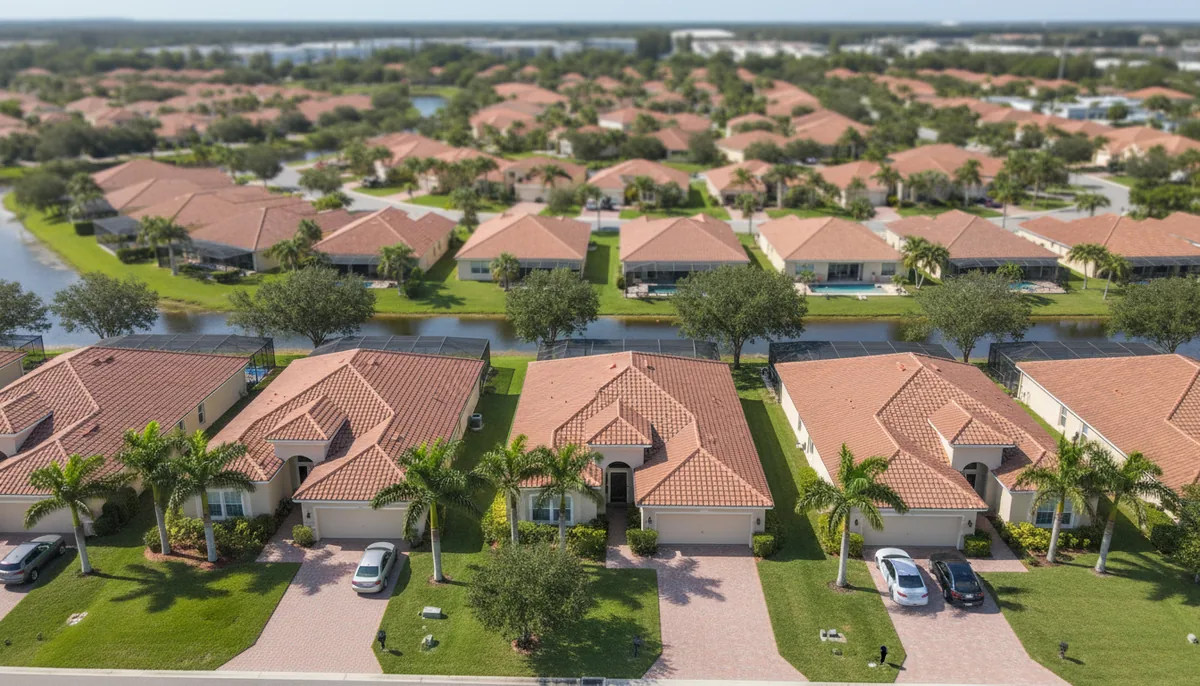
By Dale Prescott, Roofing contractor, Central Florida. Reviewed by Hal Winstead, Editor, licensed roofing contractor. That afternoon in March 2017, the sky over Kissimmee went the color of a bad bruise, and by the time the front passed, half the barrel tile on a two-story over near Oak Street was scattered across the lawn. The owner had a contract with a registered roofer from a county two hours north, who was not allowed to work outside that county. When I showed up to redo the job, the first thing I asked the owner was wether he'd looked at the roofing companies in Florida directory and checked the license prefixes. He hadn't. He'd trusted a contract that didn't say "CCC" or "RC" or anything at all.
I've been running tile and shingle crews between Orlando and the coast for twenty-two years. I've torn off more storm-damaged roofs than I care to count. That storm did plenty of damage on it's own, but the damage that really cost that homeowner money came from a signature on the wrong piece of paper. A contract that never named the license type, never mentioned a permit, and never said who would pull it. You can fix a roof. You can't unfix a bad contract.
So here is what I tell people when they ask what to look for. Not legal advice, mind you — I'm a roofer, not a lawyer, and I have been wrong about this before. But I have also watched enough homeowners sign things they didn't understand. A Florida roofing contract is supposed to protect you. Most of the time, it protects somebody else.
The three letters that tell you if the roofer can work in your town
Florida roofing contractors are licensed by the Department of Business and Professional Regulation, and that license number on the contract matters more than the fancy logo. A certified roofing contractor holds a licence with the prefix CCC and can work anywhere in the state. A registered contractor holds a prefix RC and can only work in the county or city that issued that license. It is a hard boundary. Cross it, and the contractor is working illegally, and so is the roof.
I have shown up to more than one job where the first crew had already been there, torn off half the shingles, and vanished. The homeowner pointed to a contract that said "roofing services" and alot of fine print. The license number had an RC prefix from a county three hours away. That contract was never worth the paper it was printed on.
What I would actualy do: Check that license number against the DBPR roll before the estimator finishes his pitch. Match the prefix to your county. If it says RC and you're outside that jurisdiction, walk away. If it says CCC, you're still not done, but you're at least starting in the right place.
A contract that says "no permit" is a contract to throw away
A roof replacement in Florida requires a permit pulled from the local building department. It also requires an inspection. That's not bureaucracy for the sake of it; that is a second pair of eyes on something that has to keep rain out of your bedroom for the next twenty years. So when a contractor tells you that you don't need a permit, what he is really telling you is that he doesn't want anybody looking over his shoulder.
I had a customer once — nice lady, retired teacher — who signed a contract that said "cash price, no permit, no inspection." She thought she was saving a hundred bucks. The unpermitted roof failed when she tried to sell the house three years later, and the buyer's inspector flagged the whole thing. She had to pay to have the roof inspected retroactively, then pay for the repairs the inspector made her do, then pay for the permit she avoided in the first place. Cheap roof, expensive story.
Call it common sense, but a permit paragraph should be in there. It should say who pulls the permit, who pays for it, and who schedules the inspection. If that paragraph is missing, ask why. If the answer sounds like a reason to run, then run.
The 25% rule and the day SB 4-D (2022) changed it
For years, the old rule in Florida was pretty blunt: if you repaired or replaced more than 25% of a roof in any twelve-month period, you had to bring the whole roof up to current code. That pushed a lot of homeowners into full replacements they didn't plan for. A contractor would come out to patch a leak, measure the square footage, and realize the repair was going to trigger a whole new roof. That was the law, and it was expensive.
Then SB 4-D (2022) came along. The change: if your roof was built, repaired, or replaced under the 2007 Florida Building Code or any later edition, then only the section being worked on has to meet current code. A repair no longer automatically forces a full replacement. The catch is the date. The 2007 code edition took effect on March 1, 2009. So if your roof went on before that date, the old rule still applies to you, depending on the specifics. That matters when you're writing a contract for a repair, and it matters when an insurance adjuster is staring at a line item.
What I would actually do: Before you let anyone quote you a "small repair," ask whether your roof was installed before March 1, 2009. If it was, understand that the scope of work may be bigger than the leak. And get the contractor to put in writing which code edition they're using for the bid. A good roofer won't blink at that. A bad one will try to talk around it.
Wind mitigation inspections are a line-item you should fight to include
A wind mitigation inspection is not a roof inspection. It is a documented look at six specific things: roof covering, roof deck attachment, roof-to-wall connection, roof geometry, secondary water resistance, and opening protection. In Florida, insurers are required to offer premium discounts for qualifying features, and the standard form is OIR-B1-1802. Honda Civic money for the inspection. Sometimes less. What you get back on your annual premium can easily pay for it in the first year.
I have had homeowners tell me they don't want to pay for a wind mitigation inspection because they're not replacing their roof. But you don't need a new roof to get the discount. The inspection just documents what is already there. If your roof has the right clips, the right nailing, the right decking, you might already qualify. You just haven't proven it to the insurance company.
Here's the catch I've seen hang people up: the inspection form has to be filled out by someone authorized to do it. A roofer can do the inspection, but the insurance company has requirements about who signs it. So read your policy, read the form, and make sure the person doing the inspection is actually qualified to produce the form your insurer will accept. Not every roofing contractor does this. Ask specifically.

The part of a Florida roofing contract that nobody reads
Somewhere near the back, after the payment schedule and the warranty language, there is usually a paragraph about assignments and rights. That is the part where things get sticky. In Florida, there are laws about assignment of post-loss insurance benefits, and I am not going to pretend to be a lawyer who understands every twist of them. What I know from twenty-two years on roofs is this: if a contract asks you to sign over your insurance claim rights to the contractor, read that line three times. It might make the contractor richer. It might also make it very hard for you to complain later.
Also, no contractor can honestley promise you that your insurance is going to cover a new roof. Coverage varies by policy. The only way to know what yours covers is to read the declarations page. If you have insurance through Citizens Property Insurance Corporation, that paperwork has its own quirks. Treat it the same way: read it, ask questions, and don't sign anything that hands over your rights in the same breath as the estimate.
Questions I get asked
Should I get more than one bid for my roofing job?
Yes. Get at least three. But don't just compare the bottom number. Compare the license prefixes, the permit language, the material specs, and the warranty terms. I have seen a low bid turn out to be the most expensive bid because it skipped everything I just talked about.
Can a contractor legally ask me to pay in cash?
A contractor can ask, but you don't have to. Cash has a way of making paperwork disappear. If you pay cash and the roofer skips town, there is no canceled check, no credit card dispute, no trail. The contract should state the payment method, and the schedule should be tied to completed work and inspections.
What does "insurance required" mean on a roofing contract?
It should mean the contractor carries workers' compensation and liability insurance. But on a Florida roofing contract, the phrase sometimes just gets written without proof. Ask to see the certificate of insurance, and ask that the certificate be issued to the property owner. That is the only version that protects you.
Is a roof inspection the same as a wind mitigation inspection?
No. A regular roof inspection looks for damage and wear. A wind mitigation inspection documents structural features for insurance purposes. They serve different purposes. You might need both, but for different reasons. Ask which one the contract covers.
Why is there a "storm chaser" section in my contract?
Those are the provisions that let the roofer sign you up for financing or issue a notice of intent to preserve a lien. They are legal tools. They are not necessarily bad, but they are powerful. If you don't understand them, don't sign. Have a Florida construction lawyer look at the contract if it is for a full replacement. It costs less than the mistake.
What if the roofer asks me to pay a deposit of half the roof price?
That depends on the terms and the state of the job. A deposit that large should come with a written schedule of materials and a timeline. If a roofer needs half the project cost before he has ordered a single tile, that is a red flag with rust on it. I usually tell people to keep the deposit as small as the contractor will accept, and never let it exceed the cost of materials that are actually sitting on the roof.
A Florida roofing contract is not a promise from the sky. It is a document written by somebody who wants to get paid, just like me. The good news is that the system works when you use it the way it was built. Check the DBPR roll. Insist on a permit. Get the wind mitigation form. And read the fine print like your roof depends on it, because it does.