Metal vs shingle roof Florida
By Shelly Marchetti, Florida homeowner advocate. Reviewed by Hal Winstead, Editor, licensed roofing contractor. I was standing in a driveway in Sarasota last August, holding a denial letter while a woman named Doreen pointed at a brown spot spreading across her ceiling. Her insurer had just rejected her claim because her 22-year-old shingle roof was deemed "at end of service life," even though the leak was from a tree branch that punched through during a squall. The adjuster was technically right about the roof's age, but the branch had nothing to do with age. She needed a new roof anyway, and she asked me the question I hear weekly: metal or shingles? I told her what I tell everyone—it depends on what you're trying to survive, and how long you plan to stay in the house. If you're shopping around right now, take a look at the list of metal roofing companies in Florida I helped put together, but don't call anyone until you understand the trade-offs.
The market here is flooded with both options, and both will keep rain out for years if installed right. But Florida is not Ohio. We have hurricane-force gusts, salt air, hail in the central part of the state, and a building code that changes every time a bad storm hits. What works in Tampa doesn't necessarily work in Key West, and what your neighbor swears by might be the worst choice for your particular ranch. I've been wrong about this before—I once told a client in Orlando to go with shingles because his roof was simple and he planned to sell in five years. Then a hailstorm in March dented every downspout on the block and his insurer dropped him anyway. So. Let's talk about the actual differences, not the sales pitch.
What the upfront cost actually looks like
Metal costs more. Call it two to three times the price of architectural shingles, depending on the gauge of the metal, the seam type, and the complexity of your roof. Shingles are priced per square—that's 100 square feet—and a straightforward ranch roof might run you a certain amount per square, but I don't want to throw a number at you because prices change with oil prices and supply chain nonsense. The mechanism is what matters. A metal roof uses interlocking panels or standing seams, and the labor is more specialized. A shingle roof is basically heavy paper with asphalt, nailed down in overlapping courses. The material is cheaper, the labor is faster, and the disposal of the old roof is handled the same way either way.
But here's the thing nobody mentions. The cost of the roof isn't just the material. It's the deck underneath, the underlayment, the flashing around your chimney and vents, and the plywood replacement if your deck is rotten. A metal roof will last longer, so if you amortize the cost over thirty years, the difference shrinks. I've seen shingle roofs fail at eight years in direct sun on the west coast of Florida. I've seen metal roofs last forty. The guy who tells you shingles are cheaper is telling you the truth, but he's not telling you that you might do it twice in the time a metal roof lasts once.
What a metal roof in florida endures
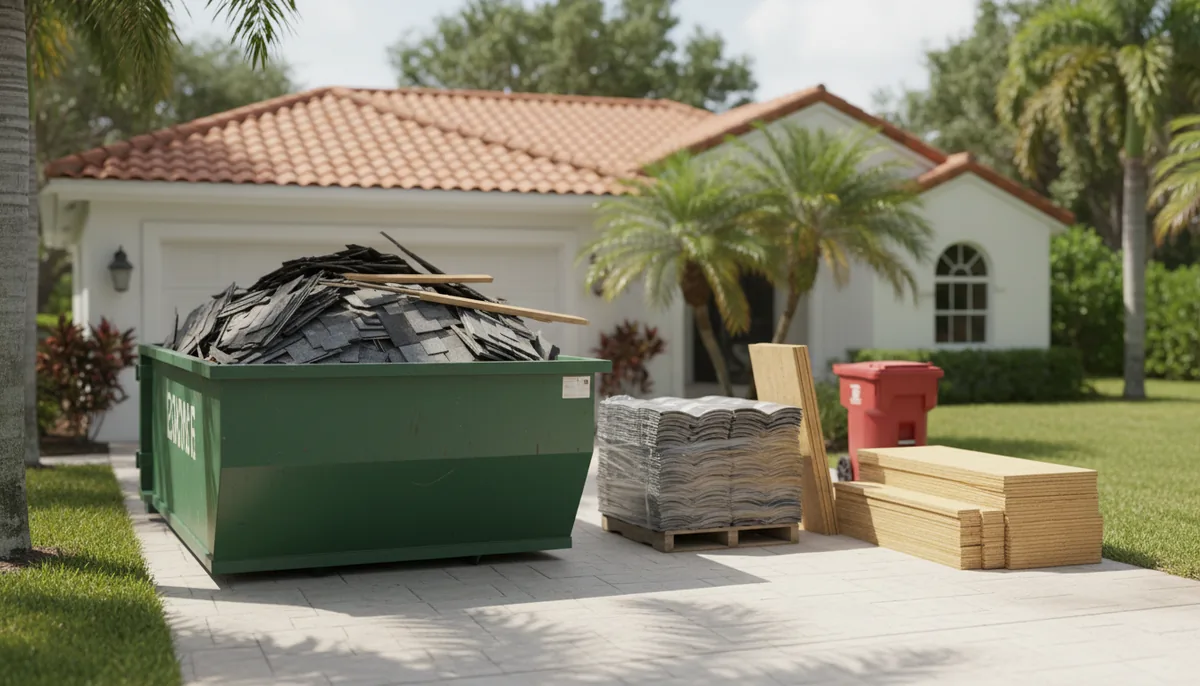
Metal in Florida has a few specific advantages. It handles wind better because the panels are long and the fasteners are hidden or screwed down tight. A standing seam roof can be attached with clips that allow the metal to expand and contract with the heat, and those clips are rated for uplift. Shingles rely on sealant strips that melt in the sun and adhesive that can fail if the roof is installed when it's too cold or too hot. In a Category 2 storm, a properly installed metal roof is less likely to peel off in sheets. That doesn't mean it's hurricane-proof—nothing is hurricane-proof. But the failure mode is different. Shingles tear off one at a time and expose the underlayment. Metal panels can rip off if the fasteners pull, but that requires sustained winds well above tropical storm force.
The other advantage is heat. A light-colored metal roof reflects solar radiation, and that can drop your attic temperature by a meaningful amount. Your air conditioner runs less, and your energy bill drops. The catch is that some metal roofs are noisy in heavy rain. You fix that with solid decking and insulation, but if your roofer skips the decking because your house is old and the trusses are open, you'll hear every downpour. I of a customer in Naples who loves her metal roof but says she can't hear her television during summer thunderstorms. She says it's worth it. I'm not sure I beleive her.
How the insurance companies treat them
This is where the conversation gets serious, because Florida's property insurance market is a mess. Your insurer doesn't care what looks pretty. They care about wind mitigation. A wind mitigation inspection is done on a form called OIR-B1-1802, and it documents six things: roof covering, roof deck attachment, roof-to-wall connection, roof geometry, secondary water resistance, and opening protection. The inspector looks at how your roof deck is nailed or screwed to the trusses, how the trusses are tied to the walls, and wether you have a secondary barrier under the shingles. Florida insurers must offer premium discounts for qualifying features, and metal roofs often score better because the deck attachment is exposed and easier to verify.
The discount isn't automatic. You have to pay for the inspection, and the savings depend on what the inspector finds. I've seen people save hundreds a year because their roof had six-penny nails instead of staples. I've also seen a homeowner pay for the inspection and discover their roof-to-wall connection was inadequate, meaning no discount at all. That's a bitter pill. But if you're choosing between metal and shingles, the metal roof may score better on the wind mitigation form because of the way it's fastened. That doesn't guarantee a premium reduction on your specific policy. Coverage varies by policy, and you need to read your declarations page to know what you're paying for. I can't tell you what your policy covers. I can tell you that the discount mechanism exists, and it's worth pursuing.
What I would actually do: Before signing anything, ask your roofer to write down the exact deck attachment method and whether they'll install secondary water resistance. Then ask an insurance agent to run a hypothetical wind mitigation inspection on that spec. You'll find out if the extra cost of metal is offset by the discount. If the agent says no discount, you have your answer.

The hail problem and the repair problem
Florida doesn't get Colorado hail, but we get enough. Hail dents metal, and some insurers have quietly started denying cosmetic claims on metal roofs because dents don't affect performance. Shingles get bruised by hail, which looks different—you get these little black spots where the granules are knocked off, and that can lead to granule loss over time. Neither is ideal. What matters is who repairs it. A shingle roof repair is simple: pull up the damaged shingles, nail in new ones, seal them. A metal roof repair requires matching the panel profile and the color, and if the panel is damaged beyond repair, you might replace an entire section that's twenty feet long. That's more expensive, and the color might not match after a few years of sun fading.
Many metal roof warranties are transferable, which helps if you sell. But you have to read the fine print. Some warranties require annual inspections by a certified contractor, and if you skip that, the warranty is void. That's a hidden maintainance cost. Shingle warranties are generally shorter and prorated, meaning the coverage drops every year. I tell people both: a metal roof is an asset, but it's an asset that needs a relationship with a roofer who actually knows how to work on it. A shingle roof is more forgiving. Almost any roofer can fix a shingle. Metal is a specialty.

What the code and the permit process demand
Every roof replacement in Florida requires a permit pulled from your local building department, and an inspection afterward. There's no exception for "quick jobs" or "storm chasers." If a contractor offers to skip the permit, walk away. I've seen this happen with a couple in Cape Coral who hired a guy from a door hanger. He tore off the old shingles, put down new ones, cashed the check, and disappeared. Then their insurer asked for proof of the permit during a claim. They couldn't produce one. The claim was denied, and a future sale got complicated because the county had no record of the roof. On paper, the roof didn't exist.
The good news is that you can verify your contractor before they start. Florida roofing contractors are licensed by the Department of Business and Professional Regulation, the DBPR. A certified contractor has a licence starting with CCC and can work anywhere in the state. A registered contractor has a licence starting with RC and can only work in the local jurisdiction that licensed them. You can check the DBPR roll online to confirm the license is active. Don't take the contractor's word for it. Don't trust the business card. Check the number yourself. It takes two minutes, and it protects you from someone who will take your money and leave you with an unpermitted roof that your insurer will flag at renewal.
What I would actually do: If you're comparing metal and shingles, write both bids on the same sheet of paper. Line by line: deck repair allowance, underlayment grade, flashing details, cleanup, permit fee, inspection scheduling. If one contractor won't put it in writing, that's your answer. And verify the license number on the DBPR roll before you negotiate anything.
What it does to your resale value
Realtors will tell you metal roofs sell houses faster, and they're mostly right. But it depends on the buyer. The first-time buyer in Jacksonville sees a metal roof and thinks "expensive to replace." The buyer from Ohio sees a metal roof and thinks "I don't have to worry about this for thirty years." You're not selling a roof, you're selling a future cost. A new shingle roof that's five years old still has ten to fifteen years left, and that's fine. A metal roof that's twenty years old still has twenty years left, and that's a selling point.
The kicker is the insurance. When a buyer applies for a homeowner's policy, the insurer looks at the roof age and the condition. A shingle roof older than fifteen years can trigger a "must replace" condition in the binding documents. Some insurers won't write new policies on roofs older than ten years, depending on the zip code. I've seen deals fall apart at the closing table because the buyer couldn't get insured. A metal roof changes that calculation because it has a longer design life, and it's more likely to earn a wind mitigation discount. But that only matters if the buyer's agent knows to include the wind mitigation inspection in the negotiations. Most don't. They just look at the age and make an assumption.
Questions I get asked
Is a metal roof louder in the rain?
Yes, unless the roof has solid wood decking underneath and adequate insulation. With proper decking, the sound is a low rumble instead of a ping. Without it, you'll hear every drop. Ask your roofer what they plan to do about sound attenuation before you sign.
Are shingles actually illegal in Florida?
No. Shingles are legal and still the most common roof covering in the state. What's changed is the installation standard. Florida Statute 627.70132 allows insurers to require a roof that is less than fifteen years old to be paid out at actual cash value rather than replacement cost, unless you have a specific endorsement. That's not a ban. It's a financial penalty for an old roof.
How long do metal roofs really last in Florida?
Depends on the material. Copper lasts a lifetime. Galvalume steel lasts forty years or more. Aluminum lasts a long time but is soft and dents easily. The weak point is the fasteners and the rubber washers, which dry out and crack. If you use exposed fastener panels, those washers need replacement eventually. A standing seam roof with hidden clips will outlast the fasteners on an exposed roof by a wide margin.
Do I have to get a wind mitigation inspection?
No, but you should. The inspection typically costs far less than the annual discount it can open up. Your insurer must offer discounts for qualifying features, and the form is OIR-B1-1802. If you're installing a new roof, pay for the inspection after the work is done so the inspector can see the deck attachment and the secondary water resistance. You'll get the documentation you need for your insurance file.
What about the My Safe Florida Home program?
That program provides matching grants for home hardening improvements, and a new roof can qualify if the roof is part of a larger package. It has been funded and then paused repeatedly, so check the current status before you count on it. The program is real. The money runs out. Don't design your roof choice around a grant that might not fund this year.
What if my contractor says I don't need a permit?
Fire them immediately. Unpermitted work is a nightmare. Your insurer can deny a claim, the local building department can force you to tear off the roof, and the next buyer's lender will flag it. A contractor who suggests skipping the permit is telling you they have no interest in doing the job right.
The truth is, there's no perfect roof for every Florida house. Metal is tougher, lasts longer, and might save you on insurance. Shingles are cheaper, easier to repair, and perfectly fine in inland areas where the wind speeds are lower. The right answer depends on your budget, your street, your tolerance for noise, and whether you plan to die in this house or sell it in five years. None of that is in a sales brochure. It's in your own head. Go figure out what matters to you first, then call a roofer.