Roof warranty Florida: The Florida Guide
By Dale Prescott, Roofing contractor, Central Florida. Reviewed by Hal Winstead, Editor, licensed roofing contractor. There was a Tuesday in Winter Park, back in 2018, where I stood on a barrel-tile roof that had been installed wrong six years before. The morning was already hot, and the homeowner had called because a golf-ball-sized chunk of tile had landed in her azaleas. I pulled the warranty file. The original contractor had written "25-year warranty" on the contract but had never registered it with the manufacturer. The roofer was gone. The manufacturer said no registration, no coverage. I remember thinking: she didn't have a roof warranty. She had a piece of paper.
That's the thing about Florida. Between the sun, the salt, and the afternoon storms that roll off the coast, your roof takes a beating that most of the country never sees. A warranty can save your hide, but only if you know what it actually is, who stands behind it, and what will make the company on the paperwork disappear faster than a cold front in July. And if you're reading this because your roof is leaking or your insurance company sent you a nasty letter, the fastest way to a shortlist of solid contractors is the DBPR license roll or a place like roofing companies in Florida that does the legwork for you. I've been wrong about this before, but I'd bet my good hammer on the rest.
Let's start with the basics, because I talk to people every week who don't know the first thing about what they bought.
What a Florida roof warranty actually covers
There's a big difference between a manufacturer's warranty and a workmanship warranty, and most homeowners mix them up. The manufacturer covers the material—the shingle, the tile, the membrane itself. If the shingle delaminates or the tile starts crumbling, the factory pays for replacement material. The contractor's workmanship warranty covers how the roof was put on. If the nails weren't driven right and the shingles blow off in the next tropical storm, that's on the installer.
Neither one covers everything. If a tree limb punches a hole in your roof, that's what insurance is for—not a warranty claim. If you never cleaned the gutters and water backed up under the edge, the manufacturer will likely tell you the failure was due to lack of maintainance. I've seen alot of homeowners get blindsided by that one. The warranty is not a maintenance plan.
And here's where I sound like the grumpy old contractor: read the warranty before you sign the contract, not after the hail stops. The best warranty in the world doesn't mean much if the company that issued it isn't around to answer the phone.
What I would actually do: Read the warranty section of the contract in my truck before I sign anything. If the paperwork says "lifetime" or "25-year," ask them to put the registration number in writing. Then call the manufacturer and confirm it's active.
The license and the permit: my two favorite arguments
Florida roofing contractors are licensed by the Department of Business and Professional Regulation. You'd think that goes without saying, but I've torn off roofs that were installed by guys who couldn't produce a license if their life depended on it. Here's the shorthand: a CERTIFIED roofing contractor holds a license begining with "CCC" and can work anywhere in the state. A REGISTERED contractor holds a license beginning with "RC" and can only work in the local jurisdiction that licensed them. Before you let anyone on your roof, verify the number is active on the DBPR roll. It takes two minutes.
Then there's the permit. A roof replacement in Florida requires a permit from the local building department, followed by an inspection. That's the law, and it's there for a reason. If a contractor offers to "save you the hassle" by skipping the permit, walk away. I cannot say that strongly enough. An unpermitted roof can complicate an insurance claim after a storm, and it can kill a home sale when the buyer's inspector finds it. I've also had to rip off unpermitted work that was dangerous—roofs where the decking wasn't fastened properly and the whole thing lifted like a kite in a breeze.
The 25% rule and SB 4-D (2022): what the insurance guy didn't tell you
This is where things get complicated, so bear with me. For years, the Florida Building Code had what everybody called the "25% rule." If more than a quarter of your roof was damaged and needed repair or replacement in any 12-month period, you had to bring the whole roof up to current code. That meant a full replacement in many cases, even if the damage was just on one side.
Then along came SB 4-D, effective May 26, 2022, and it changed the math. If your roof was built, repaired, or replaced under the 2007 Florida Building Code or any later edition, then only the portion being worked on has to meet current code. A full replacement is no longer automatically triggered. The 2007 code took effect on March 1, 2009, so roofs completed before that date generally don't qualify for the more lenient rule.
But here's the catch nobody tells you: this is about the building code and what triggers a full replacement under the law. It's not a guarantee about what your insurance company will pay for. Coverage depends on your specific policy. If a hurricane takes off half your roof, the insurance company's adjuster has their own set of rules and their own calculators. I'm not a lawyer and I'm not a licensed adjuster, so I won't pretend to give you advice on that. You need to read your declarations page and ask your agent direct questions.
What I would actually do: If my roofer told me I "had to do the whole roof because of the 25% rule," I'd ask him to show me where it says that in the current code. A lot of contractors are running on old habits. SB 4-D changed the game, and any roofer you hire should know exactly which edition of the code your house was built under.
Wind mitigation inspections: the discount you're probably leaving on the table
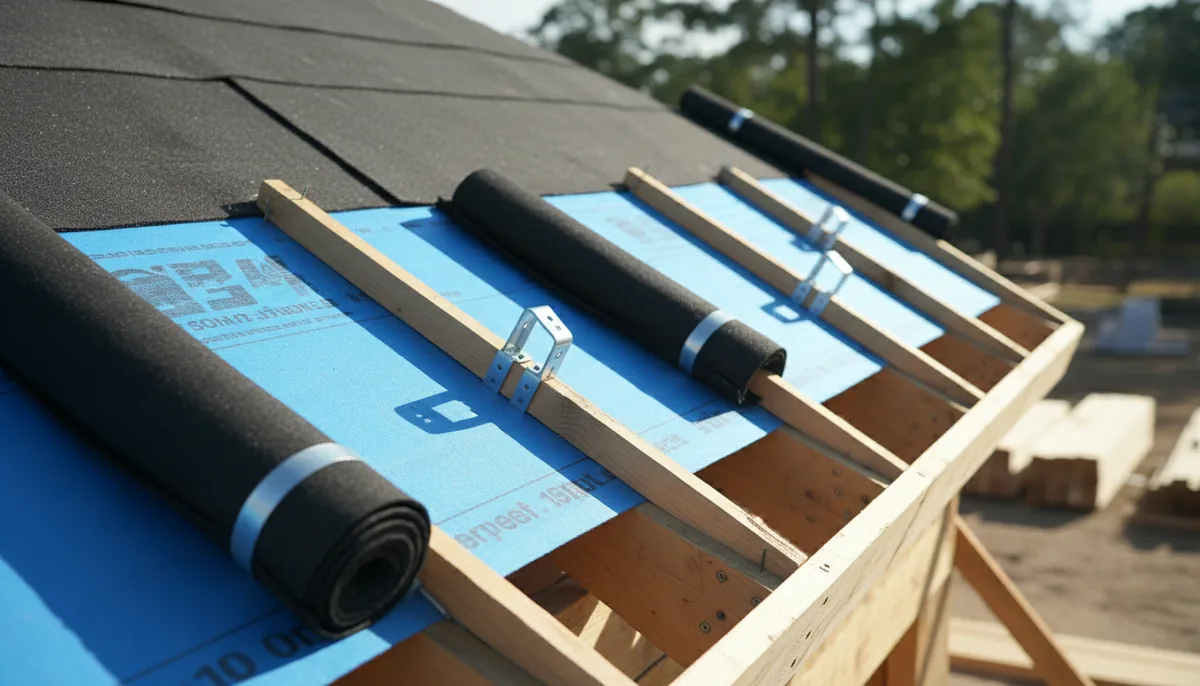
I've lost count of how many homeowners pay $50 or $100 more a month for windstorm insurance when they could of paid less. The secret is a wind mitigation inspection. It documents six things about your roof: the roof covering, the roof deck attachment, the roof-to-wall connection, the roof geometry, the secondary water resistance, and the opening protection on your windows and doors.
Florida insurers are required to offer premium discounts for qualifying features. The standard form is OIR-B1-1802. Your builder or a previous owner installed the roof with the right straps, the right nails, maybe even a secondary waterproofing barrier under the shingles. That stuff costs you money when the roof goes on. You deserve credit for it.
An inspection like this typically costs far less than the annual discount it can open up. I've seen it save people hundreds a year. It's not a gimmick. And if you have a hip roof instead of a gable end, or if your roof deck is attached with the right kind of nails, the form will reflect that. The difference in premium can be substantial.
A woman in New Smyrna Beach once told me she didn't need one because her insurance agent had "handled it." Her agent had not handled it. The agent had never even seen the house. That's not a dig at agents—some of them are great. But the discount doesn't happen automatically. You have to pay for the inspection and make sure the report lands in your insurer's hands.
Questions I get asked
How much does a new roof cost in Florida?
It depends on the size of your house, the pitch of the roof, and how many layers we have to tear off. Roofing is priced per square—that's a 10-foot by 10-foot area—and the material cost swings wildly. A basic architectural shingle is one thing. A flat concrete tile is another. You need a contractor to look at it and give you a number, not a phone estimate.
Can my insurance company force me to replace my roof?
Your insurance company can make you an offer based on your policy, but they don't have the power to make a building code decision. The building department does that. If your roof is old and the adjuster says they won't renew unless you replace it, that's an insurance business decision, not a code requirement. I've seen people get new roofs because their insurer said "replace it or we drop you," and I've seen other people with older roofs who had no problem at all. It depends on your situation.
What voids a roof warranty?
The big ones are: unpermitted work, improper installation, lack of maintenance, and putting a second layer of shingles over a roof that wasn't designed for it. Repairs by someone who isn't certified can also void a manufacturer's warranty. If you have a leak and call a handyman who hammers nails through the shingles to do a "temporary fix," don't expect the manufacturer to honor anything later.
Does the new SB 4-D law mean I can repair instead of replace?
If your roof was built under the 2007 code or later, then only the portion being repaired or replaced must meet current code. That means a section repair won't automatically force a full roof replacement. But you still need a permit, and the work still has to be done right. This is a conversation between you, your contractor, and the local building official.
What's the difference between a certified and registered contractor?
One wears many hats and one wears a shorter lease. A certified contractor has a statewide license and can work anywhere in Florida. A registered contractor can only work in the jurisdiction that licensed them. Always verify the license is active on the DBPR roll. The rubber-stamp part matters, especially if your roof is on the coast and needs someone who knows the high-velocity hurricane zone requirements.
Should you file a claim or just pay for the repair?
I get this one a lot, usually after a storm when everybody's roof looks like Swiss cheese. The answer is: I don't know, because I don't know your policy or your deductible. What I do know is that filing a claim for a small repair can come back to bite you when the next storm rolls through and you need a bigger claim. Look at your deductible. Look at your claims history. And talk to your agent before you make that call.
There's also the question of the age of your roof. If it's 15 years old and the storm only took off a few shingles, a repair might make sense. If it's 22 years old and the decking is waterlogged, a full replacement is probably smarter in the long run. A good contractor will show you the damage and lay out your options. A bad one will just start writing numbers on a clipboard.
What I would actually do: Before I called my insurance company over a leak, I'd climb up and look at the actual damage. If it's a few shingles, I'd get three repair bids and think hard about wether it's worth a claim. If the deck is rotten or the membrane is failing, that's a different conversation., your roof is a system. The warranty is part of it, the permit is part of it, the wind mitigation report is part of it. But none of that matters if the guy standing on your ridge doesn't know what he's doing. Find a licensed contractor, check the roll, pull the permit, and get the warranty registered. That's the whole game. And for a big chunk of Florida, that game starts with the afternoon thunderstorm season—the ones that roll in around 4 p.m. And test every nail you put in that morning. I've been through enough of those to know that the roof over your head is the only thing you can't afford to fake.