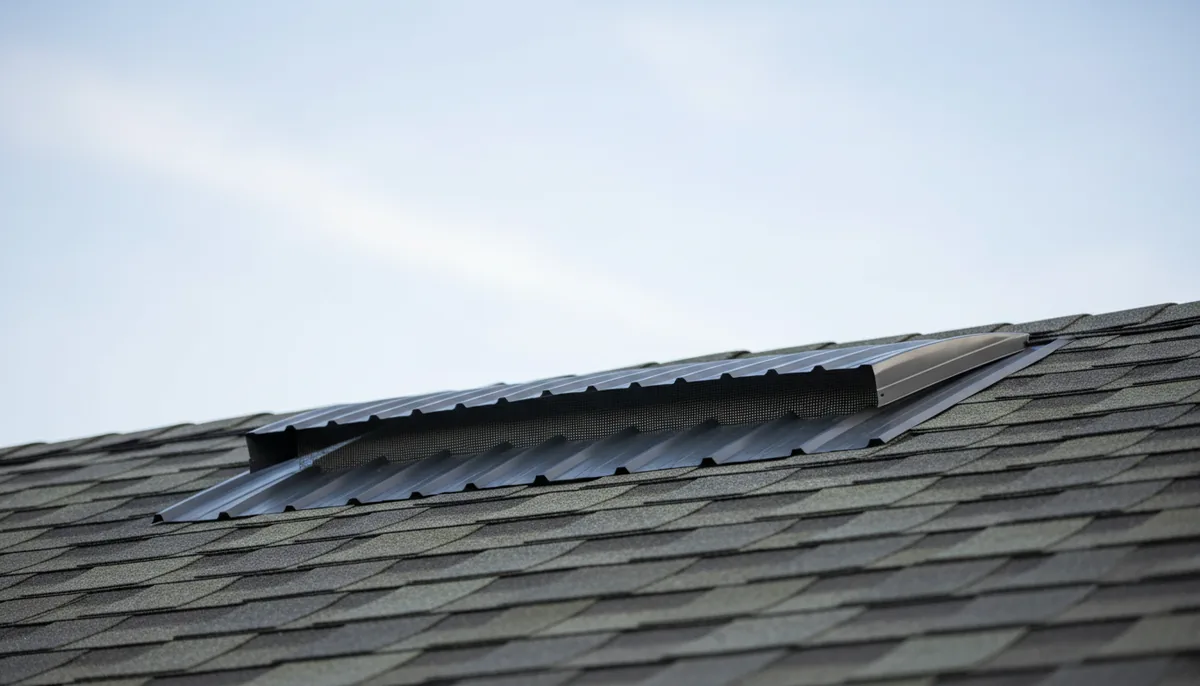
South Florida metal roofing: The Florida Guide
By Marcy Doleman, Commercial roofing estimator. Reviewed by Hal Winstead, Editor, licensed roofing contractor. You ever stand on a warehouse roof in Hialeah, late August, heat coming off the TPO like a griddle, and watch a brand-new metal roof peel itself off? I of. It was a retrofit job—screwed straight into old purlins nobody had bothered to check. The screws pulled, the panels buckled, and the owner stood below shouting about his warranty while I measured the damage with a pencil and a notepad. That afternoon taught me more about South Florida metal roofing than any manufacturer seminar ever did. And it's exactly why I tell people to slow down and look past the shiny standing seam before they sign anything.
Florida roofing contractors are licensed by the Department of Business and Professional Regulation, but the license itself doesn't mean the guy knows how to land a panel in a 140-mile-an-hour wind zone. You want someone who's done commercial work here, not a residential crew who "does metal sometimes." That's where a directory like metal roofing companies in Florida saves you the legwork of sorting through the DBPR roll one name at a time. I still check every contractor I work with against that roll, because a certified license starts with CCC and works statewide, while a registered one starts with RC and only covers the local jurisdiction that issued it. One letter difference. Big legal difference.
Now, I estimate flat and low-slope work—TPO, modified bitumen, coatings—for warehouses, retail plazas and schools. Metal roofing shows up on my desk more than you'd think, especially for sloped roofs on older buildings or when an owner wants something that'll outlast a single-ply membrane. So when people ask me about South Florida metal roofing, I don't talk about residential barrel tiles. I talk about the practical stuff: permits, the code, insurance, and what actually happens when a storm hits.
What the permit situation really looks like
That Hialeah roof didn't have a permit. I found out because the building department pulled records during an inspection after a minor leak. The owner had no idea the contractor "handled it." He didn't. An unpermitted roof in Florida can kill an insurance claim and make a future buyer run for the hills. Every roof replacement in this state needs a permit from the local building department and an inspection. Every one. If a contractor offers to skip it, walk away. I don't care how good his YouTube videos are.
The permit process also flags work that doesn't meet the current Florida Building Code. And that's where the so-called 25% rule used to bite people. Under the old rule, if you repaired or replaced more than a quarter of your roof in any twelve-month period, you had to bring the whole roof up to current code. Then SB 4-D (2022) came along and changed that for most buildings. If your roof was built, repaired, or replaced under the 2007 Florida Building Code or any later edition, only the part you're working on has to meet current code. The 2007 edition took effect in March 2009, so roofs finished before that generally don't qualify. Meaning: an older roof can still trigger a full replacement when you least expect it.
What I would actually check on a metal roof bid
I've been wrong about this before, but I've also caught three different contractors lowballing a metal retrofit because they didn't account for the existing deck condition. Metal roofing is priced per square, but the square is only the begining. Underneath that shiny panel sits the real cost.
What I would actually do: Ask for the fastener schedule in writing. Screw spacing, edge pullout values, what type of fastener goes into what substrate. If the estimator can't answer without calling the manufacturer, that's a clue.
Metal panels move with heat. South Florida heat is brutal. If the contractor doesn't plan for expansion and contraction at the clips or the sidelaps, you'll hear popping noises on sunny afternoons and watch screws back out over time. That's not a failure you can see from the ground until it's too late.
Why wind mitigation actually matters down here
I keep a stack of OIR-B1-1802 forms in my truck. That's the standard wind mitigation inspection form Florida insurers use. It documents six things: roof covering, roof deck attachment, roof-to-wall connection, roof geometry, secondary water resistance, and opening protection. For a metal roof, the deck attachment and the roof-to-wall connection are where the money is. A properly attached metal roof can qualify for some serious premium discounts, but only if the inspector can document it. And the inspection itself costs far less than the annual discount it usually unlocks.
Insurance companies are required by law to offer these discounts for qualifying features—that's in the statute, and it's a reason I tell every owner to get the inspection done before shopping policies. But don't ask me what your specific policy covers. Coverage varies. Read your declarations page and talk to your agent. What I can tell you is that a metal roof that's been installed to code with the right clips and fasteners tends to have an easier time in the underwriting process. No guarantees. Storms are weird.
What I would actually do: Before you commit to metal, pull your current wind mitigation inspection and see what it says about your roof deck. If the deck attachment is weak, a new metal skin won't fix it. The inspector will catch it on the new form anyway, so you might as well know before you spend the money.
A digression about the weather, because I can't help it
One afternoon I was measuring a sloped metal roof on a school in Fort Lauderdale and the sky went from clear to black in about nine minutes. I had a laser measure in one hand and a clipboard in the other, and I remember thinking, "If this lightning hits, my wife will kill me." The principal came out and told me to get inside. I told her I was almost done. She said the last guy who "was almost done" got struck on the soccer field. I went inside. It rained for an hour and I sat in the cafeteria eating vending machine crackers. That's the thing about South Florida—the wheather doesn't care about your estimate.
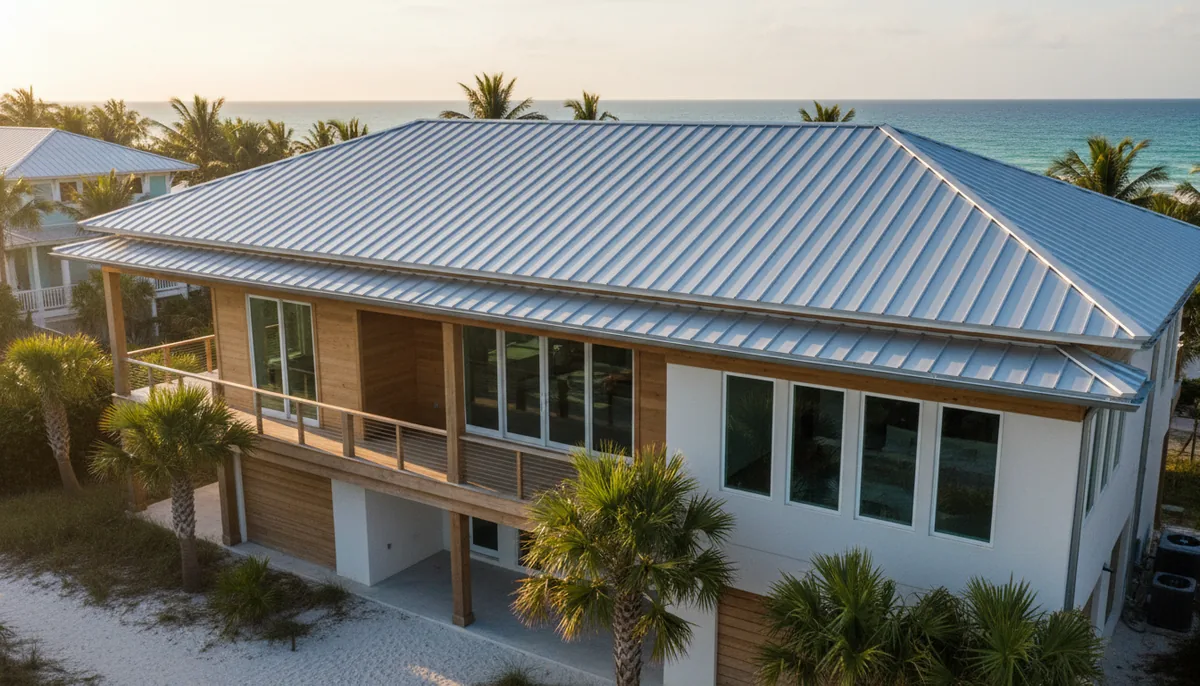
Standing seam vs. exposed fastener: the real trade-off
People ask me if they should spend the extra money on standing seam. Depends. Standing seam metal roofing has hidden clips that let the panels float, which handles thermal movement better and keeps fasteners out of the weather. Exposed fastener panels are cheaper and easier to replace, but every screw head is a potential leak point. For a low-slope commercial building, I usually steer people toward standing seam if the budget allows, because flat roofs collect water and a screw leak will find it's way to the ceiling tile faster than you can say "membrane warranty."
But here's the catch: a metal roof over a low-slope deck needs real slope or a proper structural design to drain. I've seen metal panels installed on a nearly flat roof with nothing but a few inches of taper in the insulation. That roof collected water in the valleys and rusted through in five years. The owner blamed the metal. I blamed the installer. Metal doesn't fail on its own—it fails when somebody ignores physics.
What a Florida metal roof can and cannot do for a building
Metal is genuinely tough stuff. It resists impact from hail and flying debris better than most single-ply membranes. It handles UV without the chalking you see on aged TPO. And it can last decades if the edges are terminated right and the finishes are maintained. But it is not a magic shield. A metal roof still needs a solid deck, proper underlayment, and flashings that actually wrap the corners. If the contractor tries to sell you on metal as a way to "fix" structural problems, run. Metal hides problems. It doesn't solve them.
I've also got a gripe about manufacturers who push their certified installer lists. Certification means the guy passed a test. It doesn't mean he'll show up on a Tuesday when it's pouring. The DBPR roll is the only list that tells you wether someone is legally allowed to work in your county. That's the baseline. The rest you learn by asking questions and checking references.
Questions I get asked
How much does South Florida metal roofing cost per square foot?
I won't give you a number because it depends on what's under there, the pitch, and how far the crane has to reach. I can tell you it's priced per square—roughly a hundred square feet—and that a retrofit over an existing deck always costs more than you expect once the screws start pulling out.
Does metal roofing make my insurance cheaper?
Maybe. Florida insurers have to offer premium discounts for features that show up on a wind mitigation inspection, and metal with proper attachments can qualify. But your specific discount depends on your policy, your carrier, and what the OIR-B1-1802 form actually shows. Read your declarations page. Don't take my word for anything.
Can a registered roofing contractor work anywhere in Florida?
No. A registered contractor holds a license beginning with RC and can only work in the local jurisdiction that licensed them. A certified contractor begins with CCC and can work statewide. Always verify the license number on the DBPR roll before you sign. If the number is inactive, that's a hard stop.
Do I need to bring my whole roof up to code if I replace half of it?
Only if your roof was completed before March 1, 2009, roughly speaking. The old 25% rule used to trigger a full replacement, but SB 4-D (2022) changed that for roofs built to the 2007 Florida Building Code or later. If your roof is older than that, the full replacement trigger can still apply. Have a code inspector look at it before you commit.
Why does my contractor want a wind mitigation inspection before starting?
Because a metal roof's attachment details need to be documented for the insurer, and because I'd rather know the deck is sound before I quote you a twenty-year roof that's sitting on a thirty-year-old fastener pattern. The inspection costs a couple hundred dollars, give or take, and it can open up discounts that cover that cost in the first year.
Can I get a metal roof over my existing TPO without tearing it off?
You can, but I wouldn't. Trapping a single-ply membrane under a metal roof creates a vapor problem that South Florida humidity will happily exploit. You'll get condensation, mold, and a smell that no amount of ventilation will fix. Tear it off. Do it once. Do it right.