Southwest Florida roofing: The Florida Guide
By Dale Prescott, Roofing contractor, Central Florida. Reviewed by Hal Winstead, Editor, licensed roofing contractor. You ever stand on a deck in Cape Coral in July and watch the plywood under your feet turn to sponge? I of. Seventeen years back, we were tearing off a three-tab roof over on Pelican Boulevard, and the sheathing was so rotten the safety line was the only thing keeping my foreman from going through to the living room. The homeowner had paid a guy to "repair" a leak the year before. That guy had charged for a new deck section and never pulled a permit. What he'd actually done was slap a patch over rot and paint it. We had to strip the whole thing down to the trusses. Waste of his money, waste of our time, and a roof that should have been a straightforward resheet turned into a week-long job. That's why I want to talk about how you actually pick a roofer in this state, and why the rules we work under—the real ones, the ones that touch your insurance check and your resale value—matter more than a slick estimate.
Florida roofing is not like roofing anywhere else. You've got the heat cooking the shingles year-round, the sun turning the adhesive to dust after a decade, and then the storms. Hurricanes, sure, but honestly the afternoon thunderstorms do more damage over time than most people think. You need a contractor who knows what the Florida Building Code wants, who pulls the right permits, and who can talk to your insurance company without making things worse. That's where a good directory helps. If you're just starting the hunt, a tool like roofing companies in Florida gives you a list to work from—then you go verify each one yourself. I'll show you what that means.
The first thing I tell anyone in Southwest Florida—from Naples up through Fort Myers, Cape Coral, Punta Gorda—is that the license number on the side of the truck isn't decoration. The state's Department of Business and Professional Regulation, DBPR for short, is the one that hands out contractor licenses here. You'll see two kinds of licenses. A board that starts with CCC is a certified roofing contractor; that's a license that lets them work anywhere in the state. A license starting with RC is a registered contractor, and that only lets them work in the local jurisdiction that issued it. If a guy hands you a card with an RC number and he's working twenty miles from home, that's a problem. Before you let anybody on your roof, go to the DBPR roll and check the number is active and matches the business. I've been wrong about this before, and it cost me a day waiting on a supplier once—so check. Don't call the number on the flyer. Look it up.
Now, about permits. You'd be amazed how many folks call me asking if they really need one. They've got a neighbor who knows a guy, and the guy says he can fix a leak "under the table" and save them the permit fee. Let me put this plainly. A roof replacement in Florida requires a permit from the local building department. That means an inspection. The inspector checks my work against the code. When I say I don't just install a roof, I install a permit and an inspection, that's not me being dramatic. That's me covering your back. An unpermitted roof can throw a massive wrench into an insurance claim after the next storm, and it'll absolutely complicate things when you go to sell your house. If a contractor offers to skip the permit, you shake his hand and call the next name on that directory. Walk away.
Here's where alot of the confusion starts, and honestly, a lot of homeowners get bad info from folks who should know better. For years, we worked under what everyone called the 25% rule. The Florida Building Code basically said if you repaired or replaced more than a quarter of your roof in a year, you had to bring the entire roof up to current code. So a guy with a twenty-year-old roof who had one small leak could get quoted a full replacement just because the repair was over that threshold. It wasn't a conspiracy; it was the code. That changed. The legislature passed a law—call it SB 4-D (2022), effective the end of May 2022. Under that, if your roof was built, repaired, or replaced under the 2007 Florida Building Code or anything newer, only the part being worked on has to meet current code. You don't automatically trigger a full roofer's dream project by replacing a section of shingle. Now, the 2007 code took effect in March of 2009. So roofs finished before that date usually don't qualify for this. They're still under the older, stricter rule. The upshot? If you've got an older roof, a simple repair might still mean a bigger job. If your roof is newer, you might have more options than the last guy told you. It depends on what's under there.
So what does that mean for your house in Estero or Bonita Springs? It means you need a contractor who knows exactly which code edition your roof was permitted under. That's not something you can eyeball from the street. A decent roofer will pull the records at the local building department before he quotes you anything. If he's quoting you a full replacement without checking that, he's guessing. And a guess on a roof is a guess with your money.
What I would actually do: Before you call anybody, get your own records from the building department. Find out what year your roof was permitted and what code edition was in force. Then, when you interview contractors, ask them directly if your roof falls under the SB 4-D (2022) change. You'll be amazed how many will change their tune when they realize you know the question to ask.
The other big thing that separates a Florida roof from a roof in Ohio is the wind mitigation inspection. This isn't a pass/fail thing. It's a documented look at how your roof is built to resist wind. The inspector checks the roof covering, the deck attachment, how the roof deck connects to the walls, the shape of the roof, wether there's a secondary water barrier, and how your openings are protected. The standard form is form OIR-B1-1802. That form is gold. Why? Because Florida insurers are required to offer premium discounts for houses that have qualifying features. A wind mitigation inspection proves you have those features. You pay for the inspection—call it a couple hundred bucks, depends on the house—and it can open up discounts on your annual premium that dwarf the cost in the first year. I call it the cheapest upgrade you can buy for your insurance bill. If you're getting a new roof anyway, this is the time to do it, because the inspector is already going to be looking at the deck and the connections while the old shingles are off.
A word about insurance, because it's the tail that wags the dog down here. Coverage varies by policy. I can tell you what I've seen in the field, but I'm not an adjuster and I'm not a lawyer. You need to read your declarations page and talk to your agent. What I will say is that the state got involved directly, and there's a reason. When the private market tightened up after the storm seasons, a lot of folks ended up with Citizens Property Insurance Corporation as their insurer of last resort. You know the drill. You've got a policy, you have a leak, you're scared to file a claim because you think they'll drop you. That's a real fear. But here's the thing: the law references something called Florida Statute 627.70132, which was part of the same wave of reform. What I can tell you is that it has to do with roofs and insurer behavior regarding claims. I'm not going to pretend to be a lawyer and quote you paragraphs. I'm a roofer. But when you file a claim, the quality of your documentation matters. A wind mitigation report, a permit history, photos of the storm damage before anything is covered by tarps—that's the stuff that helps your adjuster help you.
And it's worth mentioning, since I'm at it, that there's a state program for people who want to harden their homes. The one I know best is called My Safe Florida Home. It used to offer free wind inspections and, depending on funding, matching grants for things like roof upgrades. The funding comes and goes depending on the budget year. But it's a real program, and it starts the same way—with an inspection. Even if the grant money's tapped out, the inspection report itself is the same kind of document you need for your insurance discount. So check if it's open. Worst case, you're out an afternoon and you still have the report.
Let me tell you a story, the kind that makes you want to retire to the mountains. I had a customer over in Fort Myers Beach a few years back. Nice lady, snowbird. Called me in a panic because her tile roof was "buckling." I get out there and the tile looks fine. I get on the roof and walk to the ridge. She'd had a satellite dish removed, and the guy who did it had just filled the holes with caulk—looked like a kid with a toothpaste tube. And he'd nicked a tile. Water got in, the wood rotted underneath, and the whole ridge line had sagged a half-inch. That tiny nick caused twenty grand worth of work. All because someone didn't flash a penetration properly. That's the thing about this state. Water finds the tiny mistake and turns it into a catastrophe over time.
What I would actually do: Never let a roofer be the last person to touch your roof. If you get solar panels, a satellite dish, or even a new attic fan, call a licensed roofer to come back and inspect beneath that penetration. It'll cost you a hundred bucks for an hour of my time, and it's cheaper than quoting the rot repair later. Snippet.
Now let's get down to how you actually compare bids. I'll be straight with you—this industry has a range of characters, from artists to cowboys. You'll get estimates that vary wildly. That's not always a scam. The cost per square—that's a hundred square feet of roof—depends on the pitch, the access, the number of penetrations, and what they find under the old shingles. A steep hip roof with a three-story drop is harder to work than a flat ranch. I can't give you a dollar average because it changes with every commodity market, but I can tell you how to spot the difference between a pro and a guy with a truck and a hammer.
A pro pulls up with a laptop and a copy of your deed. He's already pulled the code history. He asks about your insurance. He walks the roof, takes photos, and he talks about deck thickness and ice and water shield—even though we're in Florida, a lot of the best practices come from up north. A bad estimator pulls up, walks around the yard, squints, and gives you a number off the top of his head. And that number is always suspiciously low. It's low because he plans to find "rot" once the old roof is off and then hit you with a change order for a number you can't refuse because you're now open to the sky. The pros don't pad their estimates with mystery line items. When I bid a job, I assume the deck is bad until I can prove it isn't. I tell you that up front. If I see a deck that's solid, you get a credit. If it's rotten, you're not surprised. That's the process.
So what does a storm-damaged roof actually look like?
People think a hurricane shreds your roof like a tornado. Sometimes. But often the real damage is from the week of rain after. You'll get a few tabs lifted, the shingle seal fails, and water gets pushed up under the leading edge of the shingle by the wind. The shingle looks fine from the ground. Up close, the fiberglass mat is cracked. That's a class of damage an inspector calls "bruising" or "blistering." By the time you see a water stain on the ceiling, the deck's been wet for weeks. This is why a storm claim isn't just about waiting for a roofer to knock on your door.
Questions I get asked
Do I really need to get three estimates?
You don't need three, but you need more than one. One guy may not care about your timeline. The second may be booked out six months. The third might be the one who actually wants the job. More importantly, hearing two different pros describe your roof's condition tells you more than any written warranty ever will. If one guy says you have hail damage and the other says you don't, you need to know why they disagree. Ask them both.
Will my insurance company drop me if I file a claim?
I can't speak for any specific company, and coverage varies by policy. I can tell you that I've seen policies not renewed after claims, and I've seen policies with claims that stayed put for a decade. The variable isn't the claim, it's the risk profile of the roof and the policy language. Read your declarations page. If you're worried, call your agent before you file the claim and ask a hypothetical question. Just remember that my job is to document the damage, not to predict the future.
How long does a roof replacement actually take?
A straightforward asphalt shingle roof on a single-story house? Call it two to three days with a good crew. Tile takes longer, usually four to seven days depending on the complexity. But that's just the tear-off and lay-down. The inspection scheduling, the dumpster delivery, the underlayment—that all adds days on either end. The real variable is wheather. A thunderstorm at noon can shut us down for half a day. And in the summer, it rains almost daily. So your "three-day" roof is really a "weather permitting" week.
Can I live in the house while the roof is being replaced?
You can, but it's not pleasant. The hammering alone will drive you out of the house by ten a.m. The vibration feels like the whole structure is flexing. We try to do one layer at a time so you're not open to the sky, but a tear-off is a tear-off. If you can, be somewhere else during the noisiest day. And definately move the fragile stuff off the walls. I've seen pictures fall and crack from the vibration.
Is a metal roof worth the extra money over shingles?
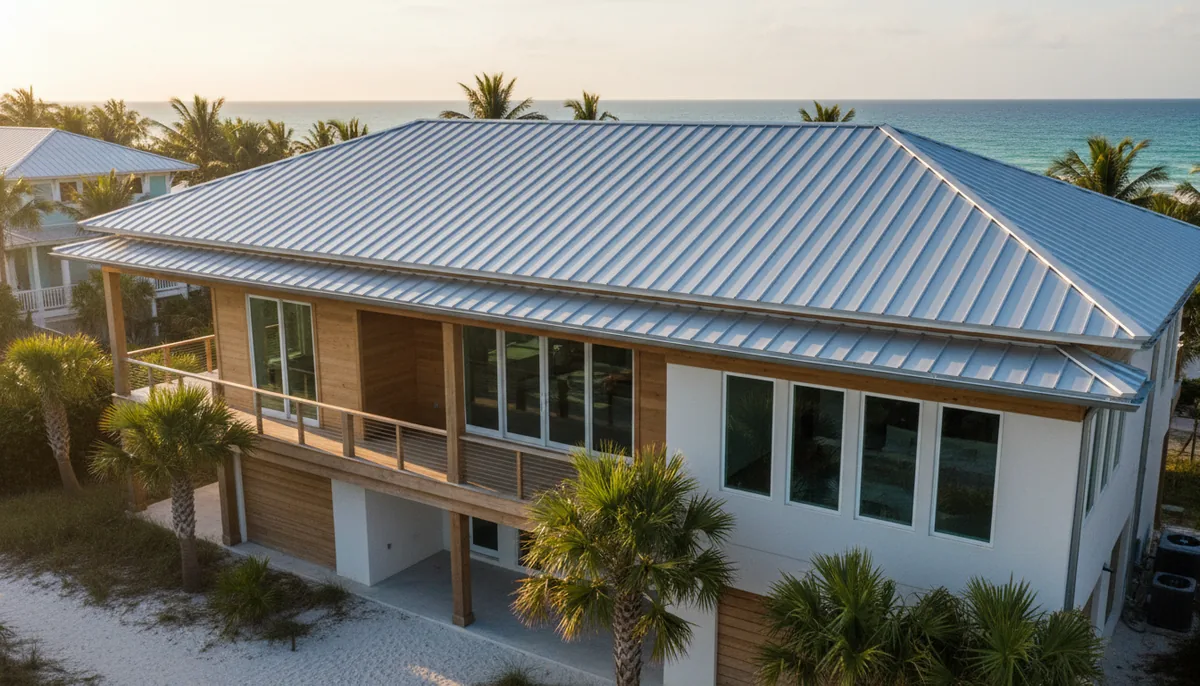
That's a value question, not a roofing question. Metal lasts longer, takes hail better, and it handles standing water better than shingles. But it costs more up front, and the installation has to be right—a leak in a metal roof is harder to find than a shingle leak. In Southwest Florida's salt air, though, cheaper metal can corrode around the fasteners. If you're thinking about it, ask for a sample of the actual fasteners they'll use, not the brochure. And check what the warranty says about salt exposure. I can't tell you it's worth it for your budget. That's your call.
What do I do if a roofer shows up at my door after a storm?
Be polite, and then be skeptical. Legitimate roofing companies do send crews out to canvas neighborhoods after storms. It's how we find work. But so do storm chasers from out of state who'll be gone by the time your roof starts leaking again. Ask for a license number. Ask if they have a physical office in Florida you can visit. Ask for references from neighbors who've actually used them. A guy working out of a truck with an out-of-state plate and a photocopied contract is a gamble I would never take.