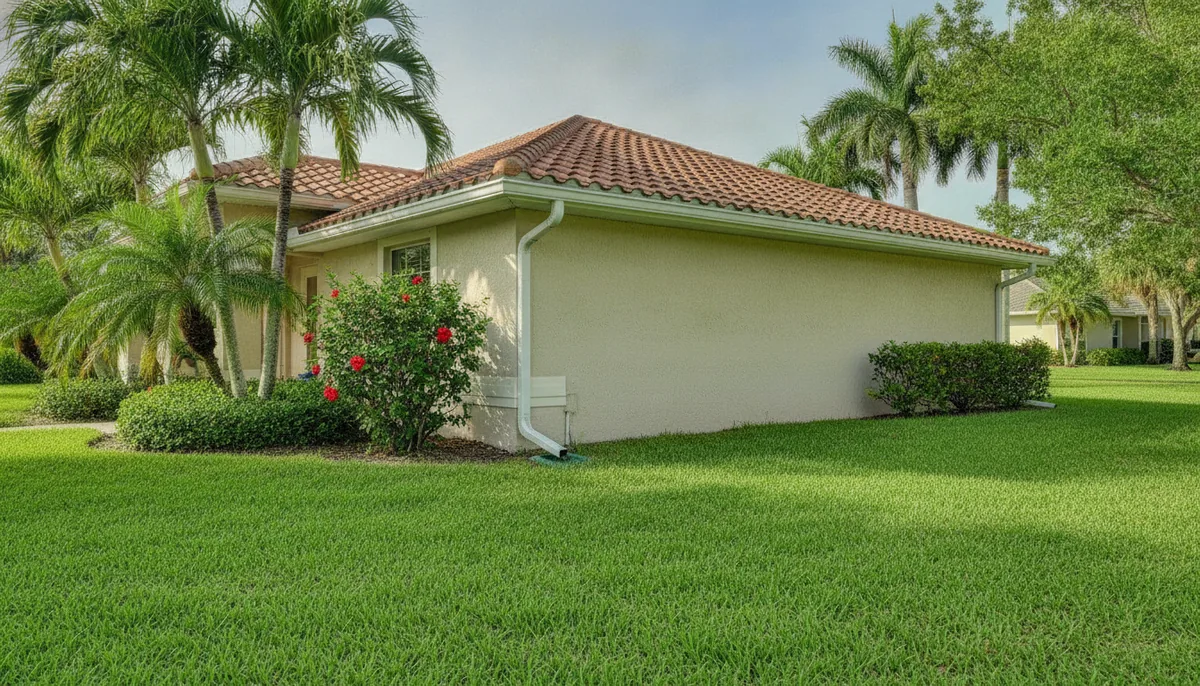
Tile roof cost Florida
By Bud Kettering, Roof consultant and inspector. Reviewed by Hal Winstead, Editor, licensed roofing contractor. I was up in a Spanish tile roof in Cape Coral last July, the kind of afternoon where the air gets thick enough to drink, and I was chasing a leak the size of a quarter. The homeowner had paid a guy a few thousand dollars to "fix" a valley six months earlier. I found the problem in about eleven minutes.
The old repair had been done with the wrong flashing and a tube of caulk that had baked into something resembling a beef jerky. And the tile itself—lovely barrel tile, the kind that looks great from the street—had been nailed so tight against the deck that the batten system couldn't breathe. Costly as all get out to tear off and relay.
That's the thing about tile in Florida. It can be the best roof you ever buy, or it can be the reason you end up on a first-name basis with an adjuster and a public adjuster.
Let me walk you through what a tile roof actually costs to put on. If you're just getting started, a quick way to get a feel for who does this work right is to browse a directory of tile roofing companies in Florida. Just remember, a website is not a background check. More on that below.
What most people get wrong about the price
Every week I get a call from somebody who has gotten three quotes. One comes in at, call it eighteen grand. One comes in at twenty-seven. One comes in at twelve. The twelve-thousand guy tells them it's a "simple re-roof, same deck, no problem."
I cannot tell you how many times that twelve-thousand quote ends up being a thirty-thousand problem.
The cost of tile roof in Florida depends on what is under the tile. You can price a roof from the street. You can't price a roof from a driveway. Concrete tiles are heavy. Some decks need reinforcing. The underlayment situation has changed so much that I've been wrong about this before, more than once. You don't know what you've got until the old tile is off and the plywood is naked.
And that's before you get to the ugly stuff: rotted fascia, truss damage from a previous leak, or the discovery that some previous owner framed out a skylight hole with lumber they found in a dumpster.
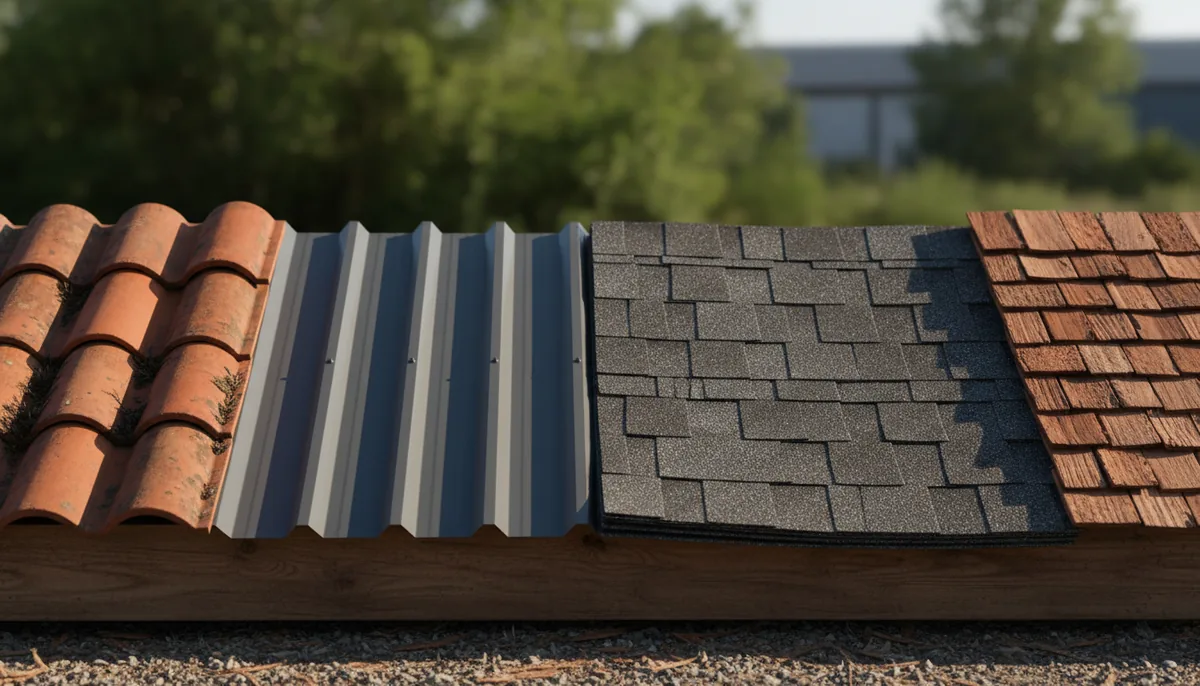
Why does one estimate say 20 and another says 35
It's not always a scam. Sometimes it's a difference in scope. One contractor includes a new deck where neccessary. One assumes the deck is fine. One includes code upgrades. One is still quoting the code from 2004.
Get it in writing. Get the line items. If the estimate is just "replace roof, one lump sum," that's a red flag the size of a foreclosure notice.
Concrete tile comes in a bunch of profiles. Flat tile vs. Barrel tile vs. A low-profile that mimics shake. Each has a different labor factor because each has a different installation system. And the fastener situation is specific. Nailing concrete tile is a different animal than nailing a shingle. If you're not familiar with that, you're not really pricing a roof. You're guessing.
Pitch matters. Access matters. A two-story front and a three-story back on a lake means the crew is doing gymnastics over water. That adds time. Time is money. Go figure.
What I would actually do: Get three proposals, but make them all quote the same scope. Hand each contractor the same set of specs—the tile profile you want, the underlayment system, the code upgrades. Then compare line to line. If one is wildly lower, ask why. And then check their license on the DBPR roll.
The license thing is not a formality
Florida roofing contractors are licensed by the Department of Business and Professional Regulation. A CERTIFIED roofing contractor has a licence begining with the letters CCC and can work anywhere in the state. A REGISTERED roofing contractor has a licence beginning with the letters RC and can only work in the local jurisdiction that signed off on them.
I of inspected roofs in four different Florida counties where the "licensed and insured" guy had an RC license for a town two hundred miles away. He was working without valid credentials. Ain't that a kick in the head.
Always verify the number against the roll. It takes two minutes. The directory does this, but you should do it too. Don't take my word for it. Don't take their word for it.
The permit costs money and it is worth every penny
A roof replacement in Florida requires a permit from the local building department. It also requires an inspection. A contractor who offers to skip the permit is a contractor you should walk away from. Unpermitted work can complicate an insurance claim down the road and torpedo a sale. Buyers' attorneys love to find that kind of stuff at the eleventh hour.
The permit fee isn't the reason your roof is expensive, but it's not nothing. So when you are comparing estimates, make sure the permit cost is in the contract.
A few years back there was a big push regarding insurance and roofs. SB 4-D (2022) changed things. I'm not a lawyer and I'm not going to pretend to be one. But the upshot is that insurers have been tightening up what they pay for on older roofs. There is alot of bad information floating around. Read your policy and read the statute—Florida Statute 627.70132 is the one people will point you towards. Read the actual words, not the headlines.
What I would actually do: If an estimator tells you to skip the permit "to save money," I'd end the conversation right there. A permit is cheap insurance against nonsense. A roof is too big an investment to do on the sly.
The one thing that can pay you back
Look, I climb around hot attics with a torch and a moisture meter all day. I see a lot of crap. But I also see the roof that pays for itself.
Wind mitigation inspection is the gift that keeps giving. The inspection documents the roof covering, the roof deck attachment, the roof-to-wall connection, the roof geometry, the secondary water resistance, and the opening protection. Insurers in Florida must offer discounts for qualifying features. The standard form is OIR-B1-1802.
Related to that, Citizens Property Insurance Corporation has been a big deal in recent years, and the "My Safe Florida Home" program has gotten attention too. If you qualify, that inspection can end up costing way less than the annual discount it unlocks. I've seen people save hundreds a year just by having their roof properly documented.
A tile roof, with the right deck attachment and the right geometry, can score well. And a good wind mitigation report is a beautiful thing for a homeowner holding the paperwork.
Should you tear off or go over
Sometimes the code allows you to overlay a new tile roof over an old one. Sometimes that is a false economy. You're adding weight to the structure. You're hiding whatever is underneath. I have seen moss, moisture, and mouse condos under old tile. When you overlay, you don't get to see that deck. You don't get to fix it. And you don't get that fresh look at the connection between the wall and the roof—the place where most of my jobs start leaking.
The exception is when the existing roof is flat and the deck is clean. But in my experience, if you've got three layers of anything, you're better off tearing down to the deck. It's a bigger number on the contract. It's a smaller number over the life of the roof.
One digression: I had a homeowner once ask me if I could "just put the new tile over the old tile and add some of that spray foam stuff to hold it down." I asked him if he wanted me to also put a sticker on it that said "certified pre-owned." He did not laugh. Some people are born to buy shingles.
Concrete when it is wet is like ice
Tile gets slick. The crew walks on it. They break a few. That is normal. If your quote says zero breakage liability, you're dealing with a dreamer. A good contractor factors in a few extra tiles for the installers and for future repairs. You want a few left over in your garage. Matching tile from a manufacturer that goes out of business is a nightmare.
And while we're at it, tile color fades. It patches differently. The new tile you put on next to the old tile will not match perfectly if the manufacturer has run a different batch. Keep the spares.
Questions I get asked
What is the actual cost of a tile roof in Florida?
I can't give you one number because the cost depends on the square footage, the pitch, the access, the number of penetrations, and what is under the existing roof. Contractors price by the square—that's a 10 by 10 foot area. You won't get a real number until someone walks the roof and knows what deck they're dealing with.
Is concrete tile more expensive than asphalt shingle?
Yes, generally, for the material and the labor. The framing might need beefing up because concrete is heavier. But tile lasts longer if it's installed right. Wether you ever see the savings depends on whether you stay in the house for a couple of decades. If you sell in five years, you might not recoup the premium.
Will my insurance company drop me if I have an old roof?
Coverage varies by policy. You need to read your declarations page and any riders. Florida Statute 627.70132 has been cited in a lot of discussions about roof claims. But I can't tell you what your specific policy covers. Do not take my word for it. Do not take your neighbor's word for it. Read the paperwork. If it doesn't make sense, ask an agent you trust.
Can't I just repair a few broken tiles instead of replacing the whole roof?
Sometimes. But if the underlayment underneath has rotted out, you're just putting new lipstick on a corpse. The tile is the armor, but the underlayment is the actual waterproofing. If water is getting in around the base of the tile, the roof is compromised. Let me get up there with a moisture meter and I'll tell you what is actually behind the problem.
Do I need a wind mitigation inspection before I replace my roof?
You need one to claim your discounts. The form is OIR-B1-1802. It is one document. You hand it to your insurer. You don't need a new roof to get the inspection, and you don't need a new roof for the inspection to help. You may qualify for some discounts as-is. The roof is only one factor. The opening protection—your windows and doors—matters too.
How do I know if the contractor is legit?
Check the DBPR roll. Look for the CCC or RC prefix. Confirm the license is active and matches the business name. Then ask for proof of workers' comp and liability. Then call the local building department and ask if they have pulled permits under that license number recently. That takes about ten minutes.
A guy who has never pulled a permit in your county is a guy who is either noncompliant or brand new. If he's brand new, he's got no track record. That is a risk you get to choose. I would not choose it for a roof that has to survive another August.