Average cost of roof cleaning in Florida
By Bud Kettering, Roof consultant and inspector. Reviewed by Hal Winstead, Editor, licensed roofing contractor. I was on a two-story barrel-tile roof in Davie last June, the kind of afternoon where the air feels thick enough to drink. I was there to inspect for a buyer, and the home looked sharp from the street. Then I got up close to a gable end and saw the algae wasn't just on the surface—it had crept up under the edge of a broken bird-stop, and the deck sheathing underneath had that soft, spongy feel that tells you everything you need to know about the next five years. That homeowner was asking about roof cleaning to make the place look better for the sale.
Funny thing is, he'd already gotten a quote from a guy with a pressure washer and a leaf blower. He wasn't trying to save the roof, just make it pretty for a photograph. I get it. But that's the wrong reason to spend money on a roof, and it's a great example of why you need to be careful when you start pricing roof cleaning companies in Florida. There's a huge difference between someone who knows how to treat a barrel tile and someone who is about to blast water up under your flashing at 3000 PSI.
So what does it actually cost to clean a roof in Florida? The answer is unsatisfying if you want a single number, because I don't deal in single numbers. I deal in square footage, pitch, and the sheer stupidity of what the last guy did to the ridge caps. You're paying for the labor, the chemistry, and the insurance of the person on the ladder. Call it a job that gets priced by the square—a unit of roof area that's ten feet by ten feet. A simple ranch house might be thirty or forty squares. A complex two-story with hips, valleys, and a steep pitch might be more, and the price climbs with the danger.
Why can't you just tell me a flat price?
Because the roof I looked at in Davie is not the roof on a one-story ranch in The Villages. Every job is a different animal. The variables are straightforward: the pitch of the roof, the height of the roof, the material, and how much of the surface is actually dirty. Access matters hugely. A single-story home with a shallow pitch where a guy can walk around with a sprayer is a different price than a two-story Spanish-tile masterpiece where he needs to tie off and run a harness system.
Also, you're not just paying for the washing. You're paying for the pre-treatment, the rinsing, and the cleanup of your landscaping. That last part gets people. The chemicals that kill the algae and black streaks will also kill your hibiscus if they're not careful. A pro has to wet down the plants, cover them, and rinse them off after. That takes time. Time is money, and it's the difference between a $200 blow-and-go and a job that actually holds up for more than a month.
Is soft washing worth the extra cost over pressure washing?
Yes. Full stop. Pressure washing a shingle roof is a great way to shorten it's lifespan by a decade or more. Most of the roofs I inspect that have been "cleaned" with a pressure washer have granule loss visible in the gutters and downspouts. You are literally blasting off the protective coating that keeps the sun from baking the mat. A soft wash uses low pressure and a chemical solution that kills the organic growth at the root, rather than just blasting the visible top layer off.
I've seen pressure-washed roofs that look great from the road. From the ridge, they look like a bad sunburn. That's on the homeowner for hiring someone who didn't know what they were doing, but it's hard to blame a guy with a truck and a wand for taking a job he shouldn't have taken. It's your house. You have to be the one who says, "Wait, are you using a soft wash?" If they look at you funny, send them down the road.
What I would actually do: If the read is just black streaks or algae stains, don't get anyone up there until you've checked the gutters, the valley flashings, and the ridge caps yourself. If you see cracked sealant or a loose cap, cleaning will make it worse by lifting the edges. Get a licensed roofing contractor to make the minor repairs first, then have the surface cleaned.
What about the insurance discount for cleaning my roof?
Here's where alot of Florida homeowners get the wrong idea, and I blame the marketing. There is a real thing called a wind mitigation inspection, which documents how your roof is attached and wether you have the right features to qualify for insurance discounts. It uses a specific form, form OIR-B1-1802. Insurers must offer premium discounts for qualifying features like a strong roof-to-wall connection or a secondary water barrier. But that inspection is not about the algae on your shingles. It's about structural integrity during a hurricane.
Cleaning your roof won't get you a discount. It can, however, prevent you from being dropped or denied coverage if your policy requires a roof in good condition. That's a different concern, and coverage varies by policy. Read your declarations page closely. If it says "roof in good repair," a roof that looks like a swamp from the street might be a problem, but a roof with lightly worn shingles isn't going to be denied because you didn't wash it. Algae growth in a humid climate is considered normal wear in my book.
Let's talk about the "cheap quote" you got from your neighbor's cousin.
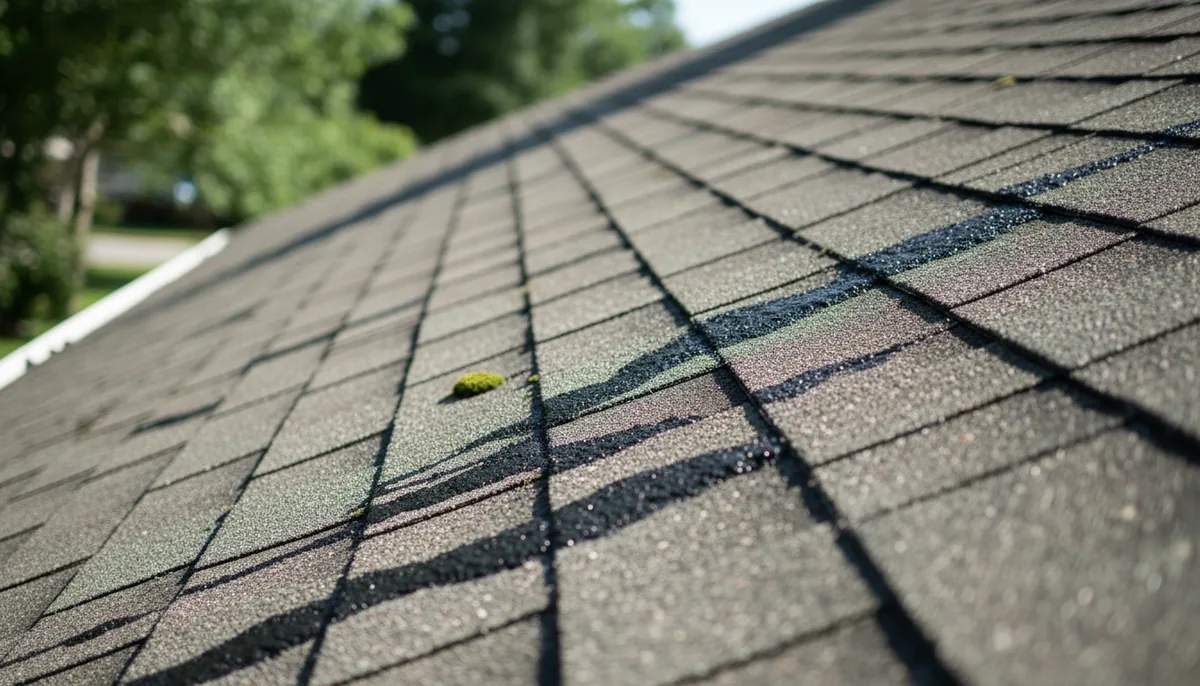
I have been wrong about this before, but I am consistently less wrong than the guy who says, "I'll do it for $200 cash." Black streak algae isn't dirt that rinses off. It's a living organism. If you just spray it with bleach and water and wait five minutes, you're not killing it. You're washing the top layer off and leaving the roots to regrow in six months. A proper soft wash involves applying a specialized cleaner, letting it dwell on the surface for a specific amount of time, and then rinsing it at low pressure.
That process is chemically simple, but practically boring. It takes time. The cheap guy isn't going to do the boring parts. He's going to be done in an hour and gone by the time you notice the streaking coming back. And if he slips and falls? That's a liability issue for you, the property owner. In Florida, you need to be careful. You don't want somebody on your roof who has no license and no workers' comp coverage. A single broken leg on a two-story Spanish tile could be a bigger payout than the cost of the cleaning was.
How do I know if the person I'm hiring is even licensed to work on roofs?
This is the part I have to hammer home because I see the aftermath of unlicensed work all the time. In Florida, roofing contractors are licensed by the Department of Business and Professional Regulation, the DBPR. You need to verify the license number is active and matches the name on their truck. If they say they're "certified," the number starts with a CCC prefix, which means they can work anywhere in the state. If they're "registered," the number starts with an RC prefix, which limits them to the county or jurisdiction that issued the license.
Now, here is the tricky part about roof cleaning. It's not always considered a roofing repair under the statutes. Some cleaning companies are just pressure washing businesses. They aren't taking on the structural integrity of your roof, so they aren't always required to hold that specific roofing license. But they should have a business license and insurance. If the person is doing more than spraying, say they are repairing cracks or re-bedding caps as part of the "cleaning" package, then you need to check the DBPR roll to see if they are actually a certified or registered roofing contractor. Check the license number yourself. Don't trust a business card.
What I would actually do: Walk the perimeter first. If you see broken tiles, nail pops, or lifted flashing, stop and fix those before anything gets cleaned. Find a licensed contractor who does repairs. Then ask for the cleaning company's certificate of insurance in writing. It's a ten-minute conversation that saves you a multi-thousand-dollar headache.
What does a roof cleaning have to do with a roof replacement?
Sometimes, the conversation starts with cleaning and ends up with a replacement. And that's okay. A lot of older roofs in Florida are being covered by the provisions of SB 4-D (2022) and newer rules that give insurers reasons to drop older roofs or adjust payouts. There's a lot of confusion around that law, so I'll keep it simple: if your roof is old, worn, and leaking in a few places, a cleaning quote is only a distraction from the real decision.
You rarely get a cleaning quote and then discover you need a replacement unless the roof is already failing. The cleaning will expose the failing parts. Once you've got the moss and old lichen off, you see the cracked shingles and sun damage clearly. That's when you need to think about a permit. A roof replacement in Florida requires a permit pulled from the local building department and an inspection. If a contractor offers to skip the permit to save you money, walk away. An unpermitted roof can complicate an insurance claim after a hurricane, and it will definately come up on a seller's disclosure when you try to sell the house.
Questions I get asked
Will roof cleaning void my warranty?
It can if the cleaner damages the surface or uses the wrong chemicals. Most shingle manufacturers have specific requirements for what you can put on their product. If you use a strong solvent or high pressure, you could disrupt the granules and void the material warranty. If your roof is still under warranty, I'd call the manufacturer before letting anyone treat it. I've asked a couple of homeowners to do this, and they came back with detailed instructions. It saves headaches.
How often should I get my roof cleaned in Florida?
In this climate, every two to three years if you have heavy tree coverage or a north-facing slope that stays damp. If your roof is in direct sun all day, you might go five years or more between cleanings. It depends on what is under there. Algae grows in damp shade, not on a solar oven. Don't let a cleaner upsell you to an annual contract unless you're trying to keep a show home looking perfect.
Is it cheaper to buy a pressure washer and do it myself?
Buying the machine is cheap. Learning how to use it correctly is where the cost goes up. A homeowner with a rented 3000 PSI washer can strip the protective granules off a shingle roof in twenty minutes. I have seen it. A pressure washer is for concrete and driveways. Use a chemical sprayer for your roof. And renting doesn't make sense for one job. Call a pro.
Does a clean roof really help with mold inside the house?
Probably not. Mold inside the house is almost always a venting or moisture problem from the attic or the crawlspace. Cleaning the outside shingles stops the organic growth from trapping moisture, which can extend the life of the decking, but it doesn't fix a bathroom exhaust fan that's not vented outside. I have spent years in attics with a torch and a moisture meter, so beleive me when I say—take a look up top before you blame the shingles outside.