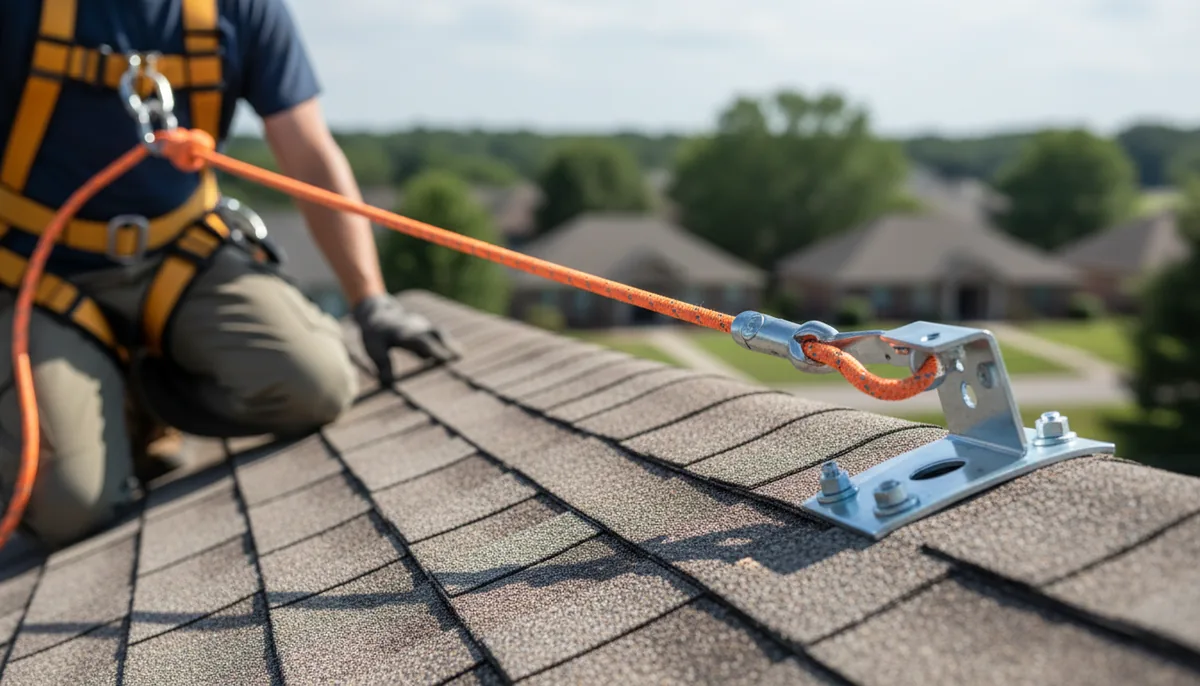
Florida roofing license practice test: A Working Contractor's Take
By Tobias Reyn, Roofing business owner. Reviewed by Hal Winstead, Editor, licensed roofing contractor.
The afternoon that made me understand the Florida roofing test was in Plant City, and it wasn't the test I failed. I was young, running two trucks, and I had a chimney flashing wrong on a re-roof—too short up the wall, no kick-out, the works. The homeowner was a nice guy who called me at 6 a.m. After the first rain, and I drove over to see water marks running down the wall like a slow confession. He didn't ask for my license. But the permit inspector would of, and that's when it hit me: every roofing company in Florida gets judged on mistakes like that. The license is only the price of admission. The roof is the real test.
I sold that company after fifteen crews, give or take. Now I write for the people coming up behind me, and the question I hear is always the same: is the test as bad as they say? Here's a working contractor's take. Yeah, it's bad. And no, it's not impossible.
Let's talk about the exam, the practice materials, and the parts of the license that show up after you pass. Some of it is code. Some of it is common sense. Some of it will make you mad.
How hard is the Florida roofing exam?
Harder than a good roofer expects, and not because it asks you to nail anything. The exam asks questions in the flat, precise language of code and statute. You will read a sentence about fasteners and realize the answer depends on one word in the middle. It is a reading test wearing a roofing hat.
Call it a reading test with roofing questions. If you know the trade but skim words, you will mark the practical answer and miss the one the state says is correct. I of been wrong about code calls before. That's why I tell people to study like the state grades grammar, not craftsmanship.
Plenty of good mechanics fail their first try. They're not dumb. They just expected the exam to feel like a jobsite, and it doesn't. The jobsite lets you touch things. The exam makes you choose between two answers that both sound like something a foreman would say. Only one is written down in the actual rule.
A Florida roofing license practice test is a tool, not a promise
Use a Florida roofing license practice test early, but use it the way you'd use a chalk line: to mark where to cut, not to pretend the cut is done. The first time you take one, don't bury yourself in the score. The score tells you how far you are from the job. The questions tell you which side of your knowledge is missing.
A good practice test asks you to explain why an answer is wrong. If it only gives you a letter, it's training you to gamble. I'd also expect a practice test to make you explain the DBPR licence prefixes CCC and RC, because that's not trivia. That's the difference between a legal bid and a canceled job.
What I would actually do: Take one practice test before studying, open-book and slow. Then take a second one after you've cleared your weak spots. Don't use a practice test as a good-luck charm.
Permit work is where the license gets real
A roof replacement in Florida requires a permit from the local building department and an inspection. That's not optional and it's not a suggestion. A contractor who offers to leave the permit off isn't doing you a favor. He's leaving you with a roof that can haunt an insurance claim and a future home sale.
I'll give you the one customer story that still makes me wince. A guy in Lakeland asked me to re-roof his house but not pull a permit because he was afraid the county would raise his property taxes. Neighbor's new kitchen raises property taxes. The permit protects your ceiling.
Unpermitted work is like a shingle nailed to wet deck—it looks fine until someone pushes on it. If you're a contractor and a homeowner asks you to skip the permit, write it in your contract as a decline. Then write a polite note saying you don't do that. Then move on.
What I would actually do: I would never start a roof replacement without a permit number or the permit itself pulled by the local building department. If the homeowner insists on skipping it, I'd politely remove my bid.
The old 25% roof rule, and what SB 4-D (2022) did to it
Here is where roofers need to be carefull, because homeowners read old articles and think any repair becomes a full tear-off. The old rule of thumb was that if you repaired or replaced more than 25% of a roof in a 12-month period, the code could make you bring the whole roof up to current code. That scared people off needed repairs.
Then SB 4-D (2022) changed the math. For a roof that was built, repaired, or replaced under the 2007 Florida Building Code or a later edition, only the part you're working on has to meet current code. A full replacement is not automatically triggered anymore.
The catch is timing. The 2007 code took effect on March 1, 2009, so a roof completed before that generally doesn't get this treatment. I'm a roofer, not a lawyer, and I don't make final code interpretations. But I know enough to ask when the roof was built before I promise a homeowner a repair won't turn into a full job.
And the rule debate is for attorneys. On a real roof, the real debate is always the deck and the layers. Scope depends on what is under there.
CCC, RC, and the RF that doesn't mean what you think
People mix up letters all the time. The DBPR licence prefixes CCC and RC are the two roofing ones. A certified contractor with a CCC number can work anywhere in Florida. A registered contractor with an RC number can only work in the local jurisdiction that issued it. Not "we can probably work something out next county over." RC is local, and that's the law.
Then there's RF. I have seen RF on a truck and offered as proof of a roofing license. RF is not a roofing prefix. RF denotes a registered plumbing contractor. If someone hands you an RF number for a roof job, you are looking at the wrong license.
A license number means nothing if it isn't active. I'd check the number against the state's DBPR roll before hiring anyone, and I'd do it even for a crew I'd worked with before. People lapse. People let insurance run out. Active is the word that matters.
What the license doesn't settle: insurance talk and due diligence
Once you're licensed, people expect you to answer every insurance question. I don't, and neither should you. Coverage varies by policy, and the only truthful answer is to read the declarations page.
I'm not a lawyer or a licensed adjuster. I won't quote Florida Statute 627.70132 from memory, because that would be legal advice wearing a roof hat. Some policies end up with Citizens Property Insurance Corporation, some with private writers. I don't know which one your customer has until they show me a policy. If an insurer hands you a form such as form OIR-B1-1802, read it before you sign anything and ask your own questions. If a program like My Safe Florida Home comes up, look at the current program rules before promising a homeowner anything.
A roofer's job is to be honest about what he saw and what he did. Let the documents talk.
Questions I get asked
How hard is the Florida roofing exam if I'm already a good roofer?
Hard in the way that matters most: it will fail a good roofer who doesn't study the words. The roofing knowledge helps, but the exam uses precise definitions and legal phrasing, not job-site instinct. Study the vocabulary, the licensing law, and the business questions, and it's very passable.
Should I use a Florida roofing license practice test or just the code book?
Use a practice test first to find what you don't know, then go to the code book for those gaps. A practice test is a diagnostic tool, not a study guide. The code book by itself is long and dry; the practice test tells you which pages matter for your weak side.
Is it worth paying for a prep course?
For a first-time taker, maybe. A good course helps if it makes you take timed tests and explain wrong answers. I wouldn't pay for one that promises “real questions” or guarantees a pass.
What if a homeowner wants me to leave the permit off?
Walk away. A permit and inspection are required for a roof replacement in Florida, and a contractor who skips them is stealing from the homeowner's future. An unpermitted roof can complicate an insurance claim and a home sale. Politely decline and don't look back.
A guy says his RF license is roofing. Is that true?
No. RF is not a roofing prefix. RF denotes a registered plumbing contractor, not a roofing license. Ask for a number begining with CCC or RC, then check it on the DBPR roll before you hire anyone.
Does a roofing license guarantee good work?
No, and don't let one fool you. A license says you passed, paid, and met the state's requirement, not that every nail landed true. It's the minimum bar. The best roofers I hired were the ones who still measured twice after the last inspection failed them.
More from the site
- Roofing license florida requirements: A Working Contractor's Take
- Florida roofing license application: A Working Contractor's Take
- Florida roofing license exam: A Working Contractor's Take
- Florida roofing license books: A Working Contractor's Take
- How to obtain a roofing license in florida: A Working Contractor's Take