Roofing license requirements Florida: A Working Contractor's Take
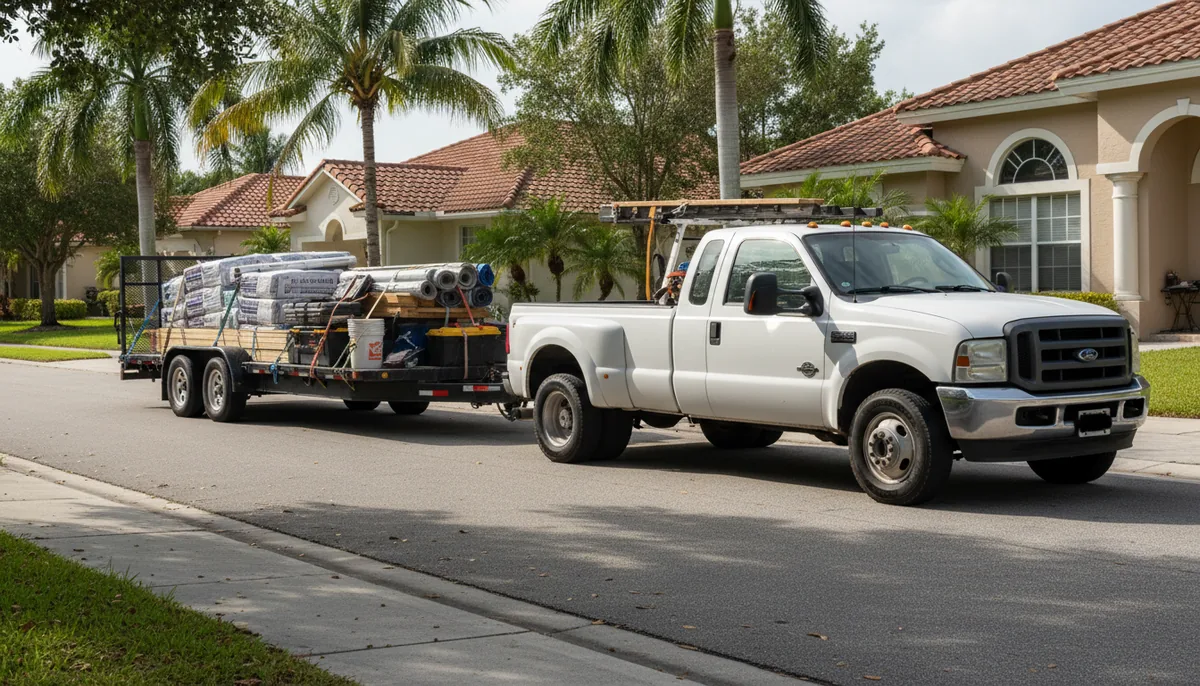
By Marcy Doleman, Commercial roofing estimator. Reviewed by Hal Winstead, Editor, licensed roofing contractor. That afternoon in Sarasota, I was measuring a bank’s low-slope TPO job when the branch manager walked out and asked if I could pull the permit after the crew finished. “Faster,” he said, grinning. The sky behind him was doing that green-gray thing Florida does before a bad storm. The roof was already leaking in three places. And he wanted to skip the inspection.
I’ve been wrong about this before, but I’d bet my ladder on this much: that conversation is why I still carry a copy of the statute in my truck. You look up roofing companies in Florida and you see a hundred logos, but what you don’t see is the number of contractors who'll quietly offer to leave the permit out of it. That’s a trap. Not just for them — for you. I tell customers this all the time. A roof without a permit is a problem you’re buying with your own signature.
And look, I’m a commercial estimator. I price flat and low-slope work — warehouses, schools, retail plazas. I’m not a lawyer. I’m not a licensed adjuster. But I’ve been pulling permits in this state since before the last building code changed, and I’ve got opinions. Let me walk you through what I actually check before I put a number on paper.
What a Florida roofing license actually means
The state runs roofing licenses through the Department of Business and Professional Regulation, the DBPR. Anyone telling you different is selling something. The license comes in two flavors for roofing: a CERTIFIED contractor or a REGISTERED contractor.
I say this because alot of folks get tripped up on the letters. A certified license starts with CCC — CCC 1234567, whatever. That means you’re licensed statewide. You can work in any county or city in Florida. A registered license starts with RC. That means you’re licensed only in the local jurisdiction where you registered. That’s it. An RC holder from Miami can’t just go do a job in Tallahassee without jumping through hoops.
Now here’s the one that gets people every time. RF is not a roofing license. I don’t care what some website says. RF denotes a registered plumbing contractor. I’ve seen job postings asking for an “RF roofing license” and it makes my teeth itch. Roofing is CCC or RC. Period. Don’t let a guy with an RF number convince you he can roof your church. He can’t. Check the number against the DBPR roll before you have anyone on a ladder.
What I would actually do: Before I hire any subcontractor, I ask for their license number and then pull it up on the DBPR website myself. Right there on the phone. If the number is inactive, I’m done. No debate.
The permit is the thing, and don't let anyone talk you out of it
Here is the non-negotiable part. A roof replacement in Florida requires a permit pulled from the local building department. And a permit means an inspection. There is no version of this story where an experienced contractor says “skip the permit, it’s fine” and means you well.
Why does it matter? Two words: insurance and resale. Say a storm rolls through next year and your brand-new roof gets torn off. The adjuster asks to see the permit records. No permit? That claim just got complicated. Or you sell the house five years from now, and the buyer’s title search finds the roof work had no permit. The sale can stall for months. I’ve seen both happen.
And it happens a lot. Guys who’ll do a shoddy job in the rain and tell you “looks good from my house” are the same guys who skip inspections. Walk away. There’s always another contractor.
CCC vs RC — what those letters tell you on a job site
When I'm on a commercial project, I always ask to see the license itself before they set one ladder on the deck. For commercial work, you almost always want a certified contractor with that CCC prefix. Schools, shopping centers, big warehouses — those usually come under state-level jurisdiction or require a certified contractor to pull the permit. A registered RC guy might be great for a small strip-mall repair in his own county, but he can’t work a county over unless he gets reciprocated or the local board allows it.
The distinction matters when I'm bidding a job. I of to know which of my guys can legally work where. You'd be surprised how many bids get thrown out because the GC didn't check wether the roofer’s license covered the jurisdiction. It's not malicious. It's lazy. And it costs everyone time.
What I would actually do: If a contractor hands me a card with an RC number, I check the county on the card matches the county of the building. A mismatch is a red flag. It means they’re either not paying attention or hoping you won’t notice.
The 25% rule gets more complicated after the 2022 change
Let’s talk about the old "25% rule." The Florida Building Code used to say that if you repaired or replaced more than 25% of a roof in any 12-month period, you had to bring the whole roof up to current code. That essentially triggered a full replacement — a huge deal if the roof was from the 90s and didn’t meet modern wind load standards.
But a law called SB 4-D changed the game effective May 26, 2022. Here’s what it actually says in plain terms: if your roof was built, repaired, or replaced to the 2007 Florida Building Code or any later edition, then only the part you’re working on needs to meet current code. A full replacement isn’t automatically triggered just for touching a portion.
Now, here is the fine print. The 2007 code edition went into effect on March 1, 2009. So if your roof was finished before that date, it generally doesn't qualify for the break. You may be stuck with the old 25% rule. That’s a big deal for older commercial buildings, where a partial repair I’m estimating can balloon into a complete tear-off if the deck is old.
I’ve had a school district call me about repairing a section of modified bitumen on a 1998 roof, and they were flabbergasted when I explained the date. They wanted to fix only the part above the cafeteria. But because the roof predated the 2007 code, a repair over 25% would trigger the full code upgrade. They were not happy. And honestley? I get it. The law isn't intuitive. It depends entirely on what's under there and when it was put down.
Insurance is where the roof meets the road — and the fine print
Insurance carriers are the ones who really care about permits and licensing now. Florida Statute 627.70132 is something I have to know cold. It’s the rule that gives policyholders more use after a loss. But I don’t know your specific policy, and no two are alike. If you’re not sure what yours covers, read your declarations page. Or ask a licensed adjuster.
That said, if a carrier sends an engineer to inspect the roof after a storm, they'll check if the work was permitted. An unpermitted repair is the fastest way to turn a "covered" claim into a "we have concerns" email. There’s also the form you need if you’re trying to work with the state-backed insurer of last resort. Ask about form OIR-B1-1802 if you’re dealing with Citizens Property Insurance Corporation specifically. It’s a wind mitigation form an inspector fills out, and a lot of policyholders never know to ask for it.
Also, there’s that state program for homeowners — My Safe Florida Home — that helps pay for wind mitigation improvements. I mention it because if you're planning a roof repair anyway, sometimes the right fix can lower your wind premium. It’s worth a call to find out if you qualify.
A quick gripe about the weather
Look, I love this state. But I will say this once: estimating flat roof work in June is misery. The heat comes off a modified bitumen membrane like a griddle, and the humidity makes it worse. You stand up there with your asphalt rake and think, "I get paid for this." Then a rain cell pops up from nowhere and you’re scrambling to cover the field before the slope drains get clogged. That's the job. Give or take.
Questions I get asked
Do I need a separate license for metal roofs, tile, or TPO?
No. Florida does not have seperate roofing licenses for different materials. A CCC or RC roofing license covers all roofing systems, from shingle to metal to low-slope membrane. What changes is the training and the equipment, not the license class.
What do the numbers on a roof estimate mean?
The estimate is usually priced per square, which is a roofing unit of 100 square feet. So when you see a number, multiply it by the number of squares on the roof and add the tear-off, decking repairs, and disposal fees. The total varies depending on pitch and access, so don’t compare two bids line by line unless they cover the same scope.
We just had a storm and only a small section got damaged. Do I have to redo the whole roof?
Depends on the age of your roof and the damage amount. If the roof was built after the 2007 code and the change from 2022 applies, then a fix to the damaged portion may be enough. If your roof is older, a repair that exceeds 25% of the roof area within a year will likely force a full replacement. Get a commercial estimator who will show you the math.
Can I get a permit myself and act as my own contractor?
You can pull a homeowner permit for your own residence in some areas, but I strongly advise against it for commercial property. A building department inspection is where a roof passes or fails, and it helps to have someone who does inspections every week. Also, your insurance company will notice you didn’t have a licensed contractor on the job. Always verify the license number is active before hiring.
Why do I keep seeing RF before a license number and being told it's for roofing?
Because you are dealing with someone who either doesn't know or hopes you don't. RF is the DBPR prefix for a registered plumbing contractor. It is not roofing. If you ever see an RF number offered as a roofing credential, thank them for their time and close the door.
Will the DBPR come out to a job site to check for licensed contractors?
They can, and they do. The DBPR has enforcement officers who run sting operations and investigate complaints. But they are a small agency, so they can't be everywhere. That’s why the directory and local building departments are your first line of defense. Check the roll. Always check the roll.