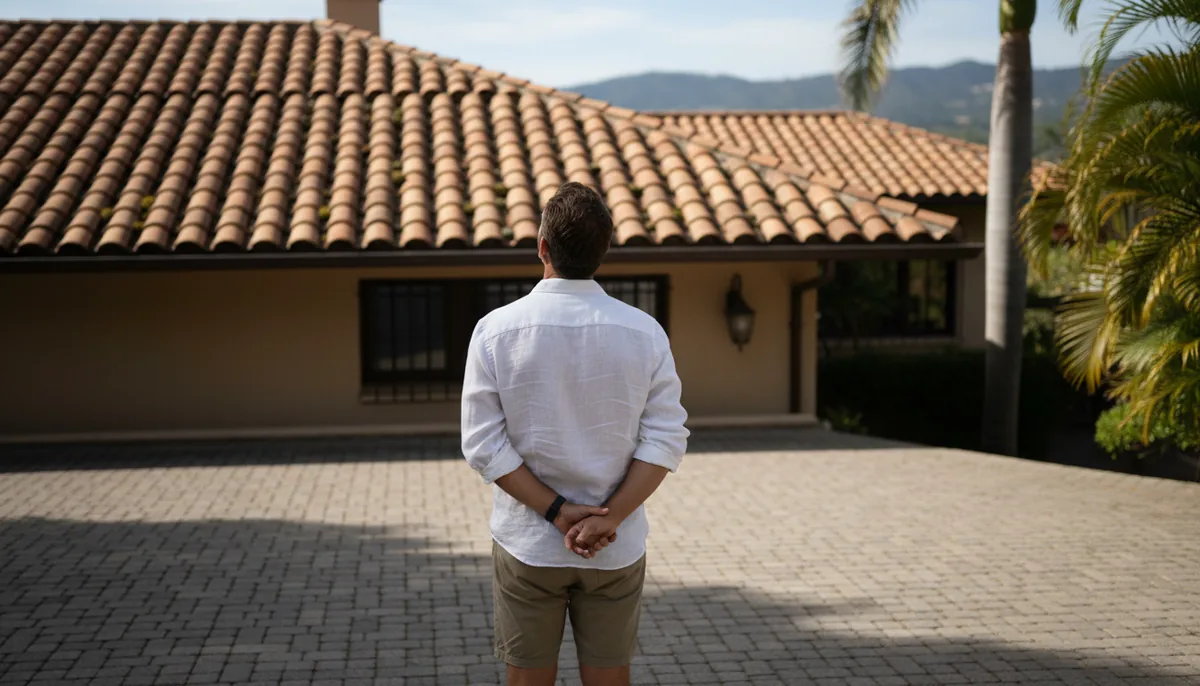
Tile roof lifespan Florida
By Bud Kettering, Roof consultant and inspector. Reviewed by Hal Winstead, Editor, licensed roofing contractor. It was 3 p.m. In Cape Coral, and I was halfway into a forty-year-old barrel tile roof when the deck gave way. Not the tile—the plywood under it. That tile looked fine from the street. Looked like it had another decade in it. Then my foot went through the sheathing and I spent the rest of the afternoon cutting out the rot, wondering what the buyer was going to say when I handed them a report that said replace everything.
In my line of work, when someone asks how long their tile roofing companies in Florida install will last, the honest answer is: it's not the tile you're worried about. It's everything underneath it.
I'm Bud Kettering. I inspect roofs for buyers, sellers, and insurers. I of spent a lifetime with a torch in one hand and a moisture meter in the other, crawling through attics from Jacksonville to Key West. Here is what I've learned about what really kills a tile roof in Florida.
A tile roof's lifespan starts with the roof deck
Tile manufacturers will tell you their product is good for fifty years, and they're not lying. The clay or concrete is the most durable part of the assembly. It can take a hurricane and laugh at it. But your tile is not your roof. Your roof is the whole system—the tile, the underlayment, the battens, and the wood deck underneath.
That deck is what dies first. In Florida, with the heat and the humidity, a plywood or OSB deck can degrade in half the time the tile above it would last. I've been on ten-year-old homes where the deck was already soft. It depends what's under there, and if you don't look, you're guessing. I have been wrong about this before, and so has everyone who works on roofs.
I have one rule that I tell every homeowner: the tile is a hat. A nice hat, a heavy hat. But if the head underneath it is sick, the hat’s not doing you any good.

How long does a tile roof last in florida?
Call it thirty to fifty years for the tile itself, and fifteen to twenty-five for the system. The reason the range is so wide is that roof lifespan in Florida has almost nothing to do with the tile and everything to do with install quality and ventilation.
A properly installed tile roof with a solid deck, adequate ventilation, and high-quality underlayment will serve you for decades. But in Florida, roofs are torn off by storms, they're walked on by every A/C guy who ever lived, and they bake in heat that makes asphalt shingles fail at year twelve. Tile stands up to the sun. It does not stand up to a roofer who nails the battens incorrectly or a homeowner who blocks the attic vents with fiberglass insulation.
- Deck failure is the number one killer, and you can't see it from the street.
- Underlayment failure is the second, and by the time you see stains on your ceiling, the deck and the batten system are often already compromised.
- Nail corrosion is a slow killer. Galvanized nails fail eventually; when they do, the battens lift and tiles move.

When does a tile roof actually need a full tear-off?
When the deck is gone, or the underlayment has degraded to the point that the deck is wet. There is no repair for a rotten deck under tile. You cannot patch a deck through a one-foot-wide tile gap. You can try, but you will never get the structural integrity back.
If your tile has hairline cracks, that's cosmetic. If twenty percent or more are cracked, you have a real problem. But the bigger issue is the underlayment—the felt or synthetic paper layer between the tile and the deck. After twenty years in the Florida sun, that underlayment can be as fragile as a spider web. Try to roof over it and you risk doing more harm just walking on it.
If you're a seller, you might think you are saving money by not replacing a forty-year-old tile roof. But we measure roofs in square feet, and we price replacements in thousands. The cost of waiting is a new deck, new battens, new tile, and a potential buyer who just got a quote and walked.
What I would actually do: If you're buying a house with a tile roof over twenty years old, budget for a replacement, not a repair. Ask for a structural inspection of the deck. A visual roof check from the ground tells you almost nothing about what is actually under there.
Can you cancel a tile roof with a new layer?
No. You cannot overlay a tile roof with another layer of tile. Layering only works with composition shingles, and it still has a lifespan that depends on what is underneath the old shingles. Tile is heavy. You're looking at anywhere from eight to twelve pounds per square foot once the mortar and batten system is in place. Stack a second layer over the first and you risk structural damage to the entire house.
If someone recommends overlaying your tile, walk away from that conversation. And walk away from the contractor who suggests it. The physics alone make it a waste of money. The existing tile or concrete has to be removed completely.
How do I tell what type of tile I have?
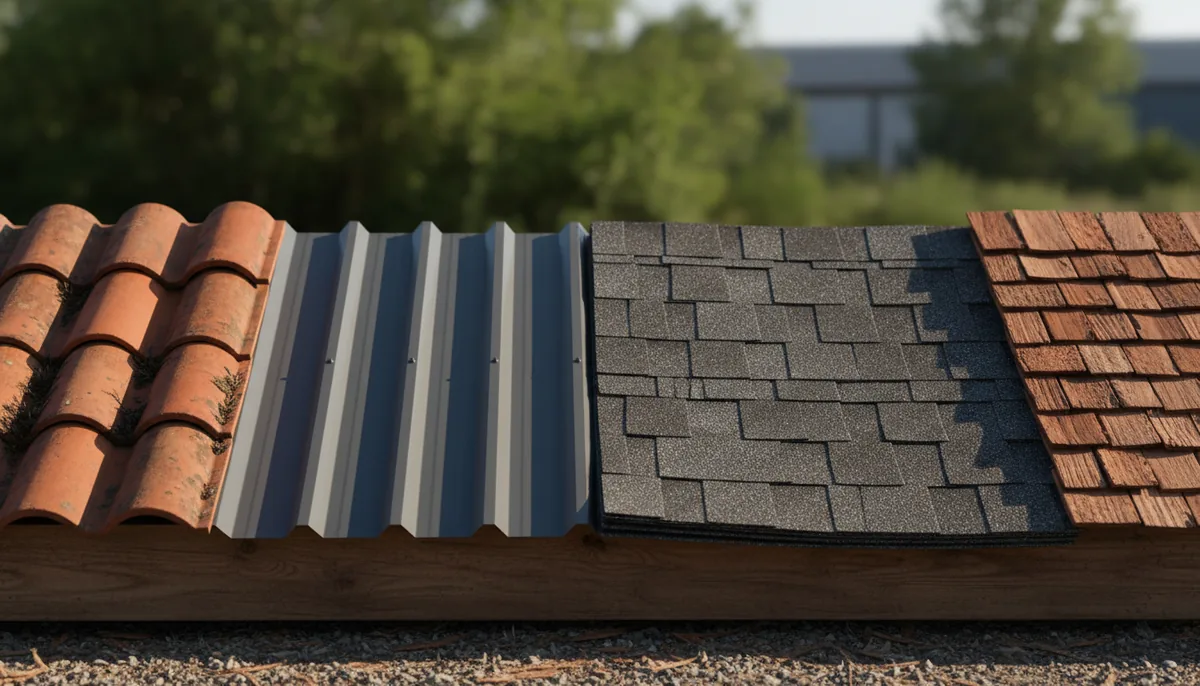
Clay tiles are typically a red, brown, or orange color. Concrete tiles are generally duller—they get dyed, and they fade, and their color is often stamped in by an impostor called a pigmented coating. As an inspector, I use a simple trick: tap both tiles. The clay one rings; the concrete one thuds. It's not scientific. But after a decade of tapping, I can tell you the difference on feel alone.
Concrete tiles are heavier than clay, give or take. They are cheaper to manufacture, which means cheaper to install, but they have a higher rate of efflorescence—that chalky white residue that tells you moisture is moving through the material. Clay tiles are lighter, pricier, and last longer if they're fired properly. Concrete tiles crack; clay tiles break.
The biggest enemy: the Florida attic
A roof's lifespan is often cut short by what goes on in the attic, not above it. Wet insulation, blocked vents, and bathroom fans that vent straight into the roof cavity cause more rot than any single storm. That's why I carry a moisture meter everywhere. When I see a deck that's wet, nine times out of ten, I trace it back to an attic ventilation problem.
You're supposed to have one square foot of net free vent area for every three hundred square feet of attic floor. That's the standard rule. But builders routinely cheat it. Insulation gets shoved into the vents, and the heat builds up. You end up with a heat-cooked underlayment below and storm-lashed tile above.
What I would actually do: On your next dry day, get into your attic. Look at the underside of the roof deck. If the wood is dark, stained, or spongy when you push a screwdriver into it, that's your warning. Fixing ventilation is cheaper than replacing a roof.
Can a tile roof be inspected from the outside?
You have to get on the roof or in the attic. A full wind mitigation inspection, required by insurers and done on the standard form OIR-B1-1802, documents the roofing covering type, deck attachment, roof-to-wall connection, and opening protection. That form will tell you if you qualify for a discount. It will not tell you if the deck is rotten. For that, you need a licensed contractor or an inspector who puts a foot on the deck.
The age of your roof, the condition of the underlayment, and the integrity of the deck are the three things an insurer cares about. The last one they cannot see from the street, and neither can you.
Does insurance care how old a tile roof is?
Yes. Florida Statute 627.70132 and rules that came after SB 4-D (2022) have shifted how insurers price risk. Many will refuse to write a new policy on a roof over fifteen years old, regardless of the material. If the roof is over twenty-five years old, you might find it uninsurable unless it has the paper to prove it is in good shape.
That doesn't mean every policy is the same. You need to read your own declarations page and contact your own agent. I have seen insurers deny claims on brand new roofs, and I have seen them pay out on thirty-year-old tile. Coverage varies by policy. I tell people: the best time to check your coverage is before the storm, not after.
If you're looking for contractors who know the current licensing and permit rules, you should verify any name against the DBPR roll and look for those prefixes: CCC and RC. A certified roofing contractor holds a CCC and can work anywhere in the state. A registered one starts with RC and can only work where they registered. Always verify the number is active, and never hire anyone who tells you to skip the permit. An unpermitted roof can haunt the sale of your house for years.
Questions I get asked
Is a tile roof really "lifelong"?
No honest roofer will ever promise you that. A well-built tile roof can last fifty seasons or more if the deck and underlayment are maintained. But by the time you get to year thirty, the risk of a hidden leak is real. Are you prepared to spend the cost of a small car to fix it after year forty?
My tile roof is fifteen years old. Is the crack in that one tile a big deal?
Probably not. A few cracked tiles are a maintainance item, not a red flag. You should of replace cracked or broken tiles with spares—if you can match the color. That's why I always say: keep the spare tile bundles the roofer leaves behind. Once the manufacturer stops making that color, you will be stuck paying to repaint the entire roof.
If I'm selling my house, should I replace the tile roof first?
Depends what the buyers' inspector reports. If you have any deck rot or failing underlayment, definately replace it before you list, or you will be negotiating the cost from a weakened position. If the roof is under twenty years old and tight, wait until the buyer asks.
Does the state force me to replace an old tile roof?
When there is a known, documented defect that is a threat to safety or a violation of the building code, and the roof needs a permit, the work will be inspected after it's done. A roof replacement in Florida requires a permit, and the local building department has to inspect it. That's non-negotiable. But the state doesn't drive up to your house and tell you the roof is old. The decision is usually driven by the insurer, the lender, or your buyer.
Can I clean the mold off my tile roof so it lasts longer?
Algae and mildew don't usually harm tile, but they make a roof ugly and can trap moisture if they pile up. If you pressure wash the tile, you can force water up under the edges and under the tile, and that can damage the batten system more than neglect. Hire someone who uses a soft-wash proccess, not a high-pressure spray.
How much should a tile roof replacement cost?
I cannot give you a number for Florida wide; no honest person can. It depends on the square footage of the roof, the pitch, the access, the type of tile, and the condition of the deck underneath. It moves with the market and the season. When you get a quote, make sure it includes a deck replacement allowance if the wood is soft.
Realistically, it's priced per square, and a square is a ten-foot by ten-foot area. You are safer getting three quotes and asking each contractor to write down what they will do if they discover deck rot halfway through the job. The one who gives you a blank stare is the one who has never seen rot.