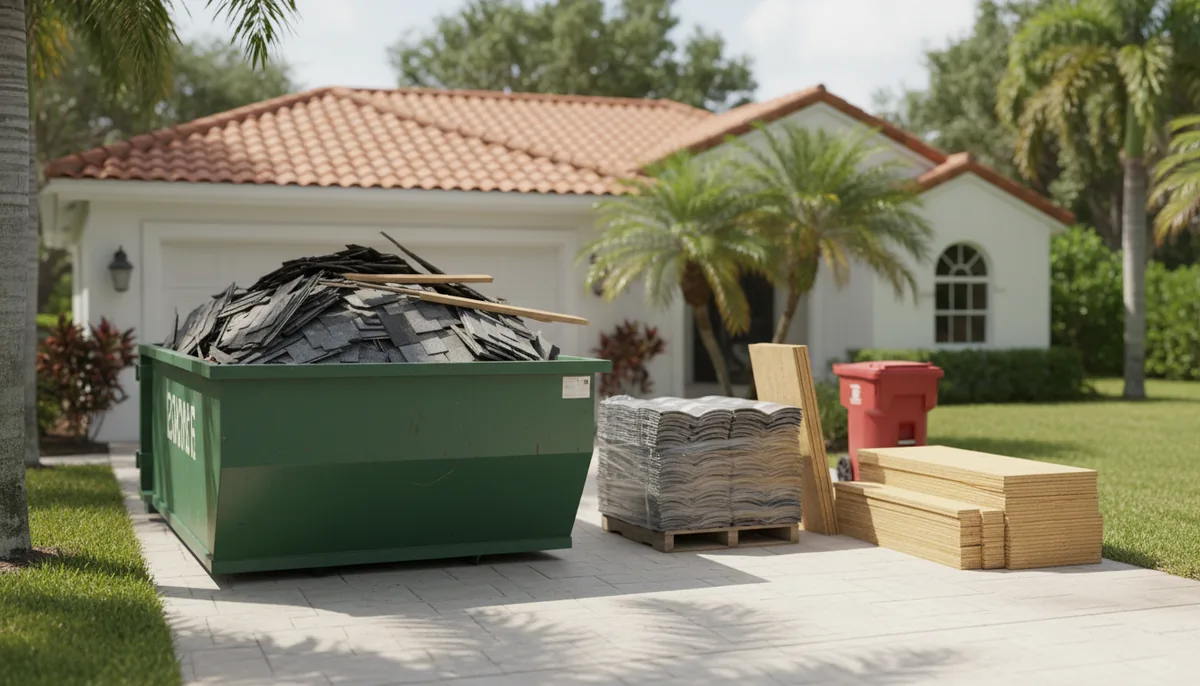
Tile roof maintenance south Florida
By Shelly Marchetti, Florida homeowner advocate. Reviewed by Hal Winstead, Editor, licensed roofing contractor. I spent a Tuesday afternoon in Coral Gables last spring walking a barrel tile roof that had looked fine from the street. The homeowner was proud of it. Then I got up there and found a ridge cap that had been glued down with what looked like silicone caulk and hope. A storm had lifted a corner of it, and the water had been running down the underlayment for months. Felt like a bad Easter egg hunt. The roof was the same age as my youngest kid, and it had never once been inspected.
Most tile roofs don't fail because the tile cracks. They fail because the stuff under the tile gives up. That's the whole ballgame. If you own a tile roof in South Florida, you are not maintaining the pretty clay things you can see from the ground—you're maintaining a water-shedding system that happens to wear a disguise. And if you're not sure yours is in good shape, you need to find out before the next big blow. That's where a real inspection comes in, which is why I send people to a list of tile roofing companies in Florida that the directory keeps current. You still have to do your part. Let's talk about what that looks like.
Here's the thing about tile. It's heavy, it's expensive, and it's unforgiving if you walk on it wrong. But it's also the best roofing material we have down here for reflecting heat and standing up to wind, when it's installed the way it's supposed to be. The problem is that "installed the way it's supposed to be" is doing alot of work in that sentence. I have seen new roofs with tile nailed so tight the tile cracked. I have seen tile chipped by the guys who installed the solar panels. I have seen mortar beds that were never given a chance to cure. A tile roof is not a set-and-forget purchase. It's a relationship.
Let's start with who you let on the roof
Florida roofing contractors are licensed by the Department of Business and Professional Regulation, which is the DBPR. You'll see two kinds of licenses. A certified contractor has a number that starts with CCC and can work anywhere in the state. A registered contractor has a number that starts with RC and is only supposed to work in the local jurisdiction that licensed them. Don't take the contractor's word for it. Look the number up on the DBPR roll yourself before you let anybody set a ladder against your house. This takes you two minutes and it saves you from the guy who claims he's "licensed in Miami-Dade" when he means he watched a YouTube video.
And while we're on the subject of things you should never accept: a contractor who offers to skip the permit. A roof replacement in Florida requires a permit from your local building department and an inspection. If they'll skip it, they'll skip other things. And an unpermitted roof can come back to bite you twice—once when you file an insurance claim and again when you try to sell the house. Walk away. I am not being dramatic. I am being the person who has read the denial letters.
What tile roof maintenance south florida actually means
Let me tell you what tile roof maintenance south florida means in practice. It means you are looking for problems in three layers. The first layer is the tile itself: cracked tiles, slipped tiles, chipped tiles. The second layer is the flashing—that's the metal that seals the edges, the valleys, and the pipe penetrations. The third layer is the underlayment, which is the real roof. Most of the time, you can't see layer three from the ground. But if a tile has slipped, or a ridge cap has lifted, water finds the gap and starts working on the felt underneath. That's how you get rot in the deck and mold in the attic. It rarely starts with a hole in the tile. It starts with a small gap you never knew was there.
Let's call it what it is. The maintenance that matters most is the stuff you can't see from the driveway. And the cheapest maintenance you can do is a yearly visual check after the worst of the heat, and another one after the first big storm. You're looking for debris that holds moisture, palmetto fronds wedged between tiles, and any place where the mortar or the foam that holds ridge caps has pulled away. You're also looking for moss and mildew, which sounds cosmetic but isn't. That organic growth holds water against the tile and can work it's way under the edges.

What a real roof inspection looks like
This is where I get to be a little pedantic. A real roof inspection is not a drone video. It's not a guy standing on your lawn with binoculars. It's someone walking the roof, carefully, who knows where tile is likely to fracture under their weight and where the hidden trouble spots are. They're checking the tile, the flashings, the penetrations, the ridge caps. They're checking the condition of the skylight curbs, which is where I see a lot of failures. And when the roof is old or looks suspect, they should check the attic for signs of active leaking—water stains, damp insulation, daylight coming through.
And here's something a lot of homeowners don't know. The inspection that matters most for your wallet is often the wind mitigation inspection. This is the one form OIR-B1-1802. That form documents six things about your roof and your house: the roof covering, the roof deck attachment, the roof-to-wall connection, the roof geometry, the secondary water resistance, and the opening protection. Florida insurers are required to offer premium discounts for features that qualify. The inspection costs less, usually much less, than the annual discount it can open up. I have seen last-year's discount pay for itself in one billing cycle. That's not a guarantee of what your policy will do, because every policy is different. But you're leaving money on the table if you've never had one done.
What I would actually do: Get the wind mitigation inspection done before you call your insurance agent. If the report shows you're missing strap ties or secondary water barrier, you'll know exactly what to fix to raise your score. And then get the report to your agent. Most of the time they need that form on file to give you the discount. I have been wrong about this before, but not often.

The mortar and the ridge caps
Let's talk about the things that make tile roofs different from shingle roofs, because the maintenance is different. The ridge caps along the peak of your roof are held in place with mortar or foam adhesive. In South Florida wheather, mortar gets brittle. It cracks. It crumbles. And once a ridge cap is loose, it's just a matter of time before a storm wind grabs it and sends it into your neighbor's window. You need to check those ridge caps more than you check anything else. If you see one that's lifted, that's not a "wait for the roofer" problem. That's a "call next week" problem.
The valleys, where two roof slopes meet, are another trouble spot. If the flashing there is old or rusted or poorly sealed, water has an open highway. The mortar that seals the ends of tiles at the rakes and eaves—that needs checking too. And the pipes that stick up through the roof for plumbing vents? The rubber boots around those dry out and crack in the sun. A cracked pipe boot will leak just as fast as a missing tile, and it's a ten dollar part plus an hour of labor compared to the cost of a ceiling repair. You do the math. I don't have to give you averages to tell you which one is cheaper.
The insurance paperwork side
I used to say that I don't do insurance paperwork, but that's not true. I read it. I read it for a living. And I want you to understand one thing clearly: what your policy covers is a matter between you and your insurer. I am not an adjuster, and I'm not a lawyer. But I am the person who tells you that when a denial letter arrives, you do not throw it in the drawer. You read it. You look at the reason. And you look at your policy's declarations page to see what you actually bought.
Since a few years ago, with the passage of SB 4-D (2022), the rules around roofing claims and assignments changed. And there's a law that governs how insurers handle offers and payments for roof claims, which is Florida Statute 627.70132. I am not going to quote the whole thing to you. I'm going to tell you that if you're having a fight with your insurer about a roof claim, you need to read your policy and then get help from someone who knows the law. Your roof can't wait. But you also can't afford to be stampeded into a contract by a public adjuster knocking on your door two days after a storm. Take a breath. Get the inspection. Then make the call.
What I would actually do: If my insurance company denied a roof claim, I would first read my declarations page to confirm what my roof coverage actually was. Then I would look at the denial letter and check the reason against my policy. If it still didn't make sense, I'd find a licensed public adjuster or an attorney who does insurance work. I would not call the contractor who knocked on my door and ask them to "go to bat" with the insurance company. That's not a real service. That's a sales pitch.
Questions I get asked
How often should I have my tile roof inspected?
I'd say every year, minimum, and definately after any storm that brings winds over 40 miles an hour. A lot of people think a tile roof doesn't need checking because the tiles look fine from the street. The tiles aren't the problem. The stuff under and around them is.
Can I walk on my own tile roof to check it?
If you don't know exactly where to step, don't. Tile is not like a shingle roof. You can crack a barrel tile just by standing in the wrong place, and the replacement tile will never match the old one. If you want to do your own check, do it from the ground with a pair of binoculars, and leave the walking to someone who does it daily. One exception: if you have flat tile, you still shouldn't walk on it unless you know the layout of the battens underneath.
Is moss or mildew on my tile roof a real problem?
Yes, because it holds moisture. Moss roots into small cracks and makes them bigger, and the moisture it traps can work its way under the tile and damage the underlayment. You can clean it, but you have to be carefull. Pressure washing a tile roof can force water up under the tiles and do more harm than good. A soft wash by a roofer is usually safer.
How long should a tile roof last in South Florida?
The tile itself can last fifty years or more, easily. But the underlayment underneath it won't last anywhere near that long, and neither will the flashing or the mortar holding the ridge caps. That's why roofers talk about "re-roofing" with tile—often you keep the tile, but you strip it, replace the underlayment and flashing, and re-install the tile. It's a big job, but it's a fraction of the cost of a full tile replacement.
What's a fair way to get an estimate for tile roof work?
Make sure the roofer prices the work per square. A "square" is ten feet by ten feet, which is a hundred square feet. Tile roofs are priced per square for the underlayment, the flashing, and the labor. The price depends on the pitch of your roof and how accessible it is. A steep roof with a three-story drop. A flat roof that's easy to walk. They're different animals. Don't take one bid. Get three. And make sure they all include the permit in the price.
What should I do if a contractor says I need a full roof replacement?
Get a second opinion, especially if the contractor won't show you the specific damage or the code requirement that forces the issue. Some roofers see an older tile roof and smell an insurance claim. A legitimate roofer will walk the roof with you, show you the failed underlayment or the rot, and explain why patching won't hold. If the story is just "this roof is old," get a second opinion before you sign anything. Old is not a defect. Old with active leaks is a different matter.
When you do hire someone, remember the license check. Look for the CCC or RC prefix on the DBPR roll. Ask if they pull the permit themselves. And get the specifics of what they'll fix in writing. The miscommunications I clean up are rarely about price. They're about scope—what exactly was supposed to be fixed, and what was quietly left out. If the quote says "repair ridge caps," and a rafter tail is rotting, that's not a roofing repair. That's a carpenter's job. Depends what is under there. And under there is always where the truth lives.