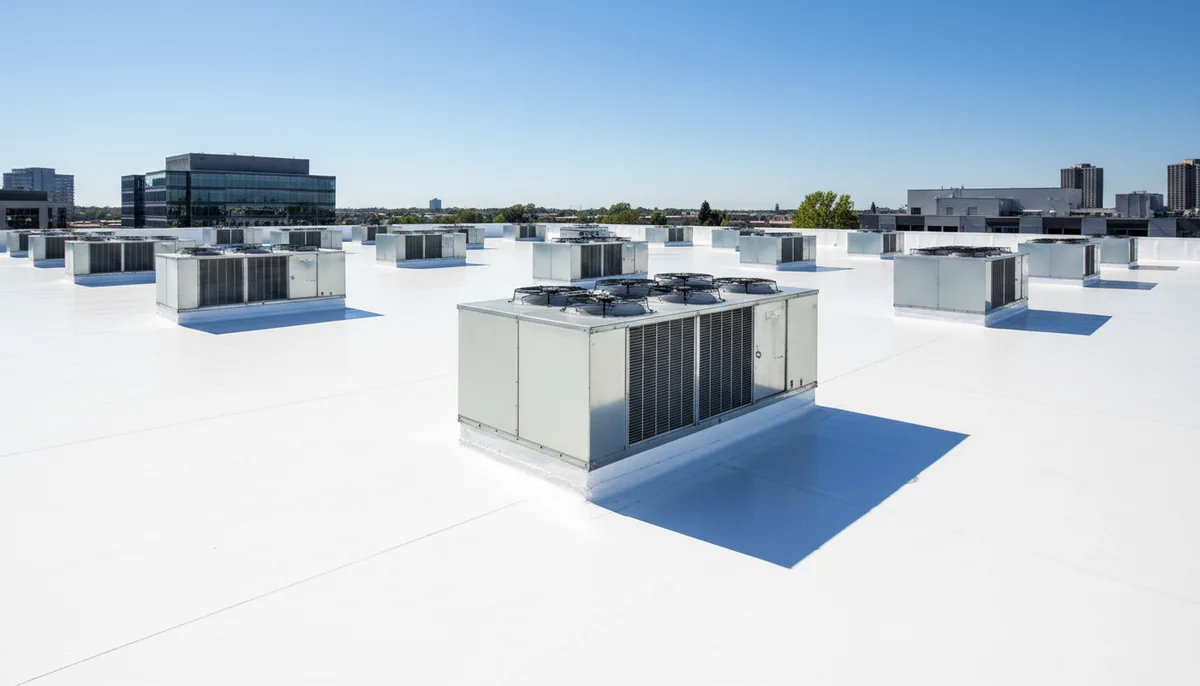
Flat roofing central florida: The Florida Guide
By Dale Prescott, Roofing contractor, Central Florida. Reviewed by Hal Winstead, Editor, licensed roofing contractor.
I remember an afternoon in Davenport, just west of Orlando, where I’d peeled back six layers of trash on a flat commercial roof only to find the deck was sponge. The building owner had been "maintaining" it for fifteen years with rolled roofing and prayer. Temperature was pushing ninety-five, the tar kettle was grumbling, and I knew the quote I was about to hand him would be more than he paid for the whole building back in '98. He looked at me like I'd keyed his truck.
That’s the thing about flat roofing in Central Florida. It looks simple, a big flat box, what could go wrong. It rots in silence, then collapses in a storm. If you’re starting your research, a solid list of flat roofing companies in Florida is a fine place to start. But you need to know what you're asking for before you call.
Flat roofing central Florida is it's own creature. It’s not just a lower pitch, it’s a different set of rules, different materials, and a different way of thinking about water. And the rules that govern it are changing so fast that half the contractors out there haven’t caught up. I sure as hell haven't kept up with all of it, and I've been tearing these things off since before some of my crew could drive.
Why "flat" roofing is never actually flat
Let me start with the basic fact that confuses more homeowners than anything else. A flat roof is pitched. It has to be. Water doesn't care about your intentions, it runs downhill, and if there's no downhill, it finds a way through your ceiling anyway. So we build in a slight slope, call it a taper, maybe a quarter inch per foot, just enough to move the water toward a drain or a scupper. It doesn't look sloped. It's not flat.
The trouble comes when you get a contractor who doesn't understand the nuance. They slap on a new membrane over a roof that's got low spots, puddles form, and then you've got standing water baking in the Florida sun. That water eats the membrane over time. It isn't a matter of if it leaks, it's just deciding when. I've been wrong about this before, but I'm rarely wrong about standing water being a problem.
The legal end of flat roofing central Florida, what changed
Here’s where I lose people, but it matters. Florida roofing contractors are licensed by the Department of Business and Professional Regulation, the DBPR. A certified contractor's licence starts with CCC and lets them work anywhere in the state. A registered contractor's licence starts with RCand is only good in the local jurisdiction that issued it. Always verify the number is active before you let anyone on your roof. Don't take their word for it, check the roll.
And there was a big rule change a few years back that alot of folks still don't know about. The old "25% rule" came from the Florida Building Code. If you repaired or replaced more than 25% of your roof in a year, you had to bring the whole roof up to current code. That was the law for years. Then SB 4-D (2022) changed it. If your roof was built, repaired, or replaced under the 2007 Florida Building Code or any later edition, then only the part you're working on has to meet current code. That's a huge relief if you have a newer roof.
Here's the catch, and it's a big one. The 2007 code didn't take effect until March 1, 2009. So if your roof was finished before that date, the old 25% rule generally still applies. I tell people all the time, get the date, get the paperwork, and know which rule you're playing by before you start. It changes the whole scope of the job.
Permits, inspections, and why skipping them is a mistake
A roof replacement in Florida requires a permit from your local building department and an inspection. I don't care if it's a tiny shed or a warehouse, the permit's part of the job. If a contractor offers to skip the permit so you can save a few bucks, walk away. I've said that for twenty-two years and I'm not stopping now.
For one, an unpermitted roof can complicate an insurance claim something fierce. And it'll be a nightmare when you go to sell the house. The buyer's inspector will find it, the title company will flag it, and you'll be paying to fix it anyway. The permit protects you. It means someone's checking the deck is solid, the fasteners are right, and the flashing isn't a joke. It's not a bureaucracy tax, it's a quality check.
What I would actually do: Before you sign anything, ask the contractor for their full legal name and their DBPR licence number. Then you go to the DBPR website and check it's active and matches. Takes two minutes. Do it for every sub, too.
The biggest single story I've seen on flat roofs is a tear-off that reveals rot. The repair was priced to handle it, but the owner was quoted for a recover. We get the old layers off, the wood's mush, and suddenly the cost jumps because the deck needs to be replaced. That isn't a contractor being dishonest, it's just that nobody knows what's under there until the old layers are gone.
Wind mitigation, the discount hiding in your paperwork
This is the part where I tell you how to save money, and it has nothing to do with haggling over the roof price. Florida law requires insurers to offer premium discounts for homes that have certain wind-resistant features. The inspection that documents these features is a wind mitigation inspection, and it uses the standard form OIR-B1-1802.
The inspector is looking at roof covering, roof deck attachment, how the roof connects to the walls, the geometry of the roof, wether there's secondary water resistance, and the opening protection. Things like impact-rated windows or shutters. If your flat roof has a proper secondary water barrier, a peel-and-stick membrane under the main layer, that counts. It's a significant point on the form.
Here's what gets me. A wind mitigation inspection costs maybe a couple hundred bucks, and the annual discount on your insurance premium can be way more than that. It pays for itself in the first year. But I meet people every day who have no idea it exists. They're paying full freight when they don't have to. Every Florida homeowner should get one. Once a year, someone asks me why their neighbor pays less for insurance on a bigger house. Nine times out of ten, it's the wind mitigation discount.
And if you're looking at this through the lens of Citizens Property Insurance Corporation, the state-backed insurer of last resort, this stuff matters even more. They're strict about roof condition. A flat roof that's nearing the end of its useful life might not even qualify for coverage. Or the premium is brutal.
Should you coat it or replace it?
This is the question I get every week. The flat roof is leaking, but it's only fifteen years old. Can't we just put a new coating on it and call it done? Sometimes. Depends entirely on what's under there. There are silicone and acrylic coatings that work beautifully as a maintainance layer on a sound existing membrane. But they're not a miracle cure for a roof that's already delaminated or has saturated insulation underneath. You're essentially sealing in the problem.
The honest answer is that coatings buy time. They don't reset the clock. If a roof's got good structure and a decent membrane that's just showing its age, a top-quality coating job can give you another five years. It's a legitimate option. But it's not a replacement. And there are contractors who'll sell you a coating job knowing you need a full tear-off, make a quick buck, and leave you with a leaky mess in a year. Find someone who tells you the truth even when it costs them the job.
What I would actually do: If a contractor tells you a coating will fix it, ask them point blank: "Will this fix the problem I have right now, or just make it leak slower?" Watch their eyes. The good ones will tell you straight.
Modified bitumen, TPO, and the alphabet soup of materials
I run tile and shingle crews, that's my bread and butter. But the flat roof business is all about the membrane. You've got modified bitumen, which is the modern descendant of built-up roofing, a layered system of asphalt and felt that's been the standard for decades. Then you've got TPO, a single-ply membrane that's white and reflects heat, which is a big deal in Florida. And EPDM, the black rubber membrane that's been around forever.
Which one's best? Depends what is under there, depends on the slope, depends on whether there's foot traffic, depends on your budget. I'm not going to tell you one is king because that's how you end up with the wrong material on the wrong building. A good contractor will walk you through the options for your specific roof, not just push whatever they've got a deal on this month.
A roof that looks flat but has a slight slope and can handle regular traffic, modified bitumen is a solid, workhorse choice. It takes abuse. A TPO roof is excellent at reflecting heat and saving energy costs, but it doesn't like people walking on it as much. EPDM is cost-effective and tough, but it doesn't have great energy performance. It's all trade-offs. There's no single best roof.
Questions I get asked
Can I repair a small leak in my flat roof without replacing the whole thing?
Yes, you can, if the leak is isolated the membrane is still in good shape around it. Patching a flat roof is a legitimate repair. But if the membrane is blistered, brittle, or has had multiple patches already, the full replacement is usually the cheaper long-term path. I've seen roofs that were 90% patches by weight. That's not a roof anymore, it's a quilt.
Does my flat roof have to be on the 2007 code to get the new 25% rule exemption?
That's the long and short of it. SB 4-D (2022) set that date. If the roof was built, repaired, or replaced to the 2007 Florida Building Code or any later code, then the repair only needs to bring the repaired section up to current code. If it's older than that, the old rule applies and the whole roof may need to be brought up to code once you pass the repair threshold.
What makes a flat roof cost more than a shingle roof?
The materials are more industrial, and the labor's different. There's no shingle counting, it's membrane, adhesives, and heat welding. The cost is typically priced per square, which is 100 square feet. A flat roof also needs a scuppers, drain, and all the details. It depends on the pitch and access as much as the size.
Will my insurance company drop me if my flat roof is old?
I can't speak for any insurance policy, coverage varies by policy and by company. What I can tell you is that Florida property insurers are paying attention to roof age and condition, particularly right now. If your roof is over fifteen years old, some policies won't offer the same terms for replacement coverage. Read your declarations page and see what it actually says about roof coverage.
Does a flat roof hurt my resale value?
It can, honestley. There's no way around the fact that some buyers are spooked by a flat roof. They've heard the horror stories. But a flat roof with a recent wind mitigation inspection and a signed, closed permit for the new installation is not the same animal. The document trail takes away the fear. I've seen a flat roof with a perfect file sell easier than a shingle roof with no records.
How do I get started if I'm ready to replace?
Get three quotes. Not two. Three. Bring the manufacturer's specs to the conversation. Talk about what happens to the old layers, because they should be removed. Ask them how long they've been running flat roof jobs in this area. And check the DBPR roll. If a quote is so low it seems like a gift, remember that the cheapest bid is just the first cheque some homeowner writes for a disaster.