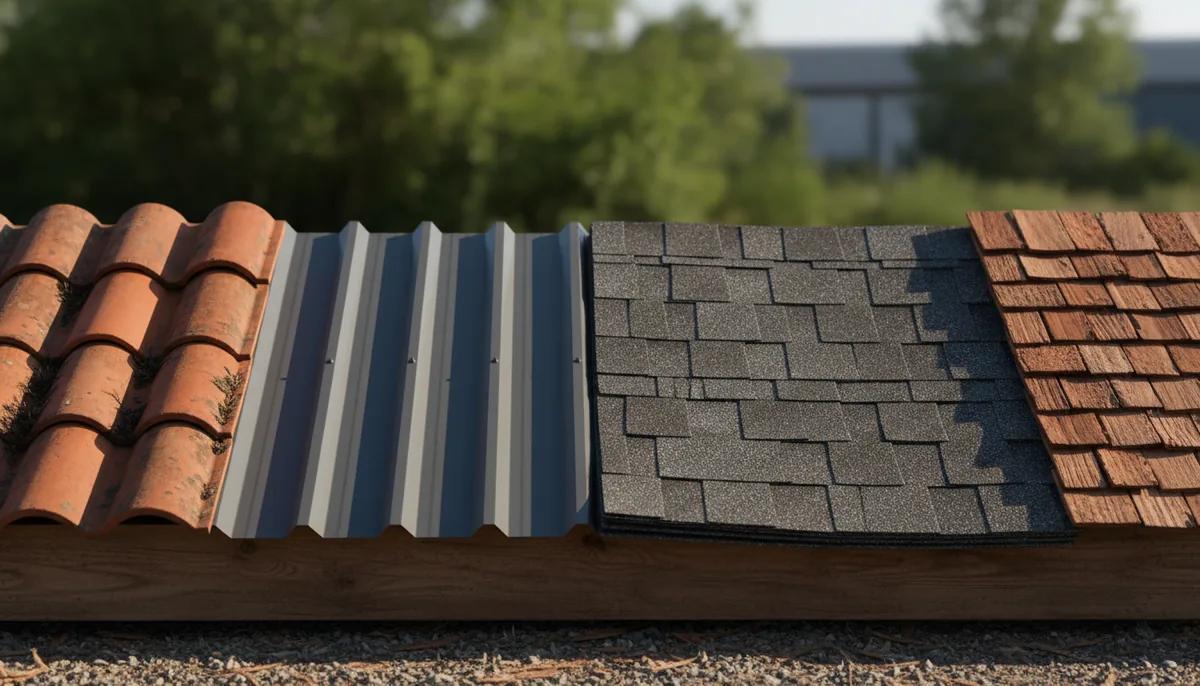
How long does a barrel tile roof last in florida
By Shelly Marchetti, Florida homeowner advocate. Reviewed by Hal Winstead, Editor, licensed roofing contractor.
I spent a Thursday morning in a Kissimmee garage with a homeowner who had a barrel tile roof that was supposedly "leak-free" per the seller's disclosure. The roof was eleven years old, and the paper backing under those beautifull red half-rounds had rotted to the point where you could see daylight from the inside. We weren't looking at the tiles at all. We were looking at what was underneath them, and that is where the whole story lives.
You called it a barrel tile roof, but what you own is really a system. And in Florida, the system fails long before the clay does.
Let me save you the phone call I get every single week. Tile roofing companies in Florida will happily quote you a tear-off, but you need to understand what you are buying and how long it will actually survive the Florida sun, rain, and wind before you pick up the phone.
The honest answer is "the tiles last forever, the roof doesn't"
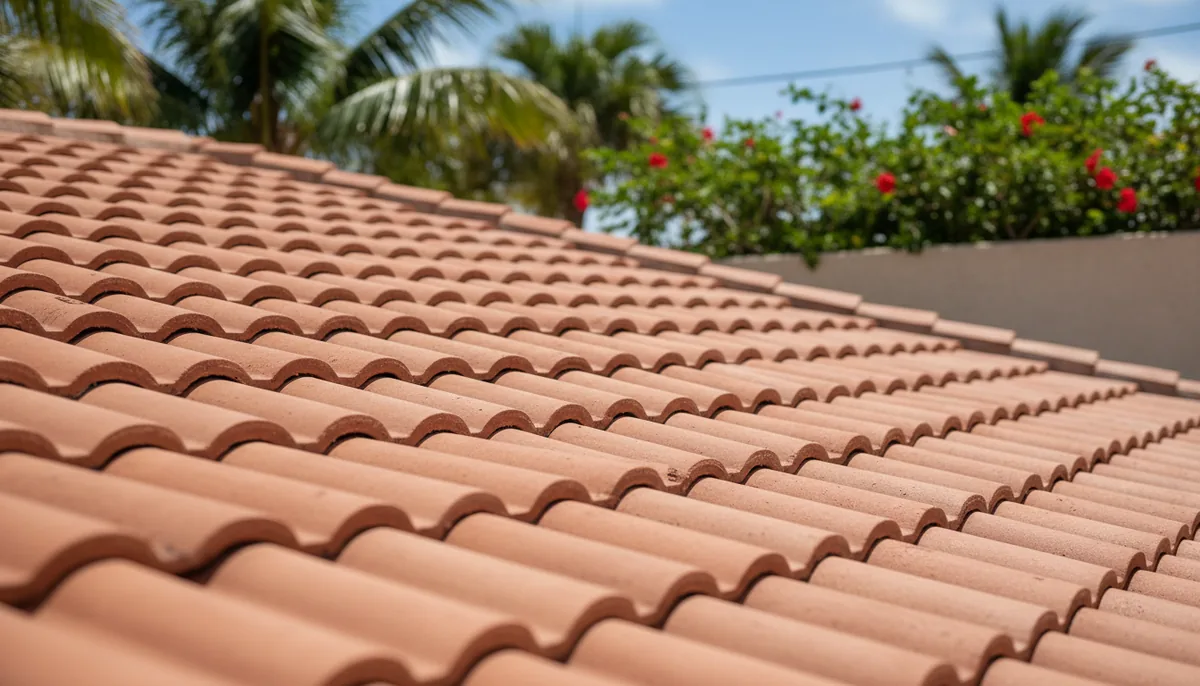
That barrel tile on your roof is basically kiln-fired dirt. It can last a hundred years. I of seen tile that outlived the house it sat on. But the roof assembly underneath it—the underlayment, the flashings, the nails, the battens—that stuff is what actually keeps the water out. And that stuff is not built to outlast your mortgage.
The common wisdom you will find online says 30 to 50 years. Call it 25 to 35 for a realistic Florida number if the thing was installed tight and the attic is vented right. But here is the problem: I have been wrong about this before, and so has every roofer you will ever meet. Some tile roofs in Florida start leaking at year 12 because the felt underlayment baked like a potato chip. Others are fine at year 30 because they have a cool roof coating or a secondary barrier under the tile. Depends what is under there.
You are not buying a 50-year roof. You are buying a 20-year underlayment with expensive ceramic armor bolted on top.
What actually kills a tile roof in Florida
The sun destroys the underlayment first. Then the wind gets under a loose tile and lifts it. Then the rain finds the seam. It is not a mysterious proccess.
- Heat degradation: The modified bitumen or felt under the tiles gets brittle and cracks.
- Wind-driven rain: Florida storms push water sideways, and barrel tile profiles have those lovely curves that actually funnel water in certain directions.
- Loose tiles: A tile that has shifted or cracked in the first course lets water run straight down the roof deck.
- Flashing failures: The metal where the tile meets a wall or chimney rusts or pulls away. This is your number one leak point, not the field of the roof.
What I tell homeowners is to stop staring at the pretty tiles and start looking at the valleys, the penetrations, and the edges. That is where the roof dies.
Permits and licences matter more than the shingle count
Any contractor who tells you they can swap out a tile roof without pulling a permit in Florida is lying to you. A roof replacement requires a permit from your local building department and an inspection. Full stop. I have seen unpermitted roofs end a home sale. I have seen insurance companies deny claims because the roof wasn't permitted. It is not a paperwork technicality—it is the difference between a legal roof and a liability.
Florida roofing contractors are licensed by the Department of Business and Professional Regulation, the DBPR. A certified contractor has a licence with a CCC prefix and can work anywhere in the state. A registered contractor has an RC prefix and can only work in the jurisdiction that issued it. Verify that number is active before you let anyone on a ladder.
Do not take my word for it. Go to the DBPR roll yourself and punch in the licence number.
What I would actually do: Pull the DBPR roll up on your phone right there in the driveway while the contractor is giving you a quote. Ask them their licence number. Watch their face when your thumbs start moving.
The wind mitigation inspection is your quiet money-maker
Here is the thing nobody tells you when you buy a barrel tile roof: Florida law requires insurers to give you a discount for certain wind-resistant features. There is a form called OIR-B1-1802, and a certified inspector documents your roof covering, roof deck attachment, roof-to-wall connections, roof geometry, secondary water resistance, and opening protection.
I charge far less for that inspection than the annual discount it unlocks for most homeowners. Call it a hundred and fifty bucks saving you three hundred a year. The math does itself.
After a hurricane season or two, just getting a fresh wind mitigation inspection can shave real money off your premium. And if a contractor mentions a specific dollar amount you'll save, be suspicious. I never promise a figure because it depends on your insurer and your policy. That number is between you and your declarations page.
The SB 4-D question you need to ask before you buy
If you are buying a house with a barrel tile roof right now, ask about the age of the roof and wether the seller ever filed a claim under the roofing law that changed everything for Florida insurers. I am talking about SB 4-D (2022), the law that scaled back what insurers have to pay for older roofs.
Insurers now have a pathway to deny coverage for roofs older than fifteen years unless you can prove with a documented inspection that the roof has at least five years of useful life left. Some policies are written against Florida Statute 627.70132, which governs these roof claim provisions.
Read your declarations page. Read the policy language itself. And if you are shopping for a home with a 15-plus-year-old tile roof, expect the insurance quote to be painful or non-existent. The roof age is not a cosmetic issue anymore.
What I would actually do: If you are buying an older tile roof home, put a condition in your contract that the seller provides you a valid wind mitigation inspection report dated within ninety days—and that the report indicates at least five years of useful life. You are buying the report, not the roof, and the report is what the insurer will actually look at.
The one question that separates a real roofer from a guy with a truck
Ask about proper underlayment.
That sounds too simple, but the difference between bargain tile installations and quality ones is the layers you never see. A professional contractor will talk about high-temp underlayment, about using a double layer in valleys, about the right fasteners for your specific roof deck. A fly-by-night operator will talk about how quick the job goes and how great the tile looks.
The tile looks great for ten years regardless. The question is whether the roof is still dry at year fifteen when the insurance company comes knocking.
Questions I get asked
How long does a barrel tile roof last in Florida before it leaks?
Realistically, you should expect the underlayment to need attention between 15 and 25 years, even if the tiles look fine. The clay itself can last a century, but the waterproofing membrane underneath is the true lifespan of the roof. When you start seeing granules in the gutters or cracked grout in the mortar bed under the tiles, you are on borrowed time.
Can I just replace the underlayment and keep the old tile?
Yes, but it is dusty, expensive, and requires pulling up every tile and laying them down again carefully. The value depends on how many tiles are already broken or chipped. I have seen homeowners do a "re-underlayment" for half the cost of a full tear-off, but I have also seen them end up spending twice after discovering thirty percent of the tiles were cracked. Get a roofer to inspect the tiles in person before committing to that route.
Does my insurance company care how old my tile roof is?
Yes. Policies increasingly contain age restrictions for roof coverage, and some insurers won't write a policy if the roof is older than fifteen or twenty years. The specific cutoff varies by policy and by company. That is not something I can tell you without reading your actual declarations page. And I am not a licensed adjuster, so I point you to the policy language and to your agent.
What is the My Safe Florida Home program?
It is a state program that provides free wind mitigation inspections and matching grants for certain hurricane-hardening improvements. You apply directly to the state. Funding comes and goes, but it is worth a check before you pay out of pocket for an inspection. A completed wind mitigation report from the program can serve the same purpose as a private one for insurance discount purposes.
Is a barrel tile roof better in a hurricane than a shingle roof?
They are heavier and more wind-resistant than shingles when installed correctly, but they are not invincible. The main weaknesses are the tiles at the edges and ridge line, and the underlayment if it is old or brittle. A tile roof with a proper secondary water barrier is an excellent system. A tile roof with rotted underlayment is worse than a cheap shingle roof because the tiles give you false confidence.
What does a tile roof cost in Florida?
Tile roofing is priced per square, which is a ten-foot by ten-foot area. Clay tile runs substantially more than concrete tile, and the cost of reinforcing your roof frame to hold the weight can add thousands. A full tear-off of existing shingles and re-roofing in barrel tile will run far more than architectural shingles. I won't give you a number because prices have swung wildly and your pitch and access change everything. Get three itemized quotes and compare the underlayment specs side by side.