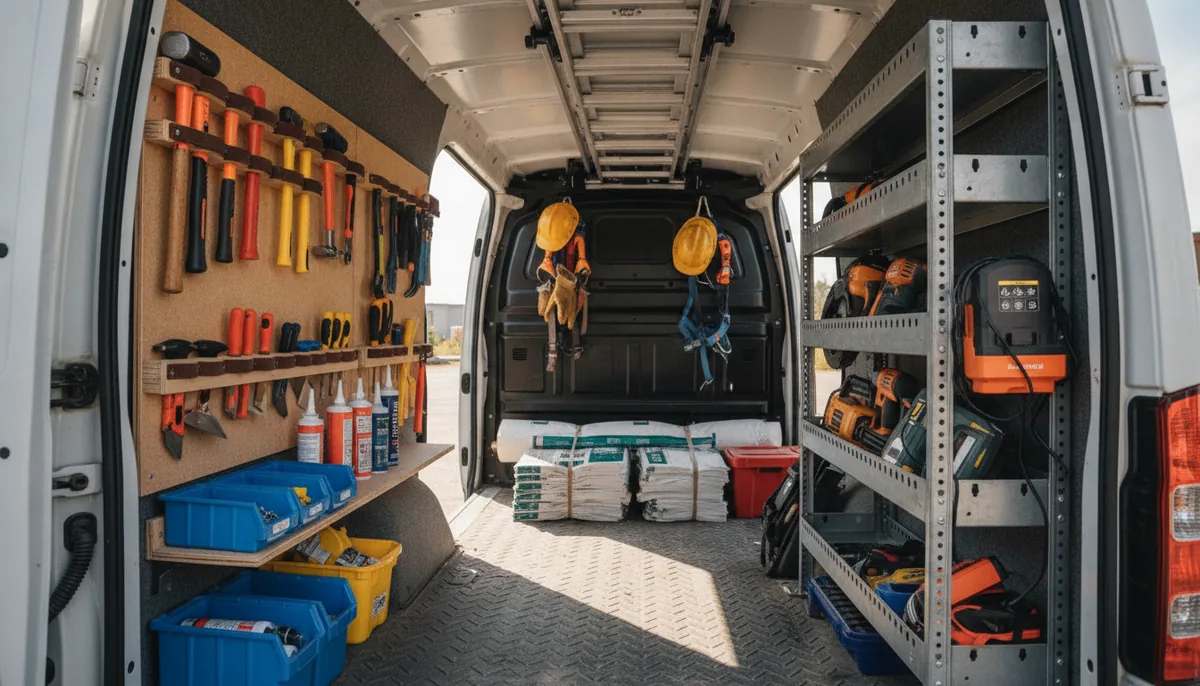
How to get a roofing license in Florida: A Working Contractor's Take
By Marcy Doleman, Commercial roofing estimator. Reviewed by Hal Winstead, Editor, licensed roofing contractor. I spent a Tuesday morning in Fort Myers on a warehouse roof that was only three years old, and the owner was furious because it was leaking like a sieve. The problem wasn't the membrane. The problem was the guy who installed it was working off a licensed friend's number, and the workmanship was garbage. I was up there with a moisture meter and a growing sense of dread because I knew the fix would cost more than the original install. That’s when I started paying attention to what a licence actually means on a roof.
If you're looking for someone to fix that mess, or if you're thinking about getting into the trade yourself, you need to know who is actually legal to stand on that deck. When you flip through the roofing companies in Florida, every one of them should have a number you can check. But not every number means what the guy with the truck says it means. I’ve been estimating commercial flat work for fifteen years, and I still see contractors, and frankly some homeowners, get this wrong.
Do you even need a Florida roofing license?
Yes. If you are contracting to repair or replace a roof on someone else’s building in Florida, you need to be licensed with the Department of Business and Professional Regulation. DBPR handles it. I don't care if it's a strip mall in Miami or a shed attached to a school in Pensacola. There are a couple of weird exceptions for very small jobs, but if you're doing this for money, you need the card.
Working unlicensed is how people end up in bad spots. I of been asked to "look the other way" on a permit more times than I can count, and I always walk. The worst part is that an unlicensed roofer often charges almost as much as a licensed one, but you get zero recourse when it fails.

CCC versus RC: what the prefixes actually tell you
Florida roofing contractors hold one of two licences, and the prefix tells you exactly how far they can roam. A CERTIFIED roofing contractor holds a licence begining with the letters CCC. That's the state licence. They can work anywhere in Florida because they passed the state exam and met the statewide criteria. If you're doing commercial work, you want to see CCC on the state's roll. I've held a CCC for years, and I've had to turn down work in counties I wasn't registered in before I got it.
A REGISTERED roofing contractor holds a licence beginning with RC. That is a local license. It means they can work only in the local jurisdiction that issued it. It's still a legitimate roofing licence, but it doesn't travel. So if a guy from one county tells you he can roof your building in the next county over and he only has an RC, he's not legal to do that job. Always verify the number is active before hiring.
And here is a pet peeve of mine: RF is NOT a roofing prefix. RF denotes a registered plumbing contractor. I've seen an RF number passed off as a roofing licence more than once, and every single time the work was a disaster. If someone flashes an RF number at you, they are a plumber pretending to be a roofer, and you should show them the gate.
What I would actually do: Before I let anyone bid on my own property, I would go to the DBPR roll and type in their exact business name. I wouldn't accept a screenshot of a licence. Screenshots can be edited. I check the roll myself, right then, on my phone.
A permit is your friend, and the law
Here's the part that gets people in trouble. A roof replacement in Florida requires a permit pulled from the local building department. That means an inspection. It's not optional. A contractor who offers to skip the permit is a contractor to walk away from. I cannot say that plainly enough.
The reason this matters beyond the legal hassle is the insurance angle. An unpermitted roof can complicate an insurance claim in a big way. If a storm damages that roof you had put on without a permit, the adjuster might ask for the permit history. And if the permit isn't there, the carrier could deny the claim or drop you. I've seen this happen. Coverage varies by policy, so do not take my word for what your specific plan says. Read your declarations page and talk to your agent. But understand that the permit is your proof the work was done to code. Without it, you're holding a bag.
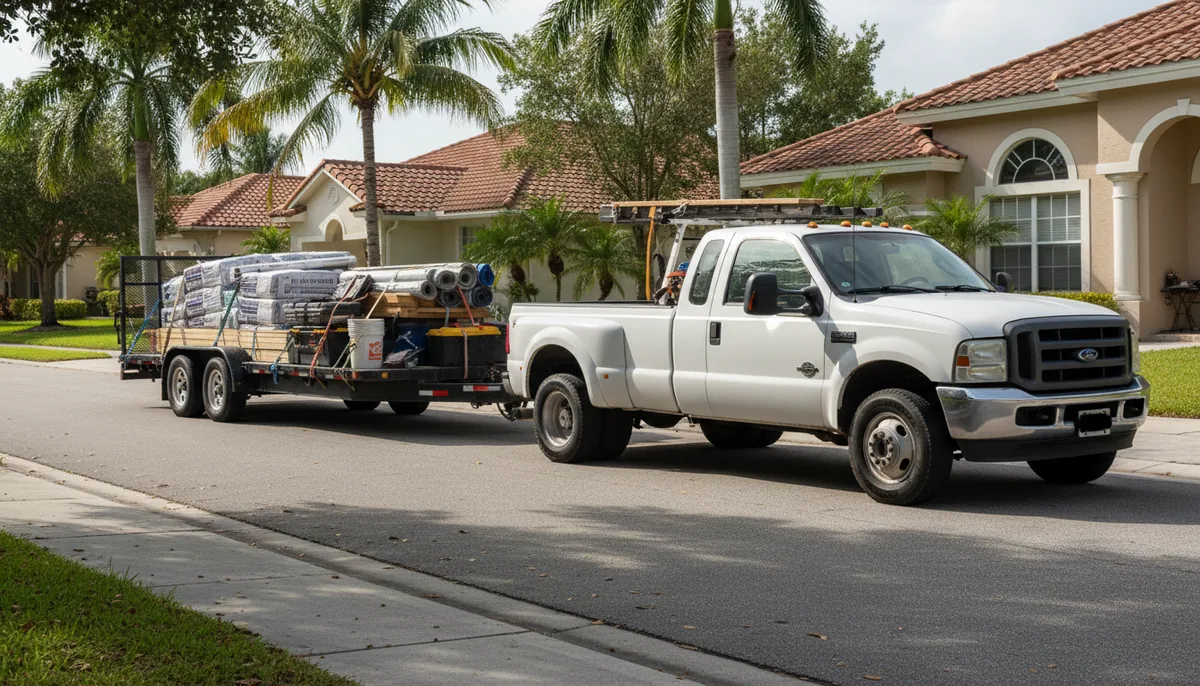
The 25% rule nobody can stop talking about
This is the one that confuses everyone, including some contractors I know. There was an old rule in the Florida Building Code that said if you repaired or replaced more than 25% of a roof in any 12-month period, you had to bring the entire roof up to current code. That meant a small patch on an old roof could trigger a full replacement. It happened alot, and it was a nasty surprise for a lot of building owners.
That changed recently. SB 4-D, which became effective 26 May 2022, rewrote the rule. If your roof was built, repaired or replaced to the 2007 Florida Building Code or any later edition, then only the portion being worked on must meet current code. That means a full replacement is no longer automatically triggered just because you're patching more than a quarter of the roof.
But there's a catch. The 2007 code took effect on 1 March 2009. So if your roof was built before that date, it generally does not qualify for the new rule. If your building has a roof from the 1990s, or even 2005, and you need significant repairs, the old rules still apply and that 25% threshold could force a full tear-off. I always check the age of the existing system before I give anyone a number, because this one blows budgets. I have been wrong about this before, usually when I assumed the roof was older than it looked. Check the paperwork, not the shingle color.
How to become a roofing contractor in Florida
If you're reading this because you want to get into the business, the path is pretty clear, though it takes time. You need to meet the experiance requirement, which means you have to have worked in the trade under a licensed contractor for a certain number of years. Then you have to pass the state licensing exam. The exam covers business management, laws, and the actual construction practices. It's no joke. I studied for months.
You also have to provide financial statements and show you have the right insurance and workers' comp coverage. The state wants to know you can actually run a business, not just swing a hammer. For the certified licence, that's the CCC, the exam is the same for everyone across the state. For the registered licence, the RC, you're dealing with your local board, and the requirements can vary a bit by area. The starting point is always the DBPR website. They have the candidate handbook and all the forms you need.
The hardest part isn't the test. The hardest part is the years of work experience you need before you can even sit for the exam. You have to find a licensed contractor willing to take you under their wing and actually sign off on your hours. I got my start working for a guy in Orlando who ran a tight crew. I was the one on the deck, pulling up old modified bitumen in the July heat. It was brutal, but it bought me the time I needed.
What I would actually do: If you're looking to build a brand new roof in Florida, I would get three bids, and I would walk the roof with each contractor. A good estimator will take you up there and show you the weak spots, the flashings, the penetrations. The contractor who says "trust me, I've been doing this for twenty years" but won't get on the ladder is the one I wouldn't trust.
Insurance, storm claims, and that state form
Because I do commercial work, I have to deal with insurance companies all the time. If you are filing a claim for roof damage, know that Florida has specific rules. Florida Statute 627.70132 is the one that governs assignments of benefits, which is the document you sign that lets a contractor deal with your insurance company directly. A lot of roofing contractors push this hard. You need to read that document carefully before you sign it. Some are fine, but some lock you into a contract that the adjuster might not approve.
The state also uses a specific form, form OIR-B1-1802, which is the uniform property insurance claim form. This is the one you fill out when you make a claim. And if you're dealing with Citizens Property Insurance Corporation, the state-backed insurer, they have their own requirements for what a roof needs to look like before they'll write a policy. The age of the roof is a huge factor there. They'll often require a roof inspection to prove it has enough life left in it.
I'm not a lawyer and I'm not a licensed adjuster. I'm an estimator, so I price the repair and I look at the assumptions the adjuster made. But I've seen enough claims to know that how you file the paperwork matters as much as the damage itself. If you're in a hurricane-prone part of the state, and let's be honest, that's all of it, the state has programs like My Safe Florida Home that can help you harden your roof. But those programs have specific application windows and requirements. Do not assume you qualify. Research it.
Questions I get asked
Do I need a new roof to pass a wind mitigation inspection?
No. A wind mitigation inspection looks at how your existing roof is attached to the structure, the shape of the roof, and wether you have things like secondary water barriers. An older roof can still pass if it's in good shape and properly attached. The inspector is checking for features that reduce risk, not just the date on the shingle.
Can I hire a registered contractor from another county?
You can hire them, but they cannot legally perform the work in your county unless they are also registered or certified there. An RC license is local. If the work is bad and they are outside their jurisdiction, your recourse is a lot more complicated. I always recommend a CCC holder for commercial work simply because the state licensing has that broader authority.
What happens if I get a permit but the work is never inspected?
That's a problem. The permit is usually closed out after a final inspection. If you never schedule the inspection, the permit stays open, and that can show up as an issue when you sell the property. The city or county might also require you to pay to have it closed out later. I've seen permits from ten years ago get found during a title search. It causes a headache and a fee.
What does the insurance company actually look at on a roof?
That depends on your policy, so read it. Generally, they look at the age of the roof, the condition of the flashing, and any signs of previous repairs or leaks. They want to know if the roof is likely to survive a storm or if it's already failing. They don't care if it looks fine from the ground. They want to see photographs and documentation.
Is a coating considered a roof replacement?
No, not technically. A coating is typically a restoration. It's a way to extend the life of an existing membrane. However, some insurance companies treat a coated roof differently the age of the roof. And the building code can have opinions on it too. If you're putting a coating over an old modified bitumen roof that has a bunch of repairs, I would want to know exactly what's underneath it before I recommended it. You can cover a lot of sins with a coating, but you can't fix structural issues with paint.
More from the site
- Florida roofing license course: A Working Contractor's Take
- Florida roofing license practice test: A Working Contractor's Take
- Roofing license florida requirements: A Working Contractor's Take
- Florida roofing license application: A Working Contractor's Take
- Florida roofing license exam: A Working Contractor's Take