Metal roof vs shingles florida
By Shelly Marchetti, Florida homeowner advocate. Reviewed by Hal Winstead, Editor, licensed roofing contractor.
It was a Tuesday afternoon in Port St. Lucie, and I was standing in a woman's attic while the heat pressed down like a wet blanket. We were looking at the underside of her roof deck, and I was trying to explain why the plywood had those dark water stains. She had just been handed a quote for a "storm-proof" shingle roof that was somehow two thousand dollars cheaper than the metal estimate sitting on her kitchen table. She looked at me and asked, "Shelly, if the shingle is cheaper and it looks fine, why would I ever pay for metal?"
That is the exact moment I hate, because there is no single right answer. It depends on what is under there, how the roof is built, and what she actually wants from a roof for the next thirty years. But I told her the truth: a cheaper quote is only cheaper if it covers the same work. And in Florida, the work is never just about the pretty surface you see from the street. Before you make that call yourself, talk to a few metal roofing companies in Florida and get a feel for what they actually inspect, not just what they sell.
I've been doing this for a long time. I read the fine print so you don't have to. But I of been wrong about this before, and so has every contractor you will ever meet. The best any of us can do is lay out the facts, ask the right questions, and make sure the decision is yours, not the salesperson's.
Why everyone in Florida is suddenly asking this
Ask ten homeowners why they are thinking about metal, and nine will say the same thing: "My neighbor got one after the last hurricane, and it still looks perfect." That is a fair reason to look. But it is not a complete reason to buy. You are not buying your neighbor's roof, you are buying one that has to sit on top of your house, with your trusses and your insurance policy.
The real reason this question comes up so much is the age of the current roof. In Florida, we live in a state where a roof is not a lifetime purchase, it is a maintainance cycle. If your shingles are fifteen years old and you are starting to see granules in the gutters, you are already in the market. The question is just wether you want to do this again in twenty years or whether you want to try to make it the last roof you ever buy.
And look, I get the appeal of never thinking about shingles again. Metal is loud in the rain, sure, but it is also a solid barrier. But it only works if the installation is right, and "right" is a word that gets thrown around loosely when there is a commission on the line.

What the shingle sales pitch leaves out
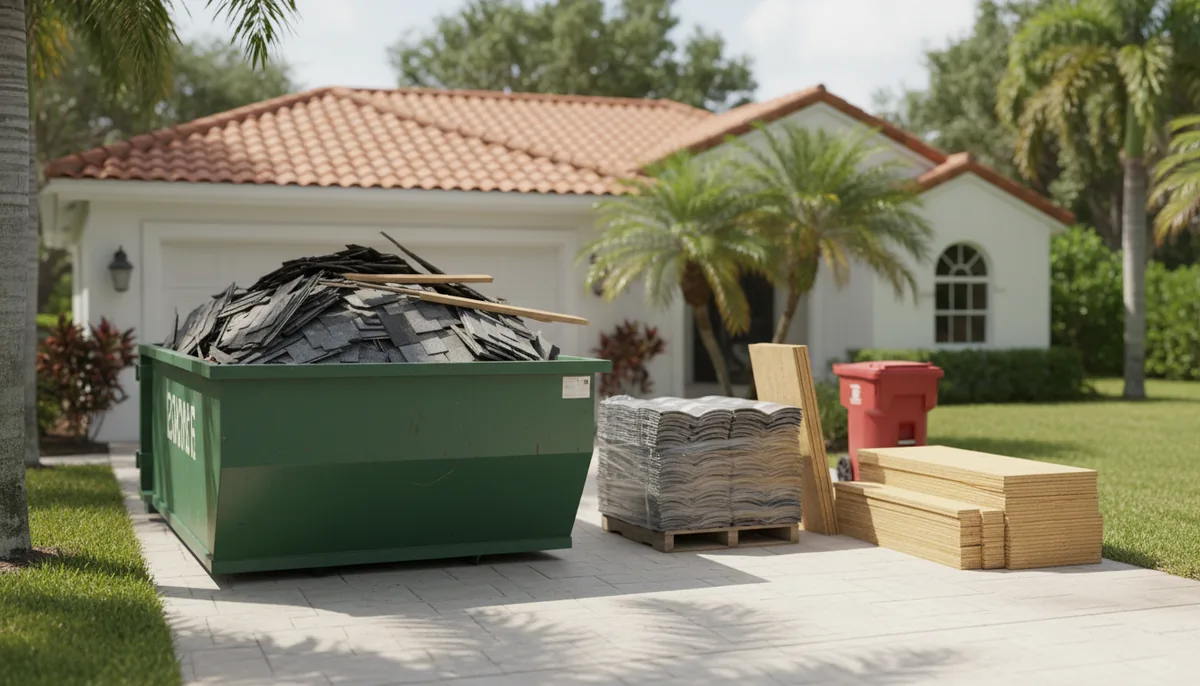
A shingle roof is a system, not a skin. It has underlayment, flashing, ridge vents, and a deck that has to be solid. When I sit with a homeowner who has a quote for architectural shingles, I look for line items. Does that price include replacing the deck where it is rotten? Does it include new flashing around the chimney and the pipe boots? If the answer is "we will know when we get up there," then the price on the paper is not the price you will pay.
That is not necessarily a scam. It is just the reality of demolition. You cannot see the damage until the old roof is off. But a contractor worth their salt will build a contingency into the contract, or at least tell you honestley that the number goes up if they find wet wood. A contractor who quotes you a fixed price and then acts surprised when the deck is bad is either inexperienced or hoping you will not look at the change order too closely.
Shingles have gotten better. I will give them that. But they still have a lifespan that is measured in decades, not lifetimes. And in this state, the sun cooks them, the rain pounds them, and the wind peels them if the sealant fails. If you are planning to die in this house, that might be fine. If you are planning to sell in ten years, the next buyer is going to look at the roof age and use it against you, no matter how pretty it looks.
What I would actually do: If you are leaning shingles, get the bid written line by line. Ask specifically what happens to the price if the deck is rotted under the old shingles. Get the answer in writing. A verbal promise is not worth the paper it is printed on, and in Florida, the paper is the only thing that protects you when the sky falls.

The metal argument is not just about looks
Metal roof vs shingles Florida is a conversation that usually starts with aesthetics. People either love the clean vertical lines or they think standing seam looks like a barn. I am not here to argue taste. I am here to talk about the physics of a hurricane trying to peel the top off your house.
A properly installed metal roof has interlocking panels that create a continuous surface. A shingle roof is made of individual tabs that are each relying on a strip of adhesive to keep them down. When the wind gets under one tab, it can start a chain reaction. A metal panel does not have that weak point because the fasteners are hidden and the seams are mechanically seamed or clipped. I am not saying metal is hurricane proof. Nobody sane promises that. But it is a different category of defense.
Now, the code. You have probably heard about the new building codes that went into effect after the last big storm season. The rules for roof coverings are stricter in certain parts of Florida than they are in others, depending on your wind zone. Do not ask me to quote the exact number, because it changes by county and it changes by the shape of your roof. What I can tell you is that a shingle roof has to be rated for the wind speed of your specific address. A metal roof has to be rated too, but the fastening pattern is often simpler to get right in the field.
The pitch of your roof matters more than you think. A steep roof sheds water but catches wind. A low-slope roof is easier to walk on but can trap water if the underlayment fails. Metal handles steep slopes beautifully. Shingles can handle them too, but the installation gets trickier and more dangerous, which means the labor cost goes up. If your roof is a simple gable, you have options. If it is a complicated hip-and-valley mess with dormers and skylights, you are going to pay a premium no matter what material you choose, because every penetration is a chance for a leak.
What I would actually do: Before you get material quotes, ask a contractor to walk the roof and tell you what the actual geometry looks like from the top. A "simple 20-square roof" can become a 30-square job real quick when you count the waste on hips and valleys. Get them to put the square footage on the estimate. Then compare prices per square, not total dollar amounts on a page.
Let's talk about the permit and the licence before you panic
I have to stop here and tell you a story that makes me want to throw a clipboard. There is a guy down in Cape Coral who had a contractor tell him, "You don't need a permit for this, we do it all the time." That is a lie. A roof replacement in Florida requires a permit pulled from the local building department, and it requires an inspection. Full stop. If a contractor offers to skip it, they are telling you they do not want an inspector looking at their work. Walk away.
And do not forget to check the licence. Florida roofing contractors are licensed by the Department of Business and Professional Regulation, DBPR. A certified contractor has a licence that starts with CCC and can work anywhere in the state. A registered contractor starts with RC and can only work in the jurisdiction that licensed them. If the number on their truck does not match the name on the contract, or if the licence is not active, you are not hiring a roofer. You are hiring a gamble.
Why do I care about the permit so much? Because an unpermitted roof can complicate an insurance claim and it can absolutely kill a home sale. The buyer's bank will ask for permits. The title company will ask for permits. And when you have to say "we did not get one," that conversation goes badly for you, not for the contractor who disappeared.
This is the part about insurance discounts nobody tells you
Everybody wants a discount on their homeowners insurance. Florida insurers are required to offer premium discounts for certain wind mitigation features, and the way they document those features is a report called a wind mitigation inspection. The form you will hear about is OIR-B1-1802. That form looks at things like the roof covering, the deck attachment, the roof-to-wall connection, the roof geometry, and whether you have secondary water resistance.
Metal roofs often score well on the roof covering portion because they are a high-wind-rated material. But here is the catch: the discount will not pay for the roof. Not even close. I tell people to think of it like a coupon, not a windfall. The inspection costs a couple hundred dollars, give or take, and it might save you a few hundred a year, depending on your policy. The math might work, or it might not. You have to run the numbers on your own house.
There is also a state program called My Safe Florida Home that used to help people with wind mitigation and retrofits. The details change depending on the budget and the year, so you should check to see if it is currently accepting applications before you count on it.
And before you ask: no, I cannot tell you what your specific policy will cover. That depends entirely on what you bought. Read your declarations page. Look at the windstorm or hurricane deductible section. If your roof is old, some carriers will not write a new policy, or they will require a roof inspection and a certificate of a certain number of years of life remaining before they bind coverage. That is not me being dramatic. That is the market we live in.
What the metal bid actually costs, and what it buys you
Here is where I lose some people. Metal costs more. I am not going to sugarcoat it with "but it's an investment." It is a higher number on the contract. The price is driven by the price of the steel, the complexity of the panels, and the fact that the installers who know how to do it right are in high demand. A shingle roof is priced per square, and the material is relatively cheap. A metal roof is also priced per square, but the material is not cheap, and the labor requires more skill.
What you are buying with the extra money is time. A shingle roof on a Florida house, call it a 20-year roof if the ventilation is good and you are lucky. A metal roof, depending on the coating and the gauge, can easily outlast that by a decade or more. If you are in your forties and you buy the metal roof, you might never buy another one. And when you go to sell, the metal roof is a strong talking point.
But there is a catch that nobody thinks about until it happens. If you have a roof leak under metal, you cannot just replace one tab. You have to find the leak, and sometimes that means removing panels that have been there for twenty years and reinstalling them. That is not a cheap fix. Metal is durable, but it is not maintenance-free. The fasteners can back out over time if the installers used the wrong kind or if the thermal movement was not accounted for. The finish can chalk and fade, especially in this salt air if you are near the coast.
I am not trying to talk you out of metal. I am trying to talk you into making the decision with your eyes open. Both roofs leak eventually. The question is which one leaks in a way you can afford to fix, and how long you get to live with the thing before you have to start over.
Questions I get asked
Is a metal roof worth the extra money in Florida?
It depends on how long you are staying in the house. If you are in your forever home and you want the last roof you ever buy, the math can work out over time because you are spreading the cost over more years. If you are selling in five years, you are not going to recoup the full price in the sale. You have to run your own numbers, not the salesperson's.
My contractor said I can put metal over the old shingles. Is that okay?
I would want to know exactly what is under there first. Some local codes allow it under certain conditions, but you are trapping all the old heat and moisture issues if the deck underneath is not solid. I have seen mold situations that were hidden for years under a metal retrofit. You save money upfront, but you might pay for it later.
Will a metal roof make my attic hotter or cooler?
Metal reflects radiant heat, but the actual temperature of the attic depends on ventilation and insulation. A metal roof with a proper air gap and ridge vent can run cooler than a dark shingle roof, but the main benefit is not the temperature, it is the lifespan and the wind rating. Do not fall for the magic temperature marketing.
What happens if I sell my house with an older roof?
The buyer will ask for a home inspection, and the inspector will report the age of the roof. The buyer will then use that to negotiate the price, or their bank will make it an issue. An older metal roof is an easier sell than an older shingle roof because the expected remaining life is longer. But buyers still want proof that it was permitted and inspected.
How do I find out if my roofer is actually licensed?
You go to the DBPR website and look up the licence number yourself. Do not take their word for it. A certified licence starts with CCC and works state-wide. A registered licence starts with RC and is local only. If the name on the licence does not match the name on the contract, ask questions. That one click is the cheapest protection you will ever get.
Does my insurance company decide what roof I have to buy?
Your insurer does not care about the color. They care about the condition, the age, and the wind mitigation features. If you are buying metal, their concern is that it is installed to code and has the right documentation. That is why the permit and the inspection matter. They expect you to protect yourself so they do not have to pay a total loss claim later.