
Roof insurance claim Florida: What Florida Homeowners Should Know
By Shelly Marchetti, Florida homeowner advocate. Reviewed by Hal Winstead, Editor, licensed roofing contractor. That hot June afternoon in Fort Myers, I sat across from a widow whose tile roof had dripped into a bucket for months. Her insurer had just denied the claim because she'd missed the deadline by a few weeks. The damage happened in 2022; she called in 2023. I pulled up the DBPR roll and the residential roofing companies in Florida directory to show her what a legitimate contractor looks like, but the real problem was a law she'd never heard of.
And that's why I'm writing this. I read quotes, contracts, denial letters, and the notices nobody reads until it's too late. I've been wrong about this before, so don't take any of this as legal advice. I'm not a lawyer or a licensed adjuster. I'm the person who tells you to read your own declarations page before you sign anything.
Here's the part that stings. Under Florida Statute 627.70132, your roof insurance claim florida timeline starts on the date the damage happened. Not the day you noticed it. Not the day the leak showed up in your dining room. The day the storm hit your roof. Call it the day the shingle blew off. That's the day. Give or take a few for gradual deterrioration, but that's roughly the law.
Why your roof insurance claim florida clock starts on the storm date
Let me say it plainly: one year for an initial claim. Eighteen months for a supplemental claim, which is what you file when the contractor opens up the roof and finds more damage. Both are measured from the date of loss. Not from discovery. I've had homeowners argue that they didn't see the damage for months. I beleive them. The insurer doesn't have to.
The legislature shortened this from three years, so if you're used to the old rules, forget them. If you had a hurricane last fall and a roofer tells you to wait until after the holidays, do the math in your calendar first. Missing the deadline gives the insurer a complete defense, even on a covered loss. That widow in Fort Myers had a covered loss. It didn't matter.
What I would actually do: Look at your calendar, decide the exact date you believe the damage happened, then subtract one year. If that date is more than a week away, call your insurer today and start the claim. If it's already passed, you need to talk to someone who knows Florida bad-faith statutes, because you may have limited options.

The 25% rule isn't what your neighbor says it is
You've probably heard the old saying: if more than 25% of a roof is damaged, you have to replace the whole thing. That came from the Florida Building Code, not from insurance policies. SB 4-D (2022) changed the calculation for alot of newer roofs.
Right now, if your roof was built, repaired, or replaced under the 2007 Florida Building Code or anything later, then only the portion being worked on has to meet current code. The automatic full-roof trigger is gone. The 2007 code took effect on March 1, 2009, so a roof completed before that date generally doesn't get the easier treatment. That means a 2008 roof can still force a full replacement, while a 2010 roof with a hole in one slope might only need that slope repaired.
I get why people mix this up. It's confusing, and every roofer you talk to has their own interpretation. Ask for the date of the original roof permit. That usually settles which version of the rule applies.
What a wind mitigation inspection actually looks for
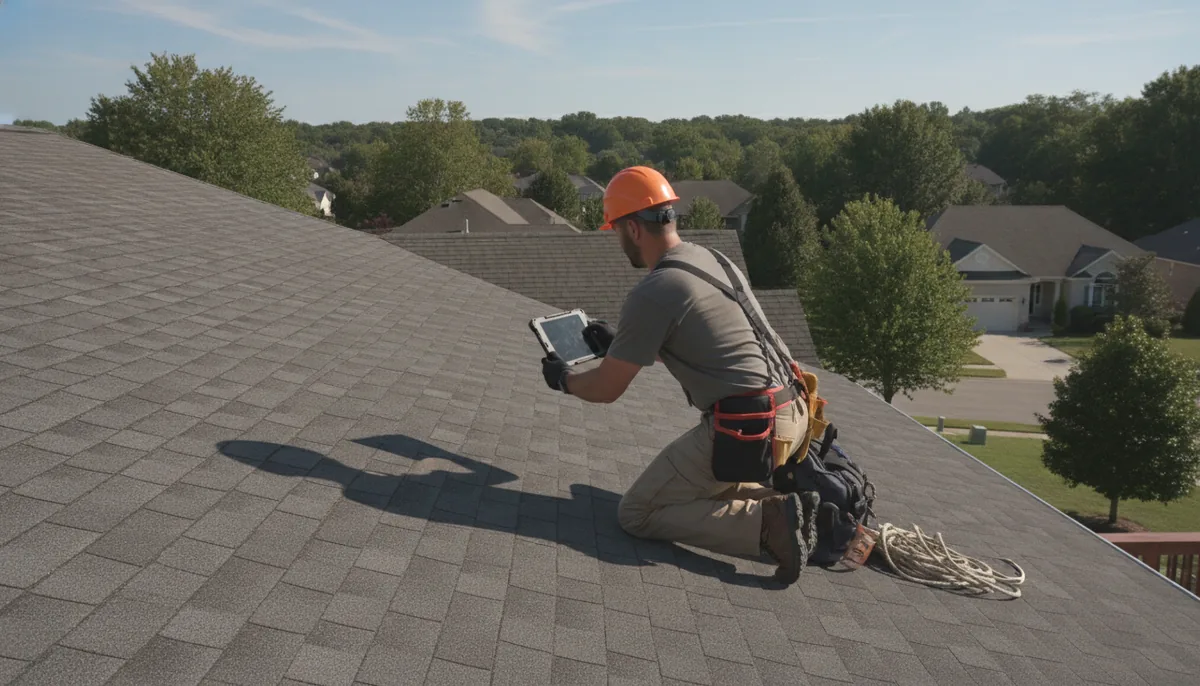
A wind mitigation inspection is not a general roof health check. It looks at seven specific things: roof covering, roof deck attachment, roof-to-wall connection, roof geometry, secondary water resistance, and opening protection. That's the standard form, OIR-B1-1802, and Florida insurers must offer premium discounts for qualifying features.
I've seen homeowners pay for this inspection out of pocket and then save that amount in one season of premium discounts. It depends on what the inspector finds. A house with hurricane straps, a hip roof, and impact windows can score a better discount than the house down the street with a gable roof and no shutters.
More from the site
- Florida building code roofing: What Florida Homeowners Should Know
- Roof age insurance florida: What Florida Homeowners Should Know
- Roof damage insurance lawyer florida: What Florida Homeowners Should Know
- Hurricane roof damage florida insurance: What Florida Homeowners Should Know
- Florida roof insurance claim: What Florida Homeowners Should Know