Roofing insurance central Florida: What Florida Homeowners Should Know
By Shelly Marchetti, Florida homeowner advocate. Reviewed by Hal Winstead, Editor, licensed roofing contractor. I spent a Tuesday afternoon last September in Casselberry on a roof that was maybe twelve years old. The homeowner, a retired nurse named Darlene, had a leak over her lanai that she'd been chasing with a tarp for three months. She finally filed a claim, and the insurer sent back a one-line letter citing Florida's one-year deadline for an initial claim. She thought the clock started when she found the stain. It didn't. It started on the date the storm tore the shingle loose. That one line cost her a new roof.
That is why I do what I do. I don't sell roofs and I don't sell policies. I sit at kitchen tables across Central Florida and translate the paper that makes or breaks a claim. If you are staring at a quote, a denial letter, or a declarations page you do not fully understand, you are in the right place. And if you need a contractor you can actually trust, start with a directory that verifies licences, like this list of residential roofing companies in Florida, because your roofer and your claim are joined at the hip.
Here is what I need you to understand about roofing insurance in Central Florida, and I am going to say it plain.
That one-year deadline is real, and it is brutal
Florida Statute 627.70132 says you have one year from the date of loss to notify your insurer of an initial claim. Not one year from when you noticed the damage. Not one year from when the adjuster finally returned your call. One year from the date the damage happened. If you miss it, the insurer has a complete defence, even if the loss is fully covered.
For supplemental claims—say you file for the original damage and then find more damage during the repair—you get 18 months from the date of loss. Same cruelty, different number. I of been wrong about this before, and I have watched adjusters be wrong about it too. Call your agent the day you suspect damage. Do not wait for the tarps.
What I would actually do: If you suspect roof damage from any storm, take dated photos of the interior and exterior that day, even with your phone, and email them to your agent. That email counts as notice. It starts the clock on their end, not yours.

What a wind mitigation inspection actually checks
The insurance companies are not doing you a favor when they give you a discount for a wind mitigation inspection. They are required to. If your roof has features that make it more likely to survive a hurricane, your insurer must offer a premium discount. The inspection does not tell you if your roof is good. It tells the actuary that your roof is good.
The inspector checks the roof covering, the deck attachment, the roof-to-wall connection, the roof geometry, the secondary water resistance, and the opening protection. They document it all on a standard form, which is the OIR-B1-1802. The cost of the inspection runs a couple hundred dollars, give or take, depending on pitch and access. The annual discount can pay for it in the first year. If you have not had one done in the last few years, get one. A roof that is 20 years old will not score well, but you want to know that before you renew instead of after a storm.

The old 25 percent rule changed. Most people missed it.
You have heard the old story: if you repair more than 25 percent of your roof, you have to replace the whole thing to meet current code. That was true under the old Florida Building Code. Then SB 4-D (2022) changed the game. If your roof was built, repaired, or replaced under the 2007 Florida Building Code or anything newer, only the portion you are working on has to meet current code. A full replacement is no longer automatically triggered.
The catch is the date. The 2007 code took effect on March 1, 2009. If your roof went on before that date, the old rule can still apply to you. If it went on after, you can often repair a section without being forced into a full replacement. I watched a homeowner in Winter Park almost sign a contract for a full replacement she did not need because her contractor was quoting under the old rule. Her roof was from 2014. She needed one section reshingled, not a whole new roof.
Citizens and My Safe Florida Home: the names you will hear
If the private market will not write you a policy, Citizens Property Insurance Corporation is the state-backed insurer of last resort. That is not a dirty word. But it is not a permanent solution, and it is not always cheaper. Before you default to Citizens, make sure your agent shopped the surplus lines market. Sometimes the private policy costs a little more but covers alot more, and Citizens will push you back to the private market as soon as the risk improves.
My Safe Florida Home is the state programme that offers free wind mitigation inspections and matching grants for qualifying hurricane-hardening work. It has changed criteria and funding every time I turn around. Do not assume it is open. Do not assume you qualify. It is worth checking wether the programme is open before you assume anything, because funding is appropriated per cycle and it runs out. I have had clients apply the week it closed and clients apply the week it reopened. It is a lottery, not a right.
What I would actually do: Before you pay anyone for hurricane shutters or a new roof, check whether My Safe Florida Home is accepting applications that week. If it is, apply the same day. If it isn't, set a calendar reminder to check again at the start of the next state fiscal cycle.
That roofer's licence number tells you a story
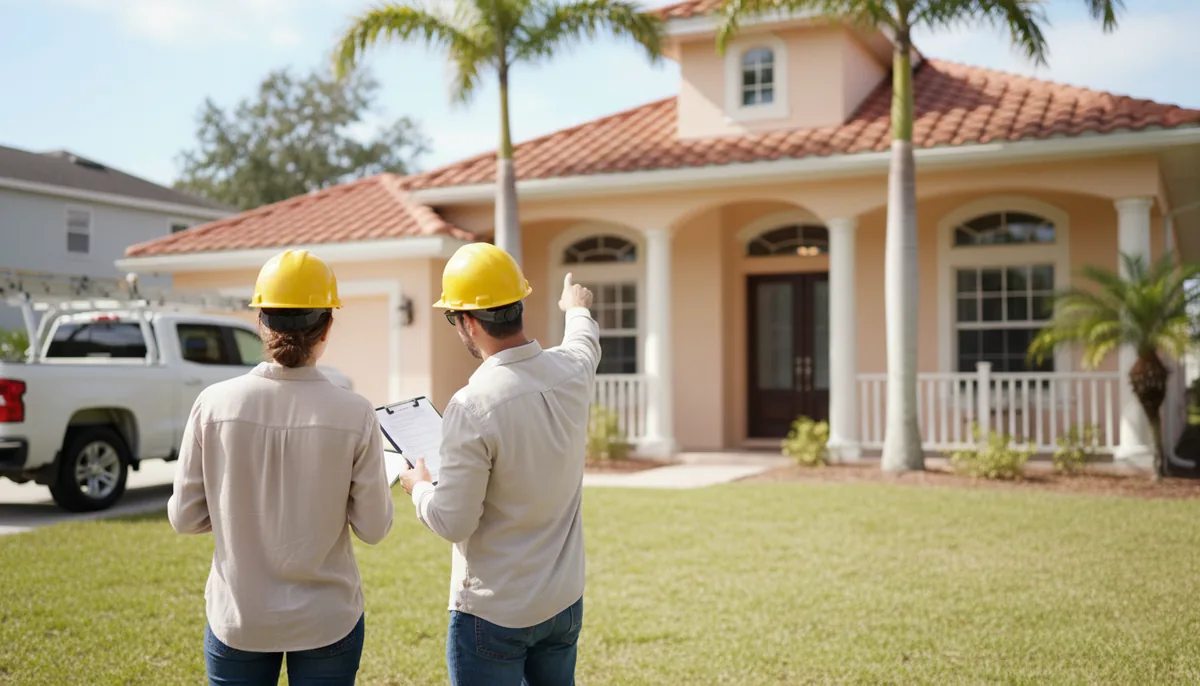
Every legitimate roofing contractor in Florida answers to the Department of Business and Professional Regulation. A certified roofer has a licence that starts with CCC and can work anywhere in the state. A registered roofer has a licence that starts with RC and can only work in the local jurisdiction that issued it. If someone with an RC licence is quoting you outside their county, that is a problem.
You can and should look up the licence number on the DBPR website before you let anyone on your roof. It is public. It takes two minutes. If the licence is not active, you are not hiring a roofer, you are hiring a lawsuit. And always confirm they carry their own workers compensation policy, not just liability. I have seen a homeowner handed a bill for a roofer's injury because the roofer was uninsured and the homeowner's policy excluded contractor injuries.
Do not read your policy with hope. Read it with a highlighter.
The biggest fight I have with homeowners is about what they think their policy covers. Coverage varies by policy. I cannot tell you what yours covers, and neither can your roofer. Your declarations page is the first page of your policy. It lists your coverage limits, your deductibles, and your endorsements. Read it before the storm, and read it again before you file.
If your policy has a roof payment schedule, meaning it pays actual cash value instead of replacement cost on older roofs, you need to know that before you file a claim. If it has a seperate hurricane deductible that is a percentage of your dwelling coverage instead of a flat dollar amount, you need to know that too. These are not hidden, they are just boring. Boring is cheaper than a surprise.
Questions I get asked
Can I file a claim if I already had my roof repaired and paid out of pocket?
You might still be within the deadline if it has been less than one year from the date of loss for an initial claim or 18 months for a supplemental claim. Keep every receipt and all the photos from the repair. But do not assume the insurance company will reimburse you just because the roof was code-compliant. Coverage depends on the cause of the loss and your policy language.
What if the insurance company denies my claim because they say it is wear and tear?
Wear and tear is excluded from most homeowner policies, which is valid for gradual deterioration. But storms cause sudden damage, and you have a right to ask the insurer to show you the specific evidence that separates storm damage from age-related wear and tear. Ask for the adjuster's notes and photos. If you still disagree, you can request a reinspection or hire a public adjuster. That has a cost, but it is sometimes worth it.
Does the one-year deadline apply if I just discovered the leak?
The deadline runs from the date the damage happened, not the date you discovered it. That is the law under Florida Statute 627.70132. If you cannot prove the date of the loss, that is a problem. This is why I tell every homeowner to document any storm that comes through, because the date of the storm is often the date of the loss.
Why does my insurance company want a wind mitigation inspection before they write my policy?
Because they have to offer you the discount if your roof qualifies, and they want to know what they are insuring. The inspection is not a negative thing. It either saves you money or tells you what you need to fix to save money later. A lower premium is a legitimate incentive to add hurricane straps or upgrade your roof deck.
Is Citizens actually worse than a private insurer?
Not automatically, but Citizens is the insurer of last resort. When the wind blows, their rates and their claims proccess are heavily regulated. Private insurers can drop you after a claim. Citizens cannot drop you just for filing. But Citizens coverage can be more limited, so read your declarations page carefully before you assume the cheapest option is the best one.
What should I do first, call my roofer or call my insurance company?
Call your insurance company first to confirm the claim deadline is not running, then call a roofer for a damage assessment. If you call the roofer first, you might accidentally create a paper trail that complicates your claim. Get the insurer on notice, then get a contractor out there to document the damage properly.
More from the site
- Florida wind mitigation roofing: What Florida Homeowners Should Know
- Florida building code roofing 2024: What Florida Homeowners Should Know
- Florida roofing insurance news: What Florida Homeowners Should Know
- How old can a roof be for insurance in florida: What Florida Homeowners Should Know
- Roof requirements for homeowners insurance in florida: What Florida Homeowners Should Know