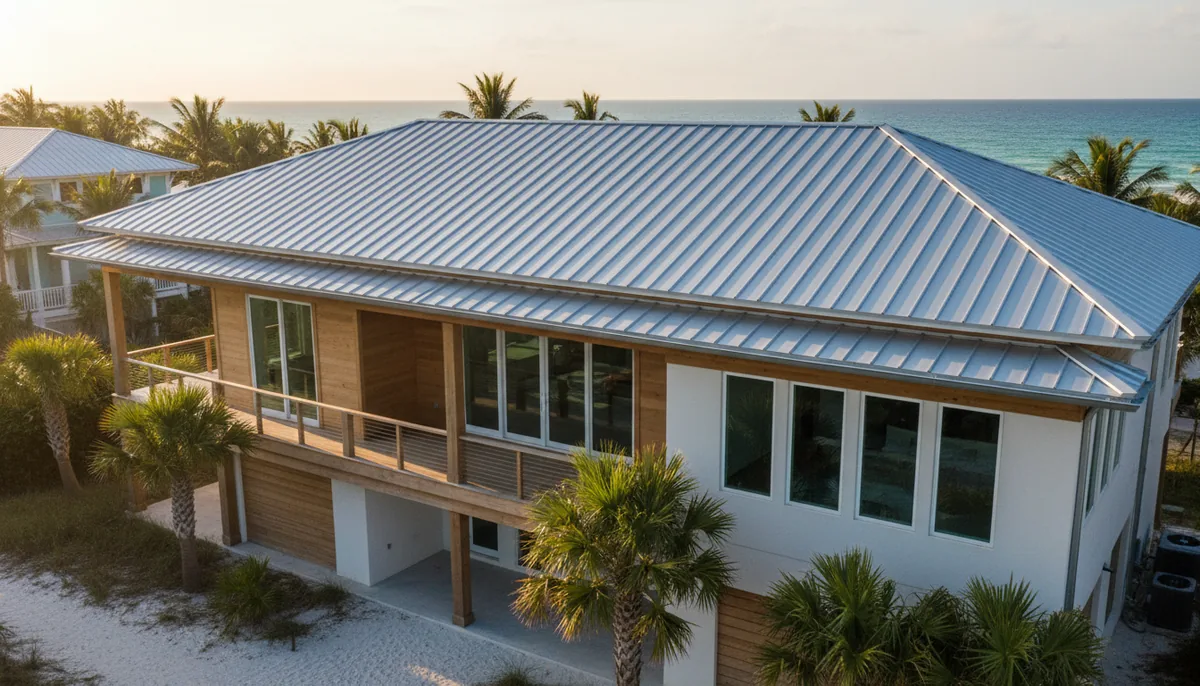
Standing seam metal roof modern florida home: The Florida Guide
By Dale Prescott, Roofing contractor, Central Florida. Reviewed by Hal Winstead, Editor, licensed roofing contractor.
Back in June I knelt on a new standing seam metal roof in Windermere and watched a panel lift under my hand like it was breathing. I touched it. It moved. That roof had never seen a hurricane, a tree, or even a stray limb. The crew that installed it two years earlier locked every clip down against the deck, leaving the metal nowhere to go when the afternoon sun came up, so the panels went looking for the space anyway and tore their own seams loose. By the time I crawled off that roof, the owner had already found metal roofing companies in Florida and wanted somebody to tell him out loud what the installer had done wrong.
I'm Dale Prescott, a roofing contractor in Central Florida. For twenty-two years I've run tile and shingle crews between Orlando and the coast, and I've torn off more storm-damaged roofs than I care to count. Lately I get called out on alot of standing seam metal roofs on modern Florida houses, those flat-line, stucco-and-glass places that look like they were built for an architecture magazine cover. Clean look. Good material. I've been wrong about this before, though, which is why this guide reads the way it does.
This is the plain-language version I hand to a neighbor who asks what to check before paying for a standing seam metal roof modern Florida home: how the panels are supposed to work, who should install it, what the 2022 rule changes mean for an old roof, and why a wind mitigation inspection should happen before you ever call your insurance agent.
Standing seam, and why it fits the modern Florida house
Standing seam is a concealed-fastener metal roof. The panels run vertically and lock together at the seams, and the fasteners live under the clips instead of out in the wheather. That means no exposed screws with rubber washers cooking in the sun, which is the thing that turns an old metal barn roof ragged after a decade.
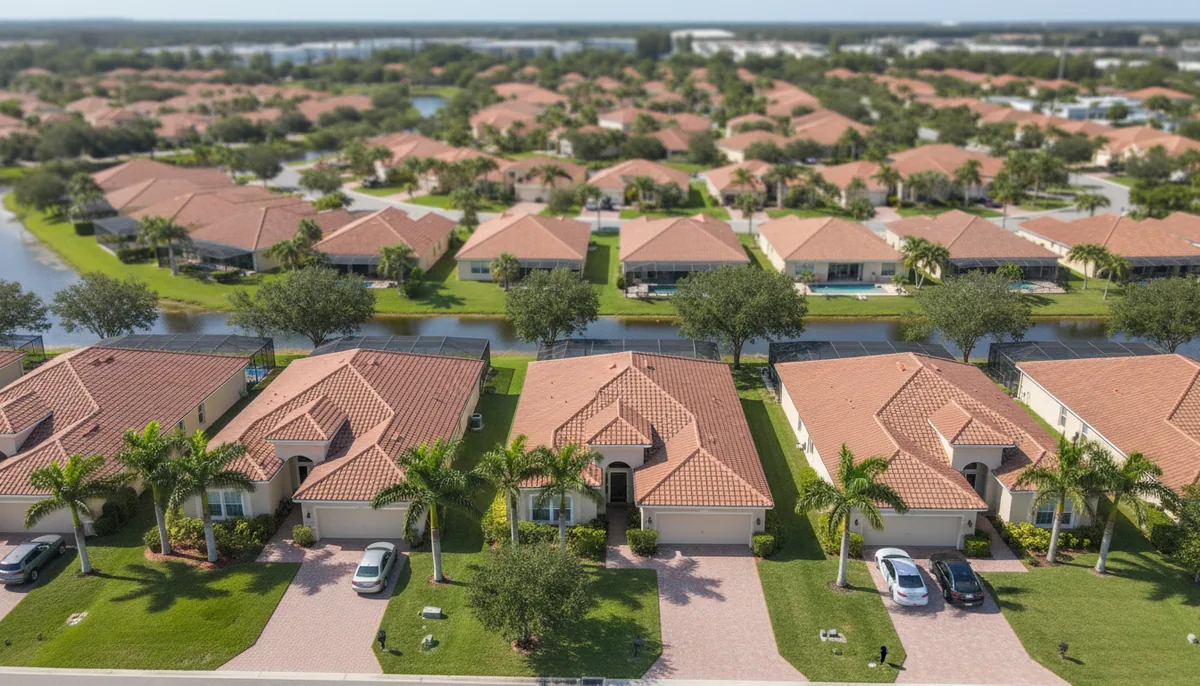
Modern Florida homes love the look because the panels give those long, unbroken lines you can't get with shingle or tile. The house reads as one shape from the street, and a light-colored panel throws heat off instead of soaking it in. The catch is that a modern Florida home tends to have a lot of seperate roof planes, parapets, and low-slope spots where water hangs around. Standing seam can handle that. It just can't handle being installed the way you'd roof a storage shed.
What actually goes wrong: clips and expansion
Metal moves. It heats up under the Florida sun, stretches, then shrinks again at night. On a long panel run, that movement is real, and the seam system is built to let the metal slide. The proper way to anchor a standing seam roof is to fix the panel at one point and let the rest float on clips that allow expansion. Call it thermal movement. The bad way is to screw or clamp every clip down solid, and that's exactly what I found in Windermere.
A true standing seam isn't sealed with caulk. The seam is a mechanical lock, and it needs room to work. If the panel can't slide at the clip, the metal will find a way to move anyway, and that's when you get popped seams, wavy panels, and noises that keep the owner awake at night.
And let me gripe for one second here. Modern houses coax people up onto the roof. They want to sit on the flat section with a drink and watch the sunset over the lake. That's fine until somebody drops a phone, bends over to pick it up, and puts a knee on a panel that wasn't meant for that kind of pressure. Dents show up from the ground when the light goes sideways. If I'm on your roof, I wear flat-soled shoes and apologize to every panel I touch.
Licenses, permits, and contractors who hate both
Florida roofing contractors are licensed through the Department of Business and Professional Regulation, and you can read the license number like a label. The DBPR licence prefixes CCC and RC are your shortcut. A certified contractor has a license begining with CCC and may work anywhere in the state. A registered contractor has one beginning with RC and is limited to the local jurisdiction that issued it. Both count as licensed, but they're not the same thing. Check the DBPR roll and verify the number is active before you let anyone on a ladder. It takes ninety seconds and it has saved me from some awkward moments.
Next comes the permit. A roof replacement in Florida requires a permit from the local building department and an inspection. If a contractor says you don't need one because it's "just a repair" or the inspector is too busy to come out, walk away. An unpermitted roof can complicate an insurance claim and it can make a future home sale turn into a mess of paperwork. I've seen houses get flagged years after the work was done.
What I would actually do: Ask the roofer for the license number, look it up on the DBPR roll, then ask for the permit number before a single panel arrives and call the local building department to confirm it's in your name. No permit, no work.
The old 25% rule and what SB 4-D (2022) changed
You may have heard somebody say Florida has a 25% rule and that any repair bigger than a quarter of the roof forces a full replacement. That rule was real for a long time. If more than 25% of the roof was repaired or replaced in a twelve-month period, the whole roof had to be brought up to current code.
Then SB 4-D (2022) changed the math. If the roof you're working on was built, repaired, or replaced under the 2007 Florida Building Code or any later edition, only the portion being worked on has to meet current code. A full roof replacement is no longer automatically triggered just because the repair area crosses that old threshold. The 2007 code took effect on March 1, 2009, so roofs completed before that date generally don't qualify.
That sounds dry until you're standing in a driveway with an insurance adjuster who wants to pay for twenty squares and the building department wants thirty-five. When a roofer tells you the whole roof has to come off, ask them which code edition the existing roof was built under and whether SB 4-D (2022) applies. You might get a different answer.
Wind mitigation: get the form before you call your insurance company
I'm not a lawyer or a licensed adjuster. I'm the guy who makes the building stop leaking. But I sit at kitchen tables and listen to people get told that metal roofs automatically get big discounts, or that this house is too old to qualify, and a lot of that talk is wrong.
A wind mitigation inspection documents six things: the roof covering, roof deck attachment, roof-to-wall connection, roof geometry, secondary water resistance, and opening protection. It doesn't predict whether you'll have a claim. It simply shows the insurer what's actually there. Florida insurers must offer premium discounts for features that qualify, and the standard way to record those features is the form OIR-B1-1802.
The form is what Citizens Property Insurance Corporation and most private insurers use to apply discounts, so the same inspection can pay off for years. Some of this sits under Florida Statute 627.70132, which has been rewritten since SB 4-D (2022) passed. How much your premium actually drops depends on your policy, so read your declarations page and ask the agent to show you the discount in writing. Also check whether My Safe Florida Home is taking applications, because when that program is open it can help with exactly this kind of home hardening.
What I would actually do: Have the wind mitigation inspection done before you call the insurance agent, read the form OIR-B1-1802 line by line yourself, and ask the agent to explain in writing how each line item affects your premium. If they can't show you, find another agent.
Questions I get asked
Does standing seam metal make a modern Florida home stronger in a hurricane?
A code-compliant standing seam roof can handle the wind load the house was designed for, but the metal is only part of the assembly. The roof deck and the roof-to-wall connection carry just as much of the load. If those are weak, a metal roof is just a very expensive sail.
Will my insurance get cheaper if I put on a metal roof?
It can, but never sign a contract based on someone's promise of a specific discount. Coverage varies from policy to policy, and discounts depend on the inspection form, the insurer, and the age of the house. Call your own agent and get the number in writing before you commit.
Can a standing seam roof go over an existing shingle roof?
Sometimes, but I usually talk people out of it. Hiding an old roof layer means nobody can inspect the deck underneath, and the fastening pattern rarely works as well through two layers. Whether it's allowed is a question for your local building department, not a guess from me.
Why does my new metal roof make popping noises at night?
Usually that's the metal moving with temperature, and some of it is normal. But if it's loud enough to wake you, or you can see wavy panels from the ground, you've got the same problem I found in Windermere: the panels couldn't slide where they were designed to slide. Have a contractor check the clips and seams before the next storm.
Should I wait until after a hurricane to let insurance pay for the roof?
No. A leak only gets worse while you wait, and a roof can fail in ways that have nothing to do with wind. Waiting doesn't create coverage that isn't already in your policy. Read your declarations page, call your agent, and patch the problem while it's still small.