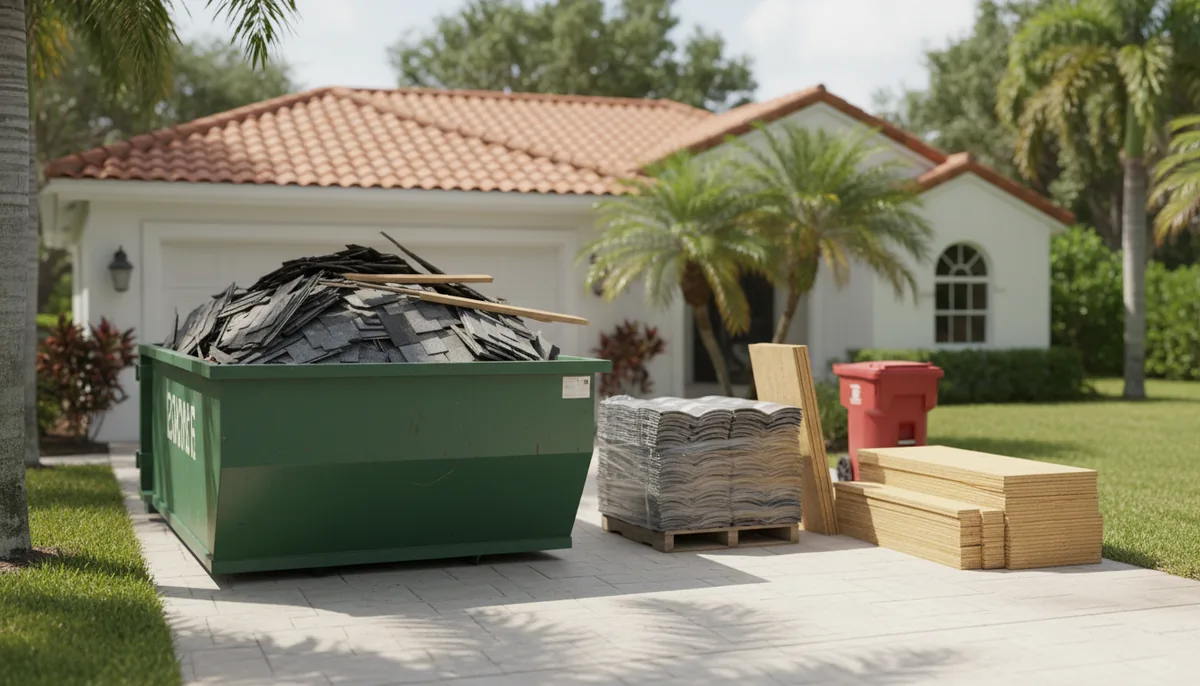
What type of roof is best for florida?
By Bud Kettering, Roof consultant and inspector. Reviewed by Hal Winstead, Editor, licensed roofing contractor.
Last July I was on my knees in a Naples attic, torch in one hand and a moisture meter in the other, when the homeowner yelled up the stairs: “So what type of roof is best for Florida?” I had just put my finger through a rotten spot in the deck under a twenty-year-old barrel tile roof, so the honest answer was already on my glove. “This one isn’t,” I said. If you are asking the same question before you hire anyone, the roofing companies in Florida directory is a place to start, but you need more than a company name.
I inspect roofs for buyers, sellers, and insurers. Most of my work happens in attics, not on the roof. That surprises people. They picture me walking the ridge and taking photos, but the attic is where roofs tell the truth: wet framing, rusted nails, cut trusses, and the stains left by leaks that stopped dripping before anyone noticed.
A roof is not a single product. It is a stack of products and labor. The deck has to be sound. The underlayment has to be continuous. The flashing has to be installed the way the manufacturer drew it. The fasteners have to hit their marks. The covering you see from the street is just the last layer, and it gets all the credit until the layers under it fail. So when a homeowner asks for the best roof, I usually ask a question right back: what is under it, and who will put it on?
What type of roof is best for Florida?
No single roof is best for Florida. There are roofs that fit a particular house and roofs that do not. A flat commercial roof in Fort Lauderdale has nothing in common with a steep shingle roof in Ocala. A standing-seam metal roof can be excellent on a simple gable but needs alot more attention on a hip roof with valleys. Concrete tile can outlive the mortgage, but only if the frame can carry it. The right roof is designed for the house, the wind load, and the insurer’s rating rules.
Wind does not ask what brand the shingles are. Wind asks wether the deck is attached, whether the trusses are tied to the walls, and whether the bottom edge of the roof was nailed right. I have inspected a modest shingle roof that smiled through a hurricane and a fancy tile roof that lost it's edge because the flashing was never laced properly. Call it luck. Call it details. I call it connections.
The answer also depends what is under there. A roof covering will not fix a wet deck, and no material on the market can save a roof-to-wall connection that was never built. I have been wrong about this before, so now I look before I recomend.

What I look at before I recommend anything
Give me thirty minutes in an attic, and I will tell you more about a roof than a contractor can from the driveway. I look at roof deck attachment: how the plywood or OSB panels are fastened to the trusses, and whether the fasteners are actually there. I look at the roof-to-wall connection for straps or clips. I look for secondary water resistance, that layer of synthetic underlayment or felt that sits between the deck and the roof covering. Then I go outside and look for nails that missed the nailing line and caulk that has turned to hard lace.
One digression. A customer in Palm Harbor asked me not to step on his new roof because he did not want footprints on the shingles. I got out my binoculars, wrote “limited inspection” on the report, and told him to call me after the next storm. You cannot inspect what you will not touch, and shingles can handle an inspector better than they can handle a hurricane.
What I would actually do: Ask for a written installation spec for deck attachment and underlayment before I choose the visible material. If the roofer cannot explain the layers under the shingles, do not let them put on the shingles.

Materials: metal, shingles, tile, and the honest version
Now for the part most people really mean: what covering should I buy?
Metal is a strong choice. I like the concealed-fastener versions because they do not have a row of exposed screws on every panel. Screws back out over time, and rubber washers dry out. A good metal roof sheds wind-driven rain about as well as anything I inspect, and it weighs much less than tile. But metal tells no lies. If the flashing is wrong, water will find every mistake. Get the manufacturer’s installation details and make the roofer follow them.
Architectural shingles are still the most common roof in Florida, and they are fine. They are cheaper, familiar, and a little quieter in a downpour. But a shingle lives and dies by its nail pattern. Nails need the right length, the right location, and the right number per shingle. I do not judge shingles by brand; I judge them by the nailing and the deck under them. A roofer who wants to avoid the tear-off needs a very good reason, because every extra layer hides something.
Tile is the one that turns homeowners’ heads. Concrete and clay tile are heavy, and some roofs stay beautifull for forty years while the deck underneath rots because nobody looks past the tile. The covering can be intact, and the roof can still be failing. If you choose tile, get an engineer or truss manufacturer to sign off on the weight, and never let anyone tell you tile does not need its underlayment replaced too.
What I would actually do: Compare written details, not the pretty brochure. For shingles, I want the nail pattern. For metal, I want the fastener schedule. For tile, I want the structural sign-off.

Wind mitigation: where the roof pays you back
Here is the part most homeowners skip. A wind mitigation inspection documents how the roof is built: roof covering, roof deck attachment, roof-to-wall connection, roof geometry, secondary water resistance, and opening protection. The standard form is OIR-B1-1802. Florida insurers must offer premium discounts for features that qualify. That is state law. The catch is your own policy decides what discount you actually get. Coverage varies by policy. Read the declarations page.
I am not a lawyer and I am not an adjuster, so I won’t translate legal language for you. I will say that roof law in Florida shifted with SB 4-D (2022), and Florida Statute 627.70132 gets mentioned every time an older roof ends up in a claim discussion. I do not argue statutes. I fill out the form, check the boxes, and let the insurer do the math.
A wind mitigation inspection typically costs far less than the annual discount it can produce, assuming the roof qualifies. Do it before the storm, not after.
What I would actually do: Have a wind mitigation inspection done on the existing roof if I am still deciding, and then update it after a replacement. The report tells me where the roof is weak and gives the insurer the facts it needs.
Permits and licenses: the boring section that saves you
Florida roofing contractors are licensed by the Department of Business and Professional Regulation. The two things to know are the DBPR licence prefixes CCC and RC. A CCC means a certified roofing contractor, licensed to work anywhere in the state. An RC means a registered roofing contractor, licensed only by the local jurisdiction that issued it. That is not a small difference. If an RC shows up fifty miles from home, that is a problem. Verify the number on the DBPR roll before you sign anything. It takes one minute.
A roof replacement in Florida also requires a permit from the local building department, plus an inspection. I understand why some contractors suggest skipping it. It costs time, and it might expose something they would rather not fix. But an unpermitted roof can complicate an insurance claim and a future sale. A contractor who offers to skip the permit is a contractor to walk away from. I have said that to buyers, sellers, and my own mother.
What I would actually do: Check the DBPR roll before the estimate, then ask to see the building permit before any tear-off begins. If both are not in order, I stop work.
Questions I get asked
What type of roof is best for Florida?
For most houses, the practical pick is an architectural shingle roof installed over a solid deck, with continuous underlayment and a real permit. A concealed-fastener metal roof is often better if the budget allows. But the material alone is not the answer. The whole system is the answer.
Is metal worth the extra money?
It can be, but only if you plan to stay in the house long enough to use the extra years it gives you. Metal roofs stand up to wind and shed water well, and the hidden-fastener designs give me fewer problems. If you plan to sell in three years, the upgrade may not pay for itself.
Can I put new shingles over old ones?
You can, but I would not unless the old roof has only one layer and the deck is in great shape. Each extra layer adds weight and hides problems. The money you save today can become a much bigger bill when the next roof has to be stripped down to the deck.
Do I need a new roof before I sell my house?
Not always, but you need an honest inspection first. A buyer’s inspector will notice the age and any bad nailing, and the buyer’s lender may require repairs. If the roof is actively leaking, you will probably have to fix that before closing. If it is just old, you might not.
How much does a wind mitigation inspection cost?
I cannot give you a Florida average, and you should not trust someone who does. The fee depends on size, pitch, and access. It is usually far less than the yearly discount a qualifying roof can get. Ask your insurer what they want to see, and it will almost always be the OIR-B1-1802.