Concrete tile roof florida home: The Florida Guide
By Dale Prescott, Roofing contractor, Central Florida. Reviewed by Hal Winstead, Editor, licensed roofing contractor.
I remember a Tuesday afternoon in Winter Park, pulling the last rows of barrel tile off a hip roof when the whole pan started to slide. I had tied the bundles off, but tied them off wrong. A strap let go, and six tiles dropped into a planter of azaleas before I could yell anything useful. Concrete tile does not forgive lazy. If you're looking for help on a concrete tile roof Florida home, start with the tile roofing companies in Florida directory, because not every roofer handles tile the way tile should be handled.
I've run tile and shingle crews between Orlando and the coast for twenty-two years. Torn off more storm-damaged roofs than I care to count. This is the talk I'd give a neighbor over the fence, not a sales pitch. I'm not a lawyer and I'm not an adjuster, so the only things I'll push hard are the things I've watched fail on real roofs.
What a concrete tile roof Florida home needs the day you buy it
A concrete tile roof does not need to be sealed every year. It does not need a coating just to stop leaks, and it doesn't want a pressure washing every spring. What it needs is an underlayment that is still alive. Tile sheds the sun. The membrane under the tile is what actualy stops water. When that membrane has baked out and turned to powder, the tile above it is just an expensive hat.
So the first thing I do on any concrete tile roof Florida home is pull a tile or two near the ridge and look underneath. You can learn more from one square foot of underlayment than from an hour of ground inspection. And I check the hips, valleys, plumbing boots, and the flashing where the roof meets the wall. Those are the spots the sun and the wind attack first.
Concrete tile is heavy. Not shingle heavy. It needs the framing under it to be done right, and it needs a roofer who understands how to move on it without cracking the flat profiles and the barrel ends. Some guys walk tile roofs like they're walking shingles. I've seen the resultes.
What I would actually do: after every hurricane season, get a licensed, tile-experienced roofer to do a visual inspection and send you photos. If they show up without roof pads and without a couple of spare tiles in the truck, send them back down.
The old 25% rule and what SB 4-D changed
This rule used to catch people by surprise. Under the Florida Building Code, if you repaired more than 25% of a roof in any twelve-month period, the whole roof had to be brought up to current code. A storm takes one side of the roof, and suddenly you're paying to re-sheet the whole thing. I had that conversation more times than I wanted.
SB 4-D (2022) changed the math for newer roofs. If your roof was built, repaired, or replaced under the 2007 Florida Building Code or later, only the portion you're working on has to meet current code. That keeps a one-slope repair from turning into a full replacement. The 2007 code edition took effect on March 1, 2009. Roofs finished before that date generally don't qualify, and the old trigger can still bite. Have your contractor show you the relevant language before you sign. I have been wrong before about how a code reader reads a particular roof, so I like to see it in writing.
DBPR licences, permits, and the roofer who wants to skip both
Florida roofing contractors are licensed through the DBPR. A certified contractor's licence starts with CCC and they can work anywhere in the state. A registered contractor's licence starts with RC and they can only work in the jurisdiction that licensed them. Look it up on the DBPR roll before you hire, and make sure the number is active. The phrase you want to know is simple: DBPR licence prefixes CCC and RC. One means statewide, the other means local, and neither means the roofer is good. It only means the state knows they exist.
Then there's the permit. A roof replacement in Florida requires a permit from your local building department and an inspection. No way around it, and no shortcut worth taking. A contractor who offers to skip the permit is a contractor to walk away from. An unpermitted roof can complicate an insurance claim and it will definately complicate a future sale.
One customer asked me if I could pull the permit after the work was done, so the price would look lower on paper. The inspection happens before final cover-up, not after. She knew it. I knew she knew it. That conversation ended fast.
Why every concrete tile roof Florida home leaks at the same spots
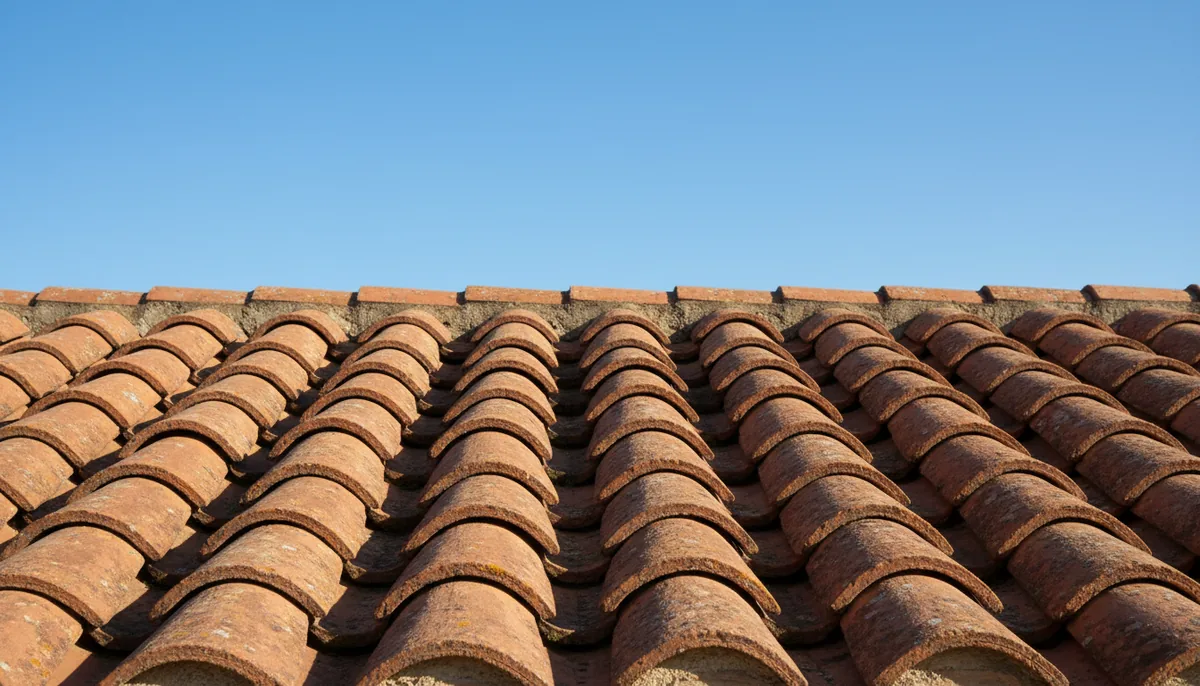
It's never the open face of the tile that leaks first. Concrete tile is armor. Water gets in at the seams in the armor: ridge caps, hips, valleys, vent boots, and the places where a sloped roof butts into a flat wall. Those are the spots where mortar cracks, foam dries out, and flashing pulls up in the sun.
When I tear off a concrete tile roof Florida home, the tile usually still has life left. The failure is under it. Old underlayment gets brittle, the fasteners back out, and water follows the slope to some low point you'd never guess from inside. A stain on the ceiling near a wall often means the leak started a dozen feet up, ran down the underlayment, and found a seam.
There's no way to replace the underlayment without lifting the tile. That's why a tile "repair" can turn into a re-roof fast. It depends what's under there, and you can't know until the tile is up.
What I would actually do: before calling anyone, grab a decent pair of binoculars and scan the roof in late afternoon light. Fresh cracks show up as lighter, grainy spots on the tile. Screenshot the roof on your phone, mark the spots, and send that to the roofer. It saves time and sometimes saves money.
Wind mitigation inspections: the form that pays
A wind mitigation inspection documents six things: roof covering, roof deck attachment, roof-to-wall connection, roof geometry, secondary water resistance, and opening protection. In Florida, the standard form is OIR-B1-1802. The whole point is to prove to an insurance company what your roof already does well.
Florida insurers must offer premium discounts for qualifying features. That isn't a maybe. So this inspection often costs far less than the annual discount it can earn. I have seen letters from companies asking for the form before renewal, and I've seen requests from Citizens Property Insurance Corporation too. The policy language varies; the answer is on your declarations page.
If you're thinking about shutters, roof-to-wall anchors, or secondary water resistance, check the My Safe Florida Home program and see if you qualify before you start buying materials. The rules change. I'm not the program, so don't take my word for the current details.
Questions I get asked
Can a roofer just replace the broken tiles and leave the rest?
Sometimes, but only if the underlayment is good and the tile profile is still made. The tile is not the waterproofing layer; the underlayment underneath is. I pull one or two tiles and look before I quote, because what is under there changes everything. If the underlayment crumbles when you touch it, the roof is going to cost alot more no matter how pretty the tile looks.
Should I seal my concrete tile roof?
No, I wouldn't. Concrete tile gets it's color from the material itself, and most sealants trap moisture and look worse before they look better. If you have water in the house, the fix is the flashing or the underlayment, not a coating on top. Spend the money finding the actual leak, not painting over it.
Do I have to remove all the tile to replace the underlayment?
Yes. There is no honest way to replace underlayment under tile without lifting the tile first. That's why a concrete tile re-roof is mostly labor: each tile gets pulled, stacked, and then reset by hand. It's also why homeowners try to patch until the underlayment is gone everywhere.
Why does my insurance company want a wind mitigation inspection?
Because the form gives them a standard way to score how well your roof handles wind. Florida law requires insurers to offer premium discounts for qualifying features, but they need proof on form OIR-B1-1802 before they apply it. If your roof is not set up to qualify, the inspection still tells you which upgrades matter most. Read your declarations page and ask your agent what they need before you schedule anything.
What is the biggest mistake you see homeowners make with tile roofs?
Waiting until a stain shows up on the ceiling. By then, water has been running along the underlayment for months. A cracked ridge cap or a pulled boot can be fixed in a morning. Let it go through two summers of heat and rain, and that fix turns into a deck replacement. I get that roof work is expensive. A small repair now beats a full tear-off later.