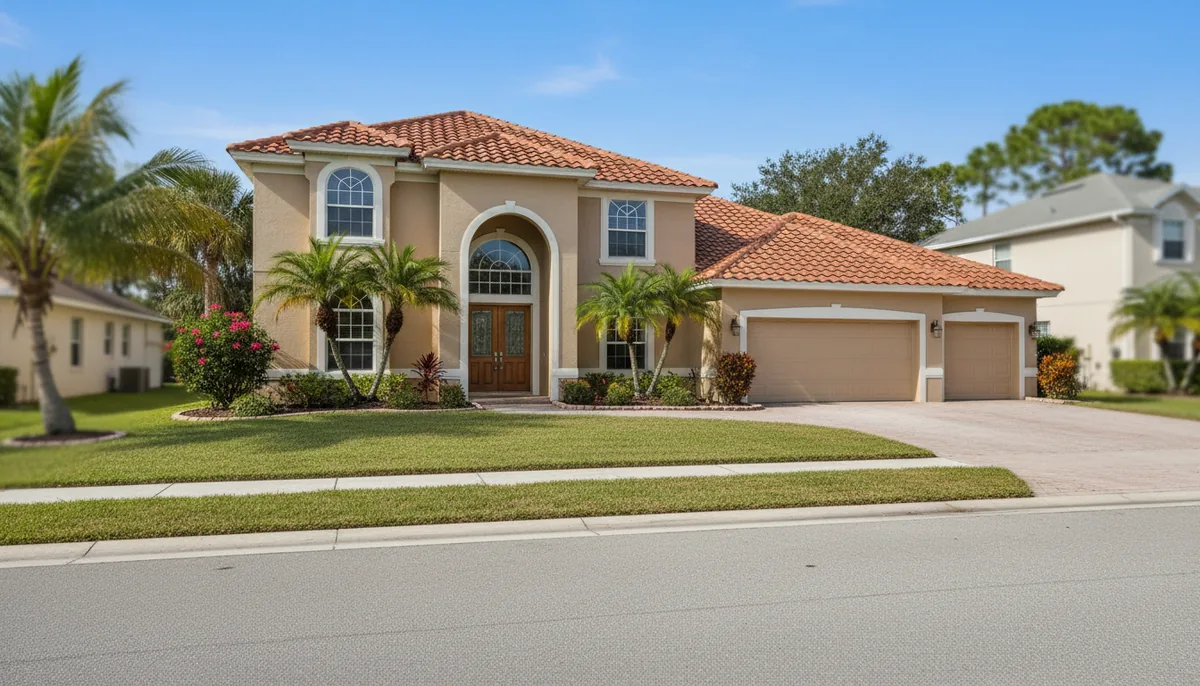
Concrete tile roof florida: The Florida Guide
By Marcy Doleman, Commercial roofing estimator. Reviewed by Hal Winstead, Editor, licensed roofing contractor.
One October afternoon in Fort Myers, I was measuring a low-slope roof on a retail plaza when the maintainance guy pointed to a concrete tile eyebrow over the storefront and said the leak was "by the columns." I got up there and found a valley flashing folded like a paper airplane. Water had been running under that tile for months, and the deck was soft. What looked solid from the parking lot wasn't. That's why I tell people to start with the tile roofing companies in Florida directory, then check the contractor's license on the DBPR roll before anyone puts a ladder against the wall.
I estimate flat and low-slope commercial work for a living—TPO, modified bitumen, coatings—mostly on warehouses, retail plazas, and schools. Concrete tile usually shows up on residential roofs, but commercial buildings love tile eyebrows, tile-clad entrances, and that old-school Florida look. Same physics, same failures.
The tile is just armor. The real water protection lives in the underlayment and flashings underneath, and you can't see it from the parking lot.
A concrete tile roof in Florida is a system, not a shingle
The tile sheds rain, but a Florida roof also gets sideways rain, UV, and the odd oak branch. The underlayment and flashings underneath are doing real work. If a hip flashing rolls over and the tile above it looks fine, the water follows the flashing. That's what happened in Fort Myers.
So when I estimate tile work, I walk it like I'd walk a TPO membrane. I look at penetrations, valleys, rakes, ridges, and every transition where tile meets a flat roof. I get in the attic or drop the ceiling tile if I can. I've been wrong abotu concrete tile roofs before, usually when I trusted the outside.
What I would actually do: Lift tiles at the lowest course, arround penetrations, at the rake, and along any valley. Look at the underlayment and the deck, not just the faces of the tile. Bring a flat bar and a bucket; you'll want both.
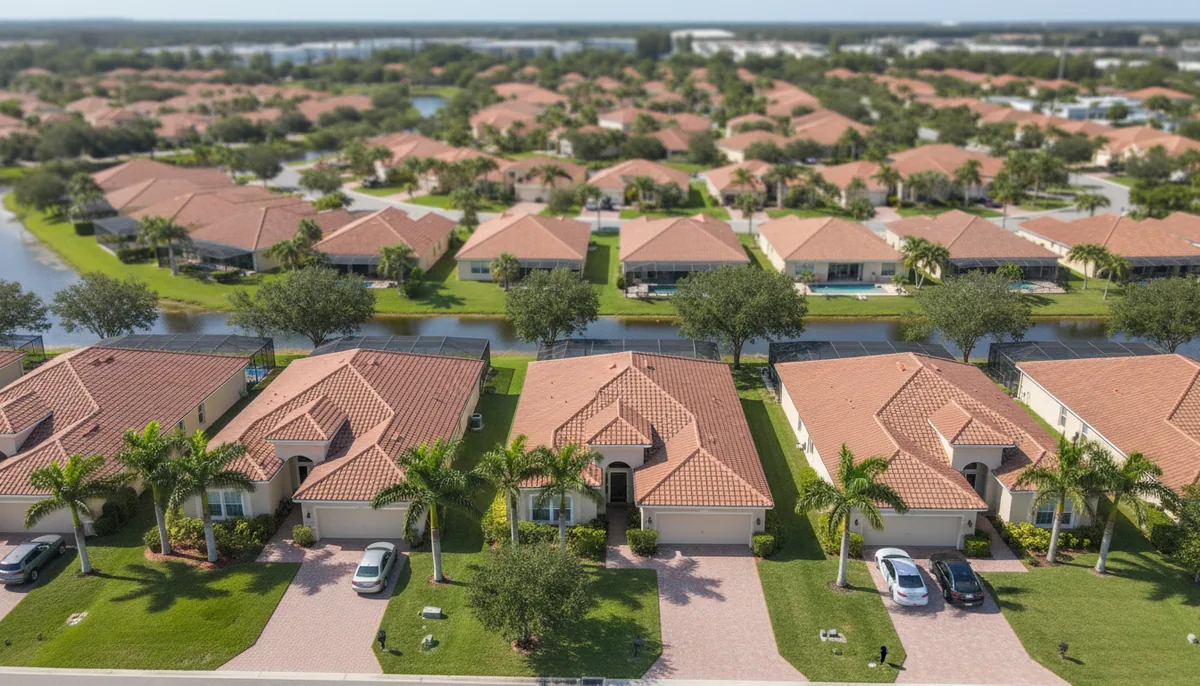
The roofer's license, the permit, and the contractor who waves both off
Florida roofing contractors are licensed by the Department of Business and Professional Regulation. The license roll is public, so use it. The DBPR licence prefixes CCC and RC tell you alot. A certified contractor's license starts with CCC