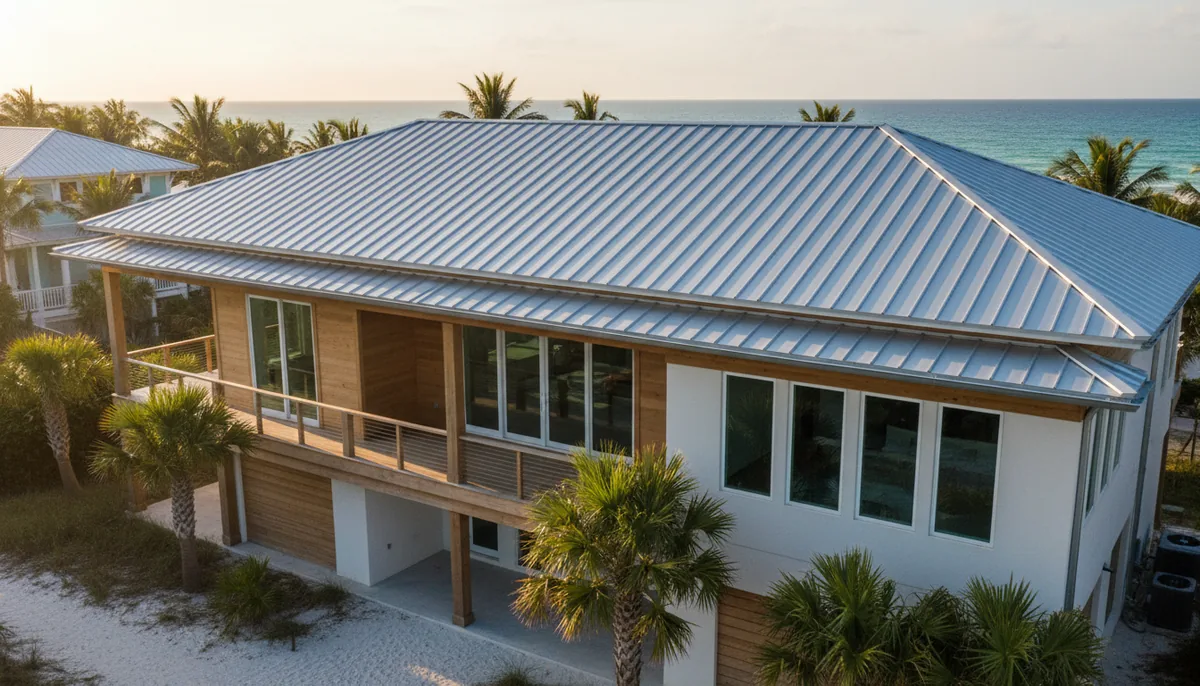
Florida 10 year roof law: The Florida Guide
By Dale Prescott, Roofing contractor, Central Florida. Reviewed by Hal Winstead, Editor, licensed roofing contractor.
I remember a Tuesday in Lakeland, back in 2010. The crew was stripping a failed tile roof, and the homeowner ran out waving a printout from an insurance message board, convinced Florida had just passed a law requiring every roof over ten years old to be torn off and replaced. The roof was eleven. He was ready to fight his own insurer. The law he was reading about didn't exist, not like that. I had to show him the building code section we were actually working under just to calm him down.
That confusion never really went away. It just morphed. These days, the phrase "Florida 10 year roof law" gets thrown around like it's a hard cutoff, and it isn't one. It is a shorthand for a bunch of seperate rules about insurance discounts, wind mitigation, and what happens when a storm damages an old roof. I have been wrong about this before, and I have been doing this for twenty-two years. So let's walk through what is real, what is not, and what makes insurance companies pay attention to your roof's age. If you are shopping around for help, you can check out the roofing companies in Florida on the directory, but read this first so you know what questions to ask them.
The first thing to understand is that the state does not have a law that says "at ten years old, your roof is illegal." That is not how it works. What actually happened is that Florida insurers started getting picky about writing new policies on roofs that were creeping up in age. A roof that is fifteen or twenty years old is a bigger risk for them, pure and simple. They are a business. They would rather not cover a roof that might be one hurricane away from a total loss.
But the state did step in with something that gets called the 10 year roof law. It came through when Citizens Property Insurance Corporation, the state-backed insurer of last resort, was getting hammered. The legislature passed a bill that said insurers have to offer a discount for wind mitigation features, and they also set rules about how old a roof can be before you have replacement cost issues. That is where the "ten years" figure gets tied into insurance, not the building code. It is about how they calculate what they will pay you if a storm tears the roof off, not about the roof itself being illegal.
What the 10-year rule is really about
The actual mechanism is in Florida Statute 627.70132. I am a contractor, not a lawyer, so I will tell you what it means on the ground. If your roof is over ten years old and it gets damaged, your insurance policy might not pay replacement cost for the whole roof. They might pay for the damaged portion, or they might depreciate the value of what is left. The law gives insurers the option to do this, and every policy is different. Some policies have endorsements that protect you from this depreciation. Read your declarations page. If it is not on there, do not assume it is covered.
This is why you see homeowners scrambling when their roof hits the ten or fifteen year mark. They get a letter from their insurance company saying the policy is not being renewed, or the premium is jumping, because the roof is old. The "florida homeowners insurance roof age" question is not a myth. It is a real underwriting factor. But it is not a flat rule where every company drops you at year eleven. Each company has it's own appetite for risk. I have seen a fifteen-year-old tile roof get a brand new policy, and I have seen a nine-year-old shingle roof get non-renewed because the company decided to stop writing wind coverage in that zip code entirely.
The 25% rule and the 15-year rule you've heard about
The other thing people get spun up about is the "25% rule." This one is a building code thing, not an insurance thing. Before May of 2022, the Florida Building Code said that if you repaired or replaced more than 25% of your roof in any twelve-month period, you had to bring the whole roof up to current code. That meant a leak in one corner of an old roof could trigger a full replacement. It was a nasty surprise for alot of people.
Then something called SB 4-D (2022) came along and changed the math. Now, if your roof was built, repaired, or replaced under the 2007 Florida Building Code or any later edition, only the section you are actually working on has to meet current code. The rest of the roof can stay as it is. That is a huge deal. The 2007 code took effect on March 1, 2009. So if your roof was completed before that date, the old rule generally still applies to you. If it was done after, you are in the clear for a partial repair without a full tear-off.
As for the "15 year roof rule in Florida"? That is not a law either. That is insurance company policy. Many carriers will not write a new policy on a roof that is over fifteen years old, or they will only give you actual cash value instead of replacement cost. It is a market rule, not a statute. It changes from company to company and year to year.
Why your roof is built matters more than its birthday
Do not get so locked in on the age that you ignore the actual construction. A cheap three-tab shingle roof on a flat commercial building is not the same risk as a properly installed architectural shingle roof with a good wind mitigation inspection. Insurance companies know this. That is why they offer discounts for features that make your roof survive a storm.
A wind mitigation inspection is the tool for this. The inspector documents six things: the roof covering type, how the roof deck is attached to the trusses, how the trusses are connected to the walls, the roof geometry (hip roofs do better than gable ends), wether you have secondary water resistance, and your opening protection (shutters or impact glass). The standard form is OIR-B1-1802. Florida law says insurers must offer a discount for qualifying features, but your insurer needs the inspection form on file to apply it.
I have seen the inspection pay for itself a dozen times over. It costs a couple hundred bucks, depending on the size of the roof and how much attic access you have. The annual discount can be a few hundred dollars or more, depending on your premium and how many features you score. Call it a good bet, not a guarantee. If your roof was built in the last ten years to code, you probably have some of these features. If you have an older roof that was re-decked, you might score well on the deck attachment anyway. It is worth the money to find out.
What I would actually do: Before you call a roofer or argue with an adjuster, get a wind mitigation inspection done by a certified inspector. Send that form OIR-B1-1802 to your insurance agent. It is the cheapest roof upgrade you can buy if you qualify for the discount.
The permit is not optional
I refuse to work without a permit. I know some guys will tell you they can save you money by pulling the roof and slapping new shingles down with no paperwork. Walk away from that person. A roof replacement in Florida requires a permit from your local building department and an inspection after the work is done. That is not a suggestion. If a contractor offers to skip it, they are telling you they do not care about your house or your ability to get insured later.
When you go to sell your house, the buyer's attorney or the title company will pull the permit history. An unpermitted roof will surface, and it will be a mess. It can also bite you on an insurance claim. If a hurricane takes that unpermitted roof off, the adjuster could deny the claim or the carrier could drop you for a material misrepresentation. You saved two thousand dollars on the install and lost forty thousand on the claim. That is not a deal. That is a nightmare.
The licensed contractor pulls the permit, schedules the inspection, and gets the sign-off. Then you have a paper trail. You also have a contractor whose license is on the line. That is worth something.
What I would actually do: Ask the roofer for their license number and look it up on the DBPR site. A certified license starts with CCC and works anywhere in the state. A registered license starts with RC and only works in the county that issued it. If they cannot give you a number that comes back active, you are done there.
How the My Safe Florida Home program can help
There is a program called My Safe Florida Home that provides free wind mitigation inspections and matching grants for homeowners who want to harden their properties against storms. It is run by the state and aimed at making your home more resilient, which often means your roof is less likely to fail. It is not a direct roof replacement grant for everyone, and funding goes in cycles. But if you qualify, it can offset the cost of improvements like upgrading your roof-to-wall connections or reinforcing your gable ends.
The application window can open and close depending on funding. You need a homestead exemption and you need to have wind insurance. Check the current status of the program online. Even if the grant money runs out, the free inspection is worth your time. It will tell you exactly where your roof stands so you can plan for the future instead of getting surprised by a non-renewal letter.
Questions I get asked
Does Florida require roof replacement at 10 years old?
No. There is no state law requiring a roof replacement when it turns ten. The ten-year figure is an insurance threshold that affects whether you get full replacement cost on a claim. The roof itself can be physically fine at ten years old. The issue is your policy, not your shingles.
Can my insurance company drop me because my roof is old?
Yes, they can. Private insurers are allowed to make underwriting decisions based on roof age. Your policy is a contract that they can choose not to renew. If you get a non-renewal notice because of the roof, your options are to find a new carrier, fix the roof to get under a certain age threshold, or go to Citizens Property Insurance Corporation as a last resort.
What is the difference between the 10-year and 15-year roof rule?
The 10-year rule is about replacement cost coverage under Florida Statute 627.70132. The 15-year rule is not a statute. It is a guideline that many insurance companies use when deciding whether to write a new policy or what condition to attach. It moves around. One carrier might draw the line at 15 years, another at 20, another at 12.
If I repair a small section of my old roof, do I have to replace the whole thing?
Not anymore, as long as your roof was built after the 2007 Florida Building Code took effect in March 2009. Under the old rule, repairing more than 25% of the roof in a year triggered a full replacement. After SB 4-D (2022), only the section you are repairing has to meet current code.
How much will insurance pay if a hurricane damages my old roof?
It depends entirely on your specific policy and its depreciation schedule. If your roof is over ten years old and you do not have a replacement cost endorsement, the payout may be actual cash value, which subtracts depreciation. Read your policy or ask your agent to explain the depreciation clause for roof surfaces.
One last thing, and this is the digression. I had a customer in Daytona who proudly told me he had been patching his own roof for twenty years. He had a five-gallon bucket of tar and a caulk gun. He also had a ceiling in his living room that looked like a topographical map of the Everglades. Some things are worth doing right the first time, and a roof is near the top of that list. The wheather here is not kind. The sun cooks the shingles, the humidity rots the decking, and the storms find every weak spot you left. Do not make it easy for them.