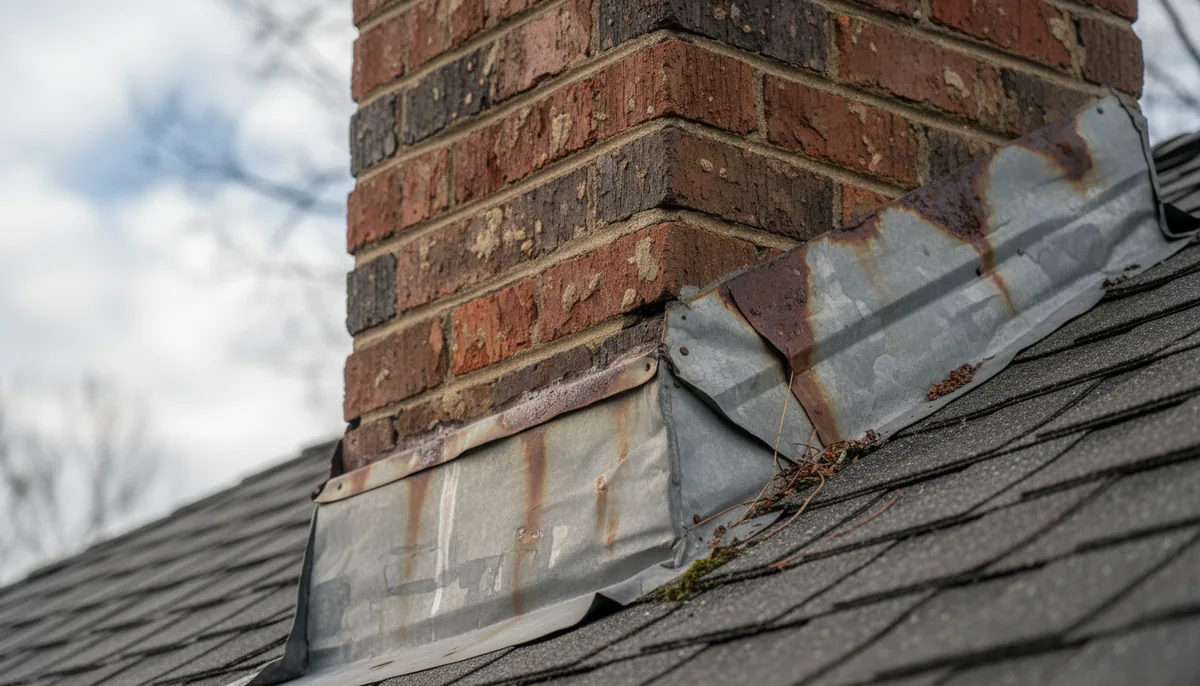
Florida emergency mobile home roof repairs — How Bad Is It, Really?
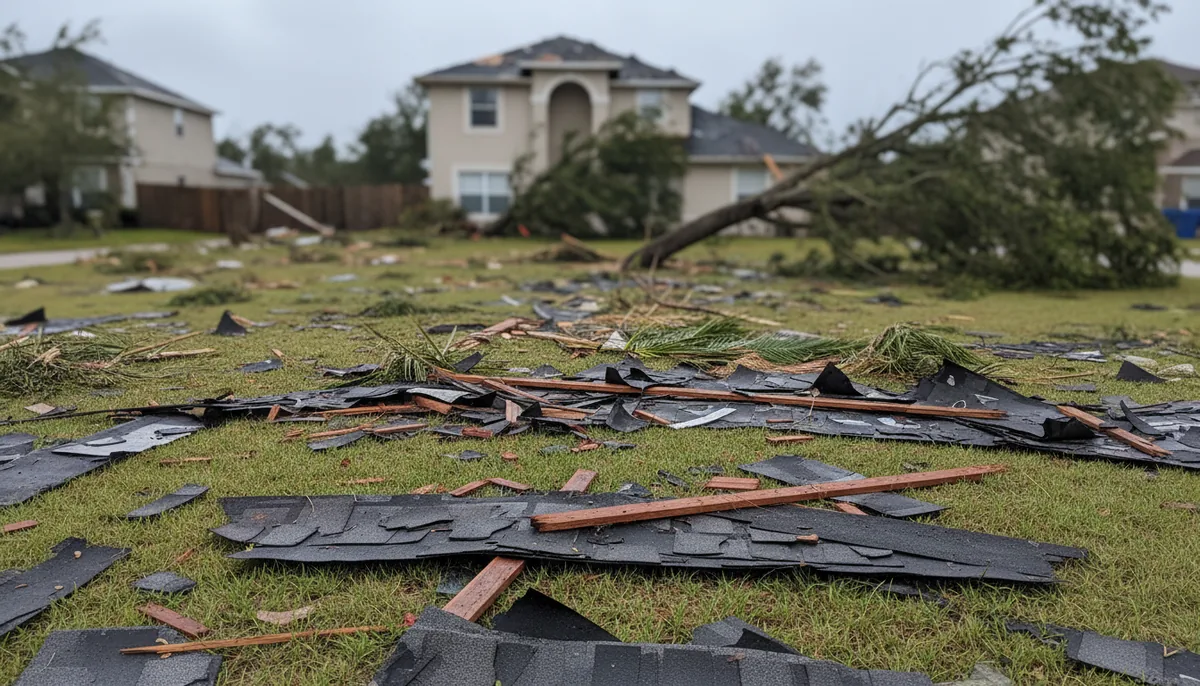
By Dale Prescott, Roofing contractor, Central Florida. Reviewed by Hal Winstead, Editor, licensed roofing contractor. Late afternoon, middle of July, Clermont. A call came in about a double-wide that had taken a beating from a squall line. I got there and found a live oak branch, easily ten inches thick, punched clean through the roof deck, with the broken end still sticking up through the membrane like a spear. The homeowner had already dragged a blue tarp up there and was trying to secure it while a second line of storms was building west over the lake. He had the right instinct. But he was fixing the wrong problem. If you want to see who actually covers this work, emergency roofing companies in Florida is where I would start.
Folks ask me all the time how bad it really is, these Florida emergency mobile home roof repairs. And the honest answer is: it depends what is under there. It depends on how old the roof is, what layer of patching it already has, and wether the insurance company is going to pay for a full tear-off or just enough to stop the dripping. If you’re looking for a list of who to call, the directory has one for emergency roofing companies in Florida, but I’ll tell you the things I’d want to know before I picked up the phone.
I’ve torn off more storm-damaged roofs than I care to count. Twenty-two years running tile and shingle crews between Orlando and the coast. I’ve seen the best and worst of it, and mobile home roofs have their own special breed of trouble. The metal is thin. The framing is light. And the roof is the only thing standing between the inside of somebody’s home and a Florida thunderstorm that can drop an inch of rain in twenty minutes.
What counts as an “emergency” roof repair on a mobile home?
An emergency means water is getting in, or about to get in, and waiting a week will make it worse. It is not a few missing shingles. It is a hole, a split seam, a ridge cap that has peeled back, or a section of roof deck that has gone soft enough to collapse under your weight. Call it a hole you can see daylight through, or better yet, a hole you can see rain through.
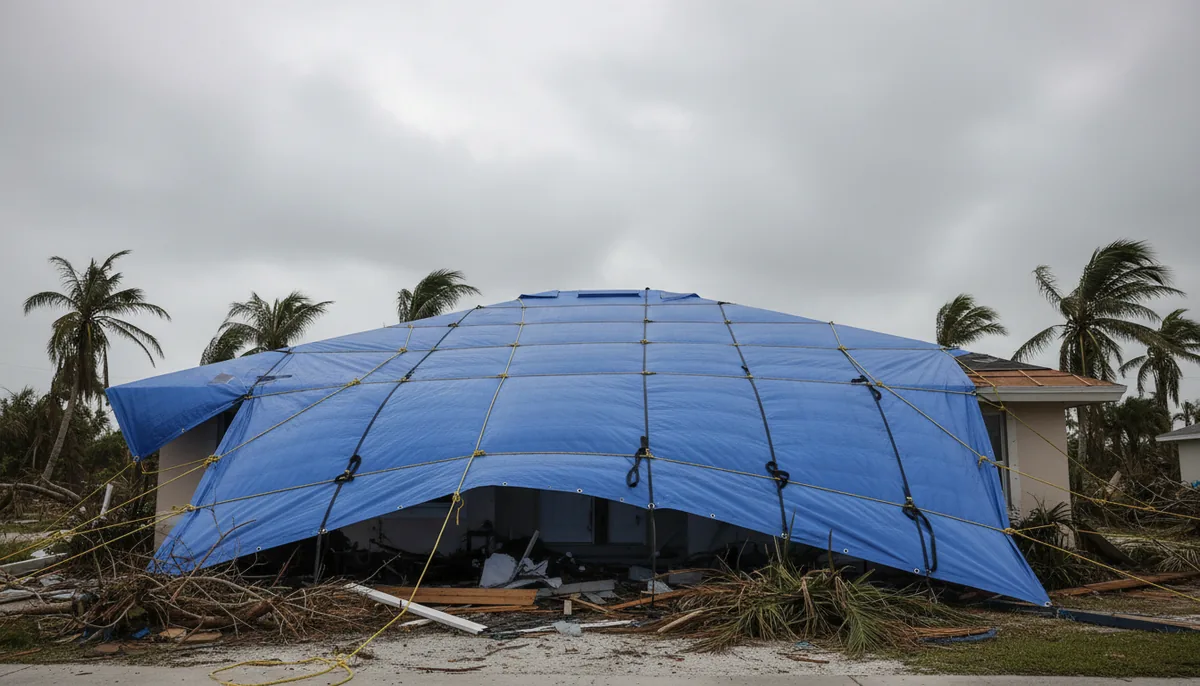
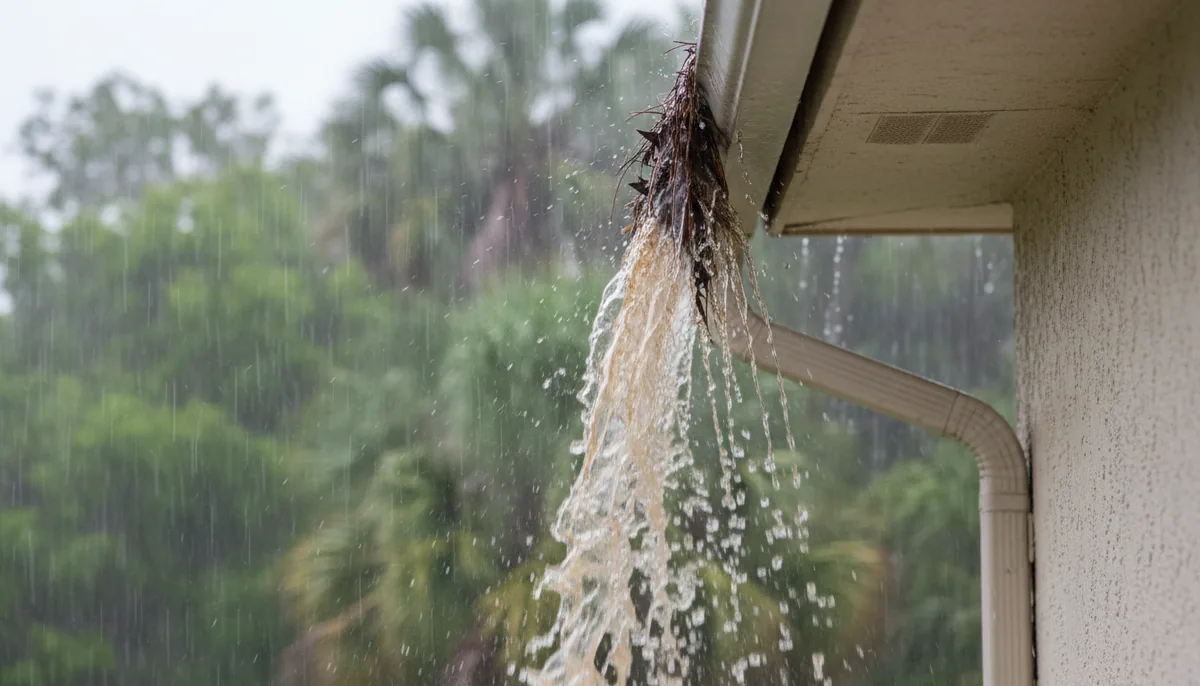
If the leak is slow and it has been raining for three days, that’s an emergency too. Water finds the path of least resistance and then rots everything in it's path. A small drip can soak a two-foot section of insulation and ceiling panel before you ever see a stain. By then the damage is done.
So the first job is to stop the water, not to fix the roof. Tarp it. Patch it. Get a bucket under the drip. Then you can breathe and start making calls. But here is where I have to say something that will make some contractors mad.
The permit isn’t optional. And the “25% rule” isn’t what it used to be.
You will hear alot of people talking about the “25% rule” and what it means for a mobile home roof. The old rule came from the Florida Building Code, and it said that if you repaired more than a quarter of your roof in a twelve-month period, you had to bring the whole roof up to current code. That meant a full replacement whether you wanted one or not.
People in the field called it a nightmare.
Then the legislature passed SB 4-D in 2022, which changed the game. Now, if your roof was built, repaired, or replaced under the 2007 Florida Building Code or any later edition, only the part you’re working on needs to meet the current code. A full replacement is no longer automatically triggered.
But there is a catch. The 2007 code took effect in March of 2009. So if your mobile home’s roof is older than that, and you do a substantial repair, you could still be on the hook for a full replacement. It depends on your original permit and which code edition it was approved under. I have been wrong about this before, because you never know what the local building department is going to say until you pull the permit and ask.
And you absolutely need a permit.
What I would actually do: Call the local building department before I let a contractor pull a permit, and ask them directly if my home’s original roof permit was under the 2007 code or later. That one call tells you whether a repair is going to trigger a full replacement. It takes ten minutes and saves you from a nasty surprise.
The roof permit and the inspection are your friends, not the enemy
A roof replacement in Florida requires a permit pulled from the local building department, and it requires an inspection. That is the law. I don’t care if you’re roofing a 4,000-square-foot custom home or a single-wide in a retiree park. The rule is the same.
A contractor who offers to skip the permit is a contractor to walk away from. That is not me being a company man. An unpermitted roof can complicate an insurance claim and it can sink a home sale later. You might save a few hundred bucks now and lose thousands later when the buyer’s title company flags a roof with no permit history.
I have seen it happen. A family in DeLand bought a double-wide, the roof had been replaced five years prior “cash deal, no permit.” When the next storm came, insurance adjuster asked to see the permit and the inspection records. There were none. The claim got complicated real fast.
A roof repair for a mobile home is usually more complex than it looks
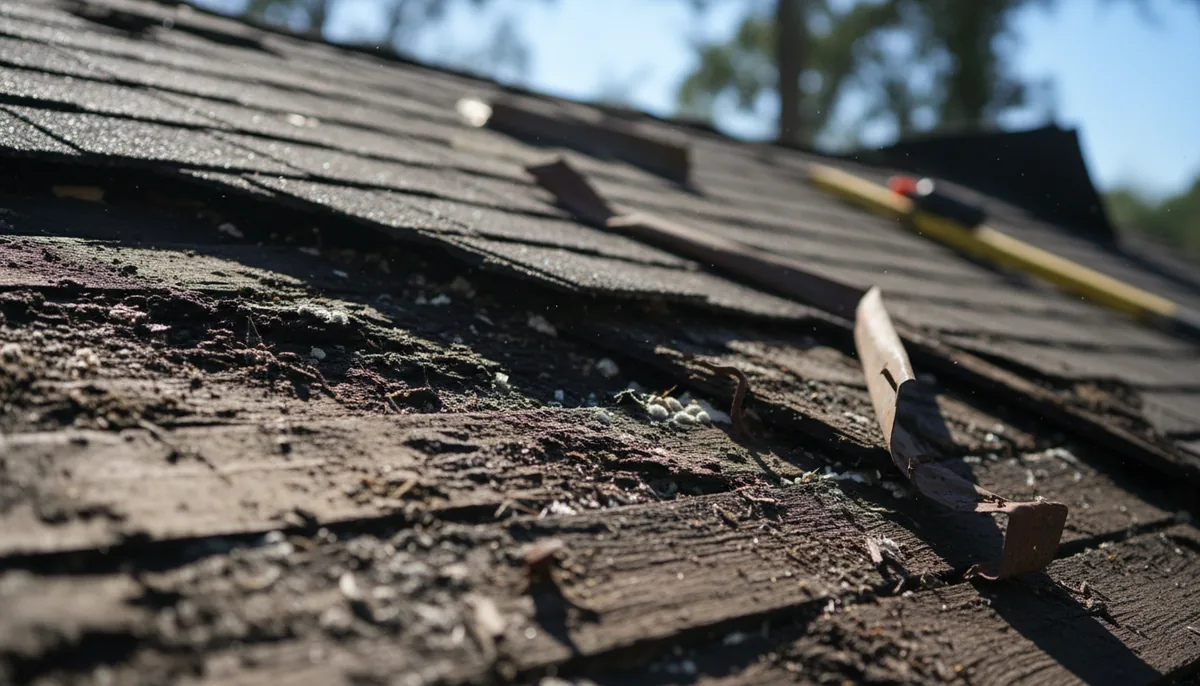
You have to ask a serious question before you get too deep: is the roof repairable at all? If the metal panels are rusted at the fasteners or the deck underneath is rotted, then patching is just throwing money at a problem that’s going to come back through the ceiling. A repair on paper costs less, but if it only lasts two years, you paid for it twice.
Size matters more than you’d think. A roof is priced per square, which is an area of ten feet by ten feet. A mobile home roof is usually a lot smaller than a stick-built house roof, but the pitch often isn’t steep, so the cost is not about the materials as much as it is about access and labor. If the home is in a park, and the crew can’t get a large ladder or lift close enough, the price goes up.
Then there is what is under the metal. If the deck is rotting from a years-old leak, a new roof is not going to help unless the deck is replaced first. Sometimes you get lucky and the deck is solid. Sometimes you’re tearing off the top layer and it comes up with half the deck attached. Call it the luck of the draw.
I had a customer in Sanford, a gentleman who had patched the same seam three times with different kinds of tape and caulk. He was proud of his work. He clambered up there and showed me the patch job, and it was neat as a pin. The problem was he was patching the seam above the living room, but the water was running along the top of the ceiling panel and dripping out over the front door. He was fixing the drip he could see instead of the hole up the slope he couldn’t. Every tradesperson has a customer like this. We talk about it in the truck.
Your insurance claim has a clock. People miss it all the time.
Here is where I have to wave my hands and tell you I am not a lawyer and not a licensed adjuster. What I know comes from seeing this happen to customers. Under Florida Statute 627.70132, you have to give your insurer notice of an initial or reopened property damage claim within one year of the date of loss. If it’s a supplemental claim, you have eighteen months. This used to be three years, and they cut it down.
The clock starts from the date the damage happened, not the date you discovered it. That one trips people up. You might not know you have a leak until the rain stops, but the storm that caused it was three weeks ago, and that is the date the insurance company is looking at. You need to read the form OIR-B1-1802 and your own policy. Coverage varies by policy, and I won’t pretend to know what yours says. Read the declarations page.
What I would actually do: If I thought there was even a chance of wind damage or a tree strike, I would call my insurance agent within a week and report it. Date the loss, and report it right away. You can always cancel the claim later if it turns out to be a drip from a bad roof vent. You cannot get a missed deadline back.
What to do before you hire someone
First, check the licence. Florida roofing contractors are licensed by the Department of Business and Professional Regulation, the DBPR. A certified contractor has a licence that starts with the prefix CCC and can work anywhere in the state. A registered contractor has a licence starting with RC and can only work in the local jurisdiction that licensed them. One is not necessarily better than the other, but the RC one is restricted. Always verify the number is active before you take a bid. The directory verifies licences against the DBPR roll, but you should check too. It takes sixty seconds.
Second, ask for a copy of the permit aplication. A real contractor will pull a permit, and you are allowed to ask to see it. If the contractor says the permit is “included” but then asks you to get one, that is a red flag.
Third, do not pay cash up front. A small deposit maybe, but not the whole job. A roof is a big enough project that there are plenty of fly-by-night operators who will take a large check and vanish before the first inspection. I am not accusing anyone, just telling you how the game is played.
Are mobile home roof repairs different from regular homes?
Yes and no. The basics are the same: stop the water, find the hole, fix the cause. But mobile homes have their own materials and their own building codes. You can’t just take a crew used to doing asphalt shingle mansions and turn them loose on a trailer roof. The fasteners are different. The flashing details are different. The way the roof sections join down the center is different.
Also, the repair work is often physically miserable. The metal gets hot. The slope is low enough that dirt collects, and the crews are standing in it. It’s not a job for somebody who isn’t used to it.
Questions I get asked
Do I really need a permit to repair a small leak on my mobile home roof?
Yes, if you are replacing more than just a few shingles or patching a small hole. A permit is required for the repair work itself. And most insurance companies will expect a permit and inspection record when they pay for a roof claim. If you are just caulking around a vent pipe, no permit is needed, but anything bigger does need one.
If I sell my mobile home, will an old roof prevent the sale?
It can. If the roof is obviously old, the buyer’s lender may require it to be replaced. If the roof was replaced without a permit, the title company might not clear the sale. An unpermitted roof is a red flag that can kill a deal at the closing table.
If my roof is leaking, can I make a temporary patch first?
Yes. A tarp held down by wood strapping is a good temporary fix and won’t hurt a future claim. But do not let a contractor put a temporary patch over a large hole and call it a repair. That is when you get billed for temporary work that has to come off anyway.
Does homeowners insurance cover mobile home roof damage from wind?
Coverage depends entirely on your specific policy. You need to read your declarations page. Some policies have seperate deductibles for wind. Some exclude certain types of roofs. I can’t tell you if your policy covers it because I don’t know what you bought. Report the loss on time, which I mentioned above, and read the paperwork.
What is the difference between a certified and registered roofing contractor?
A certified contractor, licence prefix CCC, may work anywhere in the state of Florida. A registered contractor, prefix RC, may only work in the local jurisdiction that licensed them. Always verify the licence is active on the DBPR roll before you sign. If the contractor you are talking to is registered, make sure they are actually licensed for your county and city.
Which code year applies to an older mobile home roof?
The SB 4-D change means roofs built, repaired, or replaced under the 2007 Florida Building Code or later are only required to address the portion being worked on. The 2007 code took effect in March 2009, so roofs completed before that date generally do not qualify. If your roof is from the 90s or early 2000s and you need a large repair, you might be facing a full replacement to current code. A local building official can tell you for sure once you pull a permit.
More from the site
- Storm damage roof repairs in central florida — How Bad Is It, Really?
- Storm damage roof replacement florida — How Bad Is It, Really?
- Florida hail damage roof — How Bad Is It, Really?
- Clean mold off roof florida — How Bad Is It, Really?
- Emergency roof repair ne florida storm damage — How Bad Is It, Really?