
Florida insurance roof replacement law: What Florida Homeowners Should Know
By Renata Alvarez, Former property claims adjuster. Reviewed by Hal Winstead, Editor, licensed roofing contractor. I remember the afternoon clearly. It was in Tampa, a bright Tuesday in February, and I was standing on a tile roof that had leaked through a living room ceiling three months prior. The homeowner, a retired nurse named Carol, had waited to file because she figured the leak was from the old plumbing vent flashing, not the roof itself. She was wrong on both counts. The policy was a year and a half old, the damage was from a tropical storm the previous August, and when she finally called her carrier, the response was a polite letter citing a deadline she didn't know existed. I had to explain that under Florida law, her claim was done. I've been wrong about this before, but that day I wasn't.
Nobody tells you that "florida insurance roof replacement law" isn't a single law. It's a pile of statutes, code changes, and rules that shift every couple of years, and if you're a homeowner trying to patch together what your insurer owes you, it feels like you're learning a language that's already changed by the time you speak it. There's the claim filing deadline. There's the building code change that killed the old 25% rule. There's the wind mitigation inspection that could save you money if you know it exists. And then there's the actual nightmare of figuring out who's allowed to touch your roof at all. If you're already in the middle of this, you probably want to talk to real companies who deal with this daily—you can find roof replacement companies in Florida here, and get a few opinions before you sign anything. But first, let me walk you through what I actualy saw from my side of the adjuster's desk.
The deadline that eats Florida claims for breakfast
Here's the thing that gets more homeowners than any storm damage. Under Florida Statute 627.70132, you have one year from the date of loss to notify your insurer about an initial claim. Not one year from when you noticed the stain. Not one year from when you got a roofer to look. One year from the day the roof actually got damaged. If you're filing a supplemental claim—say, you found more damage after the initial repairs—you get 18 months. This was changed from three years back in 2022, and I cannot tell you the number of people who still think they have the old deadline.
The clock runs from when the damage happened, not when you discovered it. That's the part that catches everyone. A tree branch hits your roof in July during a storm, but you don't notice the missing shingles until October, you have until the next July to file. Not October of next year. I've sat across from homeowners in Port Charlotte who had perfectly valid claims, covered losses, legitimate damage—and the only thing that killed them was a calendar. Miss that one-year mark and the insurer gets a complete defense, even on a claim they'd otherwise pay.
What I would actually do: If you have any reason to think your roof was damaged, even a stupid small reason, file the notice with your insurer before the anniversary of the storm. You don't need a roofer's estimate first. You don't need to know the full extent of the damage. You just need to get the claim on the record. You can always update it later with a supplemental claim if you find more damage within the 18-month window.

The 25% rule is gone—mostly
For years, the myth was that if more than a quarter of your roof was damaged, the insurer had to replace the whole thing. That came from the Florida Building Code, not from insurance policies. The idea was that you couldn't patch 30% of a roof and leave the rest outdated. But in May 2022, SB 4-D changed that math. If your roof was built, repaired, or replaced to the 2007 Florida Building Code or any later edition, then only the section being worked on must meet current code. A full replacement is no longer automatically triggered.
And here's the kicker that most people don't realize: the 2007 code edition took effect on March 1, 2009. So if your roof was completed before that date, it generally doesn't qualify for this relaxed rule. That means an older roof with damage to one slope may still require a full replacement to bring everything up to current code. A newer roof, though? The contractor can repair just the damaged portion. This is one of those things that makes people furious because they hear "they changed the rule" without realizing the date of their own roof matters more than anything.
I had a policyholder in Cape Coral who had a newer roof, installed in 2015, and she had a leak on one side. The roofer told her the whole thing needed replacing because of the "25% rule." That was nonsense. Her roof was built under a code edition that triggered the SB 4-D change, so only the damaged section needed to be brought up to code. She almost paid a deductible on a whole new roof she didn't need. Always check your permit history before you beleive a roofer who tells you the whole thing has to go.
That wind mitigation inspection is an insider move
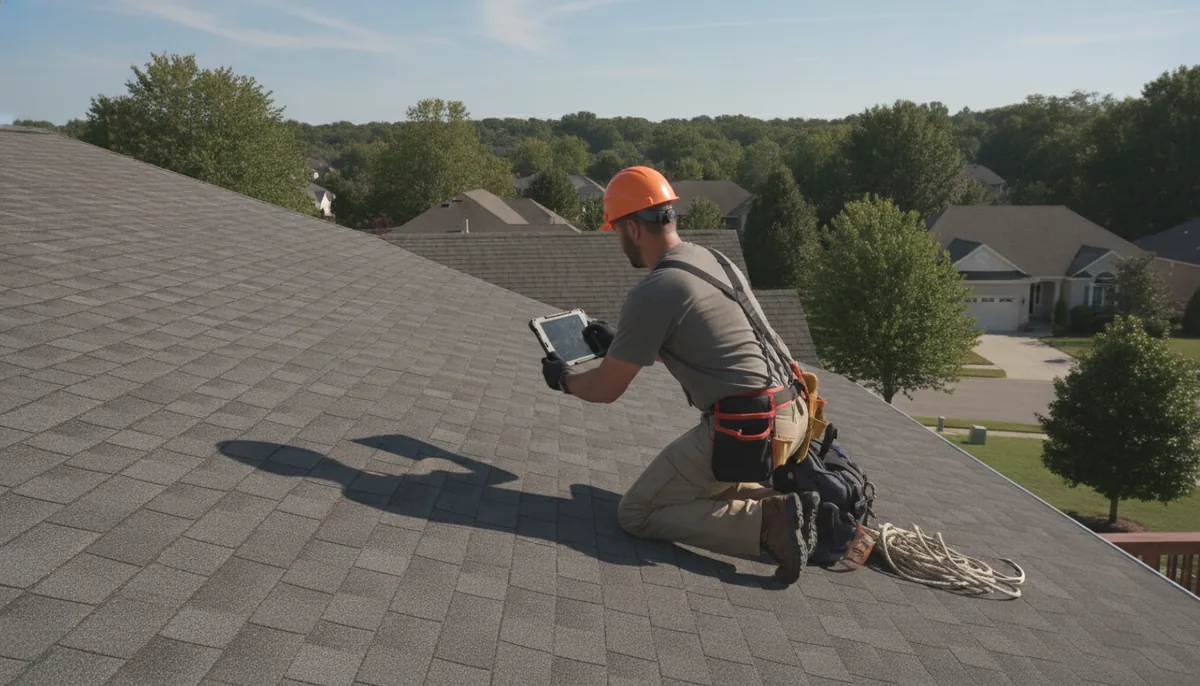
Here's where I get to gripe about how Florida homeowners leave money on the table. A wind mitigation inspection documents your roof covering, roof deck attachment, roof-to-wall connection, roof geometry, secondary water resistance, and opening protection. The standard form is OIR-B1-1802. Florida insurers are required to offer premium discounts for qualifying features. And yet maybe half the people I adjusted for had never even heard of it.
The inspection costs a fraction of what the annual discount can open up. I'm not going to give you a dollar figure because it depends on where you live and who you hire, but I've seen premiums drop by hundreds of dollars a year for a home that had proper hurricane straps and a newer roof deck. If you have a hip roof instead of a gable roof, or if you have a secondary water barrier, these are the things that make your home more resistant to wind damage. The insurer is supposed to reward that. You just have to prove it.
What I would actually do: Before I ever filed a wind claim, I'd pay for a wind mitigation inspection, send it to my insurer, and get the premium discount applied. Then if a storm actually hits, I've already documented what my roof looks like. It's evidence on your side. It gives you a baseline that makes it harder for an adjuster to claim the roof was already in bad shape before the storm.
When Citizens is your only option
Somewhere along the way, you might get a non-renewal notice from your private insurer. That's not the end of the road, but it might feel like it. Citizens Property Insurance Corporation is Florida's state-backed insurer of last resort—it's for owners who can't find coverage in the private market. I've handled claims on Citizens policies, and they're not the monster people make them out to be. They're slower sometimes. They're pickier about documentation. But they're not inherently trying to screw you.
If you end up with a Citizens policy, read the declarations page like your life depends on it. Coverage varies by policy, and I can't tell you what yours specifically covers because I haven't read it. But I can tell you this: Citizens policies often have stricter requirements around maintaining your roof, and they're less forgiving about pre-existing damage. If you're shopping and only Citizens will take you, that's not a life sentence. It's a signal that your roof needs to be in good shape before you even apply.
There's also the My Safe Florida Home program, which is a state initiative that offers free wind mitigation inspections and matching grants for hurricane-hardening improvements to homeowners who meet it's criteria. Funding is appropriated per cycle and it runs out, so don't assume a grant is currently available. It's worth checking wether the program is open when you're reading this. If you get in, that free inspection can tell you exactly what needs strengthening before the next storm.
Licensed, certified, or registered—don't get that wrong
When you finally find a contractor, you need to understand the alphabet soup. Florida roofing contractors are licensed by the Department of Business and Professional Regulation, the DBPR. A certified roofing contractor has a license that starts with CCC and can work anywhere in the state. A registered roofing contractor has a license that starts with RC and can only work in the local jurisdiction that issued it. That difference matters more than you think.
I've had homeowners in Jacksonville hire an RC-licensed contractor from Miami-Dade because the price was right, and then the work didn't pass inspection because the contractor wasn't authorized to pull permits in that county. You can look this up yourself on the DBPR roll. Always verify the license number is active before you hire someone. Don't take their word for it. Don't take my word for it. Check the roll.
Also, a word about the word "licensed." Just because a contractor has a license doesn't mean they're reputable. The directory verifies licenses against the DBPR roll, but licensed and good are two different things. Ask for references. Look at their work. Don't let a fancy truck convince you that they know how to flash a valley.
Questions I get asked
I missed the one-year deadline. Is there anything I can do?
That's probably the hardest question I get. If you missed the deadline under Florida Statute 627.70132, the insurer has a complete defense even if the loss is covered. There are narrow exceptions, but I wouldn't count on them. Your best move is to talk to a public adjuster or an attorney who handles insurance disputes, because the facts matter enormously here. I've seen claims saved by proof that the insurer had actual notice of the damage through a different channel, but that's a legal argument, not something I can advise you on.
My roofer says I need a whole new roof because of the 25% rule. Is he right?
It depends entirely on when your roof was built. If it's newer than the 2007 Florida Building Code, which took effect in March 2009, then SB 4-D (2022) means only the damaged portion needs to be brought up to current code. If your roof is older than that, then a repair that exceeds a quarter of the roof might trigger a full replacement. Get your permit history and check the date.
How much can a wind mitigation inspection actually save me?
I won't give you a number because it depends on your insurer, your policy, and your home's specific features. What I can tell you is that Florida insurers must offer premium discounts for qualifying wind mitigation features, and the form OIR-B1-1802 is how you document them. The inspection costs alot less than the annual discount you can open up, so it's usually worth doing. Just make sure you send the form to your insurer and ask for the discount to be applied.
What if Citizens is my only option for insurance?
Citizens Property Insurance Corporation exists for homeowners who can't find coverage in the private market. It's not ideal, but it's not the end of the world. Read your policy carefully because coverage varies. Keep your roof in good shape, document everything, and understand that Citizens tends to be stricter about pre-existing damage than private carriers.
How do I check if a roofing contractor is actually licensed?
Go to the DBPR roll and search for the contractor's license number. Certified contractors have a prefix of CCC and can work statewide. Registered contractors have a prefix of RC and can only work in the local jurisdiction that issued the license. Make sure the license is active and matches the name of the company you're hiring. It takes two minutes and it saves you from a world of pain.
More from the site
- Florida roof age requirement insurance: What Florida Homeowners Should Know
- Hail damage roof claim florida: What Florida Homeowners Should Know
- Florida roof building code: What Florida Homeowners Should Know
- Roof damage claim florida: What Florida Homeowners Should Know
- Florida roof permit: What Florida Homeowners Should Know