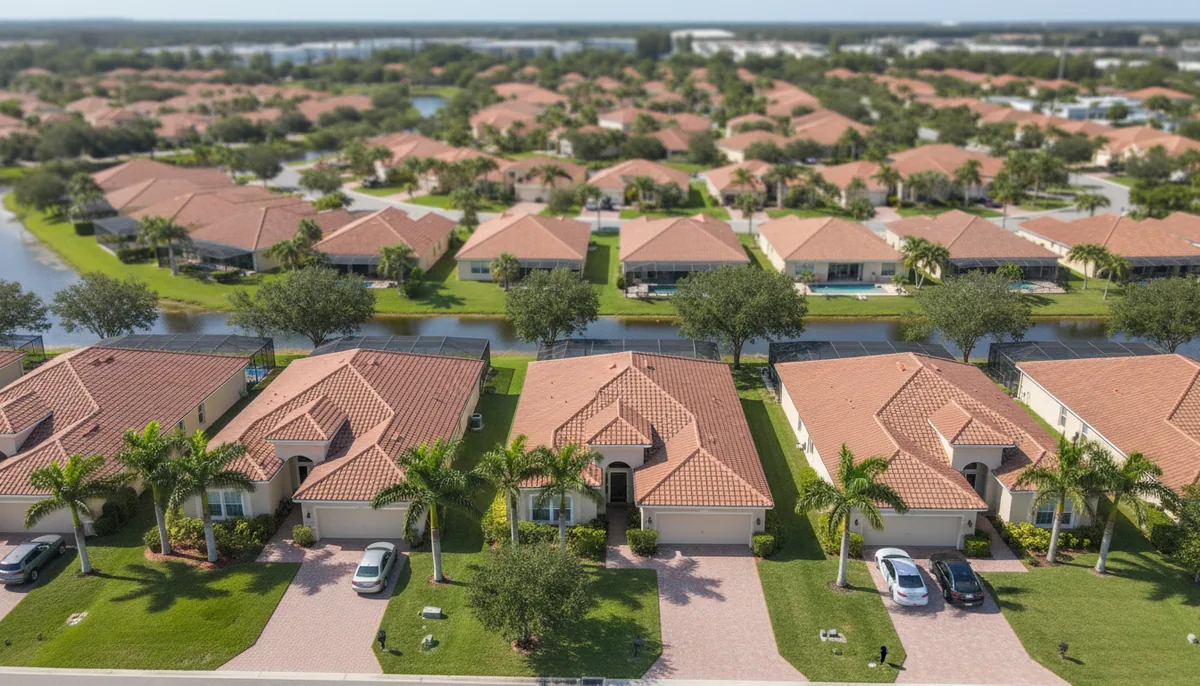
Florida roof replacement law: The Florida Guide
By Marcy Doleman, Commercial roofing estimator. Reviewed by Hal Winstead, Editor, licensed roofing contractor.
I was standing on a flat TPO roof over a school in Port St. Lucie one afternoon, watching a roofer cut a test patch out of the membrane. We were there to price a repair. Underneath that fifteen-year-old roof, the insulation board was wet as a sponge and the metal deck below it had rusted clean through in one spot. What started as a three-square leak was a full deck replacement and a new roof. The school board needed to know if the law in Tallahassee was about to force their hand on the whole building. That's when you learn the difference between a repair and a replacement is never just about the roof.
This is the part that gets people in trouble. A lot of property managers call me after they have already talked to a salesman, and what they heard about the “25% rule” is usually outdated by a couple of years. Before you pay for an estimate, you need to know what Florida law actually says about replacement now. And before you talk to a contractor, make sure you understand who you can legally hire in the first place. If you are looking for a licensed pro, the roof replacement companies in Florida directory is a good place to see what is out there, but you need the law sorted in your own head first.
The old 25% rule is not what it used to be
For years, we told customers a simple version of the Florida Building Code. If you repaired or replaced more than a quarter of your roof in any twelve-month period, the local building department would make you bring the entire roof up to current code. That scared alot of people into patching roofs they should have torn off years ago. I of been wrong about this before, but the logic used to be simple: the code did not want people upgrading a brand-new section of roof next to a crumbling old one. It wanted conformity.
Then the legislature changed things. What most people call the “25% rule” was modified in 2022. The bill was SB 4-D (2022), effective May 26. Now, if your roof was built, repaired, or replaced under the 2007 Florida Building Code or anything later, the old trigger is gone. Work on one section only requires that section to meet current code. You do not automatically have to tear off the whole roof just because you are fixing a quarter of it. The catch is that the 2007 code took effect in March 2009, so if your roof is older than that, the old rule can still bite you. Each building department reads it their own way, too.

Florida roof replacement requirements boil down to paper and permits
The legal part of a roof replacement is not actually about shingles versus tile. It is about paperwork. A roof replacement in Florida requires a permit pulled from the local building department, and an inspection. I have worked with jurisdictions from Pensacola to Key West, and they all want the same thing: a permit number on the truck and an inspection scheduled before you bury the work. If a contractor tells you that you do not need a permit for a small job, walk away. If they tell you they can do a full replacement without a permit because it is “just a reroof,” walk away faster. Unpermitted work has a way of showing up in an insurance claim denial or a title search at closing, and neither one is a headache you want.
You also need to verify who holds the permit. This is where the DBPR licence prefixes come into play. A certified roofing contractor in Florida has a licence that starts with CCC, and that person can work anywhere in the state. A registered contractor has an RC prefix and is limited to the local jurisdiction that issued the license. I have had customers hire an RC contractor for a job three counties away and not realize why the permit was rejected. Always check that the license number is active on the DBPR roll before signing anything. That is not me being paranoid; it is me being burned.
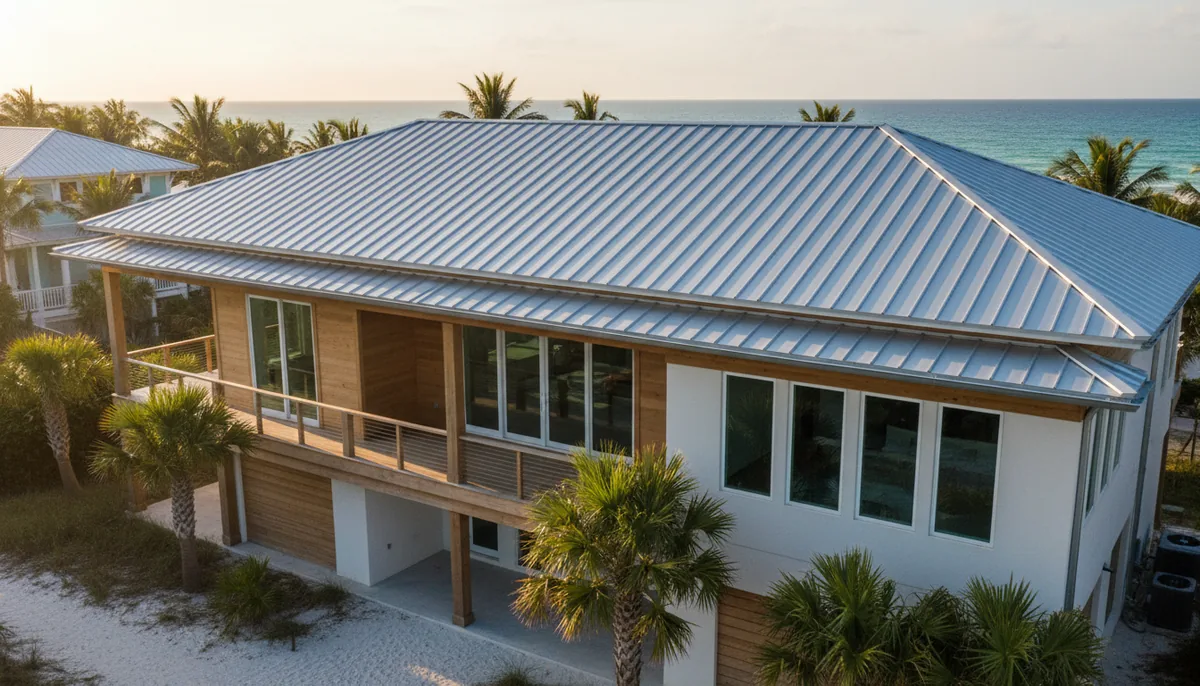
The insurance side of the replacement decision
I am an estimator, not an adjuster, so I do not tell you what your policy covers. Coverage varies wildly between carriers and even between policy years. Read your declarations page and talk to your agent. What I can tell you is that Florida Statute 627.70132 requires insurers to provide a discount for certain wind mitigation features. The inspection that documents these features is called a wind mitigation inspection. It is a seperate visit from the home inspection or the roof estimate, and it uses a standard form you might see referenced as OIR-B1-1802.
The inspector looks at the roof covering, how the roof deck is attached to the framing, the connections between the roof and the walls, the shape of the roof, wether there is secondary water resistance under the shingles, and how the openings are protected against wind-borne debris. Some of those features only exist if you paid for them in the original construction. If you have them, the discount can be significant, and the inspection has to be performed by a certified entity. I have seen the cost of that inspection paid back in the first year of premiums. It is one of the few pieces of paper that can actually make you money.
Go with the wind, not the weatherman
The worst part of this job is the panic that sets in after a hurricane warning. My phone rings off the hook, and every call is someone who wants a roof replacement in three days because they are scared about a storm that the forecasters say might graze the coast. I get it. But the contractors you want are not the ones with a truck already parked in your driveway the morning after the storm. Those storm chasers blow through, pull a permit, do bad work, and leave. The best time to think about Florida roof replacement law is on a random Tuesday in October when the sky is blue. That is when you can interview a contractor without the pressure.
> What I would actually do: If a customer calls me with a leak and a roof over fifteen years old, I do not start with their insurance claim. I start by getting them to pull their permitting history from the county. That tells me what code cycle the roof was built under, which tells me if the 2022 law even matters for their situation. Then I can give an honest estimate for either a repair or a full replacement. The answer depends on what is under there, and you do not know that until you cut a test patch.
Questions I get asked
Does the 25% rule still apply to my roof in Florida?
It depends on when your roof was built. If it was built, repaired, or replaced to the 2007 Florida Building Code or any later edition, then only the section you are working on needs to meet current code. If your roof is older than March 2009, the old rule that forces the whole roof up to code can still apply.
If I repair over 25% of my roof, do I have to replace the whole thing?
Not always anymore. Since the 2022 law changed, the old automatic trigger is gone for roofs built under the 2007 code or later. The local building official still has final say, and if your roof is older than that, they can make you bring the whole thing up to standard.
What does a wind mitigation inspection cost?
It depends on the size of the house and the access to the roof, but it is generally a few hundred dollars. The discount that comes from the insurer often pays for that cost in the first twelve months if your roof has qualifying features. You will not know if you qualify until the inspection is done.
How do I check a roofing contractor's license in Florida?
Go to the DBPR website and look up the license number. A certified contractor has a CCC prefix and can work anywhere in the state. A registered contractor has an RC prefix and only works in the jurisdiction that issued their license. If the number is not active, do not hire them.
Should I file an insurance claim first or call a roofer first?
Call a roofer who knows the law first. The roofer can tell you whether the damage is caused by wear and tear, which is not typically covered, or by a specific storm event. But many insurers require you to let them inspect before you sign a repair contract. Do not let a roofer talk you into signing a contract that says you will pay for a full replacement before you have talked to your adjuster.
What is the biggest mistake you see building owners make?
Hiring a contractor who cannot pull a permit in that county. I have walked onto jobs where a registered local contractor tried to work across the state line and the permit was rejected mid-project. That wasted three weeks and left the roof open to a rainstorm. The paperwork is as importent as the work.