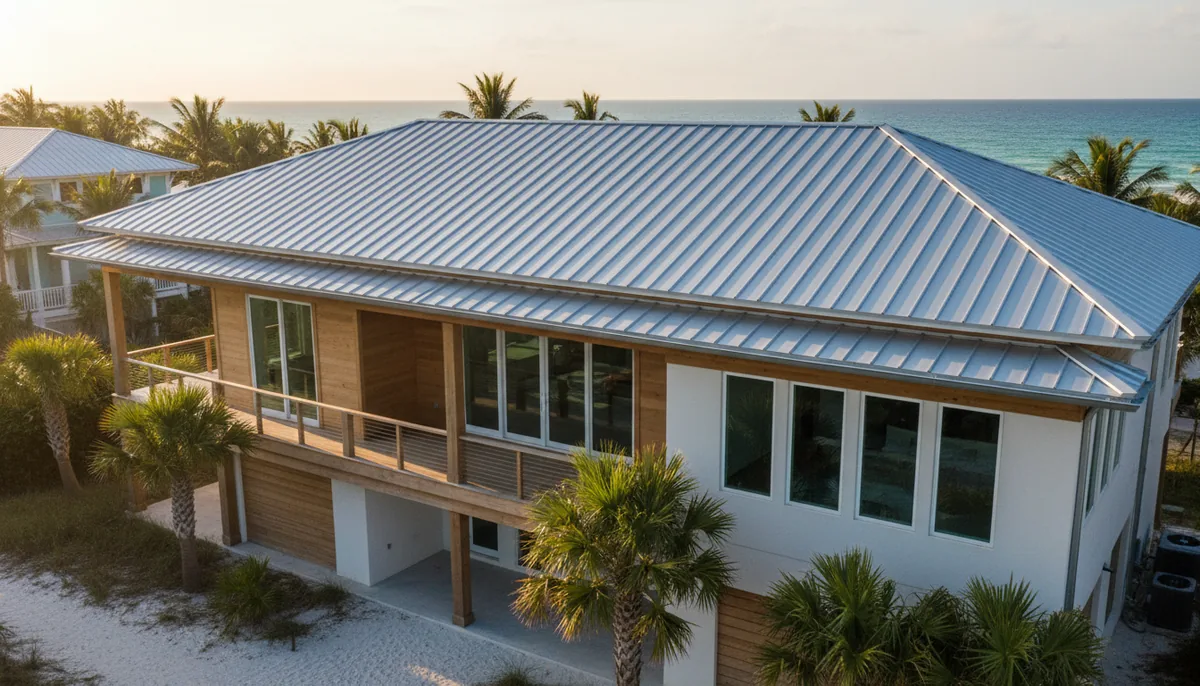
Florida roofing solutions: The Florida Guide
By Marcy Doleman, Commercial roofing estimator. Reviewed by Hal Winstead, Editor, licensed roofing contractor.
Looking for Florida Roofing Solutions? They are listed in this directory, in Winter Park, with their Florida DBPR licence number and whether that licence is currently active. See the Florida Roofing Solutions listing.
I spent one hot October afternoon in Pensacola on a school gymnasium roof, and I nearly priced a silicone coating over a roof that needed to be torn off. The modified bitumen surface looked dry and sound from the hatch. Then my test cut came up black, wet wood fiber, and the smell told me everything I needed to know. I had been wrong on that roof, and I hate being wrong on someone else’s dime. That is why my first word of advice to any owner is to start with the roofing companies in Florida directory and check the DBPR record before you listen to an estimator, including me.
Florida roofing solutions aren’t one product. They’re a stack: what is under the membrane, what the building department will allow, what your insurer will ask about, and what the budget can survive. Most of the commercial work I estimate is TPO, modified bitumen, or a coating over an existing roof. Each has a place. None of them fixes wet insulation.
I’m Marcy Doleman. I estimate flat and low-slope commercial work — warehouses, retail plazas, schools — across the state. I don’t sell roofing. I put dollar figures to it. Here is how the job actualy works.
Florida roofing solutions start with what you cannot see
A roofing estimate is only as good as the information under the membrane. On that Pensacola roof, every visible sign said coat it. The moisture meter said replace it. I of been wrong about this before, and I’ll be wrong again. A stained ceiling doesn’t allways mean a bad roof, and a clean ceiling doesn’t mean a dry one.
So I cut test holes. I check the insulation and the deck. Then I talk price per square. The number depends on access, pitch, number of penetrations, and what’s under there. It is not a number I’ll invent over the phone.
What I would actually do: Cut three or more test holes throught the membrane and check the insulation and deck. If the deck is wet, no coating will save you, and you need to know that before you spend the money.
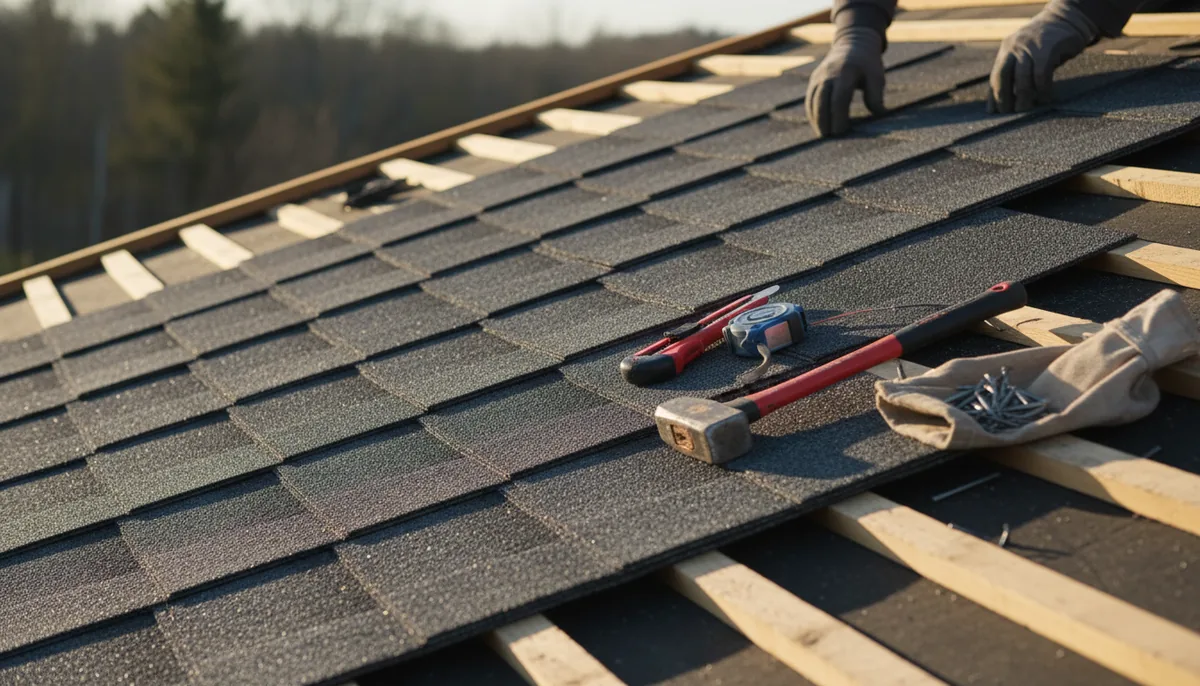
CCC and RC: read the prefix before you read the bid
Florida roofing contractors are licensed by the Department of Business and Professional Regulation. Search the roll and verify that the number is active before hiring. The DBPR licence prefixes CCC and RC tell you what a contractor is allowed to do.
A certified roofing contractor’s license begins with CCC and may be used anywhere in the state. A registered roofing contractor’s license begins with RC and may only be used in the local jurisdiction that issued it. Cross-county bid from an RC holder is a red flag, no matter how good the presentation looks.
I know registered contractors who do good work inside their own county. I also know an owner who wasted a month on a bid from a registered contractor whose local license had lapsed. Check first. It takes two minutes.
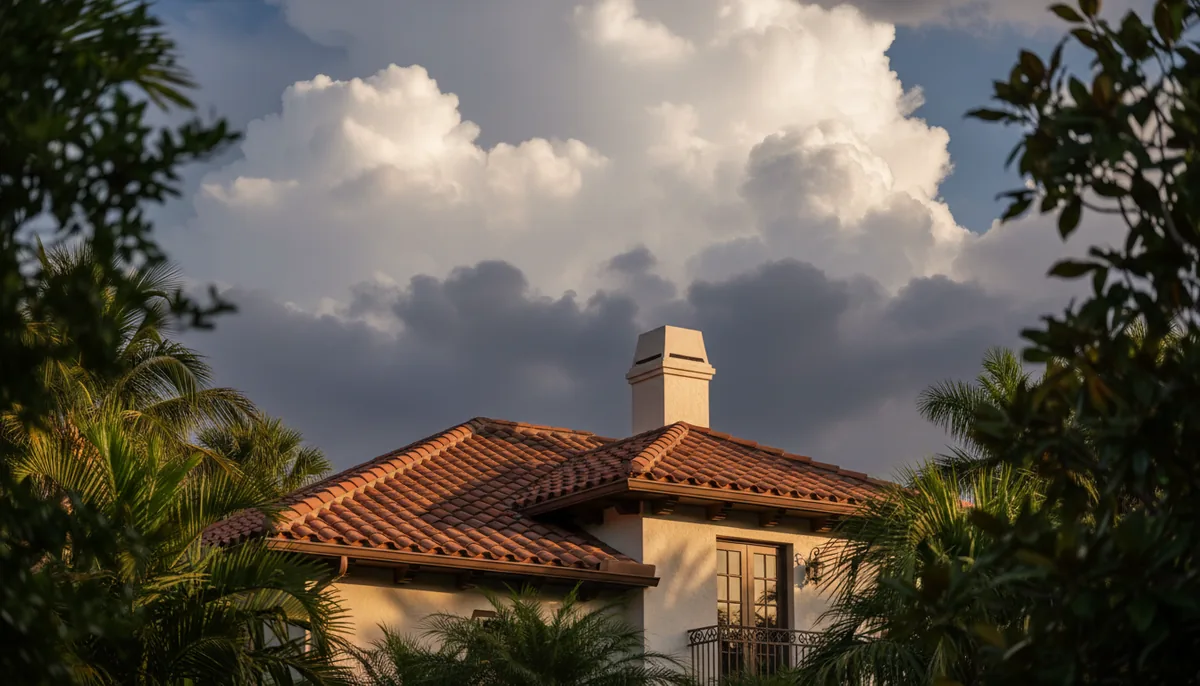
Permits, inspections, and the low bid that skips both
A roof replacement in Florida requires a permit pulled from the local building department, and it requires an inspection. If a contractor offers to skip the permit to save you money, walk away. An unpermitted roof can complicate an insurance claim and a future sale, no matter how neat the work looks.
Permit history is public record, and it tells me how many roof layers are under my feet. I pull it before I estimate, not after. One owner told me his roof was a simple single-ply system; the permit history showed three old modified-bitumen re-covers underneath. The roof wasn’t simple, and the price wasn’t simple either.
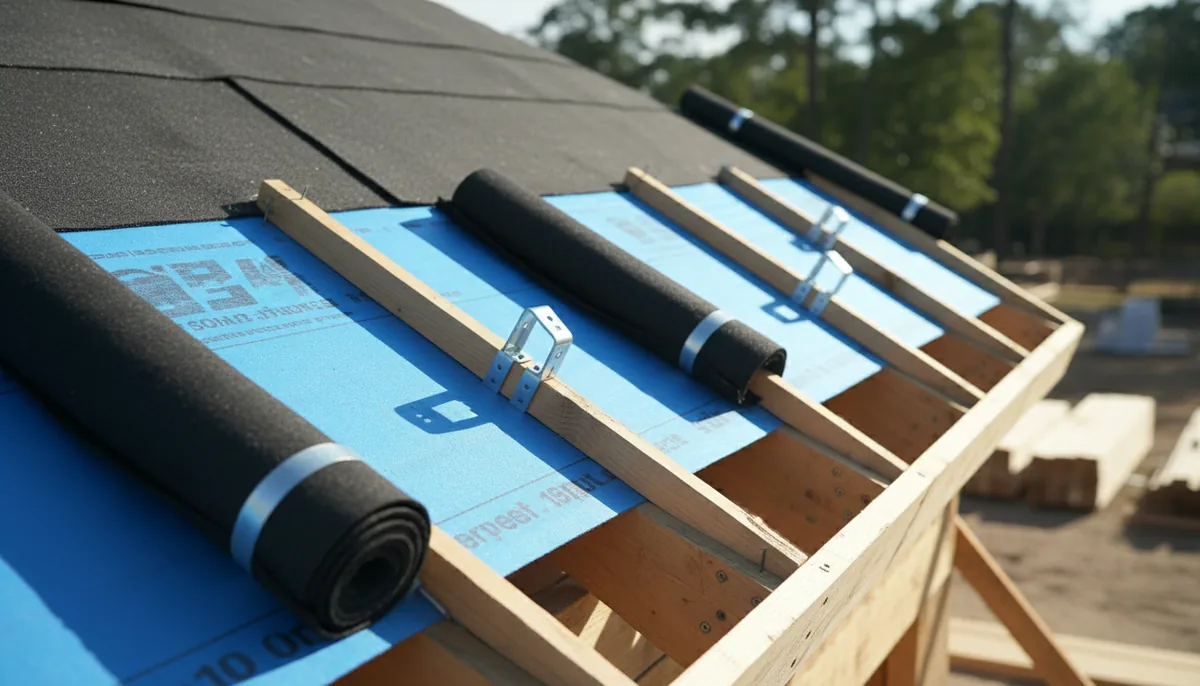
SB 4-D (2022) changed the old 25% rule
For years, the Florida rule went like this: if you repaired or replaced more than 25% of a roof in any 12-month period, you had to bring the whole roof up to current code. Owners hated that because a small repair could turn into a full replacement.
Then SB 4-D (2022) changed it for many roofs. If the roof was built, repaired, or replaced under the 2007 Florida Building Code or any later edition, only the portion being worked on must meet current code. A full replacement is no longer automatically triggered. The 2007 code took effect March 1, 2009, so older roofs generally don’t qualify.
This matters on every retail plaza with one bad corner. If the roof qualifies, a partial repair is actually a partial repair. If it doesn’t, you need to plan for the whole roof.
What I would actually do: Pull the original permit date before I price a partial repair. For a roof built before 2009, I assume the old 25% rule applies until an engineer or building official says otherwise.
Wind mitigation inspections: let the roof earn its discount
A wind mitigation inspection documents roof covering, roof deck attachment, roof-to-wall connection, roof geometry, secondary water resistance, and opening protection. Florida insurers must offer premium discounts for qualifying features. The standard form is form OIR-B1-1802.
The inspection typically costs far less than the discount it can earn, but I don’t know your premium and I don’t know your policy. Coverage varies. Read your declarations page. I’m an estimator, not a lawyer and not a licensed adjuster.
On commercial projects, the best time to think about form OIR-B1-1802 is before the reroof, not after. Deck attachment is expensive to fix later. If your building needs stronger roof-to-wall connections, that work belongs in the same contract as the new membrane.
Here is the one digression I owe you: owners always call these roofs flat. They aren’t. There is a slope, even when you can’t see it, and it sends water to a drain, scupper, or gutter. I once watched a property manager paint over a scupper opening because it looked like a dark hole in the parapet. That scupper was the only thing between that roof and a pond. Don’t paint scuppers shut.
Questions I get asked
Can a contractor with an RC license work outside that county?
No. A registered roofing contractor can only work in the local jurisdiction that licensed them. A certified contractor with a CCC license can work anywhere in Florida. If an RC holder from another county gives you a quote, keep looking.
What is the 25% rule after SB 4-D (2022)?
For many newer roofs, the old 25% trigger no longer applies. If the roof was built, repaired, or replaced under the 2007 Florida Building Code or later, only the part being worked on must meet current code. For older roofs, assume that replacing more than 25% in a year brings the whole roof up to current code. Get the permit history before you budget.
Is a coating a real roof repair?
Sometimes, but only on a dry, sound roof. A coating can extend the life of TPO or modified bitumen, but it cannot fix wet insulation or a rotten deck. If moisture is present, a coating is an expensive band-aid. Test cuts tell you which situation you are in.
Will my insurance company pay for this roof?
That depends entirely on your policy, so read the declarations page. I’m not an adjuster, and I won’t guess. An unpermitted roof can complicate the claim, and a wind mitigation inspection can help demonstrate what was actually there. Ask your agent what your policy covers before the storm, not after.
What does a new low-slope roof cost in Florida?
The cost per square depends on access, height, deck type, existing layers, and the system you choose. I won’t quote one number, because anyone who does over the phone is guessing. Get at least two contractors to walk the roof, but only after you have checked their DBPR status.
Do you estimate single-family home roofs?
No, I estimate commercial flat and low-slope work, so I won’t price your house. For a home, check the DBPR roll, ask about a wind mitigation inspection, and look into the My Safe Florida Home program. I don’t keep up with it's current funding, so check that separately.