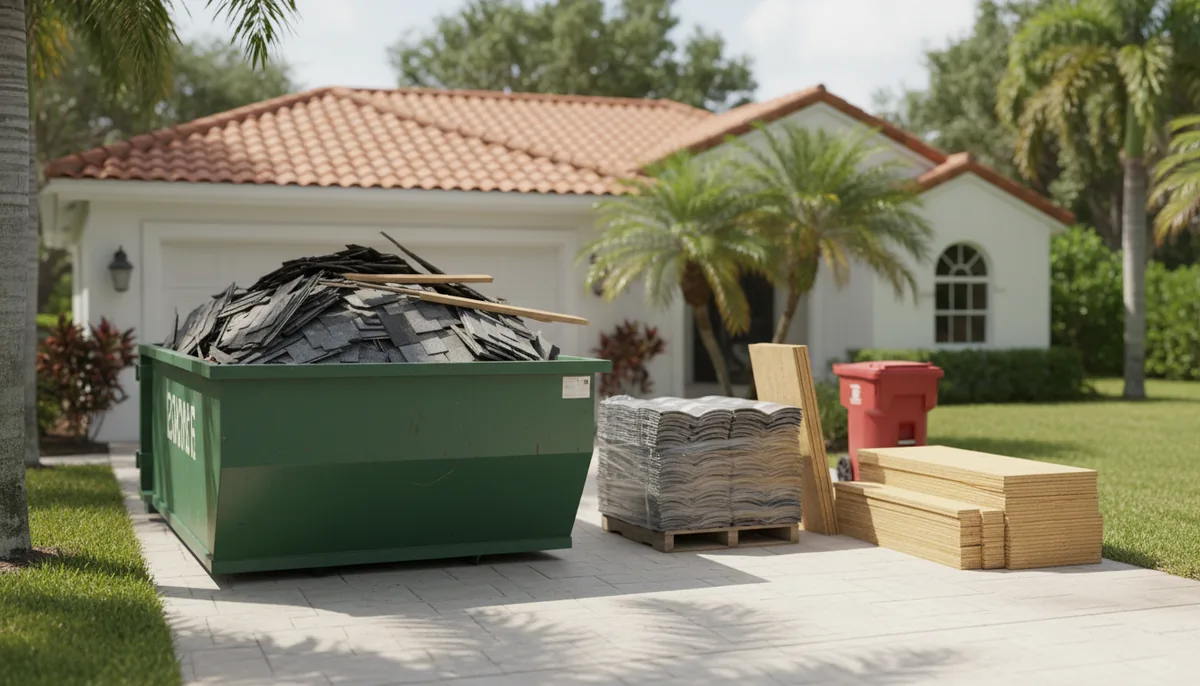
How long does a flat roof last in Florida
By Bud Kettering, Roof consultant and inspector. Reviewed by Hal Winstead, Editor, licensed roofing contractor. I was standing on a low-slope roof over a condo unit in Fort Myers back in 2022, and the owner had just told me the roof was "only five years old." The patch job under my feet told a different story. A gust of wind peeled back a corner of the newest repair, and I could see three distinct layers of old membrane underneath, all painted silver to hide their age. That particular roof was done. Not because it was old, but because somebody kept topping it instead of tearing it off.
That's the thing about flat roofs in Florida. When people ask me how long does a flat roof last in florida, they want a number. The honest answer is always "depends what is under there." I can tell you what a new one should do. I can tell you what an old one is doing. But the real number only comes out when we start pulling layers back. You want a starting point though, so here it is: a decent single-ply flat roof, installed right over a dry substrate, ought to give you fifteen to twenty years in this climate. Call it twenty if you're lucky and maintain it. Call it twelve if you're not.
The good news is you've got options. Florida has plenty of folks who know how to put these systems down right, which is why you should take your time and look through the list of flat roofing companies in Florida before you let anyone start cutting. But before you even get to the hiring stage, you need to understand what you're dealing with up there.
The honest answer for a Florida flat roof
There is no single number. Anyone who gives you one without looking at the roof is guessing. But we can talk about what the number depends on, and that's what matters.
First, you have to ask what kind of flat roof it is. You've got modified bitumen, which is the old-school torch-down stuff. You've got EPDM, which is the rubber sheet. You've got TPO and PVC, which are the white single-ply membranes that reflect heat and dominate new work down here. Each one has a different life expectancy. Give or take, a properly installed TPO roof should get you to twenty years. EPDM can go longer if it's fully adhered and protected from the sun, but alot of it fails at the seams first. Modified bitumen is a mixed bag, depends entirely on who torched it and wether they rushed the overlaps.
But the membrane is only half the story. I have been wrong about this before, but I'd bet on the deck and the insulation underneath being the real deciding factor. If the substrate is wet, if the wood is spongy, if the cover board is delaminating, then the youngest membrane in the world won't save you. The roof system fails from the bottom up, not the top down.
And then there's the wheather. We are brutal on roofs down here. The UV is relentless. The afternoon thunderstorms hammer the surface with wind-driven rain. And every couple of years, a named storm comes through and tests every flashing detail at once. You can't stop that. You can only build the roof so it survives it.

What kills a flat roof faster than time
Age is a factor, but it's rarely the true culprit. Leaks come from the details.
The seams are the weak point. Every single-ply roof has them, and every one is a place where water can find it's way in if the bond breaks. The flashings at the parapet wall, the pipe penetrations, the drain scuppers, those are where I find the real damage. Water sits there. Debris collects there. Birds peck at the corners. It's the edges that go first, always.
The other killer is ponding water. A flat roof in Florida isn't actualy flat, it's supposed to have a slight slope to push water toward the drains. But buildings settle. The structure shifts. The original installer had a bad day with the level. And before you know it, you've got a low spot that holds a puddle for three days after a storm. That standing water heats up in the sun and slowly breaks down the membrane's top surface. I've seen roofs fail in seven years because of a low spot the size of a dinner plate.
So when you ask how long does a flat roof last in florida, the better question is how long has it been allowed to sit in its own mess.

My usual first year of ownership checklist
If you buy a place with a flat roof, you don't have to just cross your fingers. There are things I'd do if it were my money.
Get a roofer to clean the roof and check the drains monthly during the wet season. That's not me selling work. A clogged scupper will turn a roof into a swimming pool in one afternoon.
Trim the trees that overhang the roof. Palmetto bugs and tree rats love a shady spot, and their activity tears up the membrane.
Walk the roof twice a year, in late spring and late fall. Look for bubbles, blisters, open seams, and any spot where the gravel is scraping the surface.
What I would actually do: Before I spent a nickel on repairs, I'd have someone with a moisture meter walk the whole roof. A flat roof leak is rarely where the stain is on the ceiling. Water runs along the deck, under the membrane, and drips down somewhere else entirely. Pay for the scan. It will save you the cost of a useless patch job.

The insurance thing nobody talks about
If you own a flat roof in Florida, you already know insurance is the real conversation. It is not about whether the roof is "old," it's about how much of it is left when the storm hits.
A couple of years ago, the rules changed. I can't cite the whole legislative history, but I can point you to what you need to know: a lot of Florida policies now require an inspection to keep your coverage. One major state-backed insurer, Citizens Property Insurance Corporation, has a specific depreciation schedule that slashes your payout if the roof is older than a certain threshold. And the newer rules, including SB 4-D (2022), made it so that a roof with obvious storm damage gets treatment based on its actual condition, not what you paid for it twenty years ago.
Here is the practical piece. Every time you file a claim for flat roof damage, the adjuster is looking at the roof's age and condition. If you've got a twenty-year-old roof that's been patched five times, you are going to have a bad time.
There is also a discount mechanism you should know about. A wind mitigation inspection documents the features that make your roof more likely to survive a hurricane. The standard form is OIR-B1-1802. Florida law says insurers must offer premium discounts for qualifying features, and the law is specific with the form number. That inspection costs a couple hundred bucks, and it often pays for itself in one year. Get it done. If your roof has the right deck attachment and secondary water resistance, you are leaving money on the table every month you don't have that form on file.
What I would actually do: I would never hire a contractor who isn't on the DBPR roll. Florida law requires roofing contractors to be licensed by the Department of Business and Professional Regulation, so check the number yourself. A certified contractor has a licence starting with CCC and can work anywhere in the state. A registered contractor has an RC prefix and can only work in the county that licensed them. And no exceptions on the permit. You need one pulled from the local building department, and you need the inspection. A roofer who offers to skip the permit is a roofer who is about to make your insurance claim a nightmare.
The flat roof leak that turned into a horror story
One time I was up in an attic in Tampa checking a flat roof that had a stain on the ceiling of a dining room. The homeowner was furious because she'd just paid a guy to patch the corner of the roof where he said the leak was coming from. She pointed to the fresh tar on the parapet.
I took my moisture meter and walked the roof in a grid. The membrane was dry on the surface, but my meter starting screaming when I got over to the middle of the room, about fifteen feet away from that patch. I pulled back the membrane and found the deck was rotten. The original leak was a tiny crack around a vent pipe. The water had run along the top of the insulation, found a low spot, and rotted the wood over the dining room. The guy who patched the parapet was treating the symptom, not the disease.
That's the real answer to the lifespan question. A flat roof in florida doesn't die of old age, it dies of neglect. The ones that last twenty-five years are the ones where somebody found that vent pipe crack in year three and fixed it right.
Do you repair or do you replace
This is the question I get on every single inspection. You've got a fourteen-year-old flat roof with one leak. Do you spend the money to patch it, or do you bite the bullet and tear it off?
My rule of thumb is this. If the roof has leaked in more than two places, or if more than fifteen percent of the roof is wet under the membrane, it's time to replace it. Patch it and you're just paying to chase the next leak.
If it has one isolated leak and a dry substrate, patch it and move on. But get the moisture scan first. Always.
And for the love of everything, do not let anyone sell you on a "recover" where they just lay new foam or a new membrane over the old one. It can be done. There's a place for it. But in this heat, with this sun, you're trapping all that old heat and moisture inside a new envelope. I've seen those jobs fail faster than the original roof did.
The brutal truth about Florida sun
You cannot outrun the sun down here. It is relentless. The UV breaks down the plasticizers in the membrane, making it stiff and brittle. That's why you see those old modified roofs cracked like an alligator's back. The surface shrinks and pulls apart from the sun.
The fix is reflection. A white TPO or PVC roof reflects most of that UV and heat before it can do damage. And it keeps your building cooler, which cuts your AC bill. That's a double win.
If you've got a dark roof, you can coat it with a reflective acrylic coating. It's not as good as a factory-made white membrane, but it'll extend the life of the roof by a few years.
Questions I get asked
Can I just paint over my leaky flat roof?
No. Painting over a leak is like putting makeup on a broken ankle. If the water is coming through the membrane, the water is already inside the system. The paint might slow it down for a month, but the substrate is wet, the deck is rotting, and you're just delaying the inevitable. Find the source, fix it there, and then you can think about a coating.
How long does a flat roof on a garage last in florida?
The same physics apply. A garage roof is just a smaller version of your main roof. If it's a detached garage that's not conditioned, it will get less wear from temperature swings, but it's also often built with cheaper materials. I've seen a garage roof last longer than a house roof because nobody walks on it. And I've seen garage roofs fail in eight years because the builder used a thinner membrane. Depends what is under there, always.
Is it true my insurance will drop me if my roof is old?
Your policy is your policy. I can't tell you what's in it. You have to read your declarations page, and if you don't understand it, ask your agent. But I can tell you that roof age is a factor in underwriting, and in this state, an old roof is a risk that many companies are unwilling to take. The state-backed insurer of last resort, Citizens Property Insurance Corporation, has its own rules. And there are programs out there to help you fortify your home, like My Safe Florida Home, but you need to check the current eligibility for yourself. The market changes so fast my head spins.
What does a wind mitigation inspection actually look at?
I look at six things: the roof covering type, the deck attachment method, the roof-to-wall connection, the roof geometry, whether there's a secondary water barrier under the roof, and the opening protection on the windows and doors. I fill out the standard form, OIR-B1-1802, and I measure real details. This is a quantifiable thing, not a vibe check. And those discounts add up, so it's worth the fee.
How do I know if a roofing contractor is legit?
You go to the DBPR website and you type in their licence number. Don't ask the contractor, because they'll just tell you what you want to hear. Check the roll. The licence prefix will be either CCC for certified or RC for registered. A certified contractor can work anywhere in our state. A registered one is limited to the local jurisdiction that issued it. And even if the licence is active, pull the permit number and verify the building department has it on file. I've walked up to too many houses with no permit on record.
Should I buy a house with an old flat roof?
Maybe. Depends on the price cut and what's under the membrane. Get an inspection before you sign anything. If the roof is old but dry, you have room to negotiate. If the roof has wet insulation and a rotten deck, you're buying a boat without a hull. Price the replacement accordingly. Don't let the shiny kitchen distract you from the roof that's about to fall on it.