How to can i get financing for a new roof in Florida?
By Dale Prescott, Roofing contractor, Central Florida. Reviewed by Hal Winstead, Editor, licensed roofing contractor. I remember the afternoon clearly. Hotter than a two-dollar pistol, out on a barrel tile tear-off in Davenport, and the foreman called me over to look at a section of decking where the old leak had been sitting. The wood was black with rot, and underneath it, the soffit vent had been blocked with fiberglass insulation from the inside. Somebody had buried the problem instead of fixing it. I told the homeowner the bad news. She looked at the pile of old tiles in the yard and asked the question I hear all the time: "Can I get financing for a new roof in Florida?" She thought she was stuck. She wasn't.
That question is a fair one. You're standing in your yard, looking at a pile of your own money in broken shingles, and it feels like there's no good path forward. The truth is, there are a few paths. And before you panic about the price, you need to sort out what you're really asking. Are you asking how to pay for an emergency replacement? Are you asking if your insurance will pick it up? Or are you asking if you can put it on a payment plan and spread the pain out? Because those are three different conversations. The first thing you should do is find out who you're dealing with. The roof replacement companies in Florida directory is a good place to start, but you still have to do your homework. I'll get to that in a minute.
Here's the thing about financing a roof. It's not like buying a car where you walk in, negotiate, and drive off. There are more moving parts. There's the permit, the inspection, the insurance claim you might file, and the real possibility that your roof doesn't need a full replacement at all. Let me break it down the way I break it down for my customers when we're standing in the driveway.
Yeah, you can finance a roof. The better question is how.
The short answer is yes, you can get financing. Banks and lenders treat a new roof like a home improvement, which means you've got options. You've got home equity loans, HELOCs, FHA Title 1 property improvement loans, and personal loans. A lot of roofing companies partner with financing companies for 12, 24, or even 60-month terms. Sometimes you see "no interest if paid in full" promotions. Read the fine print on those, because the deferred interest can hit like a freight train if you're a day late.
Now, the way the payment works depends on the size and type of your roof. We price roofs by the square, which is a 10-foot by 10-foot area, and the number of squares doesn't tell you everything. A steep roof with three layers of old shingles is a different beast from a low slope over a single-story ranch. I of been wrong about this before, but a clean, simple shingle roof over a modest house is usually a different price point than a barrel tile roof on a big two-story. The financing amount has to match the actual bid, so get the bid first. Then worry about how to pay for it.
That permit is non-negotiable. No, really.
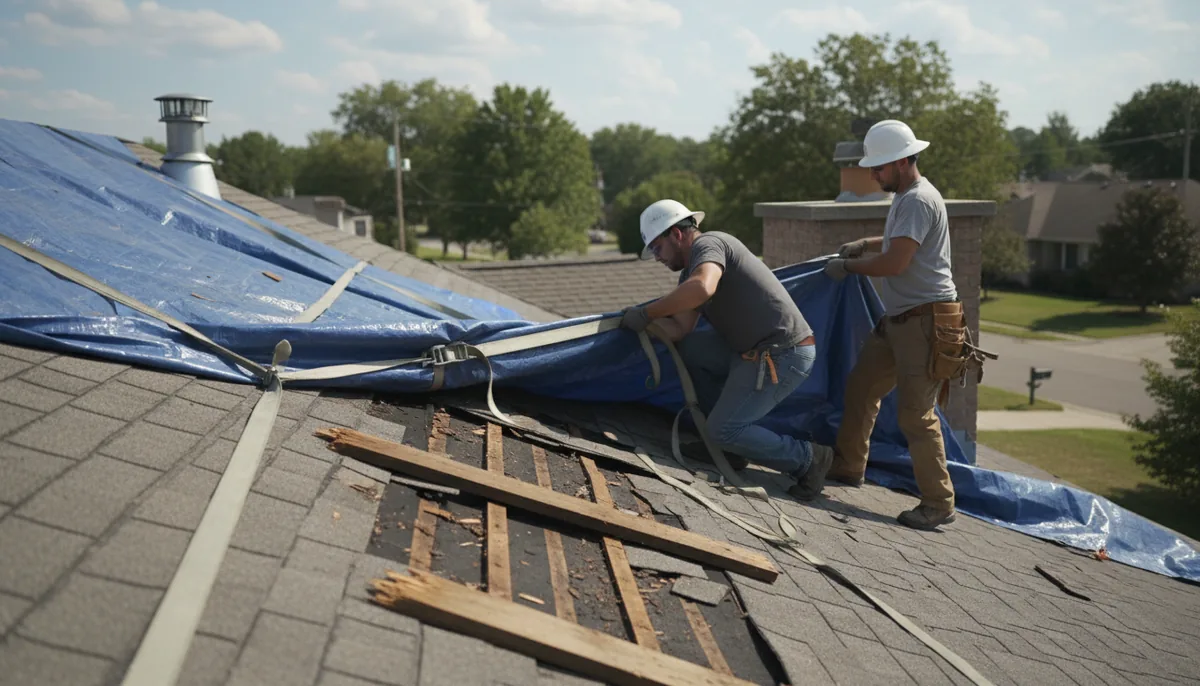
I'm going to get on my soapbox for a second. Every roof replacement in Florida requires a permit pulled from the local building department, and it has to pass an inspection. A contractor who offers to skip the permit is a contractor you walk away from. I don't care how charming he is or how much he says he'll knock off the price. An unpermitted roof can complicate an insurance claim later, and it can scare off a buyer when you go to sell the house. I've seen appraisers flag it. I've seen Title companies have a fit.
So when you're financing a roof, the permit is part of the job. It's not an add-on. It's the law. And if a company tells you they'll pull it, check that they actually do. Ask for the permit number. Call the building department. It takes five minutes. The inspection protects you, but it also protects me if I'm the one who signed the permit. I want that roof inspected. It covers my backside too.
What the law changed about repairs and the "25% rule"
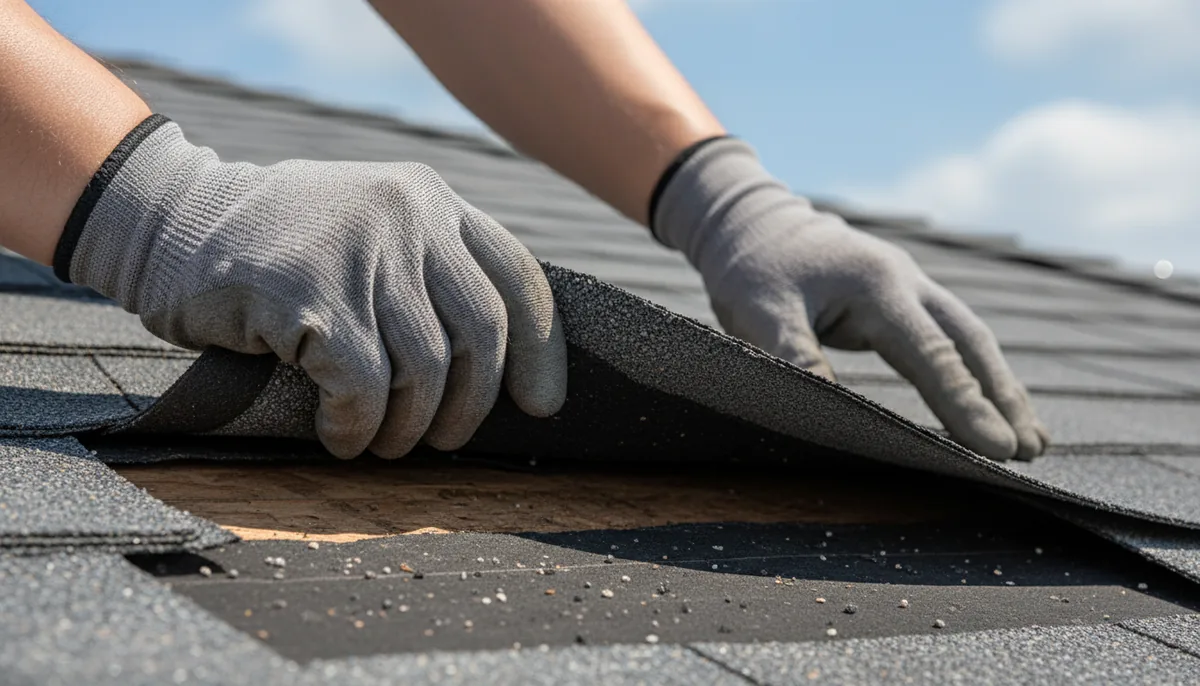
There's a common belief that if you repair more than a quarter of your roof, you are forced to rip the whole thing off. That was the old rule, call it the 25% rule. It came from the Florida Building Code. If you had storm damage across a big area, you could be forced to bring the entire roof up to current code, which often meant a full replacement you weren't counting on. Then SB 4-D (2022) changed the game. This is important if you're trying to finance a repair instead of a full tear-off.
The new law says that if your roof was built, repaired, or replaced under the 2007 Florida Building Code or any later edition, then only the portion being repaired has to meet the current code. A full replacement is not automatically triggered just because you crossed some percentage threshold. That 2007 code took effect on March 1st, 2009, so roofs completed before that date generally don't get the benefit of the new rule. If your roof is older than that, you could be in a different situation. I'd need to see it to tell you for sure.
What does this mean for financing? It means a smaller repair might be a legal option, which means a smaller loan. Before you commit to a massive finance payment for a full tear-off, get a contractor to look at the actual condition and give you a straight answer on wether a repair holds water. Pun intended.
What I would actually do: Before you sign anything, find out when your roof was last replaced. If it was put on after early 2009, and the damage is isolated, you might be able to legally repair just the bad section. That can turn a $30,000 problem into a smaller one.
Your insurance money: read your own policy, don't listen to your neighbor
The biggest mistake I see homeowners make is assuming their insurance will cover a brand new roof just because they want one. Coverage varies wildly by policy. It depends on what kind of policy you bought, what the carrier is doing in Florida right now, and what the cause of the damage was. I'm not a lawyer and I'm not a licensed adjuster, so I'm not going to tell you what your policy covers. You need to read your declarations page and the policy language yourself.
But here's what I can tell you from my side of the ladder. Florida Statute 627.70132 has alot to do with how insurance companies can handle roofing claims. And if you have a policy with Citizens Property Insurance Corporation, they have their own set of rules and inspection requirements. Sometimes a claim gets denied, and sometimes the adjuster's estimate is way lower than what the actual job costs because they don't know what's under the shingles until they tear them off. That happens a lot. Depreciation and recoverable depreciation are part of that dance. If you have a mortgage, the insurance check usually has to be endorsed by your lender, and they'll release the money in stages. That is a major headache if you are not expecting it.
If your roof is leaking and it's from a storm, file the claim. Let the adjuster look. But if the roof is just old and worn out from Florida sun, that's a maintenance issue, not an insurance claim. It's hard to hear, but the sun is your enemy here. That's not a storm event. That's wear and tear.
What I would actually do: If you think you have a storm claim, call your insurer before you call a roofer. Get a claim number. You don't need three roofing salesmen knocking on your door. I would also get the contractor's estimate in writing, then hand it to the adjuster. Let them fight over the numbers. Don't sign a contingency agreement (the "we work for the insurance money" deal) until your own claim is actually opened and you understand what it says.
The contractor's licence: the prefix tells you a lot
You want to know who you're hiring. Florida roofing contractors are licensed by the Department of Business and Professional Regulation, which everyone calls DBPR. Here is a tip that will save you from a con artist. A certified roofing contractor has a licence that begins with the prefix CCC, and that person can work anywhere in Florida. A registered contractor has a licence that begins with RC, and they are only supposed to work in the local area that licensed them. Always verify the licence number is active before you hand over a dollar.
I tell people this all the time: look it up yourself. The DBPR roll is public. You type in the name or the number and you can see if it's active, if there are complaints, all of it. It takes two minutes. Just because a guy is in the directory listing I shared above does not mean you skip this step. The directory verifies licences against the DBPR roll, but you are still the one writing the check. A valid licence, a pulled permit, and a scheduled inspection are your three best friends in this process. They are more important than whether the sales guy has a nice truck.
Living through a roof job: what your money actually buys
Let me tell you what a real replacement looks like. We show up early, before the heat gets stupid. We tarp the landscaping because the shingles are going to tear it up. We back the dump trailer in, and the tear-off crew gets up top. The noise is constant. It's hammering and scraping and the thud of bundles hitting the ground. By noon, the old roof is gone and you can see the sky through your rafters if you're inside. That's a strange feeling for a homeowner. It's also the moment when I peek at the decking and find out if the dry rot was worse than we guessed. I have replaced entire sheets of decking on unexpected days, and yes, it changed the price.
Financing covers labor and materials. It should also cover the dumpster, the underlayment, the new flashing around your chimney (if you have one), and the ridge vent. Some of that depends on what is under there and how the roof is built. I always tell homeowners to ask what is included. A great price is meaningless if the contractor is going to hit you with a "change order" for every vent pipe boot. On a tear-off, the pipes and the flashing are part of the job in my book. Make sure you ask. Get it in writing.
One last thing about the crews and the wheather. We work in the heat. I've had guys quit before lunch because the deck was too hot. That's just part of it. And somewhere between Orlando and the coast, the afternoon thunderstorm shows up like clockwork. We've gotten good at reading the radar because if we get caught with an open roof and a storm rolls in, that's a bad day for me and worse for your ceilings. A professional crew moves fast, but they don't rush into a lightning storm.
Questions I get asked
Does the county actually make me get a permit?
Yes. Every jurisdiction in Florida that I work in requires a permit for a roof replacement and a final inspection. Some folks try to do "roof-over" repairs to avoid it, but the second you're replacing decking or adding new material over old, the building department usually wants to be involved. It protects everyone.
Should I wait for the insurance company to deny it before I finance it?
No, I wouldn't wait. I'd call your insurance agent first and ask if it's even worth filing a claim. Then, I'd get a roofing contractor to look with you and give you a written estimate. If the roof is old and worn, you can start financing now and beat the next storm. Hail and hurricanes don't care about your payment plan.
What's the minimum payment or rate?
I don't quote rates because they change and they depend on your credit, the lender, and the loan amount. The mechanism is simple: you borrow a set amount, you pay it back monthly. The interest rate depends on the terms you pick. Some 12-month finance plans offer zero interest, but if you don't pay it off in time, the retroactive interest is brutal.
How long does a shingle roof last down here?
On the coast, 15 to 20 years is about what I'd call it if it's a decent shingle. Inland, maybe a few years more. The sun cooks the asphalt. If your shingles are curling at the corners and losing their granules in the gutters, it's nearing the end. Tile lasts longer, but the felt and flashing under it don't. The problem is usually what you can't see from the ground.
Can I finance a roof if I have an old mortgage?
Usually, yes. The new loan is seperate from your mortgage. But if you take out a home equity loan, that attaches to the house and your mortgage lender will require proof of insurance and payment. A personal loan or a roofing company's financing plan doesn't touch your house title, but they have higher interest rates. It's a trade-off.
Why does one contractor's price look too low?
Because he might be cutting corners. Maybe he's not pulling a permit, or he's planning to use one-layer tear-off pricing when you actually have two layers. Maybe he has no crew and he's going to sub it out to whoever shows up that morning. A lowball bid is a red flag. Get three bids. Middle is usually safer than the cheapest, but ask the expensive guy why he's so much. Answers tell you everything.