How to can you replace your own roof in Florida
By Dale Prescott, Roofing contractor, Central Florida. Reviewed by Hal Winstead, Editor, licensed roofing contractor. I remember a Tuesday afternoon in Winter Park, 2018. We’d just stripped a barrel-tile roof down to the deck, and the homeowner walked out with a six-pack, asking if I’d mind if his brother-in-law "helped" with the felt. His brother-in-law was a dentist. By the time I got back from lunch, the dentist had laid the synthetic underlayment upside down—wax paper side up, which meant nothing would stick to it, including the mortar or the tiles. We had to pull it all off and start over. Cost him two days and a bruised ego.
Every Florida storm season, I get a call from somebody who figures a roof is just shingles and nails, and they’re about to save twenty grand. And some of them are right. A flat, low-pitch shed or a little ranch with a simple gable? That is doable for a handy owner. But the question is never really "can you swing a hammer." It’s about physics, water, and paperwork. If you’re even thinking about pulling a permit and doing this yourself, you need to know what you’re stepping into before the first bundle hits the driveway. I run crews between Orlando and the coast, and I’ve torn off more storm-damaged roofs than I care to count. I’ve also fixed a fair number of DIY jobs that went sideways. Sometimes it’s cheaper to hire a pro; sometimes it’s safer for your sanity. If you aren't sure, check out the listings for roof replacement companies in Florida and at least see what the going rate is for the work before you break your back.
Let’s get one thing straight about the Florida law part of this. You can absolutely pull the permit yourself as the homeowner. The state doesn’t require a licensed contractor to do the swinging, provided you are the owner and you’re living in the house—or you intend to live in it. There are rules around that affidavit. But "can you" and "should you" are two very different questions, and the answer to the second one depends alot on whether you value your weekends.
What the county means when it says "permit"
In Florida, a roof is structural. It keeps the rain off your head, but it also ties your walls together. That’s why every single local building department—from Orange to Volusia to Brevard—requires a permit for a roof replacement. That permit means you’re going to pay a fee, you’re going to submit plans or specs, and then you’re going to have an inspector come out and look at your work. Probably at least twice: once when the deck is bare and the flashing is in, and once at the very end.
A contractor who offers to skip that permit is doing you no favors. I don’t care how much "faster" it is. An unpermitted roof can complicate an insurance claim after a hurricane and it will absolutely come up on a seller’s disclosure when you try to move. The buyer’s attorney will see it, and you’ll either be cutting the price or paying to have it inspected retroactively. Pull the permit. Do it for yourself. Do it for the person who buys your house later.
Now, if you are thinking about doing this yourself, understand that the inspector isn't your enemy. He is the only safety net you have. I’ve been wrong about this before, so I’m not saying inspectors catch everything, but they catch more than your neighbor Dave, who has a nail gun.
The DBPR licence thing—and why you can't always hire the cheapest guy
If you decide halfway through tearing off your deck that you hate your life and want to call a pro, I need you to know how licensing works down here. Florida roofing contractors are licensed by the Department of Business and Professional Regulation, which we just call DBPR. They use a DBPR licence prefixes system you should memorize: CCC and RC.
A CCC is a Certified Roofing Contractor. That licence begins with the letters CCC. If a guy holds a CCC, he can work anywhere in the state of Florida. He passed a state exam. He answers to the state board. Then you have the RC prefix—that’s a Registered Roofing Contractor. That guy is only allowed to work in the local jurisdiction that licensed him. He’s usually fine, but his authority stops at the county line.
Before you hire anybody to bail you out—or before you pass off your half-finished roof to a "buddy" who thinks he knows what he’s doing—verify the number is active on the DBPR roll. It takes two minutes. And don't just look at the paper in their truck. That paper expires. A lot of hacks in Central Florida run on expired or suspended licences. The directory checks this when it lists companies, but if you’re hiring off the street, you check.
SB 4-D and the 25% rule that isn't what you think
Here’s the part that confuses the heck out of every homeowner who calls me. You’ve probably heard about the "25% rule." Old-timers still talk about it. The old Florida Building Code said if you repaired or replaced more than 25% of your roof in any 12-month period, you had to bring the entire roof up to current code. That meant if you had a 20-year-old roof that was fine for it's age, and a storm took off one side, you were suddenly forced into a full replacement just because you hit that threshold.
That changed in 2022. The state passed SB 4-D (2022) which basically rewrote that trigger. If your roof was built, repaired, or replaced to the 2007 Florida Building Code or any later edition, then you only have to bring the portion you’re working on up to current code. A full replacement is no longer automatically triggered just because you crossed that 25% mark.
Here’s the kicker that nobody reads: The 2007 edition took effect on 1 March 2009. So roofs completed before that date fall under the older, stricter rule. That means if you own a home with a roof from 2003, you still get hammered by the old threshold. It’s not a universal amnesty. It’s a mess, and you need to know how old your roof actually is before you start ripping things off. If you bought the house recently and the seller didn't disclose the age, look at the permit history for the address. Good luck getting that in this state—but you can try.
The insurance question nobody wants to ask at the barbeque
Most people decide to DIY because their insurance company is jacking up their rates or dropping them entirely. And that is a fair thing to be angry about. If your roof is older, the carrier may send a letter saying if you don't replace it, they’re cancelling you. That puts you in a bind.
Here’s what I need you to hear: coverage varies by policy. I am not a lawyer or an adjuster. I cannot tell you what your specific policy covers. You have to read your declarations page and the policy itself. But there is an additional thing to know about: Florida Statute 627.70132. That’s the one that requires insurers to offer a roof-deductible option, usually a seperate roof deductible equal to 2% of the dwelling value or a specific dollar amount. If your policy has that, and you file a claim for a roof, you are paying that deductible out of pocket.
If you are DIYing to save money, factor that deductible in. If the replacement value is $25,000 and your deductible is 2% of a $300,000 house, you’re paying $6,000 out of pocket anyway. That changes the math, doesn't it? You can also look into form OIR-B1-1802, which is the form the insurance company sends you to acknowledge that you know you’re taking on a specific windstorm deductible. If you’ve ever signed that at closing and didn’t know what it was, call your agent.
What I would actually do: If you have an older roof and a current policy, call your agent before you touch a single shingle. Ask if a DIY roof replacement affects your claim status or your eligibility. Get it in writing.
What the manufacturer warranty does to your DIY plans
This is the part that makes me laugh—not at you, but with you. You buy the "best" architectural shingle at the big box store. You watch three YouTube videos. You install it perfectly, or what you think is perfectly. Then you go to register the warranty, and you read the fine print: "Warranty void if not installed by a licensed roofing contractor."
And you scream.
What I would actually do: Before I pulled a permit, I would call the shingle manufacturer’s local rep and ask, straight up, "Will you honor your warranty on an owner-installed roof?" The answer is often no. If the answer is no, and you value a 30-year warranty, you’ve just answered your own question about whether to hire a pro.
I’ve seen manufacturers void warranties for missing a row of nails. The wind ratings they claim are based on specific nailing patterns and specific adhesives. It’s not just slapping the shingle down. A licensed contractor installs to spec because they have liability if it goes wrong. You have nobody to sue but yourself, and you aren’t going to win.
Climate, decking, and the "little rot" that becomes a can of worms
Central Florida is a swamp that occasionaly gets hit by a hurricane. The heat and humidity cook the underside of your roof deck. I can’t tell you how many "minor deck repairs" I’ve found that turned into full plywood deck replacements because of dry rot and termites that the homeowner swore weren't there.
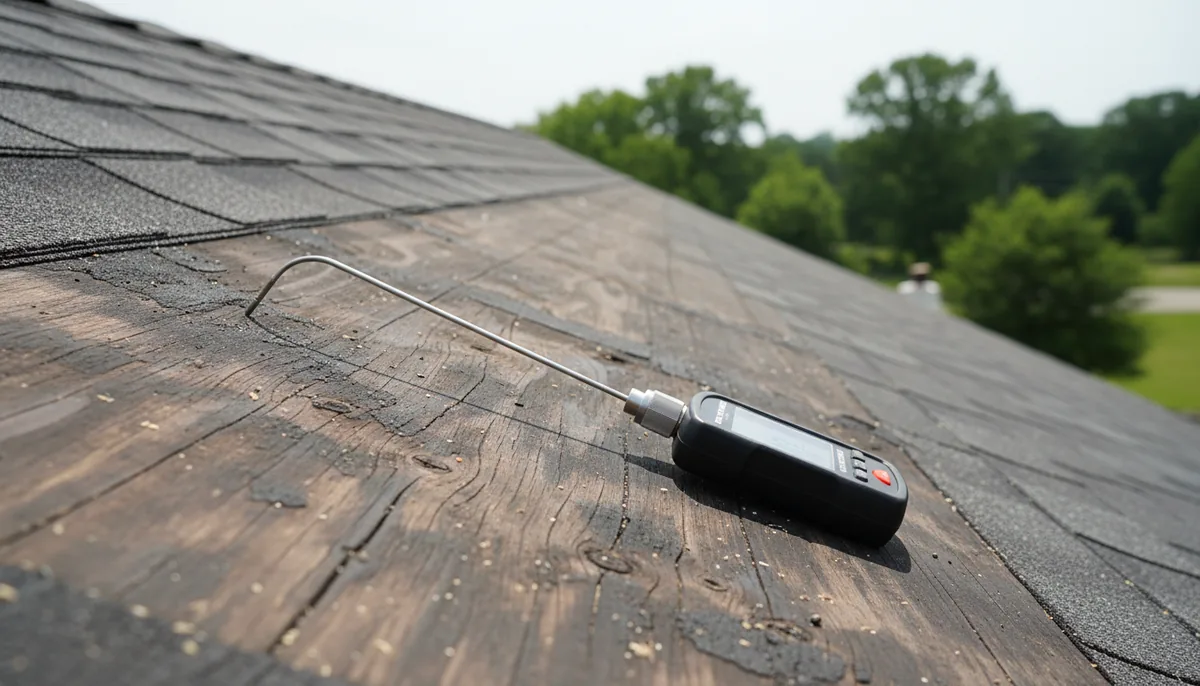
When you tear off a roof, you will find rot. You will find nails that missed. You will find old leak stains on the batten. Get a moisture meter if you’re doing this. Probe the wood with a screwdriver. If it sinks in like butter, you’re replacing that sheathing. Budget for that. Don't be the guy who puts new shingles over rotten plywood. That’s how you end up on the local news.
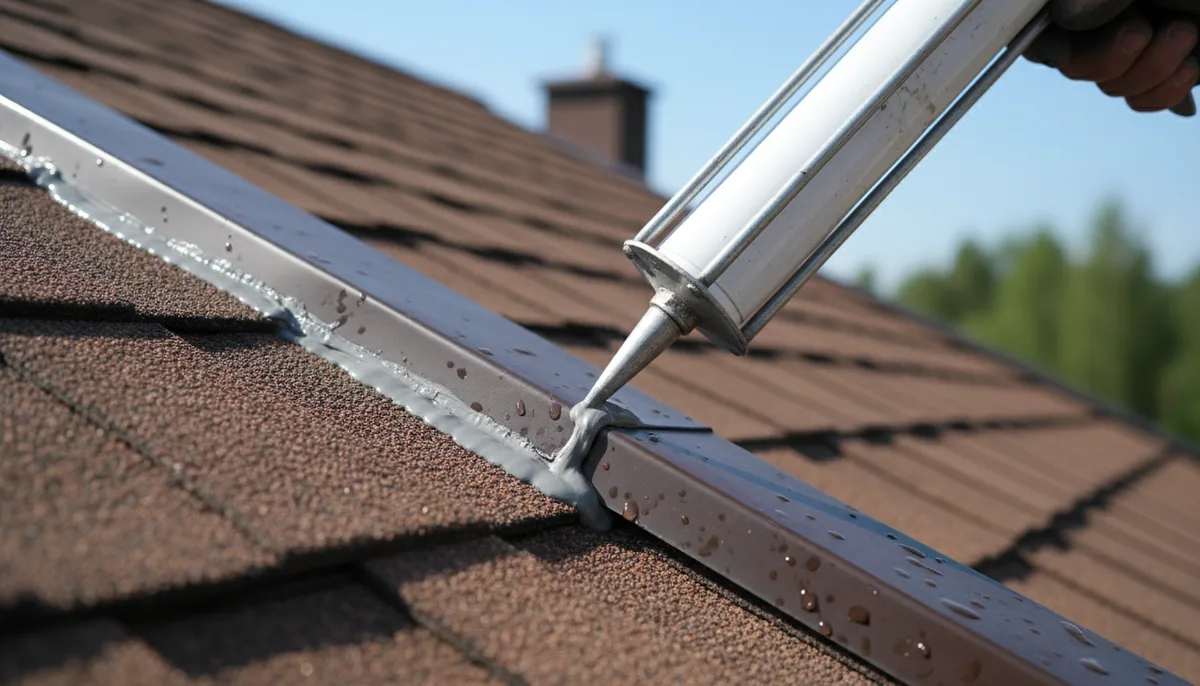
Flashings are the other problem. The step flashing, the counter-flashing, and especially the flashing around the chimney and the sidewalls. Most homeowner installations get the field perfect and then leak at the wall. That’s because your stucco sits proud of your bricks, and the flashing needs to weave in and out. It’s finicky. I’ve seen guys double-flash something and still get it wrong.
Let’s also talk about the wheather, because my knees ache. It’s 95 degrees at 9 a.m. In July up on a black deck. You will drink four gallons of water and still get dizzy. Then a storm rolls in at 3 p.m., and you have to scramble to tarp an open deck. You will do that dance at least three times. Plan for it.
One other gripe, while I am thinking about it. I once had a homeowner in Winter Garden "help" me by moving all my forklift pallets of shingles with his car. He stacked them on his lawn, on an ant hill. We had to waste half a morning spraying for fire ants before we could carry a bundle up the ladder. Bless his heart. If you're DIYing, store your materials off the ground on pallets, clear the landing zone, and don't stack them in the yard.
Questions I get asked
Will a DIY roof actually save me money?
Only if you price your own labor at zero dollars per hour. You will pay for materials, permit fees, disposal of the old roof, a dumpster rental—which, by the way, is more expensive than you think—and tools you don't own yet: nail guns, compressors, ladders tall enough to be safe, harnesses, and a nail stripper. The nails alone will shock you. After all that, you might save money if your roof is simple. If it has valleys, a hip line, or anything above a 6/12 pitch, you won't save enough to justify the back surgery.
Do I need a permit if I'm just fixing a leak?
It depends on the size of the repair. Small repairs are usually fine without one. But the old code threshold used to complicate this. Play it safe: if your repair is larger than a sheet of plywood, call the local building department and ask. Describe the scope. A torn-off corner after a storm that’s just a few shingles is one thing. Retiling an entire hip slope is another. The building official is your friend on the phone. Use their advice to stay out of trouble.
What do I do with the old roofing material?
You haul it. You cannot burn it in Florida. You cannot leave it at the curb for regular trash pickup unless you want a nasty letter from the city. You rent a dumpster or a trailer and you pay the disposal fee at a C&D landfill. Shingles are heavy. A 30-square roof throws off roughly three to four tons of waste. That means you are hauling between 6,000 and 8,000 pounds of dead asphalt to the dump. Your homeowner's association will love seeing that pile in your driveway for the two weeks it takes you to finish the job.
Is a metal roof easier to install than shingles?
No. Metal is harder to cut, harder to walk on, and leaks worse if you over-drive a screw. Standing seam requires a machine to form the panels or you’re buying preformed stuff that has a big lead time. If you have a simple gable, structural metal panels with exposed fasteners can be DIY-friendly. But if you’re messing with a "double lock standing seam" system, hire it out. Do not let that be your first roof.
What about Citizens Property Insurance Corporation—do they care if I DIY?
Citizens Property Insurance Corporation might have their own requirements for new business. During the hard market, they announced inspections of roofs prior to binding a policy. If they send an inspector out to verify the roof was replaced properly and you have no permit documentation, you could be in a holding pattern. They, and other carriers, like to see evidence of replacement. That means a permit record tied to your address.
Does the My Safe Florida Home program apply to me if I do it myself?
That program is for mitigation and discounts, and it often requires an inspector to certify the opening protections and roof tie-downs. If you’re replacing the roof yourself, you need to know that a usual part of the program requires the roof replacement to meet specific wind mitigation inspection criteria. A licensed inspector signs off on that form. You might be able to do the labor, but the paperwork and the inspection are what secures the discount. Don't assume your own work automatically qualifies. Ask the inspection company before you start.