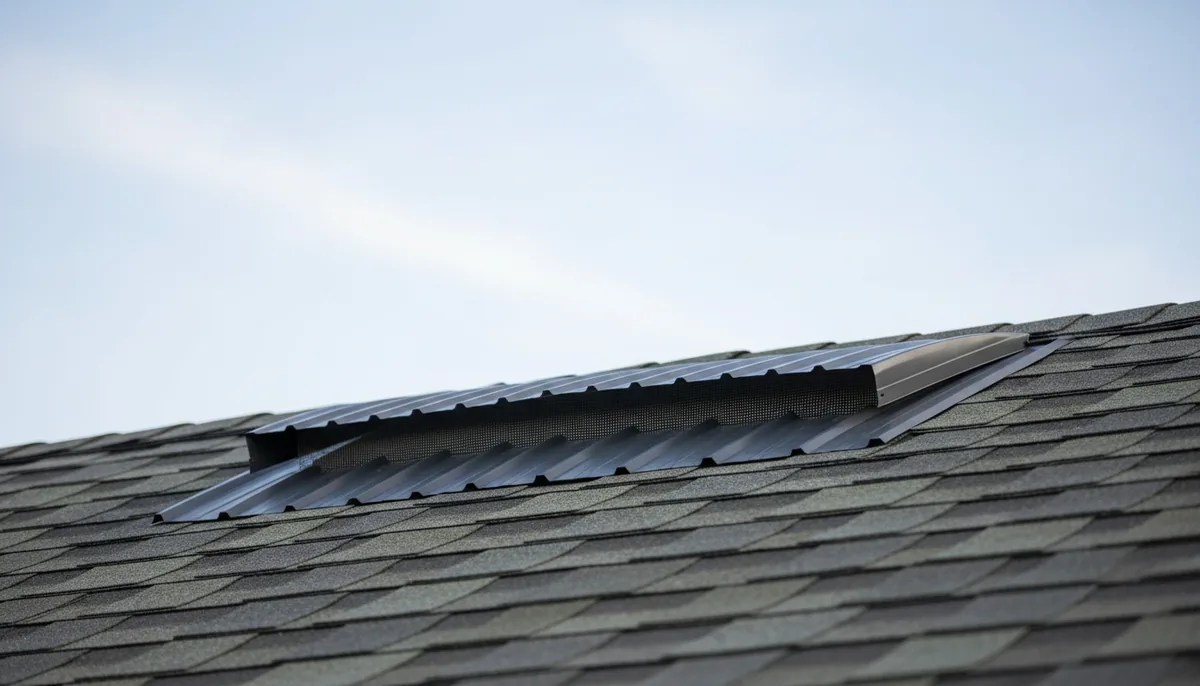
Modern standing seam metal roof florida home: The Florida Guide
By Dale Prescott, Roofing contractor, Central Florida. Reviewed by Hal Winstead, Editor, licensed roofing contractor.
That afternoon in New Smyrna Beach, I remember the sky going that sick green color you see maybe twice a decade. We were halfway through a tile tear-off on a ranch off 44, and the wind caught the felt we had exposed and just peeled it back like a strip of bacon. The homeowner came out with a camera and a cocktail, asking us to sign a liability waiver because his neighbor's palm frond had already taken a shot at his carport. I told him to get inside. He told me his roof was fine. That was the last time I ever trusted a forecast that said "chance of afternoon showers" in August, and it's why I have a healthy respect for what a modern standing seam metal roof can do in this state. If you're weighing it for your own place, you're not just picking a color—you're buying a different relationship with the wheather. And if you're serious about it, start by checking out some of the metal roofing companies in Florida on the directory, because who you hire matters as much as what you put on your deck.
I've been running crews between Orlando and the coast for twenty-two years. I've torn off more storm-damaged roofs than I care to count, and I've put up more shingle and tile than I could possibly remember. Standing seam metal used to be the oddball request—usually from someone who just moved down from Minnesota and couldn't beleive we weren't all building with steel. These days, it's a different story. People are asking me about it because their insurance did something wild, or their neighbor got a discount, or they're just tired of replacing shingles every time a named storm twitches in the Atlantic. It's not a magic bullet. But for a modern home where you want to sleep through a squall without listening for the sound of your own roof leaving, it's got the market cornered. Call it what you want: a premium product, a fortress, a money pit if you hire the wrong crew. It all depends on what's under it and who's standing on it.
The first thing you'll hear about is the wind rating. And yeah, a proper standing seam panel engaged with the right clips isn't just screwed to the deck—it's mechanically seamed, which means the panels are stitched together and the fasteners are mostly hidden, with the clips allowing for expansion and contraction. That's the part that matters down here. A shingle roof blows off in chunks when the adhesive fails. A tile roof can turn into flying clay projectiles. A standing seam roof wants to act like one solid skin. I have been wrong about this before, but I've never seen a properly installed standing seam panel fail at the seam itself. The failures I've seen come from the flashings, the ridge cap, or a roofer who didn't understand the expansion rate of metal in Florida heat. We get deck temperatures that would fry an egg. Metal moves. The system has to move with it.
Why you’re seeing standing seam on houses that aren't barns anymore
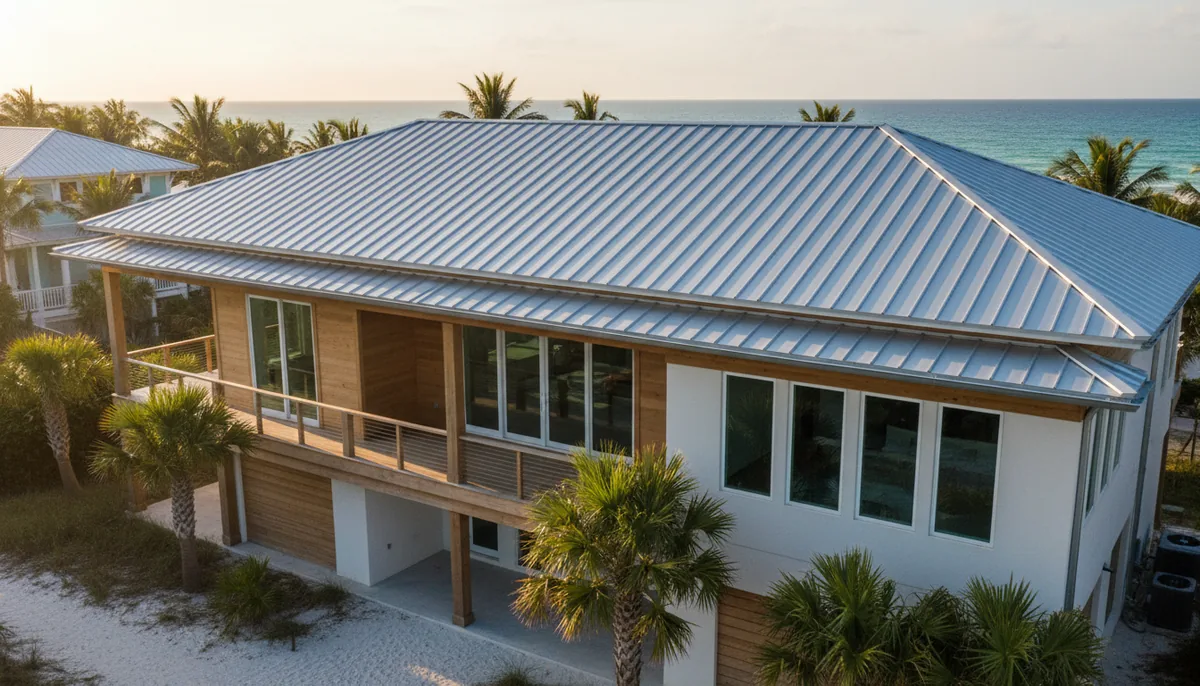
The look has changed, too. Nobody wants their house to look like a Quonset hut. The modern panels are tall and flat, with a clean vertical line that actually suits a contemporary Florida home—the kind with a flat front, big glass, and a stucco finish. I've put it on coastal cottages in Daytona, on McMansions in Heathrow, and on little ranchers in DeLand where the owners plan to age in place and never want to hear "new roof" come out of their mouth again. The color options are endless, and the finish holds up to the sun far better than paint on a shingle. It reads as modern. It reads as intentional. If you're building a house with clean lines, a shingle roof looks like an afterthought. Standing seam looks like you meant it.
The salt air question people on the coast forget
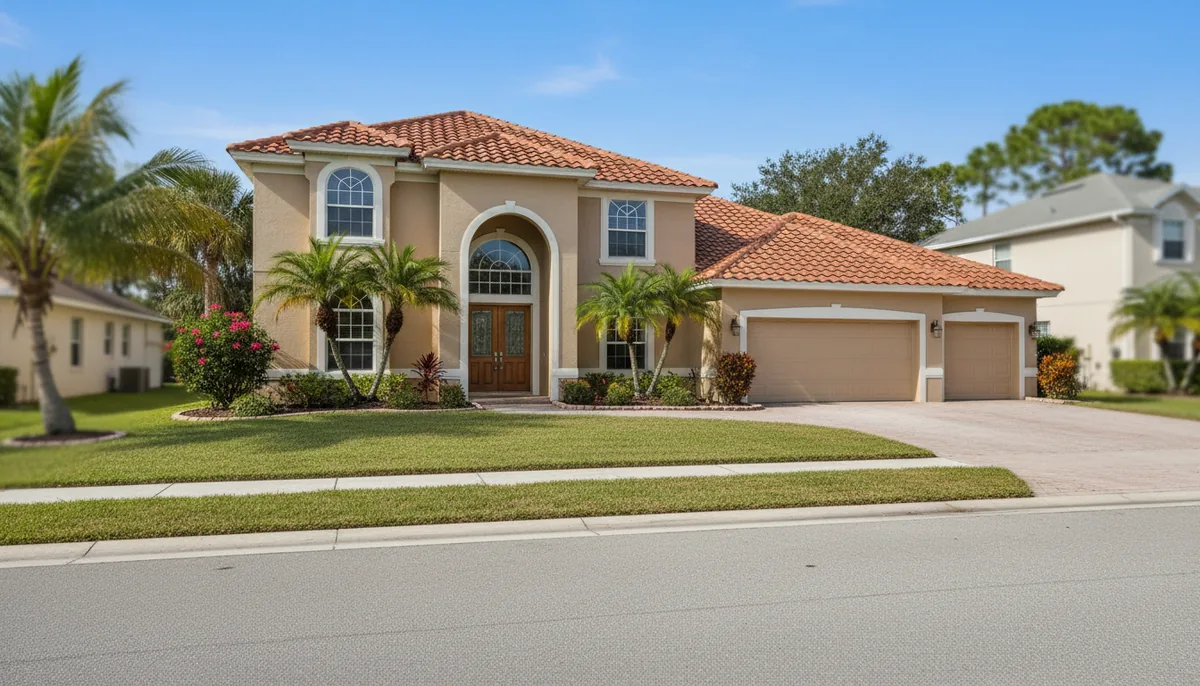
Here's the rub you don't get on the internet forums. If you're east of I-95, the salt spray is a real thing. I've seen standing seam roofs near Ormond Beach that have chalked and dulled after eight years because someone bought a cheap imported steel panel. The fix is to pay attention to the substrate. You want a good Galvalume or aluminum-zinc coating, or you spring for aluminum if you can hear the ocean from your porch. Aluminum costs more and it dents easier, but it doesn't rust. That's the trade. I'm not here to sell you the most expensive option; I'm here to tell you that the cheap panel that looks like a bargain on paper will look like a chalky disappointment in October of it's sixth year. It all depends on how close you are to the salt line.
What the 25% rule means after SB 4-D (2022)
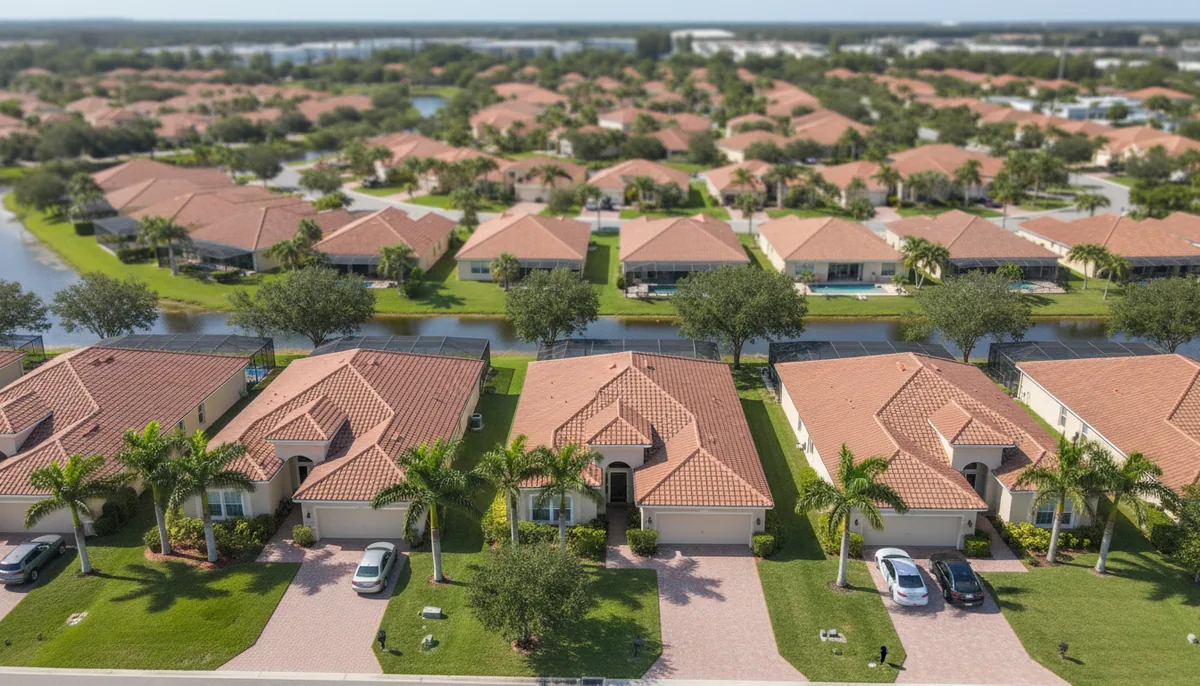
I get alot of calls from people who were told they had to do a full roof because code. That used to be the law, more or less, under what we all called the 25% rule. If your roof needed more than a quarter of it repaired or replaced in a year, you had to bring the whole roof up to current code. Then SB 4-D (2022) came along and changed the math. Here's the plain language version. If your roof was built, repaired, or replaced under the 2007 Florida Building Code or anything newer—and that code took effect in March of 2009—then a repair only has to bring the part you're working on up to code. It doesn't automatically trigger a whole new roof. That's huge. It means you can patch a modern roof without being forced into a full replacement just because you had a bad leak over the garage. But if your roof is older than that, the old trigger still applies. I always tell people: don't let a salesman quote you the law. Verify what code your roof was permitted under first.
The permit is not optional, and here's the part they don't tell you
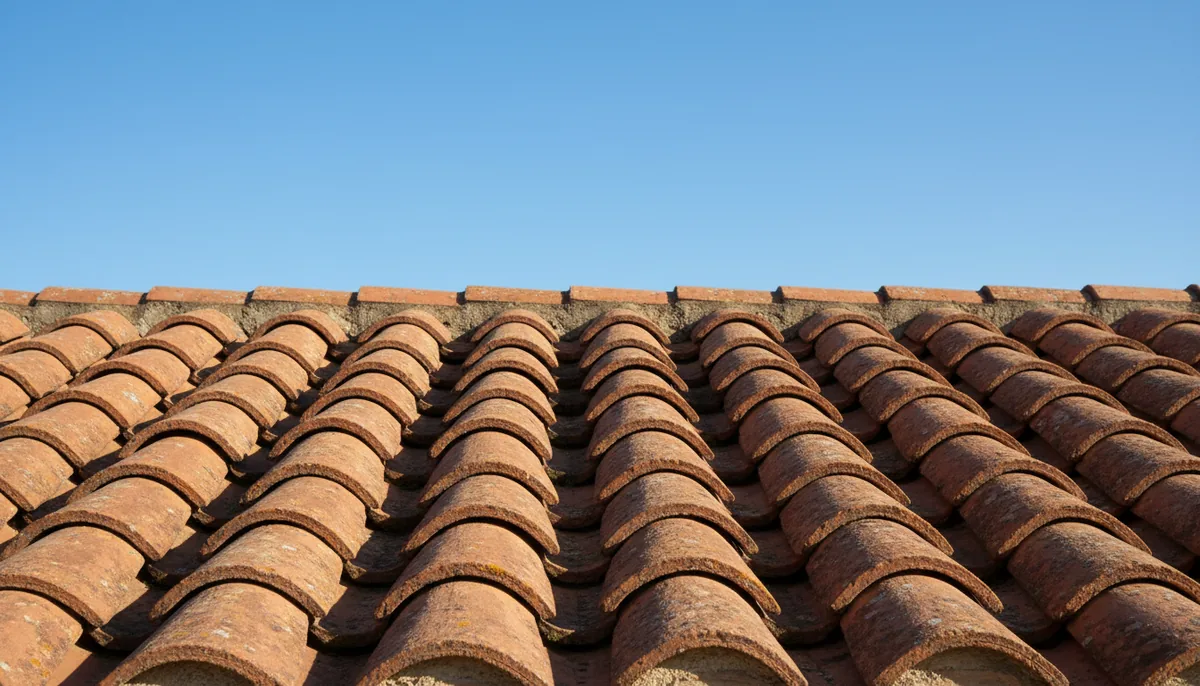
Speaking of which, let me throw a bucket of cold water on the room. A roof replacement in Florida requires a permit from your local building department, and it requires an inspection. I've pulled hundreds of them. It's a pain in the neck sometimes, especially in a small jurisdiction where the inspector only comes on Tuesdays. But if a contractor offers to skip the permit so it's cheaper and faster, walk away. Don't walk—run. An unpermitted roof can bury you at two moments you least need it: when you file an insurance claim after a storm, and when you try to sell the house and the buyer's attorney finds the roof has no paperwork. Florida Statute 627.70132 has tightened the insurance side of that, too. Insurers can deny coverage for a roof that isn't in a reasonable condition, and the permit history is often the first thing they ask to see.
What I would actually do: If a contractor suggests we "just don't pull the permit," I'd stop the conversation right there. I've walked away from jobs over this. It's not worth my license, and it's not worth your future headache.
Locking in the insurance discount with OIR-B1-1802
This is where the smart homeowners make up some of the cost. Florida law requires insurance companies to offer a discount for wind mitigation features, and a standing seam roof with the right clips can qualify. You don't just get the discount for having metal. You get it for how the roof is attached to the walls, how the deck is fastened, and wether the whole load path holds together in a gust. The way you prove it is with a wind mitigation inspection, filed on a standard form you'll hear called OIR-B1-1802. You hire a certified inspector—not me, I'm not an adjuster—and they crawl your attic and measure your roof geometry and check your strap ties. The inspection costs a couple hundred bucks, give or take. The annual discount can be worth far more than that. I've seen premiums drop by hundreds of dollars a year. It depends on your carrier and your policy, because coverage varies and I won't pretend to know what your declarations page says. Read it. If you don't understand it, call your agent. But don't skip the inspection because you're afraid of what they'll find. Even a roof that doesn't qualify for everything usually qualifies for something.
What I would actually do: Before I signed a contract for a new metal roof, I'd ask the roofer what their typical wind mitigation report comes back like. If they look at you like you grew a second head, find another roofer. A good one knows how their system will be rated, because they've seen the forms come back a hundred times.
Standing seam versus the insurance company lawyers
One thing I've learned is that adjusters are a suspicious bunch, and they have every right to be. They've seen some botched work in their careers. A standing seam roof tells them a story: the owner didn't cheap out, the install was done by a crew that had to know what they were doing, and the roof covering isn't going to fail unless something catastrophic happens. It's not a guarantee that your claim gets paid without a fight—some policies have specific exclusions and limitations, and Citizens Property Insurance Corporation has its own underwriting rules that change more often than the weather. But when you're standing in your yard after a storm with a wet rug in your living room, a roof that visibly did its job is a much easier story to tell. You're not trying to explain why your 15-year-old shingles blew off in a tropical storm. You're pointing at a roof that's still there.
Questions I get asked
Does a metal roof make my house hotter or colder?
Actually, it does both, depending on how it's built. The metal itself gets hot, but a standing seam roof has a gap between the metal and the deck, so the heat has a chance to wash away. With a radiant barrier under the deck, I've seen attics run measurably cooler. It's not a miracle cure—your AC still has to work in July. But it's not the pizza oven people fear.
Does it dent when hail hits it?
I've had homeowners ask me this after listening to their cousin in Texas. Hail in Florida is real, but it's rarely the baseball-sized stuff they get in the plains. A.22-caliber staple of ice will leave a mark on aluminum if it's coming down sideways in a squall. Thicker steel stands up better. That's a cost and weight trade you'll have to decide with your roofer.
Is it loud in the rain?
That's the number one question I hear before someone has lived under one. In my experience, they're quieter than you think once it's installed over a solid deck with the right underlayment. The rain on a metal roof sounds different, sure—kind of a clean patter instead of a thud. If you've got a rattle it's usually a loose strap or a vent pipe that wasn't flashed right. That's an install issue, not a metal issue.
What if the power company wants to put a solar array on it?
Standing seam is the best roof for solar because you don't have to penetrate the roof with holes for the racking. The clamps attach to the seams directly. That's a huge advantage over a shingle roof where every solar bracket is a potential leak. If you're planning solar in the next five years, tell your roofer now so they can reinforce the right areas.
How long does a standing seam metal roof actually last?
The finish will fade and chalk over a couple of decades, but the panel itself can last a long time—longer than the mortgage, longer than the paint on the house, longer than you'll probably want that particular color. I've torn off steel roofs that were forty years old and still had structure left, just weathered. The coatings are better now than they were then. I'm not going to give you a number because it depends on the gauge, the coating, and how close you are to salt water. Suffice it to say, it's the last roof you'll buy for this house, if you buy a good one.
Can I get a permit for a metal roof if I live in a deed-restricted community?
Maybe. I've seen HOAs that love them and HOAs that ban them because they think they look like a barn. Check your covenants before you get your heart set on a color, because I've seen a homeowner have to tear off a brand new roof and replace it with shingles because the HOA board didn't like the aesthetic. Read the rules first. That's a five-minute task that can save you fifty thousand dollars.
Look,, a roof is two things: a job and a promise. The job is making sure water stays out. The promise is that it'll still be there when the next nasty thing comes off the Atlantic. I've put my name behind the shingles and the tile and the flat roofs and the weird old foam roofs people used to spray on in the eighties. For most of them, you're buying ten years of peace before you start worrying again. For a modern standing seam metal roof, you're buying something you get to stop thinking about. That's the real reason to consider it. Not the discount, not the looks, not the wind rating. It's the quiet. I've spent twenty-two years listening for the sound of trouble overhead. It's nice to go home to a house where that sound doesn't keep you up at night.