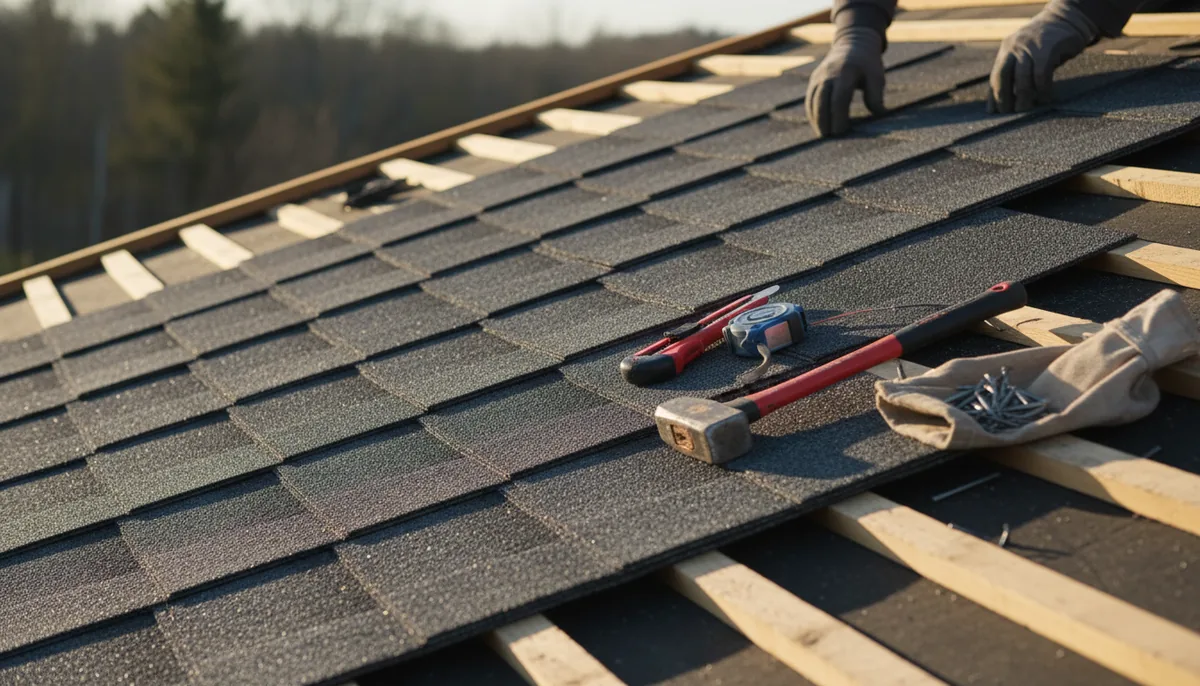
New roof florida: The Florida Guide
By Dale Prescott, Roofing contractor, Central Florida. Reviewed by Hal Winstead, Editor, licensed roofing contractor.
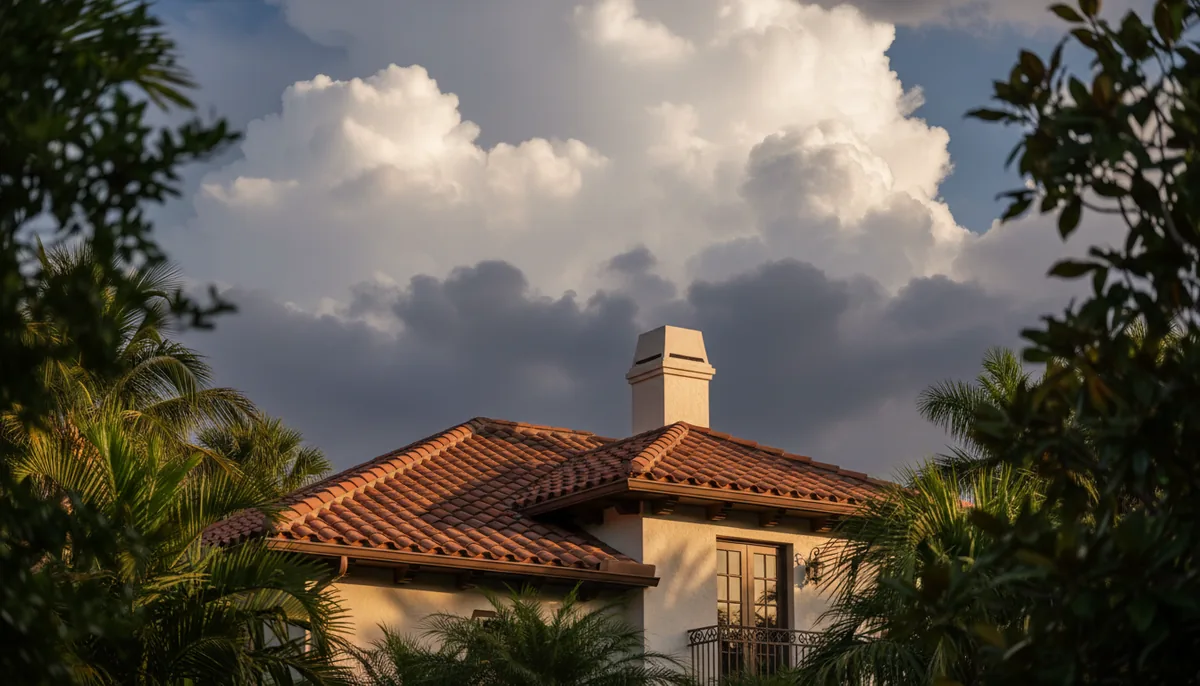
I was standing on a two-story tile roof in Winter Park back in March, pointing at a valley where the old mortar had turned to sand, when the homeowner asked me if we could "just patch that one spot and paint it." I'd seen it a hundred times. The tile looked fine from the street. But the felt underneath was rotten, the decking had soft spots you could push with a thumb, and the last repair had been nailed straight through a plumbing vent. That roof wasn't going to make it through one more summer thunderstorm, let alone a proper hurricane. We tore it off three weeks later. The homeowner thanked me halfway through the job, once they saw what we uncovered.
That's the thing about a roof in Florida. It looks like it's about the shingles or the tile. It's not. It's about everything underneath, and about what happens when the sky decides to test it. I've torn off more storm-damaged roofs than I care to count between Orlando and the coast. And if you're reading this because you're facing a new roof, let me save you some grief. If yours is too far gone and you’re just starting the search, a solid list of roof replacement companies in Florida is a better starting point than the first magnet-ad truck that stops at your curb after a storm.
The first thing you need to understand about a new roof in Florida is that it's not like getting one in Ohio. We have a specific set of codes, a specific set of insurance rules, and a specific type of wheather that treats bad workmanship like a cheat code. The second thing you need to understand is that your neighbor's cousin's friend who "does roofs" is not a roofing contractor. That's a guy with a hammer. There's a difference, and the state of Florida has a whole licensing system built to help you spot the difference. A certified contractor holds a licence with the DBPR licence prefixes CCC and RC. The RC guys are only supposed to work in their own county. The CCC guys can work anywhere in the state. That's not me being fancy, that's just the law. I'd check both before I ever let someone on my ridge line.
Now, let's talk about the big question that always comes up: do you even need a full replacement? A lot of folks hear about the "25% rule" and think they're trapped. They think if they fix more than a quarter of the roof, the building department will force them to tear off the whole thing and bring it up to current code. That was the old reality for alot of houses. But things changed.
SB 4-D (2022) changed how that rule works. If your roof was built, repaired, or replaced under the 2007 Florida Building Code or any later edition, then you don't automatically have to bring the entire roof up to code just because you're repairing a chunk of it. You only have to bring the portion you're working on up to current code. That 2007 code edition took effect back in March of 2009. So, if your house went up after that date, you're likely in good shape. If it's older, or if you don't know when it was built, you might be looking at a bigger job than you planned. It depends on what is under there, and I have been wrong about this before. The surest way to know is to pull the permit history on your own house before you get too deep in the weeds. I tell every homeowner to do it. It's your house, not mine.
So, what's the actual process for a roof replacement in Florida? The short version is: you need a permit from your local building department, and you need an inspection. That's it. There's no magic handshake. A contractor who tells you they can "skip the permit to save you money" is a contractor you walk away from. That's not a business decision. That's a life decision. An unpermitted roof can complicate an insurance claim, it can sink a future sale, and honestly, it tells me the guy doesn't want anyone looking at his work. That's all you need to know about him.
But before you even get to the tear-off, there's a step that a lot of people miss. And missing it costs them money every single year.
I'm talking about the wind mitigation inspection. I know, it sounds like paperwork. It is paperwork. But it's paperwork that finds you discounts on your insurance. Florida law requires insurers to offer premium discounts for homes that have features making them more resistant to wind damage. Things like the roof covering, the deck attachment, how the roof is connected to the walls, even the shape of the roof. The inspector uses a standard form, form OIR-B1-1802, to document all of it. They check the roof covering, the deck attachment, the roof-to-wall connection, the roof geometry, wether there's secondary water resistance, and how your openings are protected.
Here's the kicker: the inspection costs money. But it usually costs less than the annual discount it can open up. You pay for it once, and it sits on your insurance file for years. I'm not an adjuster and I'm not a lawyer, so I'm not going to tell you what your specific policy covers, because I don't know. Your policy is different from your neighbor's. Coverage varies. Read your declarations page. But I can tell you the mechanism: if your roof has the features, and the inspector documents them, the discount is there for the taking. It's one of the few times in Florida where doing the right thing actually saves you cash on the spot.
What I would actually do: Before I booked a single crew, I'd pay for the wind mitigation inspection and the permit history search on the same day. That gives you the facts. Then call your insurance agent and ask them what, if anything, they need to see. Don't let the contractor tell you what your policy does. That's between you and the insurance company.
Now, about the fun part. The cost. I get asked all the time what a new roof costs, and I can't give you a dollar figure because it depends on the square footage of your roof, the pitch, the access, and what you're putting on it. It's priced per square, with a square being ten feet by ten feet. A steep, two-story tile roof with a lot of valleys is going to cost more per square than a low-pitch ranch with a simple gable. That's just math. But what I can tell you is that the lowest bid is rarely the cheapest roof you'll ever buy. Material quality varies. Workmanship varies more. And in Florida, the man-hours you save by not installing the felt correctly are the man-hours that cost you a new living room ceiling five years later.
There is a program called My Safe Florida Home that some people qualify for, which is worth checking out if you're a homeowner in certain areas. It's a state-run thing. I won't get into the weeds on eligibility, but if you're serious about hardening your home, it's worth a search. Just remember, you get what you inspect, not what you expect. A roofer who does the job right is going to take time. He's going to look at your chimney flashing. He's going to check the starter course. He's going to be just as concerned about the ridge vent as he is about the pretty architectural shingles.
Let me tell you a quick story about the digression. I had a customer once in Deltona who, beautifull new metal roof, we finished on a Friday. He calls me Monday, says there's a leak. I go over there, ready to find a popped screw or a bad seam. I get up on the roof, and he's got a satellite dish sitting on the ridge, bolted straight through the metal. He'd put it up there himself over the weekend to watch the game. I told him he was lucky it only leaked when it rained, and that the dish was aimed at a satellite that was going to be mighty hard to see through the roof deck. He laughed. I didn't.
What I would actually do: When the crew shows up, take pictures of every vehicle's license plate and the contractor's license card. It sounds paranoid. It's not. If a guy rolls up in an unmarked F-250 with an out-of-state plate and a business card with no address, that's a red flag the size of a billboard. Verify it on the state roll. The DBPR has a website where you can look it up. It takes two minutes.
The other thing to consider is timing. Everyone in Florida decides they need a roof on the Tuesday before a hurricane is projected to hit. And look, I get it. The panic is real. But you can get a better deal, and a better contractor, in February than you can in August. Roofing crews are busy after storms. Prices go up because demand goes up. It's not greed, it's just supply and demand. If you know you need a roof, don't wait for the wind to tell you. If you wait, you end up with the guys who aren't busy because they're not good enough to be busy.
So, what about the actual "new roof Florida" experience? The tear-off makes a mess. There's no way around it. You'll find nails in your flower beds for a year. The crew will be loud. They'll start early. But a good crew will also throw down plywood to protect your lawn, they'll put a dumpster on boards so it doesn't crush your driveway, and they'll walk your yard with a magnetic sweeper. That's the standard. Hold them to it.
What I look for on a Florida roof
I'm going to tell you what I look for when I walk a roof, so you can do a rough version of it yourself. I look at the flashing first. That's the metal where the roof meets a wall or a chimney. If the caulking is cracking, that's a sign. I look at the shingle tabs. If they're brittle and breaking in your hand, the roof is at the end of it's life. I look at the bottom of the drip edge. If I see rust or granules in the gutters, that's a sign the shingles are losing their mineral coating. And I look at the decking from the inside, in the attic. If I see stains or black lines on the underside of the plywood, that's where the nails are poking through, and water is following them in. You don't need to be a contractor to spot those things. You just need to look.
What the Florida roof insurance discount actually finds
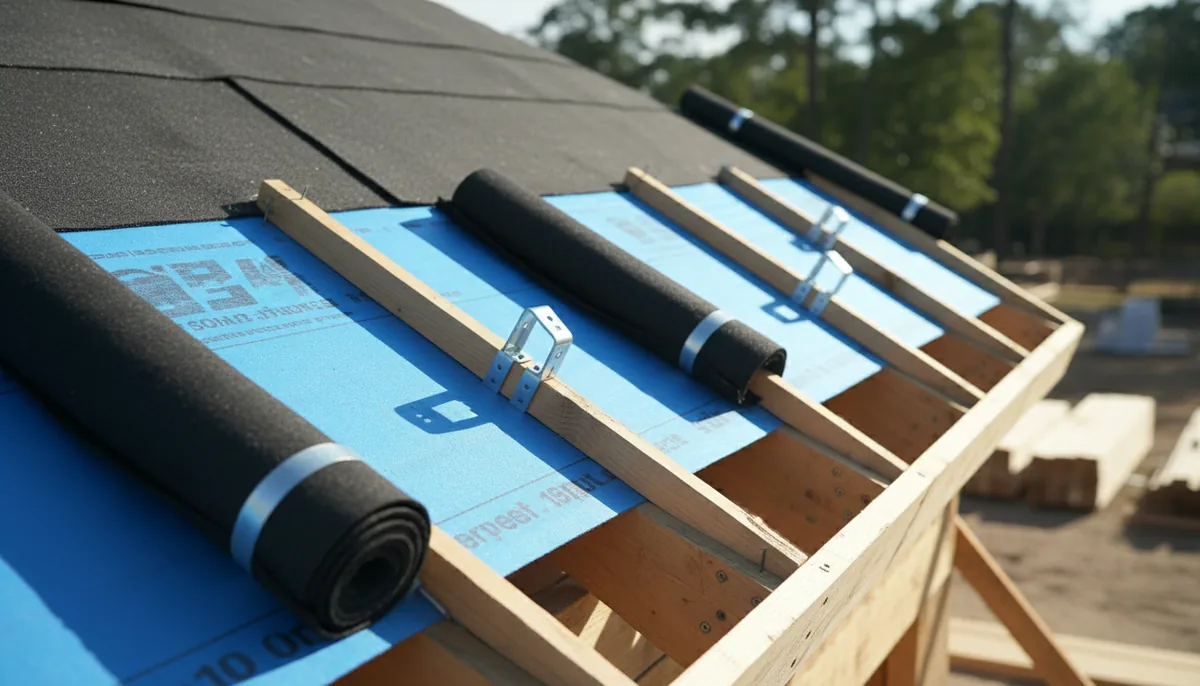
I already mentioned the wind mitigation form. Let's go a little deeper. This form, OIR-B1-1802, is the one that matters. It isn't a pass/fail. It's a "what do you have" form. If your roof deck is attached with ring-shank nails, that's better than smooth shank nails. If you have a hip roof, that's geometrically better than a gable end. If you have secondary water resistance, which is that peel-and-stick membrane over the whole deck, that's a major score for the inspector. Each of those features is worth a certain discount on your policy, and they add up.
But here's the catch, and remember, I'm not an insurance agent. The discount only matters if your policy is with a company that has to honor it. Florida Statute 627.70132 says they have to offer the discounts. You have to request the credit and give them the form. If your carrier is Citizens Property Insurance Corporation, they have their own way of doing things, but it's still based on the same form. Don't assume your agent knows you got a wind mitigation inspection. You have to hand it to them. A lot of people pay for the inspection and then never send the form to the insurance company. That's like buying a lottery ticket and throwing it in the trash.
A question that never gets old
"Can you just re-roof over the old layers?" I hear it constantly. Sometimes. It's a code thing. Single layer is generally allowed for asphalt shingles, but it's not always a good idea. If the decking underneath is wet or rotten, you're hiding the problem, not fixing it. And when you put a new roof over an old one, the old one's imperfections telegraph through. You'll see the bumps and lumps of the old shingles under the new ones. It never looks as good, and it never lasts as long. And you also have a second layer of shingles to tear off when you finally do have to do the job proper. You're just kicking the can down the road and making the future tear-off more expensive.
When the insurance company tells you to get a new florida roof
This is a big one, especially after a storm. The adjuster comes out, climbs down, and says, "You need a total roof." Okay. But don't hand that report to your contractor and take it as gospel. They're looking at your roof from the insurance company's perspective. They're looking for storm damage. A contractor is looking at the entire roof system. Sometimes the insurance adjuster says "total roof" because of a few bad spots, but the rest of the roof is sound. Sometimes they say "patch it," and the roofer knows that's a waste of money because the felt is shot. There's a tension there.
The best move is to get a contractor to walk the roof with the adjuster. A good contractor will do that. They'll point out the areas where the nail is popped or the shingle is creased. But be careful. You're not looking for a roofer who agrees with the adjuster; you're looking for a roofer who gives you documentation that matches what he physically sees. And if he says you need a roof, ask him to show you the storm damage. On a shingle roof, it's often the flexible area near the gable end where the wind has lifted and broken the seal. If he can show you those marks, he's legit.
A note on permits that will save you headaches
I'm going to say this once more. Get the permit. I know it costs money. I know it adds a step. I know the inspector might fail something on the first pass. That's the system working like it's supposed to. When you go to sell your house, the buyer's title company will ask if there were any unpermitted structures. If you had a roof replaced without a permit, you now have a giant unpermitted structure that's holding the selling process hostage. It will be a problem. Florida law and your local building department care about this. Your insurance company cares about this. And the person who has to deal with it is you.
Questions I get asked
Should I repair it or just replace the whole thing?
Depends on the age and the condition of the decking. If the roof is over fifteen years old and you've got multiple leaks, replace it. If it's a five-year-old roof with a one-square tear from a fallen branch, repair it. The biggest mistake I see is people throwing thousand-dollar patches at a roof that's really a twenty-five-year-old, one-layer asphalt roof that's just done. You can polish it, but it's still done.
What if I only want to replace the front slope?
You're asking for a problem. The new shingles won't match the old ones in color, because the sun has faded the old ones. And per the code we talked about, as soon as you work on more than a certain portion, you're in the conversation about a full roof. I'd call it a false economy. Roofing materials are a system. Mixing and matching rarely works out.
Does a new roof lower my homeowners insurance?
It can, indirectly. The roof's age and condition affect your eligibility for wind mitigation discounts. A new roof, with modern attachments, will usually score better on that inspection than an old one. I can't promise your premium drops, because rates vary by company. But I can tell you a new roof won't hurt your chances, and it might help you get a policy when the old one got you dropped.
How long does a roof replacement actually take?
That depends on the size, the weather, and whether you're dealing with tile or shingles. A standard shingle roof on a typical tract home can be done in a day or two of dry weather. Tile takes longer, usually three to five days, sometimes more. That's not a promise. That's just an honest timeline. If the crew says the whole job, including tear-off, will take a week for a simple ranch roof, ask them what they're doing with the extra days.
Do I need to be home during the work?
You don't need to be there, but you should be around when they tear off the old roof, and again. Walk around your yard. Look for nails. Ask them where they're putting the dumpster. And don't be afraid to ask the crew chief questions. It's your house, and you're paying for it.
I've been doing this work for twenty-two years, and the one thing I can promise you is that the roof doesn't lie. It's going to show you what it is, eventually. The goal is to get out in front of it, do the work right, and then not think about it for twenty years. That's the quiet luxury of a good new roof in Florida. You sleep through the thunderstorm, and you don't even wake up when the hail starts.