Roof restoration north florida: The Florida Guide
By Marcy Doleman, Commercial roofing estimator. Reviewed by Hal Winstead, Editor, licensed roofing contractor.
One humid afternoon in Tallahassee, I climbed onto a retail plaza's modified bitumen roof to price a coating job. The property manager waved from the ground and said it was just a leak at one penetration. Fifteen minutes later, I peeled back a lap and found wet insulation halfway to the parapet. That roof needed a tear-off, not a coating. If you are searching for a contractor to untangle a mess like that, a good first stop is a state directory such as roofing companies in Florida, but be aware that the listing won't tell you what is underneath anyone's membrane.
That plaza was in Tallahassee. I've had the same conversation in Pensacola, Gainesville, and Jacksonville. North Florida roofs bake all summer, then sit through the rainy season and whatever the Gulf decides to throw at them. Roof restorasion north Florida searches usually come back with promises: clean the roof, patch the bad spots, spray a coating over the field, call it done. Sometimes it is that simple. Not often.
I estimate commercial low-slope work for a living—warehouses, retail plazas, schools, the flat roofs most people never think about until water ruins something expensive. I don't sell a single product. I put numbers against what actually needs to happen, and that means finding out what the roof is hiding before I recommend a restoration.
If you search "roof restoration north Florida," here's what I'd tell you
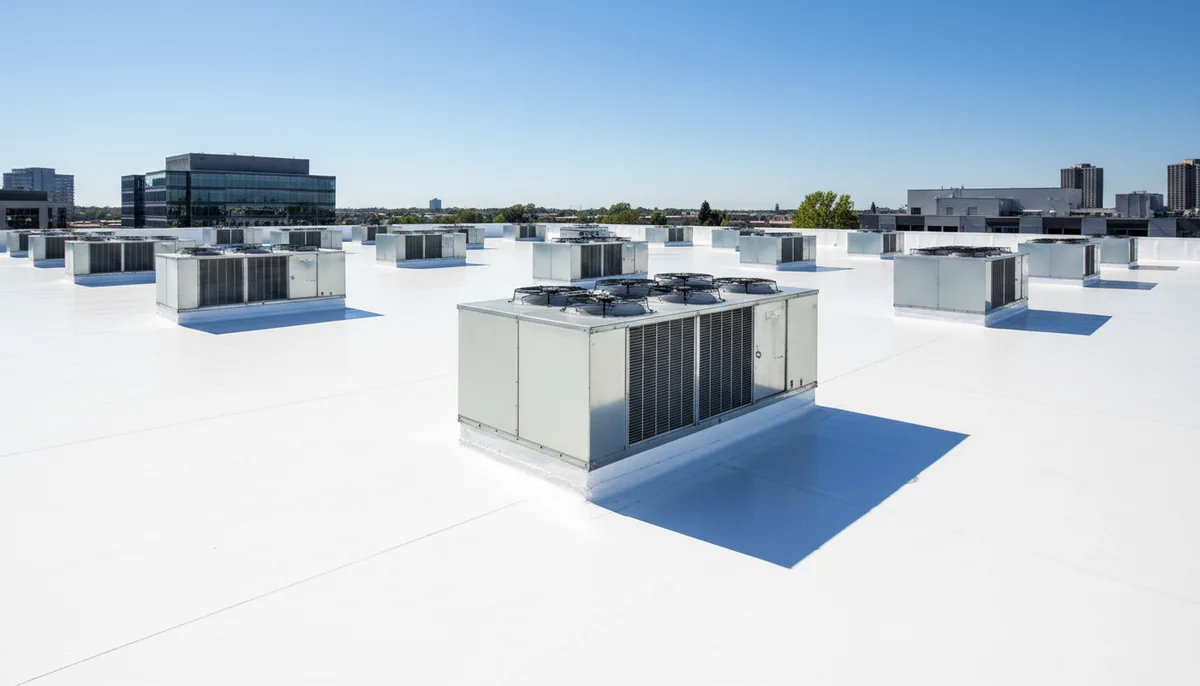
Restoration means extending the life of an existing roof system instead of tearing it off and starting over. On flat commercial roofs, that usually means a coating over an existing membrane, or a modified bitumen cap sheet over an old base. The goal is to keep the old roof dry and protected for several more years. The coating material matters less than the surface it goes on. I have watched good coating fail because water was already sitting in the roof system. I have also seen plain coating outlast expensive product because the substrate was dry and drainage was right.
What I would actually do: Before I put a restoration price in front of you, I want a moisture survey or core samples on any roof with a leak history. If someone tells you that is unnecessary, ask them to write that down and sign it.
The question nobody asks first: what is under there
I ask every owner about leak history before I look at the pretty parts. Leaks travel. Water enters at a split seam near a curb, runs along the top of the insulation, and drips two bays away from the hole. That is why one stain inside a warehouse can send me to the wrong spot if I trust the ceiling. I walk the whole field. I check each penetration, each drain, each place where the membrane turns up the parapet. If the roof has any history at all, I want evidence, not hope, that the layers are dry.
North Florida makes this worse. Heat bakes old modified bitumen until it alligators. Rain sits in low spots and finds seams that looked fine in March. A core sample is a small circle cut through the roof down to the deck, and it can kill a coating proposal in one afternoon. I have been wrong about this before, and I would rather be wrong about a sample than wrong about a whole roof.
The code change that matters to old roofs: SB 4-D (2022)
Before SB 4-D (2022), the rule said no more than a quarter of a roof could be repaired or replaced in a year without bringing the whole roof up to current code. One bad corner could pull an entire building into a full replacement. SB 4-D (2022) changed that for alot of roofs. If the roof was built, repaired, or replaced to the 2007 Florida Building Code or any later edition, then only the section you're working on has to meet current code. The rest of the roof can stay as it is.
But the date has teeth. The 2007 code took effect on 1 March 2009, so roofs completed before that date generally don't qualify. A roof on an older strip mall may not get the benefit of the change. And this does not mean no permit and no inspection. A roof replacement in Florida still requires a permit pulled from the local building department, plus an inspection. A contractor who offers to skip the permit is a contractor to walk away from. An unpermitted roof can complicate an insurance claim and a future sale.
Licences, prefixes, and your own due diligence
Florida roofing contractors are licensed by the Department of Business and Professional Regulation, and the roll is public. A certified roofing contractor holds a licence begining with CCC and can work anywhere in the state. A registered roofing contractor holds a licence beginning with RC and can work only in the local jurisdiction that licensed them. You want to see the number and check it before anyone sets up scaffolding.
A contracting licence is not a personality award. It is a legal requirement. The directory I linked earlier exists to help you find candidates, but the last fifteen seconds of verification belong to you. Ask for the licence number, check the DBPR roll, and make sure the name on the contract matches.
What I would actually do: Ask for the contractor's DBPR licence number and verify it against the state roll before you sign. Then call the local building department and ask wether the proposed scope needs a permit. I do that before I estimate, because a price means nothing if the work can't be permitted.
What wind mitigation means for North Florida roofs
This is the part where owners get their hopes up, and I get it. A wind mitigation inspection documents roof covering, roof deck attachment, roof-to-wall connection, roof geometry, secondary water resistance, and opening protection. Florida insurance companies must offer premium discounts for qualifying features. The standard form is OIR-B1-1802, and the inspection typically costs less than the first year of the discount it can open up.
But I am not a licensed adjuster, and I am not a lawyer. What your policy covers depends on the carrier and the policy itself, so start with your declarations page and ask your agent before assuming a restoration will change anything. On commercial work, insurers sometimes want an engineer's report instead of a standard inspection form. Let the underwriter tell you what they need.
Questions I get asked
How much does roof restoration cost?
It depends on square footage, pitch, access, the condition of the existing membrane, and how much prep the roof needs. Prep is the variable that blows budgets. A clean, dry membrane coats fast; one with old sealants, ponding, and blisters takes days just to get ready.
When is restoration not worth it?
Restoration is not worth it when the insulation is wet, the deck is rusted, or the membrane has lost it's bond in large areas. A coating locks moisture into the system and moves the problem around instead of solving it. In those cases, replacement is the honest answer, even when the owner doesn't want to hear it.
Do I need a permit for a coating?
This is up to the local building department, not the roofer. A full roof replacement in Florida does require a permit and an inspection; smaller repair and coating work may or may not. Ask the building official in writing before the work starts, and never let a contractor talk you out of pulling a permit when one is required.
Will insurance pay for a restoration?
I can't answer that without reading your policy, because coverage varies from one policy to the next. Start with your declarations page, then talk to your agent about what your policy covers. A wind mitigation inspection using form OIR-B1-1802 can affect discounts on some policies, but I can't promise that for yours.
What does the licence prefix tell me?
CCC means certified, and that contractor can work anywhere in the state. RC means registered, and that contractor can work only in the local jurisdiction that licensed them. Check the number and status on the DBPR roll before you sign, and if the name doesn't match your contract, ask why.