Tile roof life expectancy florida: The Florida Guide
By Dale Prescott, Roofing contractor, Central Florida. Reviewed by Hal Winstead, Editor, licensed roofing contractor.
That afternoon in Sanford I was on a ridge pulling broken barrel tile off a house the size of a small hotel, and the homeowner was standing in the driveway yelling up at me that the roof was only twelve years old. He wasn't wrong. And he wasn't right either. The tile was twelve years old, sure. But the felt underneath had cooked, the nails had let go, and the flashing around the chimney might as well have been screen doors. Twelve years. It happens.
You want a straight answer on how long a tile roof lasts in Florida? I'll give you one. Then I'll tell you why it might not matter on your house. If you are already shopping around, you can find a solid list of tile roofing companies in Florida on that directory site, and they verify licenses against the state roll before they list anybody. That matters more than you think.
The honest answer is that the clay or concrete tiles themselves are nearly immortal. I of torn off tile that was fifty years old and still reusable. The problem is never the tile. The problem is everything underneath it and everything that gets in under it. The life expectancy of a tile roof in Florida is not a number you can paint on the side of a truck. It depends on the underlayment, the way the roof was flashed, wether anybody ever walked on it wrong, and about forty years of Central Florida wheather.
How long does tile roof last in Florida? Call it 30 to 50 years if it's done right and you're lucky. But I have seen a ten-year-old roof fail because the crew used the wrong nails and the ridge caps were set in mastic that turned to dust. And I have seen a forty-year-old roof that was still dry because somebody took the time to do the details properly. The tile is the easy part. The roof is the whole system. If the system is weak, the tile is just a very heavy rain hat over a leaky bucket.
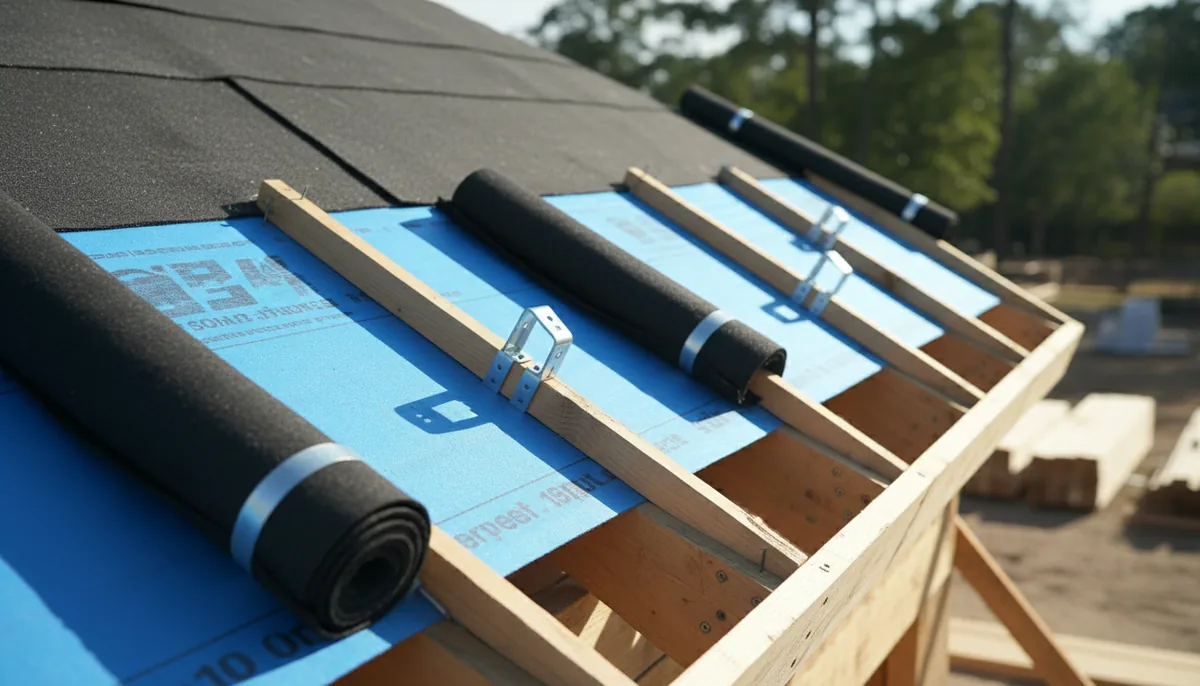
Here is the thing that catches people. A tile roof's lifespan is directly tied to what is under the tile. You might get a high-quality synthetic underlayment that gives you twenty or thirty years of protection on it's own. Or you might get the cheap #30 felt that gets brittle after eight years in the Florida sun. When that felt goes, water starts moving sideways under the tile, and you will not know it until the wood rots or the ceiling stains. By then, the fix is not a repair. The fix is a tear-off.
So the real question isn't how long the tile lasts. It's how long the whole assembly lasts. And that depends on the quality of the install, the quality of the underlayment, the pitch of the roof, and whether the roofer knew what he was doing around valleys and penetrations. A low-pitch roof with a ton of skylights is going to have a shorter life expectancy of tile roof in Florida than a steep, simple gable. That's just geometry.
How long does tile roof last in Florida? The honest answer
I get asked this on every estimate I write. The answer I give is usually: it should outlive your mortgage, but it might not outlive your patience. A properly installed tile roof on a straightforward house in Central Florida should give you forty years or more if you maintain the flashing and replace the underlayment when it wears out. And that is a big "if."
The wind mitigation inspection is part of that picture too. When an insurance company sends an inspector out to look at your roof, they are looking at the whole system. They want to know how the deck is attached, how the roof meets the walls, whether you have secondary water resistance, and what kind of opening protection you have on the windows. Florida insurers are required to offer a discount for features that qualify. The standard form they use is form OIR-B1-1802, and that inspection usually costs less than the annual discount it can open up. So go get one. It's the closest thing to free money that exists in roofing.
But the honest answer about lifespan starts with the tile type. Flat tile, barrel tile, mission tile, the profile matters less than people think. What matters is that the tile is not the weak link. The weak link is the underlayment, the flashings, and the guy who cut corners on the deck.

Barrel tile roof life expectancy florida: what the curves actually do
Barrel tile is the classic Florida look. Those S-shaped curves that channel water down the roof. The design is ancient and it works. The problem with barrel tile is that the shape creates lots of little pockets where water can sit, and it makes walking on the roof genuinely dangerous. A crew that doesn't know how to walk a barrel tile roof will crack tiles, and cracked tiles let water in.
The barrel tile roof life expectancy in Florida is really the same as any other tile roof: decades for the tile, much less for the underlayment. But barrel tile has a specific weakness at the eaves and the rakes. That's where water sheds off, and that's where wind can get underneath and lift a tile. If the hips and ridges are not set correctly, wind-driven rain will find the gap. I have been wrong about this before, and the roof let me know it.
I would not tell you that barrel tile is better or worse than flat tile. I'd tell you that barrel tile roofs need a roofer who actually knows the profile. A guy who does nothing but shingles all year will not know how to cut a valley on a barrel tile roof. He'll figure it out eventually, but "eventually" is how you get leaks.
Why a "25% rule" might be the thing that forces your hand
You may have heard about the old rule that said if you repaired more than a quarter of your roof, you had to replace the whole thing. That was real. The Florida Building Code had a provision that said no more than 25% of a roof could be repaired or replaced in a twelve-month period without bringing the whole roof up to current code.
That changed in 2022. A law called SB 4-D (2022) changed the trigger. If your roof was built, repaired, or replaced to the 2007 Florida Building Code or any later edition, then only the portion being worked on has to meet the current code. A full replacement is no longer automatically triggered. The 2007 code took effect on March 1, 2009. So if your roof went on before that date, generally speaking, the old rule still bites. If your roof went on after that date, you are in the new world.
What does that mean for you? It means you can't assume the adjuster or the building official is going to make your decision for you. You have to know when your roof was built and under which code. If you have a roof from 2005, you might be facing a full replacement when you just wanted to patch a leak. That is a conversation you need to have with a contractor early, not after the permit is pulled.
The insurance squeeze and what it does to your roof's future
You cannot talk about how long a tile roof should last in Florida without talking about insurance. The insurance companies have been leaning hard on roofs for years now. Some policies will not pay full replacement value on a roof that is over a certain age. Others require an inspection before they will even write a policy. Coverage varies by policy, so you need to read your declarations page and see what you actually agreed to.
The wind mitigation inspection is the tool that works in your favor. It documents the roof covering, the deck attachment, the roof-to-wall connection, the geometry, the secondary water resistance, and the opening protection. And Florida Statute 627.70132 is part of the legal landscape that makes insurance companies offer those discounts. I am not a lawyer and I am not an adjuster. I am a guy who nails tile to roofs. But I have watched enough customers go through this to know that a roof with proper wind mitigation documentation is a roof that is easier to insure. And an easier roof to insure is a roof that is more likely to be repaired rather than replaced.
The flip side is the nightmare scenario. You get a letter from your insurer saying they are dropping you because of the roof's age or condition. You file a claim and the adjuster says it's wear and tear. Meanwhile, Citizens Property Insurance Corporation becomes the elephant in the room, because half the state seems to be on their policy these days. That is not a reason to panic. It is a reason to plan.
How long should a tile roof last in Florida if you actually maintain it?
The short answer is a long time. If you keep the flashing tight, replace the underlayment when it wears out, and fix cracked tiles before the water finds the deck, a tile roof will last longer than you will live in that house. I have pulled tile off a house in Winter Park that was original to the 1960s and it was still in good shape. The wood underneath was another story, but the tile was fine.
Here is what I would actually do if it was my house. I would budget for a maintainance inspection every three to five years. Not a roofer selling something, but a guy who will walk the roof and point out the suspect flashings and the soft spots. The cost of that inspection is nothing compared to the cost of a tear-off.
What I would actually do: Ask your contractor exactly what underlayment he plans to use and what warranty it carries. If he shrugs, that tells you everything. If he names a specific product and a specific number of years, that tells you something else.
The other thing I would do is get a wind mitigation inspection done before I called an insurance agent. That form OIR-B1-1802 is the key that unlocks the discounts. It costs a couple hundred bucks, give or take, and it can save you more than that every single year. Get it done, keep a copy, and send it to every insurer who quotes you.
What I would actually do: Never let a contractor talk you into skipping the permit. A roof replacement in Florida requires a permit from the local building department and an inspection. If you skip that, an unpermitted roof will complicate both an insurance claim and a future sale. That is not a gray area.
The contractor thing you cannot afford to get wrong
Florida roofing contractors are licensed by the Department of Business and Professional Regulation. The DBPR issues two kinds of licenses. A certified roofing contractor has a license number that starts with CCC and can work anywhere in the state. A registered roofing contractor has a license number that starts with RC and can only work in the local jurisdiction that licensed them.
You need to verify the number is active before you hire anybody. The directory we talked about earlier verifies that for you. But you should also go on the DBPR roll yourself and check. It takes two minutes. I have met guys who let their license lapse and kept working. I have met guys who had an RC license and were roofing in a county they were never registered in. The system works only if you use it.
I had a customer one time who asked me if I could "forget" to pull a permit to save him a few hundred bucks. I told him I could also forget to get paid. He did not think that was funny. He found a guy who would do it, and six months later a tree fell on the roof and the insurance company found the unpermitted work and denied the claim. That is a true story. I have been in this business for twenty-two years, and I have never seen that end well.
Questions I get asked
How long does tile last compared to shingles?
Tile lasts far longer. Shingles in Central Florida are doing well to get fifteen or twenty years. Tile will go forty plus if the system underneath is sound. The tile is not the limiting factor. The underlayment and flashing are.
Does barrel tile last longer than flat tile?
No. The profile does not change the lifespan. Both are fired clay or concrete. Barrel tile has a different installation challenge because of the curves, but the material itself ages the same way. The roof's pitch and the quality of the install matter far more than the profile.
Will my insurance company force me to replace my tile roof?
I cannot tell you what your specific policy covers, because policies vary. What I can tell you is that a wind mitigation inspection with a good report gives you bargaining power. Insurance companies have to offer discounts for qualifying features, and a documented roof is easier to keep insured.
Is it worth repairing an old tile roof or should I just tear it off?
Depends what is under there. If the deck is solid and only the underlayment is shot, you can sometimes do a "re-tile" where you take the tile off carefully, replace the underlayment, and put the same tile back. That is a fraction of the cost of a full replacement. But if the deck is rotten or the tile is too brittle to save, you are doing a tear-off.
Do I need a permit for a roof repair in Florida?
For any meaningful repair or replacement, yes. You pull a permit from the local building department, and the work gets inspected. The contractor who tells you to skip it is not your friend. A permit is what protects you when the next homeowner asks about the roof and what protects you if you ever file a claim.
What is the biggest mistake homeowners make with tile roofs?
Letting people walk on them who do not know what they are doing. A tile roof is a walking hazard. I have seen appliance repair guys and AC techs crack dozens of tiles just trying to get to a unit on the roof. Each one of those cracks is a path for water. If somebody has to go up there, make sure they use crawl boards and know where to step.