Florida roof relief program: The Florida Guide
By Dale Prescott, Roofing contractor, Central Florida. Reviewed by Hal Winstead, Editor, licensed roofing contractor.
That whole mess started on a Tuesday afternoon in New Smyrna Beach. The homeowner had a leak over their lanai, and the adjuster had already paid out for a patch job on a 2005 tile roof. I had the old Florida Building Code rule in my head—the one that said if you repair more than 25% of that roof, you are pulling the whole thing off. The adjuster didn't see it that way. The roof didn't either, apparently, because when my guy cut into the decking to fix the leak, the wood just crumbled. We ended up stripping half the roof on the spot, and I had to make a very awkward phone call to the homeowner about what "repair" actualy meant in Central Florida.
That call goes a whole lot better now, thanks to a change in the law that alot of people still don't understand. If you are asking about the roofing companies in Florida because you typed "florida roof relief program" into Google, I know exactly what you are after. You want somebody else to pay for the new roof, or at least the state to tell you it is mandatory. Let me tell you what that search term actually means in the real world, and what it doesn't.
The truth is, "roof relief" isn't one program you sign up for. It is a few different mechanisms—a legal change, an insurance discount, and a grant lottery—that all sort of look like relief when they line up. But you need to know where the guardrails are before you start swinging a hammer, or before you sign a contract with a guy who swings one for you.
The law that changed the game
The big one everybody asks about is the 25% rule. For years, if a storm damaged more than a quarter of your roof, the local building department would make you bring the entire roof up to the current code. That meant a $2,000 repair job suddenly became a $15,000 replacement, overnight. It was the law, but it felt like a scam.
That changed with SB 4-D (2022). If your roof was built, repaired, or replaced under the 2007 Florida Building Code or any later edition—which took effect in March 2009—then the 25% trigger is gone. If I am only working on one slope of your hip roof, that slope has to meet current code. The other slopes don't get dragged into it. It saves you a pile of money, but it has a catch. Roofs from before 2009 don't qualify. If you have an older roof, the old rule still bites.
What I would actually do: Before you file a claim or let me start tearing things off, call the local building department and ask them, "Does my roof permit qualify for the SB 4-D exception?" They will know exactly what you are talking about.
Who is actually licensed to do this work
Every roofer in Florida answers to the Department of Business and Professional Regulation. That is the DBPR. Some of us carry a Certified license, which starts with the prefix CCC. That means we passed a state exam and can work anywhere in Florida. The other type is a Registered license, which starts with RC. That restricts you to the county or city that issued it. I have seen a guy from Dade County try to roof a house in Volusia on an RC license. He did not finish the job, and he did not finish the inspection proccess either. Do not let that be you.
Homeowners call me all the time saying "the contractor said he was legal." That is not good enough. Look the number up. If it is not active, or the name on the license doesn't match the truck, walk away.
Permits are not optional, no matter what your cousin says
Here is the part that makes people mad. You cannot skip the permit. Florida law requires a permit for a roof replacement from your local building department. Once the job is done, the county inspector comes out and looks at the work. If a contractor tells you he can save you money by pulling the permit "off the books" so the insurance company doesn't see the age of the roof—that is your cue to kick him off the property.
An unpermitted roof is a nightmare. It will rear it's head when you try to sell the house. It will complicate your insurance claim if the next storm hits. And if the work is bad, your warranty is worthless because there is no paper trail. I have been doing this for twenty-two years, and I have never met a homeowner who was glad they skipped the permit.
Wind mitigation inspections are the closest thing to relief
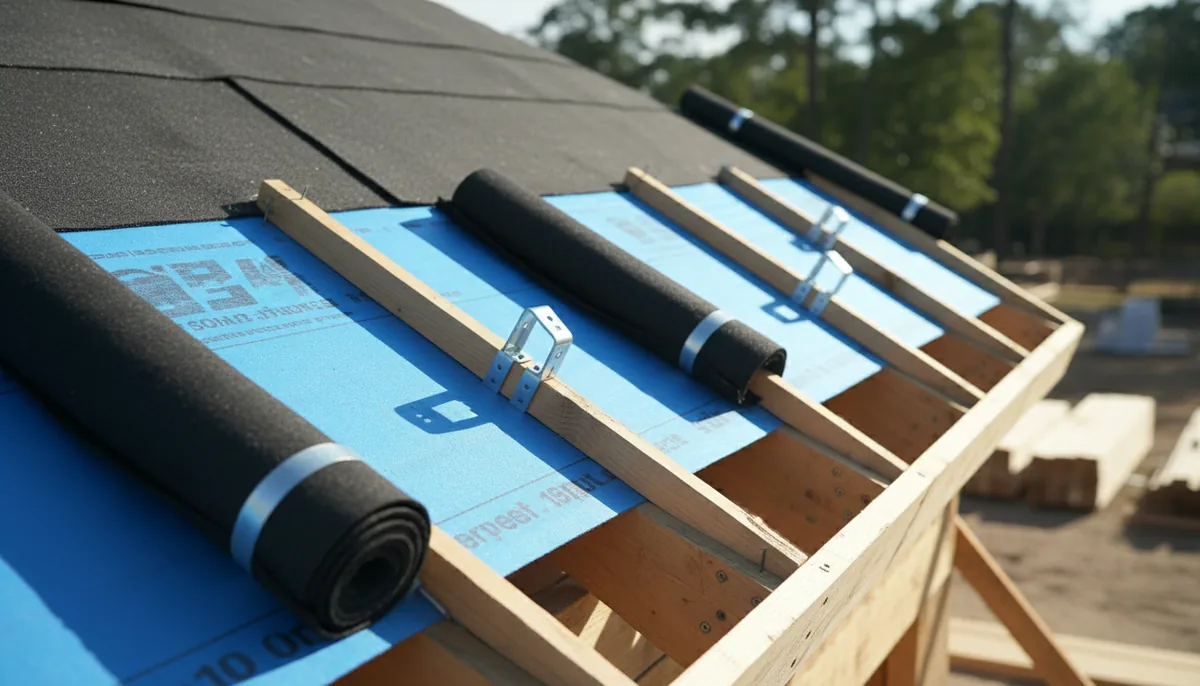
Here is the actual relief you can count on, as long as your roof was built right. A wind mitigation inspection is a documented look at how your roof is attached to the walls, how the roof deck is nailed down, and wether you have secondary water resistance underneath your shingles or tile. The standard form is OIR-B1-1802.
Insurers in Florida must give you a discount if the features are there. I have seen these inspections cost less than a hundred dollars and open up a discount that pays for itself every year you own the home. It depends on the insurer and the policy, but the mechanism is real. The state made this a legal requirement for the companies to offer, so if your agent doesn't mention it, ask.
What I would actually do: If you have a newer roof, call your insurance agent before your renewal date and ask them to send a wind mitigation inspector out. Do not wait for the storm to do it for you. That is the cheapest "raise" you will ever get.
The government grant that makes people angry
You have probably heard of the My Safe Florida Home program. That is the state fund that hands out grants for hurricane hardening, and roofs are frequently part of the hardening process. I will be straight with you—that program is a lottery. The money runs out fast, and then people complain on the news. If you get in, great. If you don't, do not let that stop you from getting the wind mitigation inspection anyway. That inspection works regardless of grant money.
There is also a "last resort" insurer in Florida called Citizens Property Insurance Corporation. You might end up with Citizens if the private market drops you. They are picky about roofs, and they have been enforcing standards that squeeze homeowners with older roofs. If you are with Citizens, read your policy's declarations page and ask the agent directly what condition your roof has to be in to stay covered.
The question of age and wear
You cannot just decide your roof is old and get a new one paid for. Insurance is for sudden and accidental damage, not for "my shingles have reached the end of their life." That is on you, and that is the cost of owning a house in Florida. I have torn off roofs that were 21 years old in Orlando where the shingles were fine, and roofs that were 12 years old where they were crumbling. It depends on the pitch, the ventilation, and the quality of the original install. There is no magic age, and there is no statistic I can give you that will answer it. That is why we walk the roof before we ever talk numbers.
Do not trust a roof that looks "new" from the street
I tell homeowners this all the time. Do not judge the roof by the street view. I had a job in Deltona where the front of the house looked like a brand new architectural shingle roof, but the back half was a patchwork of three different shingle types from two different storm claims. The "relief" that the previous owner got on the front meant the insurance company was never going to pay for the back. When I see that, I know I have to be the one to deliver the bad news.
Questions I get asked
Can I still repair my roof if I live in an older house?
Yes. You can always repair the actual leak. The SB 4-D (2022) rule specifically protects roofs installed under the 2007 code or later from being forced into a full replacement just because you crossed a percentage threshold. If your roof is older than that, call your local building department and ask them what triggers a full replacement in your jurisdiction.
Does the "Florida roof relief program" pay for my roof?
There is no single fund that will just hand you money for a new roof. The relief comes from a mix of SB 4-D (2022) protecting your wallet, wind mitigation discounts reducing your premium, and grant opportunities like My Safe Florida Home which you have to apply for. You need to chase all three to get what you are looking for.
How do I know if a contractor is licensed?
You look at the DBPR license roll. You want to see an active license with a prefix of CCC for a certified contractor who can work anywhere in the state, or RC for a registered one who is limited to a specific area. If you see the number with your own eyes on the state website, you know it is real.
Does my roof have to meet the current code for a repair?
Only the roof area you are working on has to meet the current code, provided your roof was built to the 2007 Florida Building Code or later. If you want the exact details, ask your roofer to show you the permit scope before the inspector shows up, because that defines the work.
What is the cost of a wind mitigation inspection?
I will not give you a dollar figure because it varies by company and location. I will say this: the inspection costs far less than the annual discount it unlocks. I have seen them run anywhere from a modest fee to a quick tour with a drone. Call a few licensed inspectors and ask for their price before you book, but do not skip it.
My contractor wants to skip the permit to save me money. Is that okay?
No. That is the easiest red flag in the world to spot. A permit and an inspection are the only things protecting you from a bad roof job. If they do not want the county inspector to look at their work, there is a reason. Find another contractor.
I have been wrong about roofs before. I have pulled up decking thinking I would find one thing and found another. But I have never once been wrong about the permit. Get it. Get the inspection. Push for the wind mitigation discount, and ignore the politicians who say there is a magic check waiting for you. There isn't. There is just the code, the paperwork, and the work. Get the paperwork right, and the work will hold up in the next storm.