Florida roofing scams: The Florida Guide
By Marcy Doleman, Commercial roofing estimator. Reviewed by Hal Winstead, Editor, licensed roofing contractor.
I was standing on a warehouse roof in Ocala, looking at a brand-new "replacement" that was really a repair, and the coating was already bubbling in the afternoon sun. The owner told me the storm-chaser crew did it for half of what I quoted. I ran my finger along a seam that was already lifting. It wasn't half the price.
It was twice the problem.
Florida is a special place for roofing. The heat cooks the membrane, the storms find every weak seam, and the insurance market changes the rules on you mid-game. I've been estimating commercial flat and low-slope work for over a decade, and I've seen the same scams repeat in warehouses, retail plazas and school districts from Pensacola to Homestead. If you're looking for a crew you can trust, start with the roofing companies in Florida roll, but don't stop there. You need to know what you're looking for, and what you're looking at.
First, what you're looking at
That new roof in Ocala was a scam, but not in the way most people think. The crew wasn't a gang of thieves in ski masks. They were a registered roofing contractor from a county two hours away, selling work they weren't licensed to perform. Florida roofing contractors are licensed by the Department of Business and Professional Regulation, which we all just call DBPR. A certified contractor's license starts with the prefix CCC, and that means they can work anywhere in the state. A registered contractor's license starts with RC, and it only lets them work in the local jurisdiction that issued it. That's a distinction alot of property owners miss, and the number of times I've seen an RC contractor's truck parked in a county they don't belong in is frankly too high to count.
Verify the number. Don't take their word for it. The DBPR roll is public, and it takes ninety seconds to check. Look at the license prefix, look at wether it's active, and look at any disciplinary history attached to it. I have been wrong about this before, but only when I didn't check. When I check, I don't get burned.
The insurance dance and the 25% rule that changed
You hear a lot about the 25% rule in Florida roofing, and half of what you hear was outdated after the 2022 legislative session. The old rule came from the Florida Building Code, and it said you couldn't repair or replace more than a quarter of a roof in a twelve-month period without dragging the whole roof up to current code. That was a brutal trigger for a lot of building owners with older roofs.
Then SB 4-D (2022) came along, and it changed the math. We studied the details carefully.
If your roof was built, repaired or replaced under the 2007 Florida Building Code or any later edition, then only the portion being worked on has to meet the current code. A partial repair doesn't automatically force a full replacement anymore. But here's the catch, and there's always a catch with Florida roofing.
The 2007 code took effect on March 1, 2009. So if your building's roof was completed before that date, it generally does not qualify for the partial exception. That means a repair on an older roof could still trigger a full-code replacement, and a contractor who tells you otherwise without checking the original permit date is guessing with your money. Call it a professional courtesy, but I'd rather be accurate than optimistic.
The permitting shell game
A roof replacement in Florida requires a permit from the local building department, and that permit means an inspection. Period. End of story. I've lost count of the building owners who tell me they saved money by letting a contractor talk them into skipping the permit. Did you though?
Here's what an unpermitted roof means for you. It means the work was never inspected by the local authority having jurisdiction. It means if the work is bad, you have no third-party record of what was done, what fasteners were used, or whether the deck was sound. And it absolutely means your insurance claim and your future sale just got a lot more complicated. If a contractor offers to skip the permit, that's not a favor. That's a warning sign that should send you walking the other way.
One time I was estimating a school job in Fort Myers, and the maintenance director confessed he had a crew re-cover a section of his own house without a permit because the quote was lower. He knew better. He literally wrote permits for a living. The kicker is his insurance company asked for the permit paperwork on a minor wind claim a year later, and he had to pay to have the whole section torn off and redone properly. Some lessons are expensive.
The storm chaser's price tag
Storm chasers are a particular breed. After a hail event or a named storm, they fan out across the state. "We'll handle your insurance claim, don't worry about a thing." That's a red flag in itself.
Now, I'm not saying every out-of-town contractor is a crook. But the ones who show up uninvited, offer to pay your deductible, and ask you to sign an assignment of benefits agreement are playing a different game. What is an assignment of benefits, you ask? In plain words, it lets the contractor bill your insurance company directly, and it can include provisions that make you responsible for costs your policy doesn't cover.
I'm not a lawyer and I'm not a licensed adjuster, so I can't tell you what to sign. But I can tell you this: read your policy's declarations page before you sign anything with anyone. Coverage varies by policy. What I see in the field is that the property owner who understands their own wind mitigation inspection report is the one who doesn't get taken for a ride.
What I would actually do: If a storm chaser knocks on your door, get their license number, thank them, and close the door. If they're legitimate and local, they'll still be there next week. Verify their license on the DBPR roll first.
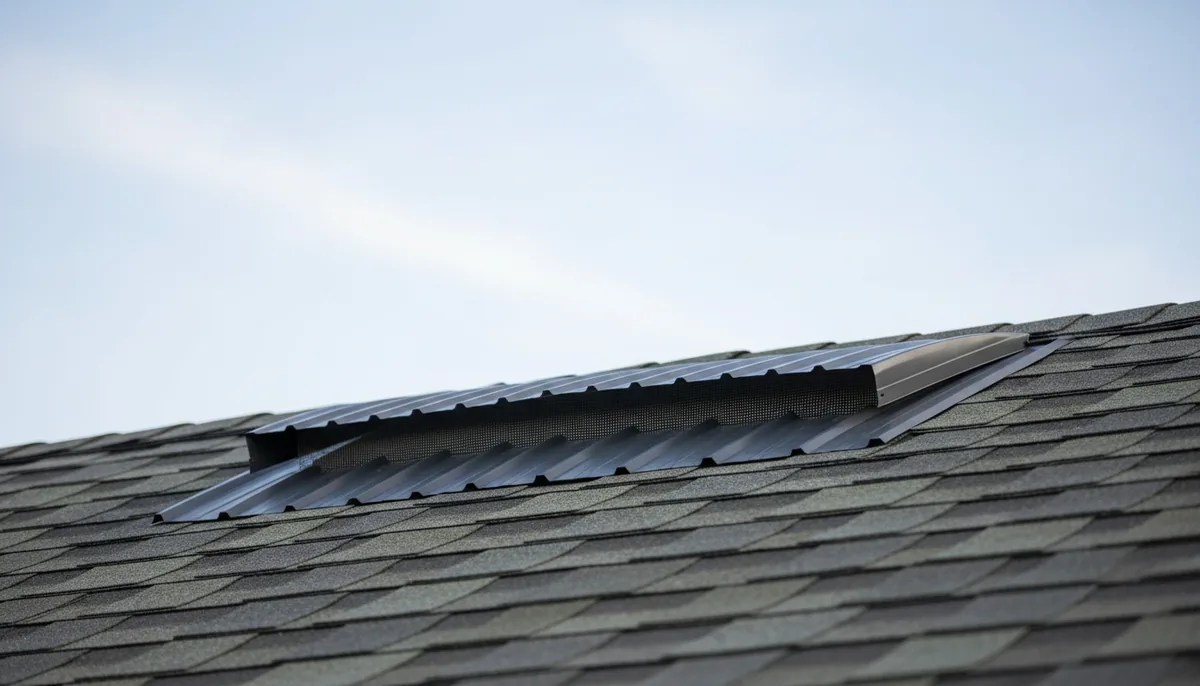
Wind mitigation inspections, the thing nobody uses
A wind mitigation inspection is not a scam, but it is possibly the most underused tool in the Florida roofing playbook. This inspection documents your roof covering, roof deck attachment, roof-to-wall connection, roof geometry, secondary water resistance, and opening protection. The standard form is the OIR-B1-1802, and your insurance company must offer premium discounts for features that qualify. The inspection usually costs less than the annual discount it can open up, so it pays for itself in a season, but only if you follow through and send the form to your carrier.
Why am I bringing this up in a post about scams? Because a lot of contractors use the wind mitigation inspection as a sales tool. They'll tell you your roof is a horror show and needs replacement to qualify for discounts. Sometimes they're right. Sometimes they're wrong, and you're the one stuck paying for a roof you didn't need.
I walked a retail plaza in Delray Beach recently where the owner was quoted a six-figure replacement based on a "free" inspection. I looked at the same inspection report, and the roof covering was in decent shape. It needed a coating and a few seam repairs, not a full tear-off. The contractor was counting on the owner not knowing the difference between a repair and a replacement.
What I would actually do: When a contractor hands you an inspection report, ask for the photos that support each line item. A legitimate inspection has photos of the deck attachment, the perimeter, and the field of the roof. If they can't produce clear photos, you're not looking at an inspection, you're looking at a sales pitch.
The scope creep shuffle
Commercial roofing quotes are priced per square. A square is a hundred square feet of roof area, and the price depends heavily on what is under the surface. I always tell property owners that the tear-off is where the surprises live. You can spec a beautifull new TPO membrane, but if the old substrate is wet or rotten, you're going to be writing a change order before the crew even gets the old roof off.
That's not necessarily a scam. That's just how roofing works. The scam is when a contractor holds your original quote hostage and starts inventing problems that don't exist to jack up the price. I see it on school jobs all the time. The project manager calls the principal and says, "We found water in the deck, you need an extra forty thousand." Sometimes the water is there, and I've verified it. Sometimes the water is there, but it was in the pre-bid photos from three weeks ago.
If a contractor wants to add money to a job, they need to show you the damage, show you the photos of the damage being discovered at the time of discovery, and get your written approval before they proceed. If they don't have those things, you don't have a change order, you have an ambush.
Questions I get asked
What is the difference between a registered and certified roofing contractor in Florida?
A certified contractor has a license starting with CCC and can work anywhere in Florida. A registered contractor has a license starting with RC and can only work in the local jurisdiction that issued the license. You should of verify the number is active on the DBPR roll before hiring anyone.
Can a contractor legally waive my insurance deductible?
No. In Florida, it is illegal for a contractor to offer to pay, rebate, or otherwise cover your insurance deductible, and it's also illegal for you to accept that offer. If a contractor pitches that to you, they've already shown you they're willing to break the rules.
Does a partial roof repair trigger a full roof replacement?
Not necessarily. If your roof was built, repaired or replaced to the 2007 Florida Building Code or later, only the portion being worked on needs to meet the current code under SB 4-D (2022). If your roof is older, a repair might trigger a full-code replacement, so verify the original permit date.
Why would a wind mitigation inspection matter if I'm not filing a claim?
Because Florida insurers must offer premium discounts for qualifying features documented on the OIR-B1-1802 form. A wind mitigation inspection is seperate from a claim, and the cost is usually far less than the annual discount it can open up.
What should I do if a contractor pressures me to sign something on the spot?
Say no and leave. A legitimate contractor will let you read everything at your own pace. If they need a decision right now, they're counting on you not reading carefully. Take the paperwork, review it, and call them next week if you're still interested.
Are all storm chasers scammers?
No, but the ones who show up uninvited, promise guaranteed claim approval, or demand an assignment of benefits should be treated with heavy skepticism. Check their DBPR license, ask for local references, and never sign anything without reading your own policy declarations page first.