Florida roofing underlayment requirements: The Florida Guide
By Dale Prescott, Roofing contractor, Central Florida. Reviewed by Hal Winstead, Editor, licensed roofing contractor.
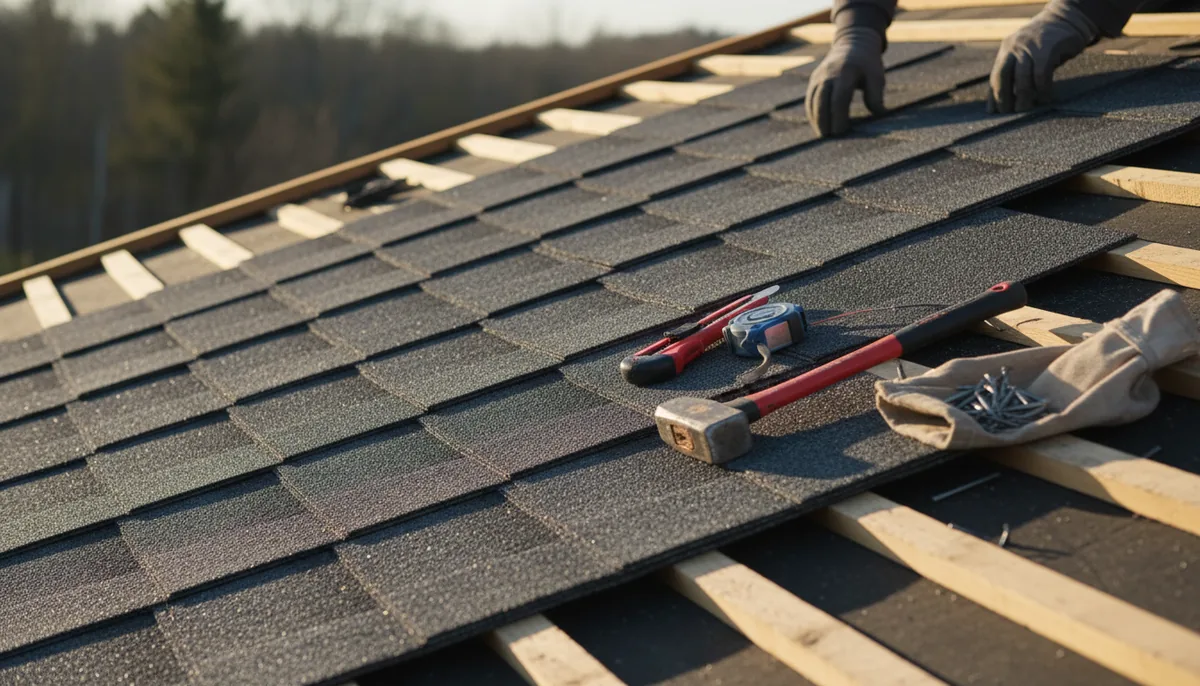
I remember a Tuesday afternoon in Davenport, sweat running down the back of my neck, standing on a tear-off where the old #30 felt had turned to brittle, blackened dust. We weren't even halfway throught the strip when a gust off the pasture curled a whole sheet of it up like a dried leaf. The homeowner was standing in the yard, watching. He'd asked me that morning if we could just "slap the new shingles over that old paper." That felt crumbled in my hand. That's not a substrate. That's dirt.
That moment is half the job down here. Florida roofing underlayment requirements exist because the sun beats the living daylights out of every roof in the state, and the stuff underneath your shingles is what keeps water out when the wind finds a seam. If you're looking for a crew that knows the difference, you can find roofing companies in Florida through the directory, but you need to know what you're asking for before they show up to bid.
The first thing I tell anyone is this: an underlayment is not a "peel and stick" by default. There are three basic layers of defense down here. First, you've got the roof deck — call it plywood or OSB. Second, the underlayment, which is the felt or synthetic membrane that sits on top of the deck. Third, the shingles or tile. The shingles are the pretty part. The underlayment is the part that actualy keeps your ceiling dry during a sideways rainstorm when a shingle lifts. And the Florida Building Code has specific rules about what that middle layer has to be.
Your shingles are the roof's first line of defense. Your underlayment is the second. Remember that.
What exactly is roof underlayment, anyway?
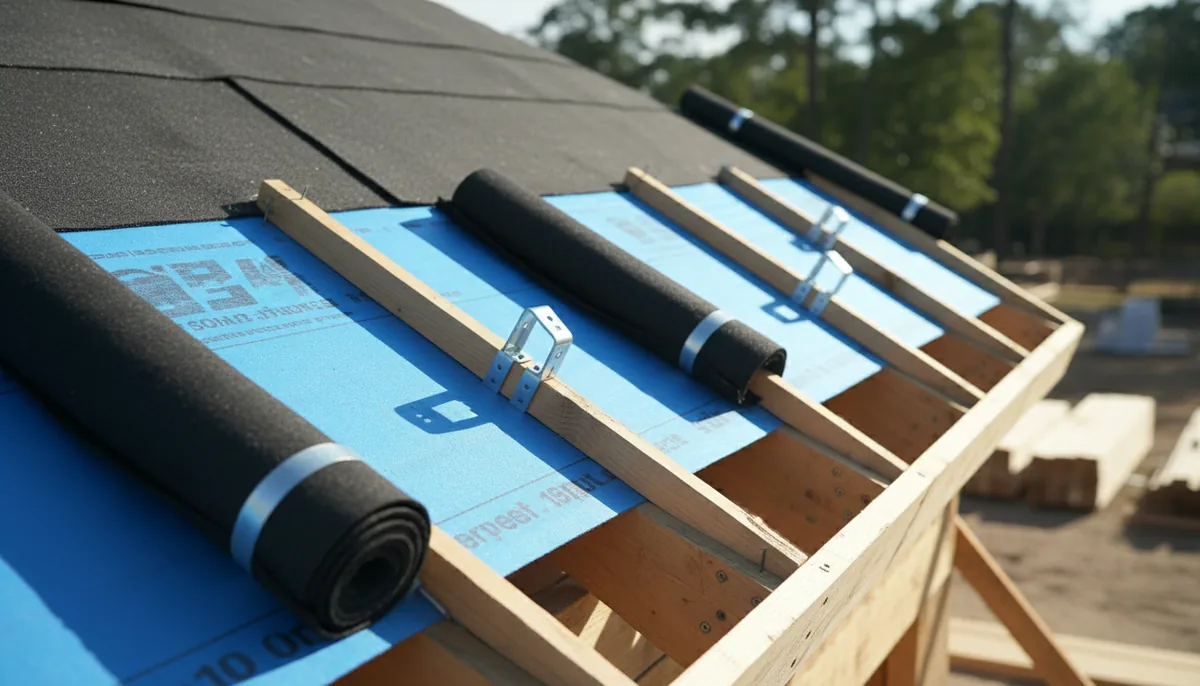
Underlayment is the material installed directly onto the roof deck, beneath the shingles. In Florida, you're essentially looking at two main types: asphalt-saturated felt (the old #30 and #15 grades) and synthetic underlayment. Felt is the traditional stuff. It's heavy, it's cheap, and it absorbs water if it gets rained on before the shingles go down. I've soaked more felt rolls than I care to count. It can dry out, sure, but it degrades over time under Florida's sun, and it tears easily when you're walking on it in July heat. Synthetic underlayment is a woven or spun polypropylene sheet. It's lighter, it lasts longer when exposed to the elements before the final roof covering gets installed, and it doesn't tear as easy under your boots near the eaves. It costs more. I use it on almost every job now.
The code portion that matters most to you is the "underlayment requirements" part. This is where Florida roofing underlayment requirements come into play: the Florida Building Code tells the contractor what type of underlayment to use, how many nails and staples per sheet, and how much overlap there has to be at the seams. That overlap is critical. For shingle roofs, you're usually looking at at least a two-inch lap for horizontal seams, sometimes more depending on the slope of the roof. For flat or low-slope roofs, you might need a base sheet and a cap sheet, fully adhered or mopped down. Don't get me started on tile roofs — those need a double layer of underlayment in some cases.
Why I throw a wet roll of felt at the inspector
You hear "felt" and "synthetic" and you think it's just a preference. It is not. There's a reason the code requirements exist. They changed the rules after hurricanes reminded us all what happens when you rely on cheap paper between you and the storm. The specifics are less about what brand you buy and more about how it's installed. It's a builder's rule, not a marketing one. The inspector doesn't care if you bought the pretty red synthetic. He cares if it's lapped right and nailed right and sealed at the valleys. I've seen inspectors fail a roof because a crew didn't stagger the seams. I've also seen a crew try to staple felt down instead of nailing it. That's Florida roofing underlayment requirements in a nutshell: it's all about keeping the water out, even when the shingles are gone.
The code tests the deck. If the decking is rotted at the eaves, the underlayment doesn't save you. If the nail pattern is wrong, the wind is going to find it. I of been wrong about this before, but I've learned to check the deck first. You can't put good underlayment on bad wood.
Check the licence before you check the calendar
I know you want a date for your roof replacement. I get it. But before you book a crew, you need to verify who is holding the ladder. Florida roofing contractors are licensed by the Department of Business and Professional Regulation, the DBPR. A certified roofing contractor carries a licence that starts with CCC and can work anywhere in the state. A registered roofing contractor carries a licence starting with RC, and that guy can only work in the local jurisdiction that licensed him. I've worked with both. The RC guys are often great locally, but if they tell you they can pull a permit across the county line, they're wrong. Always check the DBPR roll. The directory does this for you, but you can also do it yourself in two minutes. It's worth it.
Here is the other thing you need to hear: a roof replacement in Florida requires a permit from your local building department. That means an inspection. It means the county or city is going to look at the underlayment before the shingles go on. If a contractor offers to skip the permit to save you a few bucks, walk away. I mean it. Walk away. An unpermitted roof can complicate an insurance claim and hang you up when you try to sell the house. That's not a rumor, that's the law.
What I would actually do: Ask the contractor for their DBPR licence number, look it up on the state roll, and confirm it is active. Then ask to see the permit card for your address. Do not book a crew until both check out.
The 25% rule and the SB 4-D change
This is the thing that confuses everyone. For years, if you had storm damage and wanted to patch a section of roof, the inspector or contractor would tell you that if more than 25% of the roof was being repaired in any 12-month period, you had to bring the whole roof up to current code. That was the old "25% rule." It meant alot of roof replacements got triggered by what started as a small insurance claim.
That changed with SB 4-D, which became effective on 26 May 2022. The new rule looks at what code edition your roof was built to. If your roof was built, repaired, or replaced using the 2007 Florida Building Code or any later edition, then you only have to bring the portion you're working on up to current code. It does not automatically trigger a full-roof replacement. The caveat is that the 2007 code edition took effect on 1 March 2009. So, if your roof was completed before roughly March 2009, it likely does not qualify for that partial-replacement allowance. That means an older roof with a lot of damage might still need a full tear-off. It depends on what is under there, and it depends on your specific city inspector. Insurance policies vary on this too, so read your declarations page.
What I would actually do: If you have damage on a newer roof, let the adjuster out, but also ask your local building department what their current position is on partial repairs. The state law is one thing. The guy signing the permit is the one who matters on the day.
Money on the roof: wind mitigation inspections
Here's a trick a lot of homeowners don't know about until they ask. A wind mitigation inspection is a formal look at six specific things: the roof covering, the roof deck attachment, the roof-to-wall connection, the roof geometry, the secondary water resistance, and the opening protection. The inspector fills out a standard state form, form OIR-B1-1802. That form tells your insurance company exactly how your roof is built and how it's attached. Florida insurers are required to offer premium discounts for certain qualifying features. So if your roof has the right nails, the right hurricane clips, and a sealed deck, that form can save you money every year. I've seen this discount dwarf the inspection cost. It depends on your specific policy, but it's worth the couple of hundred bucks, give or take.
The catch is that you usually need this done on an existing roof. I can't inspect my own work and have it count, and don't let anyone tell you otherwise. You get a licensed home inspector or a building official to do it. The wind mitigation form is also a smart thing to have in hand before you call about a claim. It shows you did your homework.
The Citizens and My Safe Florida Home angle
If you have insurance through the state-owned insurer of last resort, Citizens Property Insurance Corporation, they might require a wind mitigation inspection before they write a policy, or they might give you a hard time about older roofs. I have seen Citizens require roofs to have a certain remaining lifespan. That isn't me quoting a policy — it's just what I've seen on the job. The other program is My Safe Florida Home, which offers free hurricane retrofitting inspections and matching grants for things like opening protection and roof upgrades. That program comes and goes depending on state funding. But if it's open, it's free money to harden your house. I'd take it.
The truth is that Florida roofing underlayment requirements are not just a list of rules. They're a direct reaction to what happens when a hurricane peels back a shingle and finds nothing underneath. I've seen roofs where the shingles look fine and the deck is rotten because the felt wore out decades ago. I've seen tile roofs with a single layer of old #15 felt that might as well have been cheesecloth. The code is trying to save you from that exact scenario.
Questions I get asked
What's the best underlayment for a Florida roof?
For most shingle roofs, I run a synthetic underlayment. It holds up to sun exposure better than felt if there's a wheather delay during installation, and it doesn't tear under your feet. Tile roofs are a different animal and can need a double layer. Ask your contractor what they plan to run and why.
Can I just patch a small leak without a permit?
If you're patching a small area of an older roof, a lot of contractors will tell you it's a repair, not a replacement, so no permit is needed. That's often true, but the line gets blurry. If you have to replace decking or if the repair area is large, you're drifting into permit territory. When in doubt, call the building department. It is a lot cheaper than explaining an unpermitted repair at closing.
Does my insurance company require a wind mitigation inspection?
Not for every policy, but they have to offer you a discount if you have one. If you're getting a new policy, especially with Citizens, they might require it before they bind coverage. Coverage varies by policy. You need to read your declarations page or ask your agent directly.
How often do you see deck rot under a "fine" roof?
More often than I'd like. If the underlayment failed years ago, water has been seeping in every heavy rain. That moisture rots the plywood from the top down. By the time shingles look bad, the deck is often mush. That's why we tear off and look before we quote a final number. We can't see through the deck.
Is the 25% rule still something I should worry about?
It was changed for most modern roofs by SB 4-D back in 2022. If your roof was built to the 2007 code or newer, and that's most roofs after March of 2009, a large partial repair won't automatically force a full replacement. If your roof is older than that, you might still be in a situation where the whole thing needs to come off. It really depends on what code edition your roof was originally permitted under.
Why does the underlayment matter if the shingles are warranted for 30 years?
Because the shingle warranty does not cover the underlayment, and the underlayment is what protects the deck while the shingles are doing their job. A 30-year shingle on a 15-year felt is a 15-year roof. If the underlayment fails, the deck rots, and the shingles are standing on rotten wood. They don't last long there.